• KZT/USD = 0.00211
  • TJS/USD = 0.10810
  • UZS/USD = 0.00008
  • TMT/USD = 0.29760
  • KZT/USD = 0.00211
  • TJS/USD = 0.10810
  • UZS/USD = 0.00008
  • TMT/USD = 0.29760
  • KZT/USD = 0.00211
  • TJS/USD = 0.10810
  • UZS/USD = 0.00008
  • TMT/USD = 0.29760
  • KZT/USD = 0.00211
  • TJS/USD = 0.10810
  • UZS/USD = 0.00008
  • TMT/USD = 0.29760
  • KZT/USD = 0.00211
  • TJS/USD = 0.10810
  • UZS/USD = 0.00008
  • TMT/USD = 0.29760
  • KZT/USD = 0.00211
  • TJS/USD = 0.10810
  • UZS/USD = 0.00008
  • TMT/USD = 0.29760
  • KZT/USD = 0.00211
  • TJS/USD = 0.10810
  • UZS/USD = 0.00008
  • TMT/USD = 0.29760
  • KZT/USD = 0.00211
  • TJS/USD = 0.10810
  • UZS/USD = 0.00008
  • TMT/USD = 0.29760

Viewing results 1 - 6 of 87

Exploring What’s Behind Iran’s Push in Tajikistan

As Turkey increases its influence among Turkic Central Asian nations, Tajikistan – the only Persian-speaking country in the region – is looking to Iran as a potential strategic partner. Dushanbe is aiming to significantly strengthen bilateral ties with Tehran, hoping that such a move will have a positive impact on its economy; but what are the Islamic Republic’s interests in Tajikistan? On January 15, Iranian President Masoud Pezeshkian paid an official visit to Dushanbe, where he met with his Tajik counterpart Emomali Rahmon. The fact that he led a delegation of the Iranian business community suggests that Tehran plans to increase its economic presence in the landlocked Central Asian state. In 2024, the two nations increased their trade volume by nearly 50% compared to 2023. The problem, however, is that their total trade turnover reached “only” $378 million, which is rather modest compared to the $1,12 billion trade volume achieved by Tajikistan and Russia in the first seven months of 2024. From 1995 to 2013, the Islamic Republic actively invested in the economy of Tajikistan, which led to the construction of the Sangtuda-2 Hydroelectric Power Plant and the tunnel at the Anzob Pass. However, between 2013-2021, economic relations between Tehran and Dushanbe deteriorated significantly. Now, Tajikistan hopes to see more Iranian investments in its economy. "Trade and the economy are among the priority areas of our bilateral relations. We voiced our interest in developing investment cooperation with the Islamic Republic of Iran,” Rahmon said at a press conference after talks with Pezeshkian. As a result of their summit, Tajikistan and Iran significantly deepened their bilateral ties by signing 23 memoranda of understanding in sectors such as trade, energy, infrastructure, cultural exchange, and security. Since Daler Juma, Tajikistan's Minister of Energy and Water Resources attended the meeting between Tajik and Iranian delegations, it is almost certain that energy was one of the main topics that was discussed. For Dushanbe, it is crucial to secure funding for the completion of the Rogun Hydroelectric Power Plant, the Istiklol tunnel (also known as the Anzob Tunnel), where the Iranian company Farob is engaged in the construction, as well as a number of small and medium-sized projects. For Tehran, the economic aspect of cooperation with Tajikistan is undoubtedly very important, although it seems to have other ambitions in the Central Asian state as well. “Iran’s primary interest in Tajikistan is related to cultural and religious bonds, as it sees the country as part of its Persian-Iranian-Islamic civilization,” Fereshteh Sadeghi, a Tehran-based journalist who has worked with Iran's Press TV and Al Jazeera English, told The Times of Central Asia. In her view, by maintaining a good political relationship with Dushanbe, the Islamic Republic can significantly strengthen these cultural connections. “Tajiks speak Farsi, love Farsi literature, and are said to be able to recite poems by Persian or Farsi-speaking poets from memory more easily than Iranians themselves can,” she explained, pointing out that religious aspect also plays an important role in Tajik-Iranian relations. Although Tajikistan is...

Kazakhstan Aims to Boost Agricultural Exports to Russia

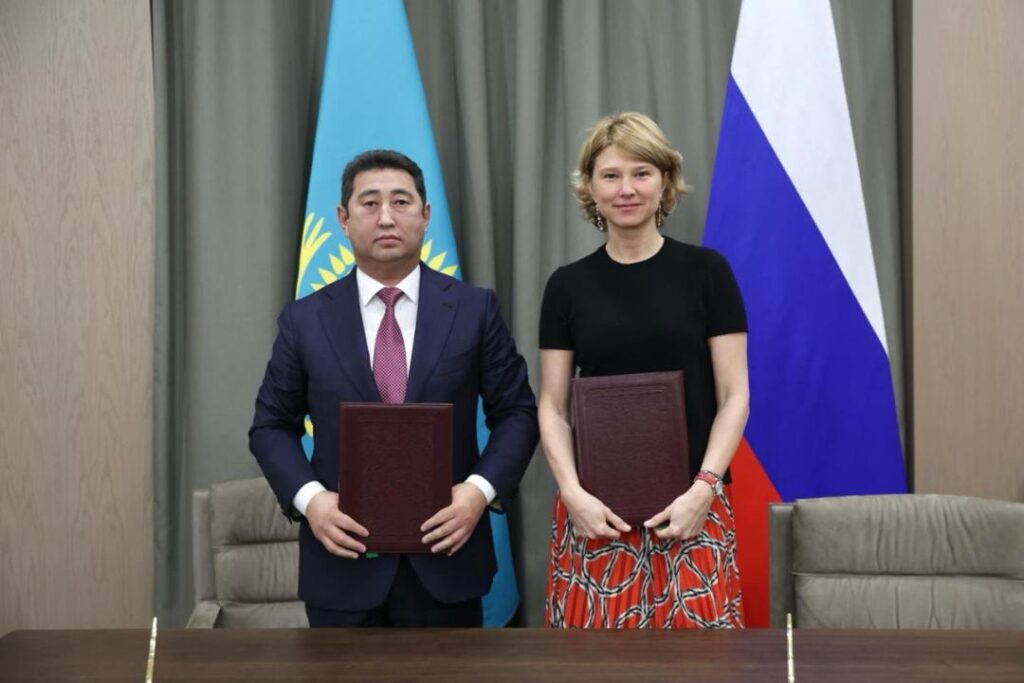
Kazakhstan is seeking to expand its agricultural exports to Russia as part of efforts to strengthen bilateral trade ties. On January 21, Minister of Agriculture Aidarbek Saparov met with his Russian counterpart Oksana Lut in Moscow to discuss lifting restrictions on the import and transit of agricultural products. Trade turnover in agricultural goods between the two countries reached $3.4 billion from January to November 2024, marking a 4.3% increase compared to the same period in the previous year. According to Saparov, Russia remains Kazakhstan's largest trading partner in the agricultural sector. Over the first 11 months of 2024, Kazakhstan’s agricultural exports to Russia totaled $502.9 million. “Kazakhstan is interested in increasing the presence of its agricultural products on the Russian market,” Saparov said. In recent months, both countries have made progress in easing trade restrictions. Kazakhstan has lifted all restrictions on Russian agricultural products, while Russia this month removed temporary bans on tomato imports from 36 Kazakh enterprises. Discussions are ongoing to further relax restrictions on the import and transit of Kazakh livestock and plant products. The Moscow meeting concluded with the signing of an action plan to enhance Russian-Kazakh agro-industrial cooperation. Key elements of the plan include: Preparing a joint project to establish an agrobiotechnopark. Creating a favorable framework for mutual food supplies. Finalizing the integration of veterinary and phytosanitary control information systems. These measures are expected to strengthen agricultural trade between the two countries and support the development of new joint projects in the agro-industrial sector.

Trump Nominee Marco Rubio Signals Support for Normalizing Central Asia Trade

U.S. President-elect Donald Trump’s nominee for secretary of state says the Jackson-Vanik amendment, a 50-year-old law that imposes some restrictions on trade with several countries in Central Asia, is “a relic of an era that’s passed.” U.S. Senator Marco Rubio, a Florida Republican who spoke on Wednesday during a confirmation hearing in the Senate Foreign Relations Committee, also described China, a key economic partner in Central Asia, as a threat and an adversary. Rubio, known as a hawk on national security issues, had harsh words too for what he called chaos-sowing “dictators” in Moscow, Tehran and Pyongyang. Tough language aside, Rubio’s interactions with his fellow senators were relatively smooth, suggesting his path to the secretary of state job is open as the United States prepares for Trump’s inauguration on Jan. 20. Central Asian nations have been watching for what to expect when Trump returns for a second term in the White House, and they got an encouraging glimpse in Rubio’s testimony. In the Washington hearing, Senator Steve Daines, a Montana Republican, told Rubio that he and Senator Gary Peters, a Michigan Democrat, have been working to rescind the Jackson-Vanik amendment in Central Asia. The 1974 law, passed at the height of the Cold War, aimed to promote human rights in countries that were part of the Soviet bloc by preventing normal trade relations with “non-market economies” that restrict emigration. But Daines argued that it is outdated in the former Soviet republics of Kazakhstan and Uzbekistan, especially as Central Asia becomes more important because of its energy resources and geopolitical influence. “I realize you have a lot of priorities on your plate when you will be confirmed as our secretary,” Daines said to Rubio. He added that rescinding the amendment in the region would be a big step “that Central Asia needs right now to grow.” In response, Rubio said that permanent removal of the amendment in Central Asia would require legislative approval and he mentioned an initiative by Senators Chris Murphy (Connecticut Democrat) and Todd Young (Indiana Republican) that also seeks to peal the measure for Tajikistan, Kazakhstan and Uzbekistan. “I think this is a relic of an era that’s passed,” Rubio said of the Jackson-Vanik amendment. “There are some that argue that we should use it as leverage for human rights concessions, or leverage to get them to go stronger in our way” against Russia, he said. However, the Florida senator said, Kazakhstan is a market economy and therefore meets conditions for removal from the amendment’s restrictions. He added: “So we will work with you on this because I think it’s important.” Kazakhstan became a member of the World Trade Organization in 2015, two years after Tajikistan joined the group. Uzbekistan has been signing individual agreements with countries and hopes to join the WTO by 2026. Kyrgyzstan, Ukraine and Russia are among former Soviet states that were subject to the Jackson-Vanik amendment but later achieved normal trade relations status with the United States. Russia, however, is currently under Western...

Uzbek Products to Reach Europe and Africa Through Turkish Port

Uzbek diplomats recently visited Turkey’s Kocaeli region to strengthen trade and economic ties, holding discussions with local officials and business leaders. The meetings addressed opportunities for expanding cooperation in trade, economic, cultural, educational, and humanitarian sectors. Uzbek representatives highlighted ongoing reforms in Uzbekistan and the incentives available to foreign investors in its free economic zones. Key figures in the talks included Kocaeli’s Mayor Tahir Büyükakın, Regional Governor Ilhami Aktash, Regional Industrial Chamber Head Ayhan Zeytinoğlu, and Gebze Güzeller Industrial Zone Director Adem Ceylan. Mayor Büyükakın provided an overview of Kocaeli’s economic and social strengths, while Ayhan Zeytinoğlu expressed interest in boosting bilateral economic collaboration. Zeytinoğlu proposed facilitating exchanges between Uzbek and Turkish business delegations to foster stronger partnerships. Adem Ceylan suggested establishing a dedicated logistics center for Uzbek investors within the Gebze Industrial Zone. The center would provide storage facilities for Uzbek-made goods and serve as a gateway for exporting products to Europe and Africa via the Gebze seaport. The visit concluded with an agreement to organize a business forum in the Kocaeli region. The planned forum will feature a delegation of Uzbek entrepreneurs, aimed at enhancing bilateral and regional cooperation.

Kazakhstan’s Lamb Gaining Ground in Arab Markets

Demand for Kazakh food products is on the rise in the United Arab Emirates (UAE), which imports over $23 billion worth of agricultural goods annually. Kazakhstan’s agricultural exports to the UAE were a key focus during a meeting in Dubai between Kazakhstan’s Minister of Trade and Integration, Arman Shakkaliyev, and UAE Minister of State for Foreign Trade, Thani bin Ahmed Al Zeyoudi​. Shakkaliyev reaffirmed Kazakhstan’s readiness to supply organic agricultural products, with chilled lamb emerging as a standout item in the UAE market. During the first ten months of 2024, Kazakhstan exported 13,300 tons of lamb to the UAE, valued at $45.3 million. This marks a twofold increase in export volume and a 64% rise in revenue compared to the same period in 2023. In addition to lamb, Shakkaliyev highlighted Kazakhstan’s capacity to export high-quality flour, sunflower oil, confectionery, and dairy products to the UAE. The minister also emphasized Kazakhstan’s commitment to developing halal certification for its agricultural products. “Since 2014, more than 1,800 domestic and foreign companies have been certified, demonstrating the high quality and compliance of Kazakhstani products with international standards,” he noted. As part of the meeting, a tasting session showcased Kazakhstani lamb, confectionery, and apples, further promoting the country's agricultural offerings. Kazakhstan’s lamb exports have also seen significant growth in other Arab markets. According to the Kazakh Ministry of Trade and Integration, lamb exports to Qatar have increased by 75% since the beginning of 2024.

Kazakhstan and Serbia Strengthen Ties Despite Different Geopolitical Paths

Serbian President Vucic (54) might physically resemble Kazakh leader Kassym-Jomart Tokayev (71), but the geopolitical positions of Sebia and Kazakhstan could not be more different. While the Balkan nation – a European Union candidate since 2012 – remains in the EU’s “eternal waiting room”, the Central Asian country – a member of the Russian-led Eurasian Economic Union – seems to have found a delicate balance between Russia, China, and the West. Those differences, however, have not prevented Serbia and Kazakhstan from strengthening their bilateral ties. Over the past six months, the two countries have been actively preparing for Tokayev’s trip to Serbia. This year, he spoke by phone with Vucic twice, while various Serbian and Kazakh officials held several meetings. On November 18-19, Tokayev finally visited the Southeastern European nation, where he met with his Serbian counterpart. According to the Kazakh leader, they discussed strengthening trade and economic relations and bilateral partnerships between the two nations. “It is essential that we develop cooperation. We had constructive talks and reached important deals,” Tokayev stressed. During his visit to the Balkan country, Serbian and Kazakh ministers signed several bilateral agreements. One of them is a 2025 plan on military cooperation. It is, therefore, no surprise that, following the talks in Belgrade, Vucic and Tokayev attended an exhibition of arms and military equipment at the Batajnica military airport near the Serbian capital. Indeed, military ties seem to be an important aspect of the Serbian-Kazakh relationship. Back in 2017, the two nations signed a memorandum of understanding in the field of military-technical collaboration. Six years later, in November 2023, Kazakhstan and Serbia inked intergovernmental agreements on military-technical cooperation, while in June of this year Serbian and Kazakh defense ministers discussed in Astana military relations between the two countries. Also, in September, Roman Vassilenko, Kazakhstan’s Deputy Foreign Minister, announced that Belgrade and Astana plan то expand cooperation in the defense industry. It remains to be seen how Moscow – Astana’s nominal ally in the Collective Security Treaty Organization (CSTO) – will react to Kazakhstan’s ambitions to deepen military ties with Serbia – a nominally neutral country that has indirectly supplied Ukraine with $885 million worth of weapons. Despite being in different geopolitical positions, Serbia and Kazakhstan seem to share the same approach regarding Ukraine. Both nations support the Eastern European country’s territorial integrity, while trying to preserve relatively good relations with the Kremlin. At the same time, they support each other’s territorial integrity, which is particularly important for Serbia given that Kazakhstan does not recognize the 2008 unilateral independence of Kosovo. In 2022, sitting next to Russian President Vladimir Putin, Tokayev said that if the right to self-determination is put into practice worldwide, then there will be over 600 countries instead of the 193 states which are currently members of the United Nations. “For this reason, we do not recognize either Taiwan, or Kosovo, or South Ossetia, or Abkhazia… This principle will also be applied to quasi-state territories, which, in our opinion, are Lugansk and...