• KGS/USD = 0.01144 0%
  • KZT/USD = 0.00202 0%
  • TJS/USD = 0.10606 -0.09%
  • UZS/USD = 0.00008 0%
  • TMT/USD = 0.28490 0%
  • KGS/USD = 0.01144 0%
  • KZT/USD = 0.00202 0%
  • TJS/USD = 0.10606 -0.09%
  • UZS/USD = 0.00008 0%
  • TMT/USD = 0.28490 0%
  • KGS/USD = 0.01144 0%
  • KZT/USD = 0.00202 0%
  • TJS/USD = 0.10606 -0.09%
  • UZS/USD = 0.00008 0%
  • TMT/USD = 0.28490 0%
  • KGS/USD = 0.01144 0%
  • KZT/USD = 0.00202 0%
  • TJS/USD = 0.10606 -0.09%
  • UZS/USD = 0.00008 0%
  • TMT/USD = 0.28490 0%
  • KGS/USD = 0.01144 0%
  • KZT/USD = 0.00202 0%
  • TJS/USD = 0.10606 -0.09%
  • UZS/USD = 0.00008 0%
  • TMT/USD = 0.28490 0%
  • KGS/USD = 0.01144 0%
  • KZT/USD = 0.00202 0%
  • TJS/USD = 0.10606 -0.09%
  • UZS/USD = 0.00008 0%
  • TMT/USD = 0.28490 0%
  • KGS/USD = 0.01144 0%
  • KZT/USD = 0.00202 0%
  • TJS/USD = 0.10606 -0.09%
  • UZS/USD = 0.00008 0%
  • TMT/USD = 0.28490 0%
  • KGS/USD = 0.01144 0%
  • KZT/USD = 0.00202 0%
  • TJS/USD = 0.10606 -0.09%
  • UZS/USD = 0.00008 0%
  • TMT/USD = 0.28490 0%
13 February 2026

Viewing results 1 - 6 of 15

Tokayev Praises Trump’s ‘Common-Sense’ Governance, Backs U.S.-Led Peace Initiatives

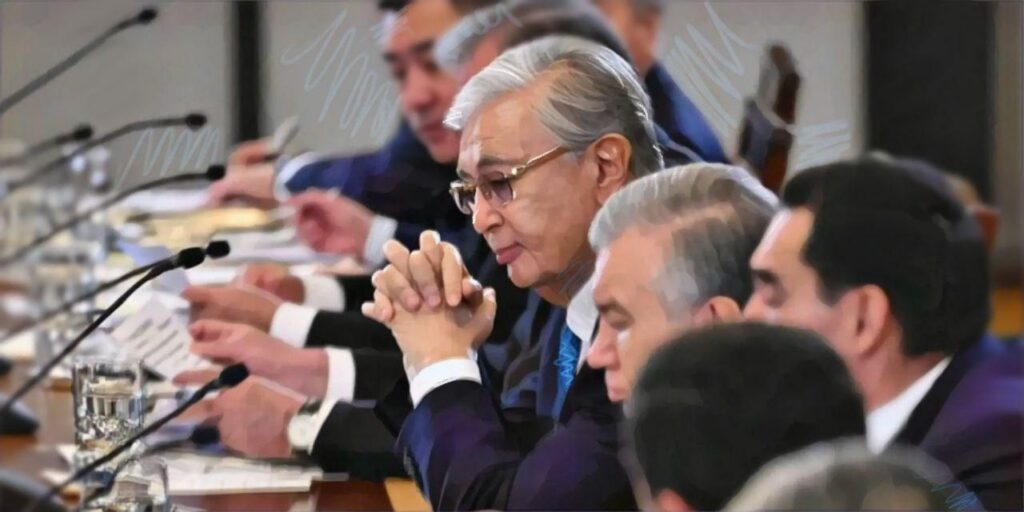
Kazakhstan’s President Kassym-Jomart Tokayev has offered rare and explicit praise for the domestic and foreign policies of U.S. President Donald Trump, describing him as a strong leader whose governance model prioritizes national interests, law and order, and pragmatic diplomacy. In an exclusive interview with The News International during his visit to Islamabad, President Tokayev described President Trump’s leadership as “forward-looking,” pointing to what he characterized as strong economic performance and ongoing transformative reforms in the social sphere in the United States. “President Trump is a strong and forward-looking leader who puts the national interests of his country first,” Tokayev said, pointing to what he described as strong economic performance and transformative reforms in the social sphere. He added that Trump’s emphasis on law and order resonated with Kazakhstan’s own governance philosophy, which prioritizes compliance with the law and respect for state institutions. Tokayev said that in an increasingly complex global environment, governments must ensure internal stability by enforcing the rule of law. “All citizens must comply with the law and respect law-enforcement agencies while avoiding any obstruction,” he noted, drawing a direct parallel between Washington’s and Astana’s domestic policy approaches. Support for the Abraham Accords The Kazakh president also defended his country’s decision to join the Abraham Accords, an initiative launched during Trump’s presidency to normalize relations between Israel and several Muslim-majority countries. Describing the accords as “a truly forward-looking initiative,” Tokayev said Kazakhstan’s participation reflects its long-standing commitment to peace, stability, and international dialogue. He stressed that diplomacy remains the most effective instrument for resolving conflicts and fostering long-term regional and global stability. While reaffirming Kazakhstan’s strong relations with Israel, Tokayev underscored that Astana continues to support the Palestinian people and advocates a two-state solution. From a national interest perspective, he said, joining the Abraham Accords creates opportunities to attract foreign investment, advanced technologies, and concrete economic benefits. He also expressed hope that Kazakhstan’s accession would help broaden Arab–Jewish rapprochement into a wider Muslim–Judaic dialogue. Board of Peace and the UN Framework Addressing criticism surrounding the newly established Board of Peace, which he co-founded with Pakistan’s prime minister, amongst others, Tokayev rejected claims that the initiative seeks to undermine the United Nations. He said President Trump had personally emphasized that the Board of Peace is designed to complement, not replace, the United Nations, which he acknowledged is currently facing institutional strain. Tokayev highlighted that the initiative implements United Nations Security Council Resolution 2803, reinforcing the principle that peace efforts must combine international legitimacy with effective leadership. According to Tokayev, the Board of Peace aims to deliver swift and practical outcomes through flexible mechanisms for conflict resolution, positioning it as a pragmatic addition to existing global peace architectures. Gaza and the Limits of Diplomacy On the prospects for peace in Gaza, Tokayev offered cautious realism. He said proposals put forward by U.S. Special Envoy Steve Witkoff and senior adviser Jared Kushner appeared ambitious, structured, and grounded in development-oriented thinking. However, he warned that no plan can succeed without genuine political...

Astana and Tashkent Engage Washington’s Central Asia Vector

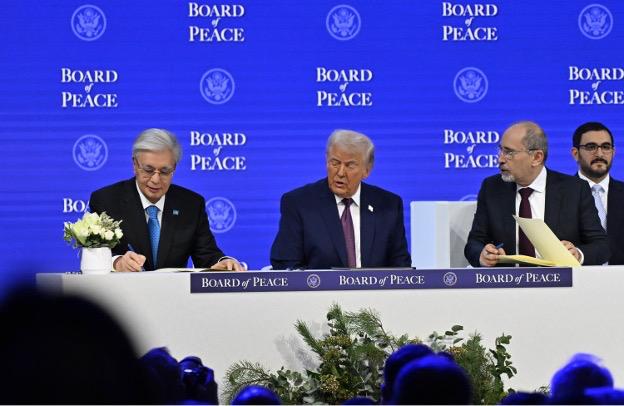
On January 22 at the World Economic Forum in Davos, Kazakhstan’s President Kassym-Jomart Tokayev and Uzbekistan’s President Shavkat Mirziyoyev signed President Donald Trump’s new Board of Peace charter. The document matters less than what their participation signifies: recognized access to the White House and a willingness to be publicly associated with a U.S.-led initiative. This is all the more significant as Washington’s relations with several long-standing partners have recently become more fraught and publicly contested. The Central Asian response is part of that story. Their participation indicates that the Trump White House regards them as interlocutors of consequence, and that both Central Asian capitals are embracing that status. On December 1, Washington assumed the G20 presidency for 2026 and set three priorities: limiting regulatory burdens, strengthening affordable and secure energy supply chains, and advancing technology and innovation. It has also scheduled the leaders’ summit for December 14–15, 2026, in the Miami area. On December 23, Trump said that he was inviting Tokayev and Mirziyoyev to attend as guests. That invitation places Kazakhstan and Uzbekistan inside a host-defined agenda whose working tracks overlap with their strongest external bargaining assets, including energy, critical minerals potential, and transport connectivity. Trump publicly tied the invitations to discussions of peace, trade, and cooperation, which is in line with his subsequent Board of Peace invitations. Diplomatic Logic and Multi-Vectorism It is worthwhile situating these developments in the context of Central Asian cooperation, which Kazakhstan and Uzbekistan have driven as the regional core. At the August 2024 Consultative Meeting in Astana, all five leaders signed a Roadmap for the development of regional cooperation for 2025–2027, and adopted a “Central Asia 2040” conceptual framework. Tokayev and Mirziyoyev referenced their 2022 allied-relations agreement and announced plans to adopt a strategic partnership program through 2034, including large-scale joint economic and energy projects. Moscow’s preoccupation with the war in Ukraine has widened the room for maneuver by other external actors, and Central Asian capitals have pursued these opportunities selectively. For example, the EU’s then foreign-policy chief Josep Borrell visited Kazakhstan and Kyrgyzstan in early August 2024, Japan has pursued its “Central Asia plus Japan” line as a counterweight to China’s influence, and Azerbaijan has been building an energy bridge between Central Asia and Europe via the South Caucasus with Kazakhstan and Uzbekistan. Washington’s main channel into this complex is the C5+1, and the current U.S. emphasis is to create routines that survive individual summits. The U.S. Special Envoy for South and Central Asian Affairs Sergio Gor and Deputy Secretary of State Christopher Landau travelled to Kazakhstan and Uzbekistan in October 2025 ahead of the Washington summit that Trump hosted the following month for the five leaders. Such formats can concentrate attention on the implementation of standardized procurement procedures and regularized dispute resolution that new supply-chain corridors require for interoperable paperwork and predictable customs treatment. Kyrgyzstan is scheduled to host the second B5+1 forum (the business counterpart to C5+1) on February 4–5, 2026. This has already been prepared by a joint briefing...

Kazakhstan, Uzbekistan, and Azerbaijan Join Trump-Initiated Board of Peace

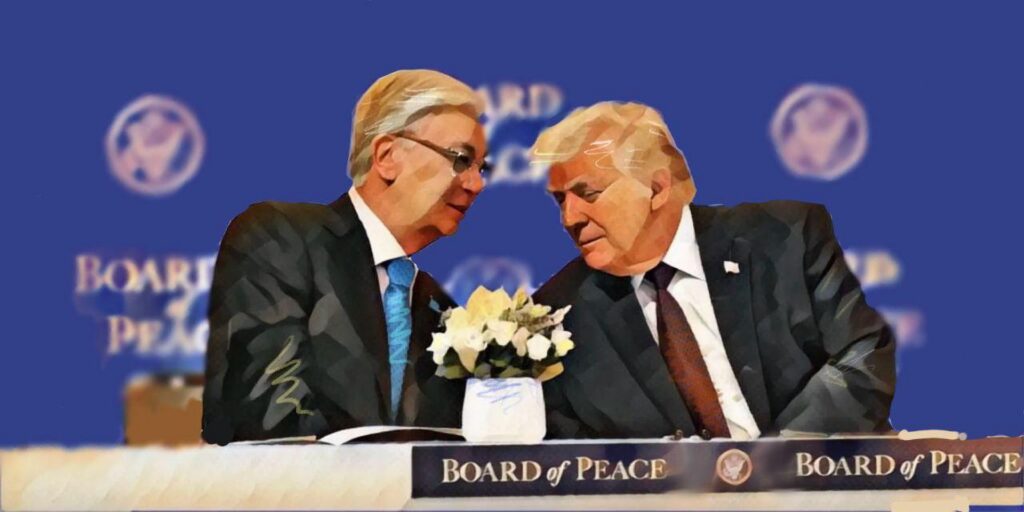
A new international organization, the Board of Peace, was formally established yesterday on the initiative of U.S. President Donald Trump. The charter for the board was signed on the sidelines of the World Economic Forum in Davos by representatives from 19 countries. Joining Kazakhstan and Uzbekistan as founding signatories, the other parties are Argentina, Armenia, Azerbaijan, Bahrain, Bulgaria, Hungary, Indonesia, Jordan, Qatar, Saudi Arabia, Turkey, the United Arab Emirates, Morocco, Mongolia, Pakistan, Kosovo, and Vietnam. The United States is not counted among the 19 signatories, acting instead as the initiative’s convener and chair. The Board of Peace is designed as a consultative platform rather than a treaty-based organization, with no enforcement powers and voluntary participation by member states. Following the signing, a comprehensive development plan for the Gaza Strip was unveiled, which envisions transforming the enclave into a regional economic hub by 2035, with a projected GDP of over $10 billion under the proposal. The plan includes restoring water, electricity, sewage systems, and hospitals, creating jobs, and developing coastal tourism. The concept was presented by entrepreneur Jared Kushner, Trump’s son-in-law. Kushner will serve on the Board of Peace’s executive board, alongside U.S. Secretary of State Marco Rubio, Special Envoy Steve Witkoff, World Bank President Ajay Banga, and former British Prime Minister Tony Blair, among others. The inclusion of Kazakhstan and Uzbekistan, the two largest economies in Central Asia, as founding members underscores their growing role in global diplomacy. Azerbaijan, which has recently expressed interest in joining the Central Asia-focused C5 regional format, also signed the charter. Separately, observers have begun referring to the growing cooperation between Central Asia and Azerbaijan as the “C6,” which could pave the way for greater collaboration on the development of the Trans-Caspian International Transport Route, including the Zangezur Corridor through Armenia. [caption id="attachment_42672" align="aligncenter" width="1280"] Image: president.uz[/caption] Uzbekistan’s participation reflects Tashkent’s increasingly active multi-vector foreign policy under President Shavkat Mirziyoyev, which has sought to expand the country’s diplomatic footprint beyond its immediate neighborhood. In recent years, Uzbekistan has stepped up engagement with the United States, the European Union, and the Middle East, while positioning itself as a pragmatic regional actor on development, connectivity, and post-conflict reconstruction initiatives. During the signing ceremony, President Kassym-Jomart Tokayev of Kazakhstan and Trump reportedly had a brief but cordial exchange. In a statement to the press, Ruslan Zheldibay, spokesperson for the Kazakh president, said Tokayev pointed out that Kazakhstan’s accession to the Abraham Accords was listed as item 177 in a document titled 365 Victories of President Donald Trump in 365 Days, distributed at the Davos Forum. Tokayev also wished Trump success in pursuing a “common sense” domestic policy. Trump, in turn, thanked Tokayev for supporting the Board of Peace initiative. [caption id="attachment_42673" align="aligncenter" width="2560"] Image: Akorda.kz[/caption] The press service of Akorda, the presidential residence of Kazakhstan, later clarified that joining the Board of Peace is based on a sovereign decision and entails a standard three-year term. Participation does not require a financial contribution, though the charter allows member states...

Uzbekistan Agrees to Join U.S.-Proposed Board of Peace

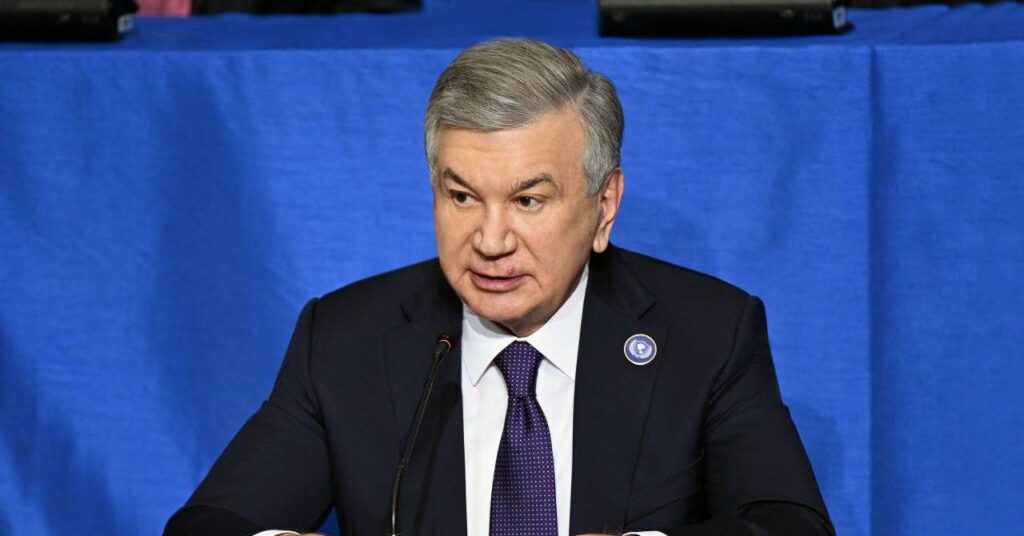
Uzbekistan has received and accepted an official invitation from U.S. President Donald Trump to join a new international initiative aimed at promoting peace and resolving conflicts in the Middle East, according to the press secretary of the President of Uzbekistan. The invitation, addressed to President Shavkat Mirziyoyev, proposes Uzbekistan’s participation as a founding member of a newly established Peace Council. The initiative is anchored in a comprehensive plan to end the conflict in Gaza, which was announced on September 29, 2025, supported by several global leaders, and endorsed by United Nations Security Council Resolution 2803, adopted on November 17, 2025, the presidential press service stated. According to the letter from the White House, the initiative seeks to unite countries willing to take responsibility for fostering long-term peace, stability, and security in the Middle East. The Peace Council is envisioned as an international body that would initially focus on Gaza, with a broader mandate to address other conflicts over time. In his response, President Mirziyoyev affirmed Uzbekistan’s readiness to join the Peace Council as a founding member. He called the initiative a significant step toward resolving enduring conflicts in the Middle East and promoting peace and stability across the wider region. In recent years, Tashkent has sought to expand its international role through dialogue-oriented diplomacy while avoiding formal military or bloc alignments. As previously reported by The Times of Central Asia, Kazakhstan has also accepted an invitation to join the Peace Council. The offer, addressed to President Kassym-Jomart Tokayev, was confirmed by Ruslan Zheldibay, assistant to the Kazakh president’s press secretary. Zheldibay stated that Tokayev was among the first world leaders to receive an official invitation from President Trump. “Yes, President Kassym-Jomart Tokayev received an official invitation to join the Peace Council, and Kazakhstan was invited to become one of its founding states,” Zheldibay said. He added that Tokayev responded with gratitude, confirmed Kazakhstan’s participation, and reaffirmed the country’s intention to contribute to a lasting peace in the Middle East and broader global stability. According to a report by Reuters, international reactions to Trump’s proposal have been cautious. The initiative, sent to approximately 60 countries, has raised concerns among some diplomats who worry it could undermine the role of the United Nations. Reuters also reported that the Peace Council would be chaired for life by President Trump and would initially focus on Gaza before expanding its scope to other global conflicts. Member states would serve three-year terms, unless they contribute $1 billion each to gain permanent membership. The White House stated that permanent membership would be reserved for countries demonstrating a sustained commitment to peace, security, and prosperity.

Tokayev Aligns Kazakhstan With Trump’s Board of Peace Initiative

Kazakh President Kassym-Jomart Tokayev has agreed to join a new international body initiated by U.S. President Donald Trump that is intended to address post-war governance and reconstruction in Gaza, with the possibility of later expanding its remit to other global conflicts. Tokayev’s press secretary, Ruslan Zheldibay, said President Tokayev has accepted Trump’s invitation and sent a letter expressing his readiness to participate. The “Board of Peace” is a structure initiated by Trump as part of his broader Middle East agenda. Draft documents outline a body that would coordinate political oversight, reconstruction funding, and security arrangements in Gaza following the current conflict. They describe Trump as chair of the board on a permanent basis and outline different membership terms for participating states. Kazakhstan was invited as an early participant and is expected to be among the first countries to formally join. The decision aligns with Kazakhstan’s long-standing foreign policy approach, which emphasizes engagement with major powers and participation in multilateral diplomatic initiatives. Astana has previously hosted negotiations on regional security issues and has sought a visible role in international conflict mediation. The Board of Peace emerged from a U.S.-backed plan announced in late 2025 to stabilize Gaza following months of war. The plan was presented as a mechanism to oversee reconstruction and governance while preventing renewed conflict. Invitations to join the board were sent to roughly 60 countries, spanning Europe, Asia, the Middle East, and Africa. A draft charter reviewed by several governments sets out a tiered membership structure. Countries may serve on the board for an initial three-year term without a financial contribution. Longer participation is tied to a $1 billion payment to a central fund within the first year of the charter’s entry into force. The funding clause links longer participation to large upfront contributions, although U.S. officials have disputed that the payment would be mandatory in practice. The board’s initial focus is Gaza, but the charter allows for expansion to other conflicts if members agree. The documents describe responsibilities that include oversight of reconstruction projects, coordination with regional actors, and engagement with international financial institutions. The charter does not grant the board enforcement powers, leaving its authority dependent on political support from participating states. Kazakhstan’s participation follows earlier expressions of support for Trump’s Gaza initiative. In October 2025, Tokayev welcomed the U.S. peace plan as a potential step toward restoring stability and rebuilding trust among states involved in the conflict. The move places Kazakhstan alongside a diverse group of invited countries. Russia has confirmed receipt of an invitation for President Vladimir Putin to join the board, and Moscow has said it is examining the proposal and seeking clarification through diplomatic channels. Several other governments have acknowledged invitations, while responses have varied. Some countries have indicated interest in participation, while others have expressed reservations about the board’s structure and its relationship to existing international institutions. Concerns have focused on governance, accountability, and the potential overlap with United Nations-led mechanisms for peacekeeping and reconstruction. The United Nations remains central to...