• KGS/USD = 0.01143 0%
  • KZT/USD = 0.00206 0%
  • TJS/USD = 0.10684 -1.11%
  • UZS/USD = 0.00008 0%
  • TMT/USD = 0.28571 0%
  • KGS/USD = 0.01143 0%
  • KZT/USD = 0.00206 0%
  • TJS/USD = 0.10684 -1.11%
  • UZS/USD = 0.00008 0%
  • TMT/USD = 0.28571 0%
  • KGS/USD = 0.01143 0%
  • KZT/USD = 0.00206 0%
  • TJS/USD = 0.10684 -1.11%
  • UZS/USD = 0.00008 0%
  • TMT/USD = 0.28571 0%
  • KGS/USD = 0.01143 0%
  • KZT/USD = 0.00206 0%
  • TJS/USD = 0.10684 -1.11%
  • UZS/USD = 0.00008 0%
  • TMT/USD = 0.28571 0%
  • KGS/USD = 0.01143 0%
  • KZT/USD = 0.00206 0%
  • TJS/USD = 0.10684 -1.11%
  • UZS/USD = 0.00008 0%
  • TMT/USD = 0.28571 0%
  • KGS/USD = 0.01143 0%
  • KZT/USD = 0.00206 0%
  • TJS/USD = 0.10684 -1.11%
  • UZS/USD = 0.00008 0%
  • TMT/USD = 0.28571 0%
  • KGS/USD = 0.01143 0%
  • KZT/USD = 0.00206 0%
  • TJS/USD = 0.10684 -1.11%
  • UZS/USD = 0.00008 0%
  • TMT/USD = 0.28571 0%
  • KGS/USD = 0.01143 0%
  • KZT/USD = 0.00206 0%
  • TJS/USD = 0.10684 -1.11%
  • UZS/USD = 0.00008 0%
  • TMT/USD = 0.28571 0%

Viewing results 1 - 6 of 18

Iran Expands Economic Cooperation with EAEU and Kazakhstan

In recent years, Iran has strengthened its trade, economic, and transport ties with the Eurasian Economic Union (EAEU), an economic bloc comprising Armenia, Belarus, Kazakhstan, Kyrgyzstan, and Russia. In December 2024, Iran was granted observer status in the EAEU, joining Cuba and Uzbekistan as the bloc’s third observer state. This status allows Iran to attend EAEU meetings and access non-confidential documents but does not grant decision-making rights. A year earlier, in December 2023, the EAEU and Iran signed a full Free Trade Agreement (FTA), establishing duty-free trade for 90% of goods and covering more than 95% of mutual trade between the parties. According to official statistics, the EAEU plays a significant role in Iran's foreign trade. In 2023, the bloc accounted for 10.1% of Iran’s exports, making it Iran’s third-largest trading partner after China (30.4%) and Turkey (14.5%). [caption id="attachment_28237" align="aligncenter" width="800"] Image: Marko Bukorovic[/caption] Strengthening Ties with Kazakhstan Iran has also worked to deepen bilateral cooperation with EAEU members, particularly Kazakhstan. On January 30, Iranian First Vice President Mohammad-Reza Aref visited Almaty to attend a meeting of EAEU prime ministers. He also held bilateral talks with Kazakhstan’s Prime Minister Olzhas Bektenov, focusing on expanding trade, economic, agricultural, transport, and logistics cooperation. According to Kazakhstan’s Ministry of Trade and Integration, in the first eleven months of 2024, trade turnover between Kazakhstan and Iran reached $296 million, an 8.1% increase compared to the same period in 2023. Kazakhstan’s exports to Iran rose by 29.1% to $100.6 million. Bektenov described Iran as a friendly neighbor in the Caspian region and emphasized Kazakhstan’s interest in diversifying and increasing exports to Iran. The country has identified 60 types of goods worth over $132 million for potential export and is prepared to meet Iran’s demand for grain products, including wheat and barley. Expanding Transport and Logistics Cooperation Discussions also covered transport and logistics cooperation, with a focus on increasing cargo traffic along the North-South Corridor, which connects Russia, Kazakhstan, Turkmenistan, and Iran. Both sides expressed interest in expanding transit capacity and modernizing key port terminals in Kazakhstan (Aktau and Kuryk) and Iran (Anzali and Amirabad). The Iranian Vice President stressed the geographic and economic importance of the Iran-Kazakhstan partnership and reaffirmed both countries’ commitment to increasing bilateral trade to $3 billion annually.
Kazakhstan Ships First Batch of Kashagan Oil to Baku

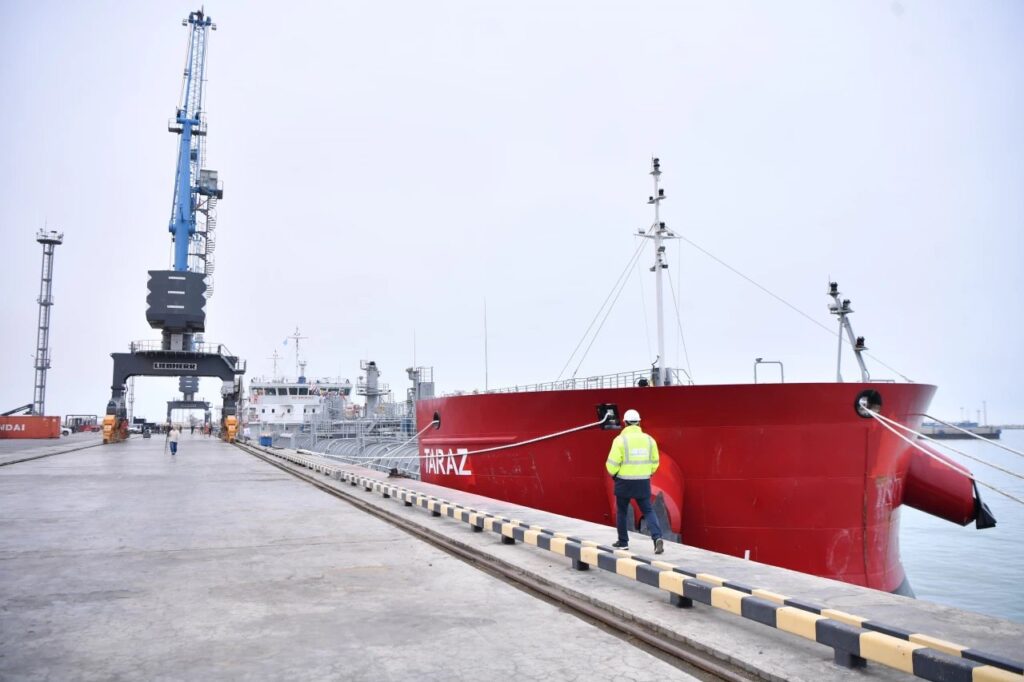
Kazakhstan has shipped its first batch of oil from the Kashagan field to the Azerbaijani port of Baku, marking a significant step in the country’s efforts to diversify its export routes. The shipment was confirmed by the national oil company KazMunayGas (KMG). The tanker Taraz, carrying Kashagan oil, departed from the port of Aktau and is en route to Azerbaijan. Upon arrival in Baku, the oil will be transported via the Baku-Tbilisi-Ceyhan (BTC) pipeline system to the Mediterranean Sea. The export operation is being carried out by KMG Kashagan B.V., a subsidiary of JSC NC KazMunayGas, which manages Kazakhstan’s share in the North Caspian Production Sharing Agreement (PSA). This initiative aligns with Kazakh President Kassym-Jomart Tokayev’s directive for KazMunayGas to develop alternative hydrocarbon export routes. The shipment also advances the development of the Trans-Caspian International Transportation Route, a vital corridor for Kazakhstan’s oil exports. In 2022, KazMunayGas and Azerbaijan’s state oil company SOCAR signed a general agreement to enable the transit of Kazakh oil. In March 2024, the two parties finalized plans for a phased increase in deliveries through Azerbaijan. Under the agreement, annual transit volumes are expected to reach 2.2 million tons. KMG Kashagan B.V., which holds a 16.88% stake in the North Caspian PSA, represents Kazakhstan’s interests in the North Caspian Project (NCP). The company is responsible for the exploration and production of hydrocarbons in the Caspian Sea, as well as the independent transportation and sale of its production share under the PSA’s terms. Energy analysts highlight that diversifying export routes will help Kazakhstan reduce its reliance on traditional oil supply corridors, thereby increasing flexibility and resilience in the face of global market volatility.

NASA Discovers ‘Ghost’ Island in the Caspian Sea

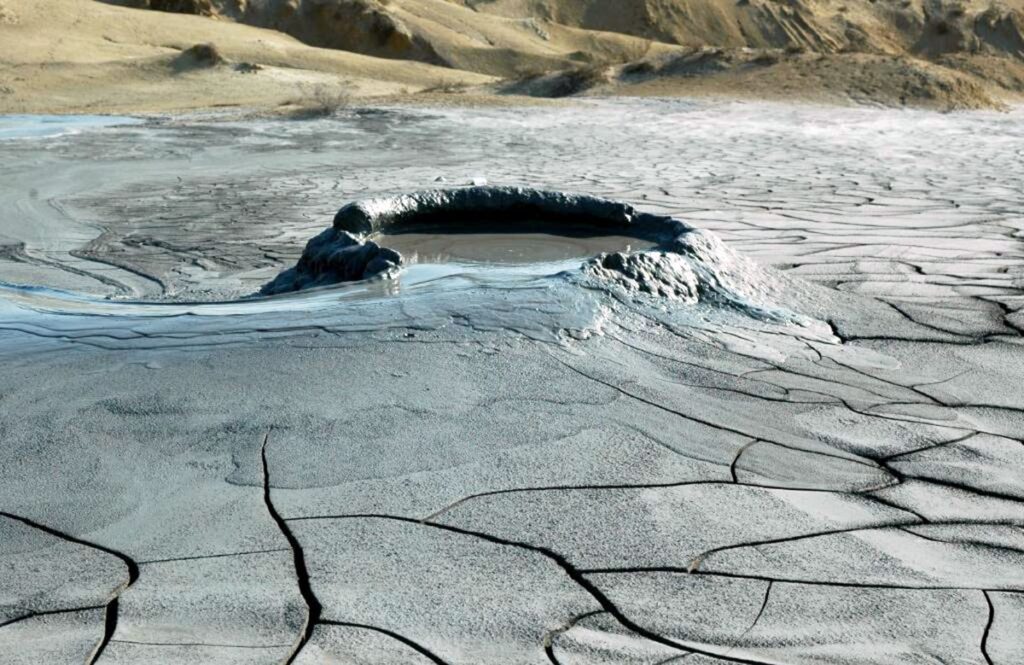
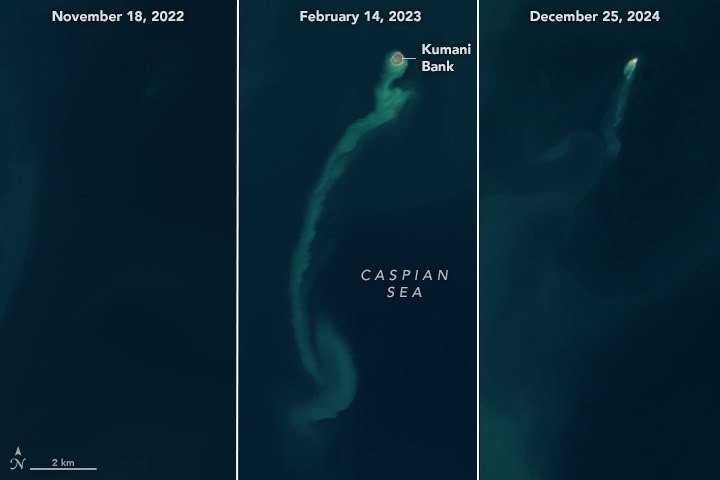
NASA satellites have detected a fascinating phenomenon in the Caspian Sea: the temporary formation of an island following the eruption of the Kumani mud volcano. According to data from NASA's Earth Observatory, the island emerged in early 2023 but had almost completely disappeared by the end of 2024, earning it the nickname “ghost island.” The island was first observed using Landsat 8 and 9 satellite imagery in January 2023, shortly after the volcano erupted. It measured up to 400 meters wide and was accompanied by a visible sedimentary plume extending from its surface. However, by late 2024, the island had diminished significantly, leaving only faint traces of its existence. The Kumani mud volcano, located 25 kilometers off the eastern coast of Azerbaijan, is no stranger to such occurrences. Since its first recorded eruption in 1861, the volcano has periodically created temporary islands, which vanish after short periods. Mud volcanoes like Kumani are common in regions with active tectonic activity. They eject high-pressure mixtures of water, gas, and sediment, forming landmasses that are often unstable and short-lived. The Caspian region is notable for its high concentration of mud volcanoes, with more than 300 such formations in Azerbaijan and on the Caspian Sea shelf. Many of these volcanoes emit combustible gases, particularly methane, which has drawn the interest of scientists and geologists. The connection between these mud volcanoes and the hydrocarbon systems of the South Caspian Basin makes them critical subjects for research. The emergence and disappearance of this “ghost” island in the Caspian Sea highlight how much remains to be understood about mud volcanoes. These transient landforms demonstrate the dynamic forces of nature and underscore the need for further exploration of geological processes occurring on the seafloor.

Kazakhstan Takes Bold Steps to Revive Caspian Sea Fishing Industry

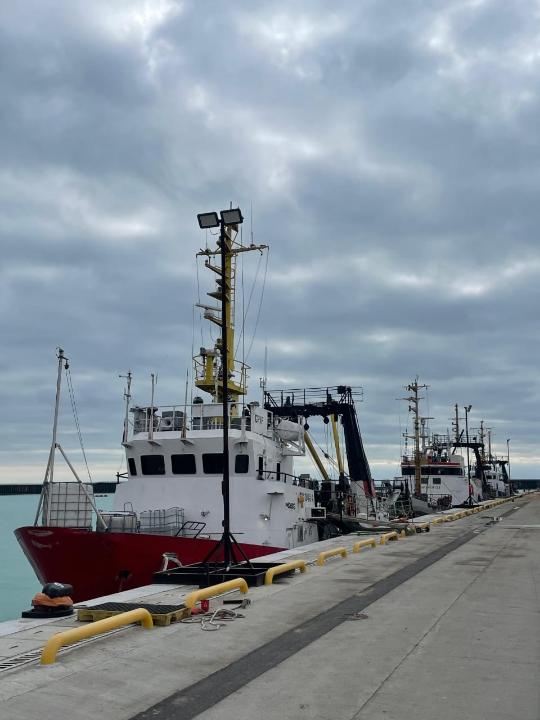
For the first time in over 30 years, commercial fishing has resumed in Kazakhstan’s section of the Caspian Sea. On December 20, Deputy Minister of Agriculture Amangaliy Berdalin attended the ceremonial departure of fishing boats targeting sprat from the port of Sarzha in the village of Kuryk, located in the Mangistau region. Commercial fishing in the Mangistau region was active before 1991 but declined after the dissolution of the Soviet Union. Its revival is part of Kazakhstan’s broader efforts to develop a sustainable fishing industry and bolster food security. One of the first steps in this revival was the purchase of two fishing vessels by Aktau Balyk Company LLP. The company aims to catch approximately 10,000 tons of Caspian sprat annually, providing this resource to the domestic market. Plans are already underway to expand operations. Next year, Aktau Balyk intends to acquire four additional vessels, increasing its fleet and boosting its annual catch volume to 30,000 tons. The government’s commitment to revitalizing the fishing industry is underscored by the Program for the Development of Fisheries until 2030. This initiative prioritizes fish farming as a cornerstone of the sector's growth. According to the program: Kazakhstan aims to produce 270,000 tons of fish annually through fish farming by 2030. The government seeks to increase domestic fish consumption to 134,000 tons annually. Fish imports are targeted to drop from 45,000 tons to 25,000 tons annually. This strategic push signals Kazakhstan’s determination to establish a thriving fishing industry to meet domestic demand and position the country as a competitive player in the regional seafood market.

Caspian Sea Water Decline Requires Urgent Action, Says UNEP Chief

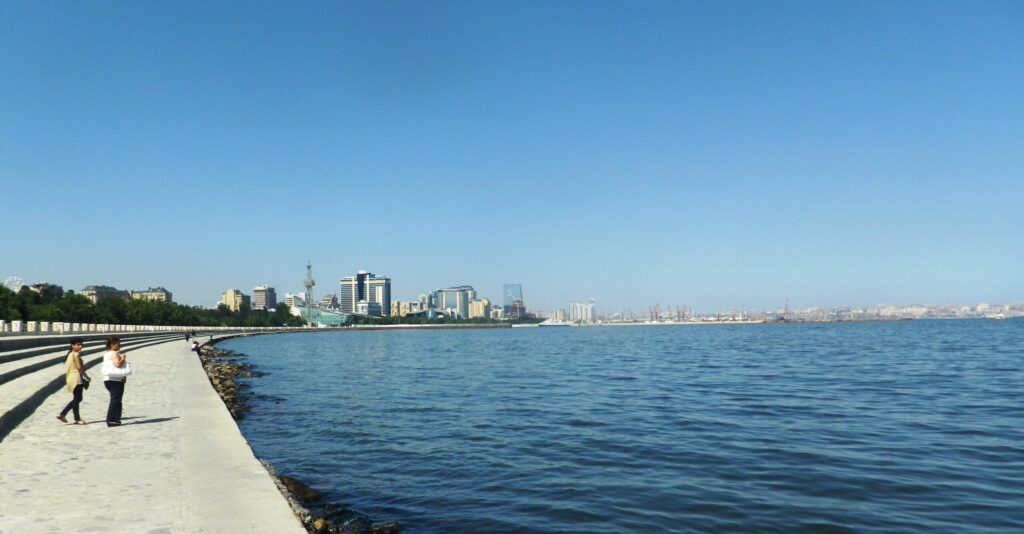
By the end of this century, the water levels of the Caspian Sea could drop by up to 18 meters, a decline that would devastate ecosystems and species, threaten livelihoods, and jeopardize food security and regional stability. Inger Andersen, Under-Secretary-General of the United Nations and Executive Director of the United Nations Environment Programme (UNEP), highlighted this concern during the event, “Caspian Sea Water Decline in Light of Climate Change” at COP29 in Baku, Azerbaijan, on November 18. According to Andersen, the Caspian Sea, the largest enclosed body of water on Earth, “is under siege from the triple planetary crisis: the crisis of climate change, the crisis of nature, land and biodiversity loss, and the crisis of pollution and waste.” Andersen warned that without urgent action, this environmental and human crisis may result in as many as five million people being displaced from the Caspian basin by the middle of the century. [caption id="attachment_25708" align="aligncenter" width="722"] Inger Andersun; image: UNEP[/caption] The UNEP chief mentioned the impacts of the Caspian crisis: declining fisheries, salinization threatening agriculture, and the critically endangered Caspian seal — a species found nowhere else on Earth — facing extinction. Andersen emphasized the critical importance of the Tehran Convention — “the cornerstone for regional cooperation on the Caspian Sea.” The Framework Convention for the Protection of the Marine Environment of the Caspian Sea (Tehran Convention) was signed by the five Caspian littoral states — Azerbaijan, Iran, Kazakhstan, Russia, and Turkmenistan — in 2003 and entered into force in August 2006 after being ratified by all five governments. [caption id="attachment_25706" align="aligncenter" width="2560"] Aktau, Kazakhstan; image: TCA, Ola Fiedorczuk[/caption] The Tehran Convention “provides a platform to align our efforts, to unite science and policy, and to prioritize sustainable development across this unique region. As the interim Secretariat of the Tehran Convention, UNEP is proud to support these vital efforts and remains firm in its commitment to providing technical expertise, fostering collaboration, and supporting innovative financing mechanisms to address this urgent challenge,” said Andersen, emphasizing that robust monitoring and predictive models are essential to understanding and managing the drivers of Caspian water level changes. “Science must inform every decision we take, whether on climate adaptation, biodiversity protection or pollution control,” Andersen stated, calling for regional cooperation to be strengthened. “The challenges the Caspian faces transcend borders. Solutions must do the same. Through trans-boundary collaboration, we can craft integrated solutions that safeguard ecosystems, support livelihoods, and promote equitable economic growth,” she stated. The Times of Central Asia earlier reported that the abundant floodwater in April-May 2024 raised Kazakhstan’s Caspian Sea water level by over a meter. On July 1, Kazakhstan’s Ministry of Water Resources and Irrigation announced that the water level in the northeastern part of the Caspian Sea had risen by 119 cm since the beginning of 2024. The COP29 summit has been widely criticized for its "theatrics," "slow progress," and handing out the "red carpet" treatment to fossil fuel bosses.

Turkmenistan Pushes for UNESCO World Heritage Status for its Unique Mud Volcanoes

Turkmenistan has launched an in-depth study and documentation project focusing on its extraordinary geological landmarks, especially the ancient mud volcanoes that line the western Caspian Sea coast. This effort aims to compile the necessary scientific and cultural documentation to nominate these unique mud volcanoes for inclusion in the UNESCO World Heritage list. The recent initial expedition was attended by members of the Turkmenistan National Commission for UNESCO, along with biologists, geographers, and geologists from various scientific organizations. These specialists examined multiple mud volcanoes along the Caspian coast, primarily within the Esenguly district of the Balkan region. Over several days, the team meticulously surveyed active, dormant, and long-extinct volcanoes, documenting their findings through photography and soil sampling. They noted that though activity has decreased, this does not mean many volcanoes have stopped completely. Among the most notable formations are the Akpatlavuk and Gokpatlavuk mud volcanoes. Akpatlavuk, located on a prominent hill along the southern part of the Caspian's eastern coast, showcases a dome with numerous mud outcrops and deep channels carved by flowing streams. At its base lies an expansive mud lake, adding to its remarkable landscape. Gokpatlavuk, towering 70 meters above the northern plains near Ekerem, features steep, eroded slopes and gullies through which streams of carbonated mud steadily flow, creating a striking visual of natural forces at work. The nomination process will require updated imagery and refreshed data to supplement the national atlas of mud volcanoes. As part of their preparation, researchers will review studies conducted by Azerbaijani scientists in the 1970s, given that the mud volcanoes of Turkmenistan, Azerbaijan, and Iran form an interconnected geological complex representing nearly half of the world’s mud volcanoes.