• KGS/USD = 0.01144 0%
  • KZT/USD = 0.00215 0%
  • TJS/USD = 0.10640 0%
  • UZS/USD = 0.00008 0%
  • TMT/USD = 0.28530 0%
  • KGS/USD = 0.01144 0%
  • KZT/USD = 0.00215 0%
  • TJS/USD = 0.10640 0%
  • UZS/USD = 0.00008 0%
  • TMT/USD = 0.28530 0%
  • KGS/USD = 0.01144 0%
  • KZT/USD = 0.00215 0%
  • TJS/USD = 0.10640 0%
  • UZS/USD = 0.00008 0%
  • TMT/USD = 0.28530 0%
  • KGS/USD = 0.01144 0%
  • KZT/USD = 0.00215 0%
  • TJS/USD = 0.10640 0%
  • UZS/USD = 0.00008 0%
  • TMT/USD = 0.28530 0%
  • KGS/USD = 0.01144 0%
  • KZT/USD = 0.00215 0%
  • TJS/USD = 0.10640 0%
  • UZS/USD = 0.00008 0%
  • TMT/USD = 0.28530 0%
  • KGS/USD = 0.01144 0%
  • KZT/USD = 0.00215 0%
  • TJS/USD = 0.10640 0%
  • UZS/USD = 0.00008 0%
  • TMT/USD = 0.28530 0%
  • KGS/USD = 0.01144 0%
  • KZT/USD = 0.00215 0%
  • TJS/USD = 0.10640 0%
  • UZS/USD = 0.00008 0%
  • TMT/USD = 0.28530 0%
  • KGS/USD = 0.01144 0%
  • KZT/USD = 0.00215 0%
  • TJS/USD = 0.10640 0%
  • UZS/USD = 0.00008 0%
  • TMT/USD = 0.28530 0%

Viewing results 1 - 6 of 42

Putin in Tajikistan for CIS Summit Amid Migration Tensions

When President Vladimir Putin arrives in Dushanbe on 8 October for his first state visit, Tajikistan will briefly become the focal point of regional diplomacy. Currently holding the rotating chair of the Commonwealth of Independent States (CIS), Dushanbe is preparing to host both the CIS Heads of State Council and the second Russia–Central Asia summit. For Moscow, Central Asia has remained a priority since the invasion of Ukraine, and the visit highlights what is at stake for both Russia and its host. Tajikistan depends heavily on Russia for security, trade, and employment opportunities for its citizens, but relations have been tested by the aftermath of the March 2024 Crocus City Hall attack, which exposed the fragility of migration-driven economics and the risk of renewed extremism. An Old Relationship Tested by New Tensions Russia and Tajikistan have been closely entwined since the collapse of the Soviet Union. Putin has already made twelve trips to Tajikistan since taking office, and this will be his first with state‑visit status. Security cooperation remains the backbone of the relationship. Russia’s 201st military base in Tajikistan - formerly the 201st motor rifle division and now Moscow’s largest overseas facility - has long been billed as a shield along the Afghan frontier; the two sides continue to coordinate through the CSTO (Collective Security Treaty Organization), and within the SCO (Shanghai Cooperation Organization) framework. Trade between the two nations has expanded despite sanctions headwinds. On the eve of the visit, presidential aide Yuri Ushakov said bilateral turnover rose by more than 17 % in the first seven months of 2025, and reached about US$1.5 billion in 2024. Russia accounts for over 22 % of Tajikistan’s foreign trade. Meanwhile, more than 1.2 million Tajik citizens work in Russia, making up about 16 % of all foreign workers there. They remitted US$1.8 billion back home last year, roughly 17 % of Tajikistan’s GDP. This symbiosis means that the two leaders routinely discuss labor migration and social issues alongside security and trade. Yet the relationship has been strained by a wave of xenophobia following the Crocus City Hall attack, which killed 145 people, which the Russian authorities accused militants from Tajikistan of perpetrating. As previously reported by The Times of Central Asia, following the arrest of four Tajik suspects, Central Asian migrants in Russia have faced arson attacks, beatings, and boycotts of their businesses. Russian law enforcement has launched aggressive street inspections and created special units to check hostels and businesses frequented by Central Asians. Even long‑time Tajik residents with Russian citizenship have reported menacing phone calls and threats. In the wake of the attack, diaspora leaders urged compatriots not to leave their homes, and the Tajik interior ministry publicly rebutted Russian media reports, stating that three of the four suspects named were not involved. Those pressures hit a country heavily reliant on remittances. The World Bank’s 2025 update estimates that money sent home by migrants accounted for 49 % of Tajikistan’s GDP in 2024. Since the start of the Ukraine war, Russian politicians and media have become increasingly hostile toward Central Asian migrants, leading Moscow to deactivate all foreign‑owned SIM cards and...

Central Asian Leaders To Join Putin at Moscow’s WWII Parade

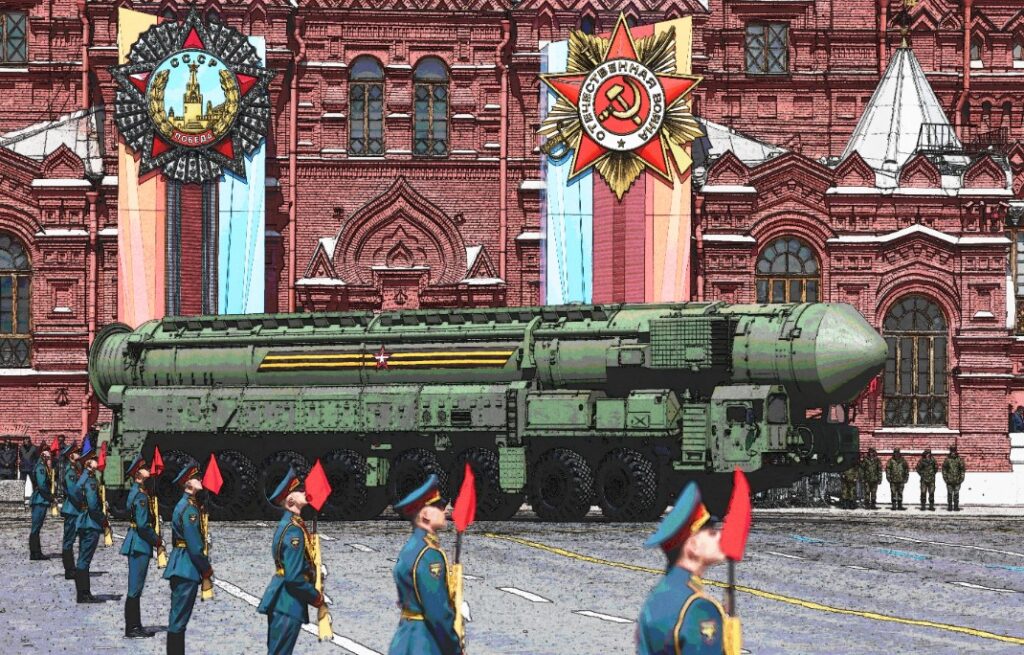
Leaders of the Commonwealth of Independent States, or CIS, will attend the 80th anniversary of the victory over Nazi Germany in Moscow on May 9, Russian state media have reported. The CIS, a regional group that was set up as the Soviet Union collapsed in 1991, includes the Central Asian countries that were Soviet republics: Kazakhstan, Kyrgyzstan, Tajikistan, Turkmenistan and Uzbekistan. Those leaders have traditionally attended the Moscow parade. But the event drew more international scrutiny in the last few years as Russian President Vladimir Putin tried to showcase diplomatic contacts in the face of Western efforts to isolate him, and display Russian military might as the war in Ukraine dragged on. "I am happy and pleased, just like you, to announce that all heads of state of the CIS will be at the celebrations in Moscow on May 9," CIS Secretary General Sergey Lebedev told the council of the group’s inter-parliamentary assembly. He was quoted by Russia’s RIA Novosti news agency. The Russian news outlet TASS issued a similar report. Kremlin spokesman Dmitry Peskov has said more than 20 heads of state and government are expected to join Putin at the victory parade in Moscow. Some Central Asian countries, whose ancestors fought for the Soviet Union against Germany in WWII, hold their own events around the anniversary of the end of the war against the Nazis. Kyrgyzstan, for example, plans a parade on May 8 in the capital of Bishkek, allowing President Sadyr Japarov to catch the Moscow parade on the next day. Similarly, the Kazakh capital of Astana will host a military parade on May 7 after canceling several previous commemorations.

Global Ranking: Kazakhstan Has the Third-Highest Unemployment Rate in Eurasia

In the global ranking of unemployment rates for 2024, prepared by ILOSTAT, Kazakhstan placed 104th out of 187 countries with an unemployment rate of 4.8%. According to analysts from Energyprom.kz, the worst unemployment rates were recorded in Eswatini (34.4%), South Africa (33.2%), and Djibouti (25.9%), while Qatar boasted the lowest rate globally at 0.1%. In the Eurasia region Kazakhstan ranked third highest for unemployment, ahead of only Tajikistan (11.6%) and Azerbaijan (5.6%). The best performers in the region are Moldova (1.4%), Russia (2.5%), and Kyrgyzstan (3.3%). For context, the global average unemployment rate stood at 5%, with the Europe and Central Asia region slightly higher at 5.5%. The Bureau of National Statistics of Kazakhstan (BNS) reported that by the end of Q3 2024, the country had 448,600 unemployed individuals - 0.6% fewer than during the same period in 2023. The official unemployment rate was 4.6%, with parity between urban and rural areas. Family circumstances (100,200 cases), voluntary resignations (95,600 cases), and difficulties in finding employment (92,200 cases) were identified as the primary causes of unemployment. In terms of job-seeking durations: 127,500 individuals searched for less than a month. 113,300 sought work for one to three months. 124,600 for three to six months. 36,800 for six months to a year. 46,000 were unemployed for over a year. A small fraction of the unemployed (332 individuals) had already initiated entrepreneurial ventures or secured employment arrangements.

Uzbekistan’s Foreign Trade Turnover Reaches $59.4 Billion in 2024

From January to November 2024, Uzbekistan’s foreign trade turnover (FTT) reached $59.4 billion, marking an increase of $2.1 billion or 3.6% compared to the same period in 2023, according to the Uzbek Statistical Agency. The volume of exports rose to $24.2 billion, a 4.4% increase compared to January-November 2023. Imports totaled $35.1 billion, growing by 3.0% over the same period. Kazakhstan emerged as one of Uzbekistan’s largest economic partners, following China and Russia. Factors contributing to this include a shared border, trade liberalization, and economic collaboration within the CIS free trade zone. Uzbekistan currently conducts trade with 195 countries, with significant FTT shares attributed to: China: 19.0% Russia: 18.0% Kazakhstan: 6.5% Turkey: 4.4% South Korea: 3.0% The Commonwealth of Independent States (CIS) countries accounted for 35.4% of Uzbekistan’s FTT during this period, reflecting a 3.0% increase from 2023. The growing economies of Uzbekistan’s trading partners in the CIS suggest a potential for increased demand for Uzbek exports. However, trade with non-CIS countries saw a decline. Uzbekistan’s trade share with other foreign nations dropped by 3.0% compared to the same period in 2023, comprising 64.6% of the total FTT.

Kyrgyzstan MP Proposes Legalization of Marijuana

At a recent session of the Jogorku Kenesh, Kyrgyzstan's parliament, Kyrgyz MP Dastan Bekeshev proposed revising the country’s approach to drug policy. Bekeshev suggested distinguishing between the lesser and greater evils of drug use, advocating for the legalization of light natural substances, such as marijuana, while emphasizing the dangers of synthetic drugs​​​. Bekeshev argued that banning and destroying natural drugs only drives up their prices, pushing young people toward cheaper but far more harmful synthetic alternatives. He stressed that this approach exacerbates the drug problem rather than solving it. The idea of legalizing light drugs is not new for Bekeshev. In 2019, he proposed creating a designated zone at the former Manas airbase where the sale and use of light drugs would be permitted. Similarly, in 2017, former National Bank head Tolkunbek Abdygulov suggested that legalizing marijuana could help boost tourism in Kyrgyzstan​​. These proposals have sparked heated debates among Kyrgyz society and lawmakers, with opinions divided over balancing drug control with reducing the negative consequences of drug use. Regional Context The debate on legalizing light drugs is not unique to Kyrgyzstan. Across the Eurasia region, similar proposals have surfaced but have yet to gain official approval. In 2013, Russia called on CIS countries to adopt a joint statement opposing the legalization of light drugs, citing the potential risks of their spread. In 2023, Russian Interior Minister Vladimir Kolokoltsev reiterated Moscow’s firm stance against legalization, blaming Western propaganda for negatively influencing youth​​. Belarus has also explored the idea of legalizing psychedelics and other light drugs. However, no official measures have been enacted, reflecting the prevailing opposition to drug legalization within the CIS. Bekeshev’s proposal continues to fuel conversations about whether Kyrgyzstan could break with the regional norm and take a different approach to drug policy. As the debate unfolds, questions remain about the potential economic and social impacts of such a move.

CSTO Leaders Tackle Regional Security, Nuclear Energy, and Afghan Border Concerns

Astana hosted a summit of the Collective Security Treaty Organization (CSTO), gathering heads of member states to discuss pressing regional and international issues. Kazakh President Kassym-Jomart Tokayev chaired the session of the CSTO Collective Security Council. Attendees included Belarusian President Alexander Lukashenko, Kyrgyz President Sadyr Japarov, Russian President Vladimir Putin, Tajik President Emomali Rahmon, and CSTO Secretary-General Imangali Tasmagambetov. In his address, President Tokayev highlighted the CSTO’s pivotal role in maintaining peace and stability in Eurasia. “Amid modern challenges, the CSTO consistently demonstrates its relevance as a guarantor of security for all member states. Our coordinated actions, mutual trust, and support strengthen our collective ability to tackle complex and large-scale tasks. The CSTO is not merely a military partnership but a unique mechanism that unites our efforts and resources to safeguard sovereignty and territorial integrity,” Tokayev stated. CSTO’s Response to Kazakhstan’s 2022 Crisis Tokayev reflected on the CSTO’s rapid deployment in January 2022, when Kazakhstan faced unrest over rising gas prices, which escalated into violent confrontations. Within 24 hours, CSTO forces were deployed to stabilize the situation. Russian troops secured strategic facilities in Almaty, while Kazakh forces restored order, marking a critical demonstration of the organization’s operational capability. Putin Unveils "Oreshnik" Missile System Russian President Vladimir Putin addressed ongoing tensions with Ukraine, signaling the potential use of the Oreshnik medium-range ballistic missile system in response to Western-supplied long-range missiles targeting Russian territory. According to Putin, the Oreshnik has the destructive power of nuclear weapons, and can penetrate heavily fortified targets. “The temperature of the striking elements reaches 4,000 degrees. At the explosion's epicenter, everything is reduced to elementary particles, essentially turning to dust,” he explained. Putin also announced that serial production of the missile had begun, with several units ready for deployment. Kazakhstan’s Nuclear Power Project Discussions also turned to Kazakhstan’s plans to build its first nuclear power plant. Tokayev has proposed an international consortium, and Putin expressed Russia's willingness to participate through Rosatom, emphasizing its extensive experience with international collaborations. “Rosatom is ready to work with specialists from other countries,” Putin remarked, leaving the door open for multilateral cooperation. Armenia’s Absence and CSTO’s Future Noticeably absent from the summit was Armenian Prime Minister Nikol Pashinyan, following Armenia’s decision to freeze its CSTO membership earlier this year. Yerevan cited concerns over its sovereignty as the reason for the suspension. Secretary-General Tasmagambetov remained optimistic about Armenia’s return, calling it a valued ally. “This is the decision of an independent and sovereign state, which no country or organization can influence. Nevertheless, we view Armenia as an ally and hope it will return to full participation in the CSTO in the foreseeable future,” Tasmagambetov stated. Key Summit Outcomes During the session, the Collective Security Treaty Organization (CSTO) also reflected on Kazakhstan's presidency in 2024, highlighting significant milestones achieved under its leadership. President Tokayev reported that approximately 60 activities were conducted within the CSTO's statutory areas of cooperation during Kazakhstan’s presidency. This included advancing coordinated approaches to key international issues in collaboration with member...