• KGS/USD = 0.01144 0%
  • KZT/USD = 0.00215 0%
  • TJS/USD = 0.10691 0.09%
  • UZS/USD = 0.00008 0%
  • TMT/USD = 0.28530 0%
  • KGS/USD = 0.01144 0%
  • KZT/USD = 0.00215 0%
  • TJS/USD = 0.10691 0.09%
  • UZS/USD = 0.00008 0%
  • TMT/USD = 0.28530 0%
  • KGS/USD = 0.01144 0%
  • KZT/USD = 0.00215 0%
  • TJS/USD = 0.10691 0.09%
  • UZS/USD = 0.00008 0%
  • TMT/USD = 0.28530 0%
  • KGS/USD = 0.01144 0%
  • KZT/USD = 0.00215 0%
  • TJS/USD = 0.10691 0.09%
  • UZS/USD = 0.00008 0%
  • TMT/USD = 0.28530 0%
  • KGS/USD = 0.01144 0%
  • KZT/USD = 0.00215 0%
  • TJS/USD = 0.10691 0.09%
  • UZS/USD = 0.00008 0%
  • TMT/USD = 0.28530 0%
  • KGS/USD = 0.01144 0%
  • KZT/USD = 0.00215 0%
  • TJS/USD = 0.10691 0.09%
  • UZS/USD = 0.00008 0%
  • TMT/USD = 0.28530 0%
  • KGS/USD = 0.01144 0%
  • KZT/USD = 0.00215 0%
  • TJS/USD = 0.10691 0.09%
  • UZS/USD = 0.00008 0%
  • TMT/USD = 0.28530 0%
  • KGS/USD = 0.01144 0%
  • KZT/USD = 0.00215 0%
  • TJS/USD = 0.10691 0.09%
  • UZS/USD = 0.00008 0%
  • TMT/USD = 0.28530 0%

Viewing results 1 - 6 of 217

Kazakhstan Trades Electricity for Water in Bid to Mitigate Summer Drought Risks

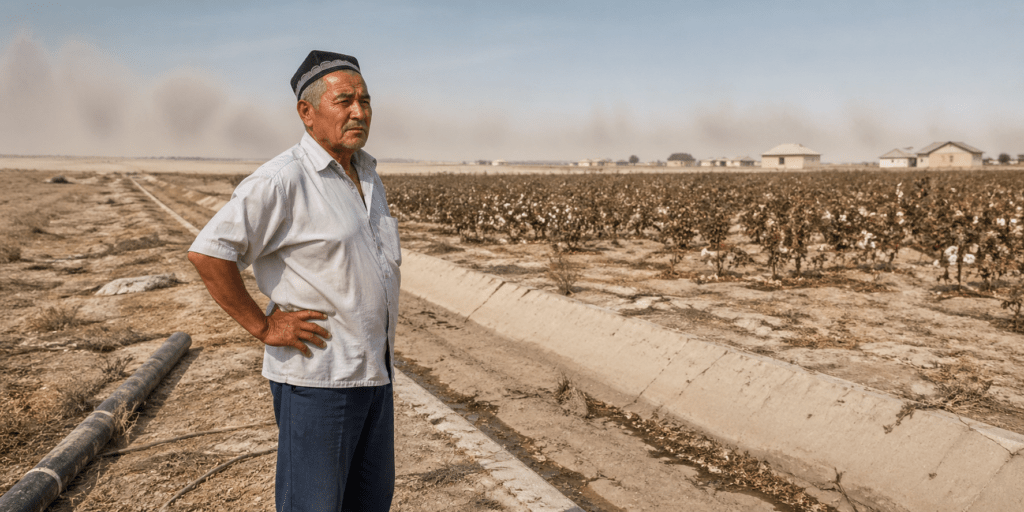
Central Asia is entering a new phase in the management of its water-energy nexus, moving from declarations to practical coordination. A trilateral protocol signed in Almaty by Kazakhstan, Kyrgyzstan, and Uzbekistan marked a significant step toward stabilizing the region’s water regime amid escalating climate risks. Brokered under Kazakhstan’s chairmanship, the agreement aims to balance the load on the Toktogul Reservoir, the main regulating structure of the Syr Darya basin. Kyrgyzstan typically increases winter water discharges to generate electricity, which reduces irrigation water availability downstream during summer. Under the new deal, Kazakhstan and Uzbekistan will supply Kyrgyzstan with electricity during winter, in return for Kyrgyzstan's commitment to store water and ensure its release during the 2026 growing season. The Almaty Protocol complements the existing plan for filling the Shardara Reservoir, which aims to accumulate 11 cubic kilometers of water by April 1, 2026. Achieving this target hinges on Toktogul’s operations. Without external support, Kyrgyzstan’s energy infrastructure would struggle to meet the requirement. Supplemental electricity from Astana and Tashkent thus forms the economic backbone of this arrangement. Longstanding disparities in regional water and energy needs remain a source of instability. Kyrgyzstan requires water in winter for hydropower, while Kazakhstan, especially its Turkestan and Kyzylorda regions, relies on it in summer for irrigation. Recent water shortages have pushed the countries toward more pragmatic coordination. Uzbekistan has committed to managing the technical conditions for transit and balancing inter-system flows. Despite facing its own energy shortfall and aging infrastructure, Kazakhstan is participating in regional stabilization to avert socio-economic risks in its southern provinces. External factors are adding urgency to regional cooperation. Afghanistan’s construction of the Qosh-Tepa Canal is expected to reduce the Amu Darya’s water balance by 20-25%. Although Uzbekistan is most directly affected, the resulting pressure on water systems could also impact the Syr Darya, on which southern Kazakhstan heavily depends. Internally, Kazakhstan faces persistent challenges. Water loss during transport reaches up to 40-50% due to outdated canal infrastructure. Rice cultivation continues in the water-intensive Kyzylorda region, while water-saving technologies are used on only about 30% of irrigated land. These new agreements suggest that Central Asian countries can rapidly implement collective mechanisms in response to shared threats. In effect, elements of a regional Water and Energy Consortium are already operating in a de facto, ad hoc manner. Water, energy, and food security are increasingly seen as interconnected resources requiring coordinated governance. For Kazakhstan, the priority now is to institutionalize these provisional agreements. If the “electricity-for-water” model can be formalized into a durable framework, it could stand as one of the most significant accomplishments of the country’s regional diplomacy.

From Glaciers to Green Goals: Central Asia at COP30

The UN Climate Change Conference (COP30) in Belém, Brazil, concluded with a hard-fought global deal that boosts climate finance for developing countries but avoids any promise to phase out fossil fuels. Amid this uneasy compromise, the Central Asian nations worked to get their priorities heard. Their delegations pressed for more climate funding, recognition of their unique vulnerabilities, and support for regional initiatives, with mixed results. A United Regional Voice on Climate Home to over 80 million people, Central Asia entered COP30 with a goal outlined as “five countries, one voice,” after a regional dialogue in Dushanbe ahead of the summit forged a common stance on shared threats such as melting glaciers and water stress. The region has already warmed about 2.2 °C – faster than the global average – and glaciers are shrinking by roughly 0.5% each year, Uzbekistan’s environment minister Aziz Abdukhakimov warned in Belém. He noted worsening land degradation and vanishing water resources, underscoring Central Asia’s acute climate vulnerability. In response, Uzbekistan unveiled a new pledge to cut its greenhouse gas emissions by 50% by 2035 (from 2010 levels) by expanding renewable energy and forests. Such actions align with COP30’s call for developed nations to triple adaptation finance by 2035 to help vulnerable countries cope. “COP30 showed that climate cooperation is alive and kicking, keeping humanity in the fight for a livable planet,” UN climate chief Simon Stiell said in his closing speech, praising delegates for persisting despite global divisions. National Commitments and Initiatives Kazakhstan, Central Asia’s largest economy and emitter, took on a visible role at COP30. Its delegation was led by Minister of Ecology and Natural Resources Yerlan Nyssanbayev, who addressed the summit’s opening session. Nyssanbayev reaffirmed Kazakhstan’s commitment to the Paris Agreement goals, noting the country has adopted a “Revised Nationally Determined Contribution (NDC) and a National Adaptation Plan” with more ambitious targets to cut emissions and bolster resilience. “It is crucial for us to consistently work toward achieving our climate goals,” he stated. Nyssanbayev emphasized the importance of climate finance for developing countries, highlighting the new “Baku–Belém Roadmap” to mobilize $1.3 trillion annually by 2035 and urging support for a significantly increased funding mechanism.  Kazakhstan also became one of only seven nations – and the sole Central Asian country – to sign a joint declaration pledging “near zero” methane emissions from its fossil fuel sector. In a sign of ongoing regional leadership, Nyssanbayev invited all delegates to attend a Central Asia Regional Environmental Summit that Kazakhstan will host in 2026, aiming to sustain climate cooperation beyond COP30. Kyrgyzstan, given its geography, used the summit to champion the mountain agenda and the plight of high-altitude communities on the frontlines of climate change. The Kyrgyz Republic chairs the UNFCCC’s Mountain Group and sent a delegation led by Deputy Chairman of the Cabinet of Ministers, Edil Baisalov, and Dinara Kemelova, the President’s Special Representative for the Mountain Agenda. In the first week of COP30, Kemelova delivered keynote remarks at multiple high-level sessions, calling for strengthened international support and...

COP30 Delegate from Kazakhstan Says International Cooperation Is Hard, But Worth It

One of Kazakhstan’s representatives at the United Nations climate talks (COP30) in Belém, Brazil, this month was Almira Azhibekova, a Master of Environmental Management student at Yale University in the United States. As a member of the team from Kazakhstan’s Ministry of Ecology and Natural Resources, Azhibekova analyzed negotiations, helped prepare final reports, and performed other tasks. She shared this account, lightly edited by The Times of Central Asia. Views are her own. Attending COP30 as part of Kazakhstan’s delegation was an amazing chance to connect theoretical knowledge that I acquired at Yale with real-world climate diplomacy. I learned how countries like Kazakhstan access climate finance and technology support through fair partnerships and witnessed how, despite obstacles and challenges, international cooperation is the best way to turn ambitious goals into action. It is something I hope to bring back to Yale and my future work at home. What struck me most about COP30 was how global cooperation works in practice. It is inspiring, but also incredibly challenging. Seeing negotiations happen in real time was eye-opening. There is urgency, there is complexity, and there is a very human side to everything. Reaching consensus is not easy. Every country has its own priorities and concerns, and negotiators must ensure that everyone is heard and respected. Often, a single paragraph will go through informal consultations, smaller working groups, and then formal sessions before it can be agreed upon. Even one sentence in a final text can be discussed for hours, and some issues remain open for years. Diplomacy takes patience. Sometimes, a small difference in language becomes the focus of intense discussion because specific terminology can carry distinct legal and operational consequences. In international climate law, each term has a defined meaning, and a slight change in wording can alter how a mechanism will be implemented. I realized just how much weight language holds in shaping global climate action. Another insight, one I had known in theory but witnessed in practice, is that climate change affects every aspect of economies and societies and is a defining issue in international relations. Decisions made in negotiation rooms can influence economic development, security, and international cooperation, far beyond the environmental sphere. There were also practical challenges that made cooperation more difficult. Differences in languages, levels of technical expertise, national experiences, and even delegation sizes. Some countries can’t send enough people to be present in every negotiation. Equity in the process is as important as equity in the results. [caption id="attachment_39763" align="aligncenter" width="1327"] Photo provided by Almira Azhibekova[/caption] Another important factor is the quality of technical logistics and working conditions, which directly affect the effectiveness and accessibility of an already complex negotiation process. In addition to these observations, I was incredibly fortunate to speak to Dr. Katia Simeonova, a key architect and co-founder of the transparency framework under the Paris Agreement. She explained the peculiarities of negotiation: how every word in the text works in practice, how specific terms shape legal outcomes, and things that delegations must...

Glacier Shift in Tajikistan Triggers Fears of Flood and Landslide

A significant portion of the Didal Glacier in Tajikistan’s Tajikabad district has detached and slid more than five kilometers downslope, according to a report by Russian state news agency TASS, citing the Agency for Hydrometeorology of Tajikistan. Experts from the agency’s Center for Glaciology confirmed that the glacier has continued to shift over the past three days, advancing an additional 72 meters and remaining in an “unstable” state. A field expedition to the Surkhob River basin revealed that the detached ice mass measures between 1.3 and 1.5 kilometers in length, 170-200 meters in width, and 25-50 meters in height. Satellite imagery reviewed by glaciologists confirmed the glacier’s ongoing movement and indicated significant displacement since its initial shift began in September. Experts attribute the detachment to unusually high temperatures during the summer and autumn months. The Geophysical Service of the National Academy of Sciences noted that seismic activity may also be a contributing factor. On November 3, an earthquake struck the region at 01:29 local time, with tremors measuring four points in Dushanbe and six to seven in northern Afghanistan, the location of the epicenter. Scientists believe the combination of warming temperatures and recent seismic shocks has rendered the glacier’s behavior increasingly unpredictable. Officials from the Hydrometeorology Agency warned that continued movement of the Didal Glacier could lead to the formation of glacial lakes and possible outburst floods, endangering downstream settlements and infrastructure. The unstable ice mass also raises the risk of secondary natural hazards such as landslides and mudflows. Monitoring teams are conducting regular field assessments to track developments. Authorities have described the glacier's shift as a broader warning about the urgency of climate adaptation and glacier conservation. Tajikistan, 93 percent of which is mountainous, hosts roughly 14,000 glaciers that supply nearly 60 percent of Central Asia’s water resources. Of these, approximately 1,300 have already melted completely, and the rate of glacial retreat is accelerating. Earlier this year, President Emomali Rahmon warned of the growing threat posed by glacial lake outbursts, noting their potential to destroy villages and infrastructure and potential to cause casualties. He cited climate change, air pollution, and heavy dust deposits as key factors driving glacier loss. A similar incident occurred on October 25, when a large section of the Ismoil Somoni Glacier broke away in the same district. Emergency services quickly contained the situation, though authorities warned that continued rainfall and further collapse remained possible.

Central Asia Faces Billions in Climate Adaptation Costs, UNEP Warns

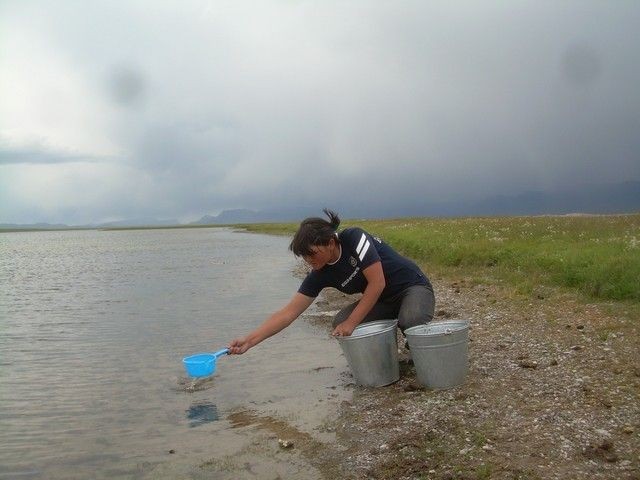
Central Asia ranks among the most climate-vulnerable regions in the world and will require tens of billions of dollars to adapt to the accelerating effects of global warming, according to a new report by the United Nations Environment Programme (UNEP). The report identifies Central Asia as one of the fastest-warming areas globally. However, current adaptation funding remains drastically insufficient to meet the growing threat. A Region Under Threat Developing countries worldwide, including those in Central Asia, will need up to $310 billion annually by 2035 to adapt to climate change. UNEP highlights the region’s specific challenges: rapidly melting glaciers, widespread soil degradation, worsening water scarcity, and increasing aridity, all of which endanger food security and energy sustainability. “If we don't start investing in adaptation now, we will face increasing costs every year,” said UNEP Executive Director Inger Andersen. Tajikistan and Kyrgyzstan are particularly exposed, with more than 70% of their populations employed in agriculture, which depends heavily on mountain rivers fed by glacial runoff. According to UNEP, glacier volumes in the region have shrunk by over 30% in the past decade. The changing flow of the Amu Darya and Syr Darya rivers threatens not only agriculture but also the hydropower sectors in both countries. Diminished access to water could lead to socio-economic instability in vulnerable communities. Funding Gap Widens UNEP estimates that developing countries in Europe and Central Asia need roughly $51 billion annually for adaptation. Yet, only a fraction of that figure is currently being met. Tajikistan, for example, has outlined total climate financing needs of $8 billion by 2030 and $17 billion by 2050. In Uzbekistan, the cost of modernizing irrigation and water management systems alone is expected to approach $10 billion by 2030. UNEP has urged governments in the region to accelerate the updating of national adaptation plans, many of which have not been revised in over a decade, and to enhance cooperation in the Amu Darya and Syr Darya basins. Priority areas include investment in irrigation infrastructure, early warning systems, and flood control. From Glaciers to Farms In response to UNEP’s findings, international organizations have begun to fund targeted adaptation initiatives. The Green Climate Fund, for instance, has approved $250 million for the From Glaciers to Farms program, spearheaded by the Asian Development Bank. The project aims to strengthen agricultural and water resilience in glacier-dependent countries in Central Asia, the South Caucasus, and parts of South Asia. It covers four major river basins: the Naryn and Panj in Central Asia, the Kura in the South Caucasus, and the Swat in Pakistan, benefiting approximately 13 million people. Funding will support the development of irrigation networks, reservoir construction, glacier monitoring, and early warning systems. The program also places a strong emphasis on empowering women entrepreneurs in agriculture and improving the financial sustainability of rural communities.

Uzbekistan’s Green Energy Output Hits 9 Billion kWh in 2025

Uzbekistan’s solar and wind power plants generated a record 9 billion kilowatt-hours (kWh) of electricity in 2025, according to data released by the Ministry of Energy on October 22. The milestone reflects the country’s growing commitment to renewable energy and aligns with the strategic goals outlined by President Shavkat Mirziyoyev in his addresses to the 78th and 80th sessions of the United Nations General Assembly. Uzbekistan aims to adapt its economy to climate change, achieve carbon neutrality, and expand the share of renewables in its energy mix. The country currently operates 12 solar photovoltaic plants and five wind farms with a combined capacity of 4,682 megawatts. These facilities have saved approximately 2.73 billion cubic meters of natural gas and prevented the emission of nearly 4 million tons of pollutants. As of October 22, total electricity generation from hydro, solar, and wind sources reached 14.52 billion kWh for the year. Renewable energy now accounts for about 23% of Uzbekistan’s total electricity output. Officials estimate that the 9 billion kWh produced by solar and wind facilities alone could meet ten months of electricity demand for 7.5 million households or provide a full year’s supply for 6 million homes. The figure highlights the country’s accelerating transition toward a more sustainable energy future.