• KGS/USD = 0.01144 0%
  • KZT/USD = 0.00215 0%
  • TJS/USD = 0.10691 0.09%
  • UZS/USD = 0.00008 0%
  • TMT/USD = 0.28530 0%
  • KGS/USD = 0.01144 0%
  • KZT/USD = 0.00215 0%
  • TJS/USD = 0.10691 0.09%
  • UZS/USD = 0.00008 0%
  • TMT/USD = 0.28530 0%
  • KGS/USD = 0.01144 0%
  • KZT/USD = 0.00215 0%
  • TJS/USD = 0.10691 0.09%
  • UZS/USD = 0.00008 0%
  • TMT/USD = 0.28530 0%
  • KGS/USD = 0.01144 0%
  • KZT/USD = 0.00215 0%
  • TJS/USD = 0.10691 0.09%
  • UZS/USD = 0.00008 0%
  • TMT/USD = 0.28530 0%
  • KGS/USD = 0.01144 0%
  • KZT/USD = 0.00215 0%
  • TJS/USD = 0.10691 0.09%
  • UZS/USD = 0.00008 0%
  • TMT/USD = 0.28530 0%
  • KGS/USD = 0.01144 0%
  • KZT/USD = 0.00215 0%
  • TJS/USD = 0.10691 0.09%
  • UZS/USD = 0.00008 0%
  • TMT/USD = 0.28530 0%
  • KGS/USD = 0.01144 0%
  • KZT/USD = 0.00215 0%
  • TJS/USD = 0.10691 0.09%
  • UZS/USD = 0.00008 0%
  • TMT/USD = 0.28530 0%
  • KGS/USD = 0.01144 0%
  • KZT/USD = 0.00215 0%
  • TJS/USD = 0.10691 0.09%
  • UZS/USD = 0.00008 0%
  • TMT/USD = 0.28530 0%

Viewing results 1 - 6 of 217

ADB Approves $3M for Glacier Monitoring in Tajikistan

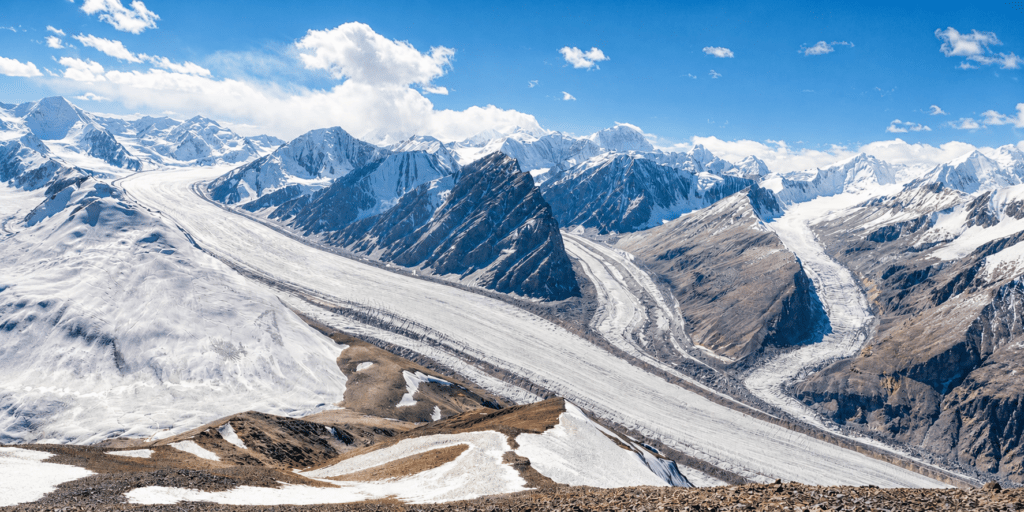
The Asian Development Bank (ADB) has approved a $3 million grant to enhance Tajikistan’s glacier monitoring and natural disaster warning capabilities. The initiative aims to reduce risks linked to accelerated snow and ice melt, particularly in the country’s mountainous regions, and improve public safety. The grant is financed by the Japan Fund for Prosperous and Sustainable Asia and the Pacific (JFSB), which is supported by the Government of Japan through the ADB. Ko Sakamoto, ADB’s Permanent Representative in Tajikistan, emphasized the project's importance for the country. “Glaciers and snow are important for water supply, agriculture, and hydropower, but their rapid melting caused by extreme weather events can trigger devastating floods, avalanches, and other disasters,” he said. Sakamoto noted that the initiative will provide Tajikistan with modern tools for forecasting and responding to climate-related threats. The project is scheduled to be completed by 2029, with most activities to be implemented in high-risk areas of the Gorno-Badakhshan Autonomous Region. The Hydrometeorological Agency has been designated as the project’s executive body. Among the key components is the creation of a unified digital data system to improve the accuracy and timeliness of glacier and snow cover monitoring. The system will enhance the collection, storage, and analysis of data critical for disaster risk assessment. To manage the new infrastructure, technical specialists from the Hydrometeorological Agency will receive training in modern monitoring and data management methods. The project also emphasizes the active inclusion of women in the training process, aligning with ADB’s commitment to inclusive development. Improving early warning systems is another central element of the initiative. Plans include updating disaster risk management strategies, strengthening coordination between local authorities and communities, and enhancing the clarity and timeliness of public alerts related to glacial and snowmelt hazards. Tajikistan joined the ADB in 1998. Since then, the partnership has supported a wide range of infrastructure and development projects, including the modernization of major highways, such as the Obigarm-Nurobod, Dushanbe-Bokhtar, Aini-Penjikent, Dushanbe-Tursunzade, and Vose-Khovaling corridors, as well as the restoration of irrigation systems, expansion of water supply networks, and construction of schools and hospitals.

Kazakhstan to Host International Genetic Resources Bank

Kazakhstan will host an international genetic resources bank following unanimous approval from the 57 member states of the Organization of Islamic Cooperation (OIC). The initiative, spearheaded by the Islamic Organization for Food Security (IOFS), aims to preserve the biological diversity of agricultural crops and foster scientific collaboration among OIC countries. “One of the key initiatives we plan to implement in Kazakhstan is the creation of a Genetic Resources Bank, or an international genetic bank. Its goal is to preserve the biological diversity of agricultural crops,” said Berik Aryn, Director General of the IOFS, speaking at a roundtable in Astana marking OIC Food Security Day. According to Aryn, the government of Kazakhstan has already expressed its readiness to host the facility, and a project roadmap has been completed. The Qatar Fund for Development (QFFD) has pledged approximately $2 million to finance the first phase. “We expect to begin practical implementation of the project next year and complete the creation of the bank by 2029,” Aryn said. He cited the Svalbard Global Seed Vault in Norway as a comparable model but noted that the Kazakh bank would offer broader functionality. The project will eventually include a research center focused on crop breeding and the development of varieties resistant to climate change, drought, and other environmental stresses. “We want this gene bank to eventually become a full-fledged research center where scientists from OIC countries can work on creating new crop varieties that are resistant to climate change, drought, and other adverse factors, as well as on increasing yields,” Aryn added. The specific location is still under consideration, though the Almaty region is currently the most likely candidate due to its favorable climatic conditions. “Genetic material varies: some samples can be stored for decades, while others require regular updating and cultivation on site. In terms of climatic conditions, the Almaty region is the optimal region,” Aryn noted. In parallel with the gene bank initiative, IOFS is also advancing projects across Central Asia that promote the use of biochar to rehabilitate degraded soils. Biochar, a carbon-rich substance produced via pyrolysis of biomass, enhances soil fertility, improves water retention, and acts as a sorbent by absorbing harmful substances. “Biochar is a technology that is already widely used around the world, including in Arab and Asian countries. It is particularly relevant for Central Asia, as the region's soils are often salinated. Biochar is capable of absorbing salt and significantly improving soil structure, creating favorable conditions for agriculture for decades,” said IOFS Project Manager Bakytzhan Arystanbek. As previously reported by the Times of Central Asia, Kazakhstan launched its first agroclimatic testing site for carbon technologies, Kaz Agro Carbon, in early November.

Turkmenistan and Spain Eye Regional Center to Combat Desertification in Central Asia

Turkmenistan and Spain have discussed closer cooperation to address desertification in Central Asia, including the possible creation of a regional center focused on land degradation. The talks took place in Ashgabat during a meeting between Turkmenistan’s Minister of Environmental Protection and Spain’s ambassador to Russia, Ricardo Martínez Vázquez, who is also accredited in Turkmenistan. The discussions followed Turkmen President Serdar Berdimuhamedov’s proposal at the United Nations General Assembly to establish a specialized regional center to combat desertification in Central Asia. The initiative is intended to strengthen cooperation among regional states and attract international expertise and funding. [caption id="attachment_41076" align="aligncenter" width="1000"] Image: mineco.gov.tm[/caption] Desertification is a growing concern across Central Asia, a region where arid and semi-arid landscapes dominate much of the territory. The United Nations Convention to Combat Desertification defines desertification as land degradation in dry areas caused by climatic variations and human activities. According to the UNCCD, more than 20% of land in Central Asia is already degraded, affecting around 30% of the population. Much of this damage is linked to unsustainable water use, intensive agriculture, overgrazing, and the long-term effects of climate change. Spain’s interest in desertification in Turkmenistan is rooted in their shared status as nations on the front lines of climate change. As one of the European countries most vulnerable to soil degradation, Spain co-launched the International Drought Resilience Alliance (IDRA) to export its expertise in "dryland" management and water conservation, which is directly applicable to the arid landscapes of Central Asia. This common challenge has fostered a diplomatic partnership focused on the United Nations Convention to Combat Desertification (UNCCD), where countries exchange strategies for land restoration and drought resilience. Beyond environmental solidarity, Spain views Turkmenistan as a critical emerging market for its advanced engineering and agricultural sectors. Major Spanish firms, such as TYPSA, are already active in the region, providing technical assistance for massive infrastructure projects, such as desalination plants on the Caspian Sea, and modernizing irrigation systems for thousands of hectares of farmland. This commercial engagement is bolstered by Spain's support for Turkmenistan’s proposal to host a Regional Center for Climate Change Technologies, which would serve as a hub for Spanish green tech in Central Asia. The bilateral relationship also aligns with the broader EU Strategy for Central Asia, which prioritizes environmental stability as a means of ensuring regional security. By helping Turkmenistan manage its dwindling water resources and combat the encroaching Karakum Desert, Spain contributes to the EU for a Green Turkmenistan initiative. This cooperation helps prevent resource-driven migration and instability, and strengthens trade ties in a region that is becoming increasingly vital for global energy and logistics. One of the most visible examples of desertification in the region is the collapse of the Aral Sea. Once the world’s fourth-largest inland lake, the Aral Sea began shrinking rapidly in the 1960s after its feeder rivers were diverted for large-scale irrigation projects. By the early 2000s, the sea had lost roughly 90% of its volume. [caption id="attachment_13621" align="aligncenter" width="2560"] Desert ships on the former...

Tajikistan’s Forests on the Brink of Extinction

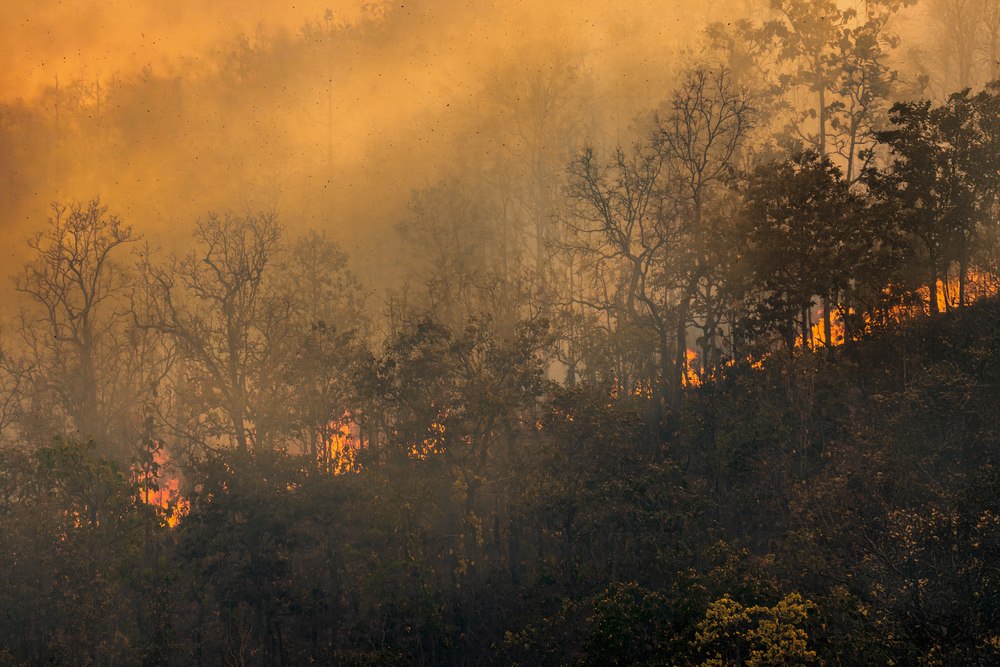
Tajikistan's forests, already scarce, covering just 3% of the country's territory, are facing unprecedented threats due to climate change and human activity. These fragile ecosystems, vital for maintaining the country’s ecological balance, are rapidly disappearing, with far-reaching consequences for the environment and public safety. Since the early 1990s, Tajikistan’s forest area has shrunk significantly. Currently, forests cover approximately 423,000 hectares, compared to about 20% of the national territory a century ago. In the 19th century, tugai forests alone spanned one million hectares, now reduced more than eightfold. The causes of deforestation are complex: widespread logging during past energy crises, land conversion for agriculture, rising temperatures, and declining precipitation. These factors have accelerated ecosystem degradation and disrupted the country’s water balance. Forest loss is also directly linked to the rising frequency of natural disasters. According to the National Climate Report, the number of mudslides and landslides has increased by 25-30% over the past two decades. Experts estimate that one in five landslides in mountainous regions is directly related to deforestation. Climate warming is also hastening snow and glacier melt, resulting in sudden floods, while prolonged droughts render the soil brittle and unstable. Forests once served as a natural buffer against these effects, but are no longer able to perform this function effectively. As temperatures rise, Tajikistan’s forests are becoming increasingly susceptible to fires. In 2025 alone, wildfires scorched over 430 hectares of forest in nine regions, including Varzob and Penjikent. Compounding the crisis is inadequate infrastructure. “There are no roads, equipment cannot reach the area, and the material and technical base is poorly developed,” said Davlatali Sharifzoda, Deputy Director of the Forestry Agency. Rising temperatures are also fueling the spread of pests such as bark beetles, which threaten rare species already listed in the Red Book of endangered flora. Forest degradation is also contributing to soil erosion, particularly in mountainous areas. This poses a serious threat to agriculture, which occupies 3.7 million hectares of Tajikistan’s land. “Soils are becoming less productive due to rising temperatures and reduced rainfall, which reduces crop yields and complicates the lives of farmers,” said Murod Ergashev, a researcher at the Institute of Soil Science. Tajikistan’s forests are home to approximately 270 species of trees and shrubs, 30 of which are endangered. Biologist Rustam Muratov warns that ongoing degradation could lead to the irreversible loss of unique ecosystems and endemic species. The Tajik government is taking action. Under the Bonn Challenge, the country has committed to restoring 66,000 hectares of degraded forests by 2030. Plans include planting drought-resistant species, such as pistachio, walnut, and saxaul. The national forest sector development program for 2022-2026 aims to modernize nurseries, expand seedling production, and establish industrial plantations. The goal is to restore 15,000 hectares of forest, double forest productivity, and reduce livestock grazing in forest areas by 30%. Community involvement is key to sustainable forest management. In the Sangvor and Shokhin districts, local residents, with support from the FAO, participate in regulated harvesting of berries and medicinal plants. Tajikistan’s forests...

Journal Retracts Climate Study After Discovering Errors in Uzbekistan’s Economic Data

The scientific journal Nature has retracted a high-profile article on the economic impacts of climate change after significant inaccuracies were discovered in economic data related to Uzbekistan. The study, originally published online on April 17, 2024, examined how rising global temperatures could affect economic output by mid-century. According to the retraction notice, the dataset contained serious errors in Uzbekistan’s economic indicators from 1995 to 1999, which substantially altered the study’s findings. The authors acknowledged that the results were highly sensitive to the inclusion of Uzbekistan. Upon review, they found the country’s reported economic figures during that period were inaccurate. They also noted additional complications, including inconsistencies caused by transitions between data sources, and the failure to fully account for long-term economic trends. Another methodological issue, spatial auto-correlation, which affects uncertainty estimates, had not been incorporated into the original analysis. Once the authors corrected the dataset and adjusted their methodology, the study’s conclusions changed significantly. Specifically, the projected range of climate-related economic damages by 2050 shifted from 11-29% to a broader 6-31%. The statistical likelihood that damages would differ significantly under various emissions scenarios by mid-century also fell, from 99% to 90%. Due to the scale of these changes, the authors concluded that a simple correction was insufficient and opted for a full retraction. A revised version of the study, updated with corrected data and improved methodology, has been made publicly available but has not yet undergone peer review. The authors plan to resubmit the article, and Nature has stated it will update the retraction notice if the revised version is accepted for publication. The researchers thanked the members of the scientific community who identified the discrepancies, and emphasized the importance of transparent corrections in climate science.

Kyrgyzstan Launches Environmental Strategy for Lake Issyk-Kul

On December 2, Kyrgyzstan’s Cabinet of Ministers approved the Concept for the Sustainable Development of the Ecological and Economic System of Lake Issyk-Kul until 2030, along with a corresponding Action Plan. The initiative aims to protect the lake and its surrounding biosphere from intensifying environmental and human pressures, while ensuring long-term economic resilience in the region. Located in northeastern Kyrgyzstan, Issyk-Kul is the country’s largest lake, a unique ecological reserve, and one of Central Asia’s main tourist destinations. However, the newly adopted Concept reflects growing concerns over environmental degradation and the urgent need for coordinated management. Based in part on a government technical assessment, the strategy outlines a comprehensive roadmap to stabilize the lake’s ecosystem, modernize critical infrastructure, and mitigate climate risks. Climate Threats and Water Imbalance A key priority of the Concept is enhanced monitoring of Lake Issyk-Kul and its surrounding basin, particularly its water and energy resources. Climate change, including glacial retreat and reduced river inflow, has placed the basin under mounting stress. Of the 957 glaciers in the Issyk-Kul basin, covering 560.8 square kilometers, many are melting at an accelerated rate. Although roughly 120 rivers flow into the lake, only 80 reach it during summer due to irrigation withdrawals. To restore hydrological balance, the government plans to introduce modern irrigation technologies across 100,000 hectares of farmland. Officials estimate this could redirect up to 200 million cubic meters of water back into the lake each year. Between 1927 and 2003, Issyk-Kul’s water level fell by 2.75 meters, driven by declining inflow, outdated monitoring systems, and inefficient water use. The new Concept calls for restoring hydrological infrastructure, including groundwater observation stations and river hydro-posts. It also proposes strict accounting of irrigation water and a shift toward water-saving technologies in agriculture. Combatting Wastewater and Pollution Untreated wastewater remains one of the most severe threats to the lake’s ecosystem. Discharges from settlements, hotels, and tourism facilities have polluted the lake for years. The Concept aims to modernize wastewater treatment plants, expand sewage networks, and promote the reuse of treated water for irrigation purposes. Over the past five years, 47 new treatment facilities have been constructed in the Issyk-Kul region. The government now plans to reduce untreated wastewater discharge by 40%. Industrial Risks and Waste Management Environmental oversight of industrial activity, particularly at the Kumtor gold mine, the country’s largest, is another priority. The Concept calls for stricter regulation of hazardous waste and the rehabilitation of mining tailings to protect soil, groundwater, and the lake itself. Solid waste management is also being addressed. In October 2025, China’s Hunan Junxin Environmental Protection Co. Ltd. began building a waste-to-energy incineration plant in Karakol, the region’s administrative center. This will be the company’s third facility in Kyrgyzstan, following earlier projects in Bishkek and Osh. The introduction of separate waste collection systems is seen as key to reducing landfill pressure and minimizing environmental damage. To address air quality, the Concept promotes modernization of outdated heating systems, emission controls on industry and transport, and the adoption of...