• KZT/USD = 0.00220
  • TJS/USD = 0.10820
  • UZS/USD = 0.00009
  • TMT/USD = 0.29850
  • KZT/USD = 0.00220
  • TJS/USD = 0.10820
  • UZS/USD = 0.00009
  • TMT/USD = 0.29850
  • KZT/USD = 0.00220
  • TJS/USD = 0.10820
  • UZS/USD = 0.00009
  • TMT/USD = 0.29850
  • KZT/USD = 0.00220
  • TJS/USD = 0.10820
  • UZS/USD = 0.00009
  • TMT/USD = 0.29850
  • KZT/USD = 0.00220
  • TJS/USD = 0.10820
  • UZS/USD = 0.00009
  • TMT/USD = 0.29850
  • KZT/USD = 0.00220
  • TJS/USD = 0.10820
  • UZS/USD = 0.00009
  • TMT/USD = 0.29850
  • KZT/USD = 0.00220
  • TJS/USD = 0.10820
  • UZS/USD = 0.00009
  • TMT/USD = 0.29850
  • KZT/USD = 0.00220
  • TJS/USD = 0.10820
  • UZS/USD = 0.00009
  • TMT/USD = 0.29850
08 September 2026

Viewing results 1 - 6 of 89

Kyrgyz Government Adopts Strategic Task to Construct Eco-City

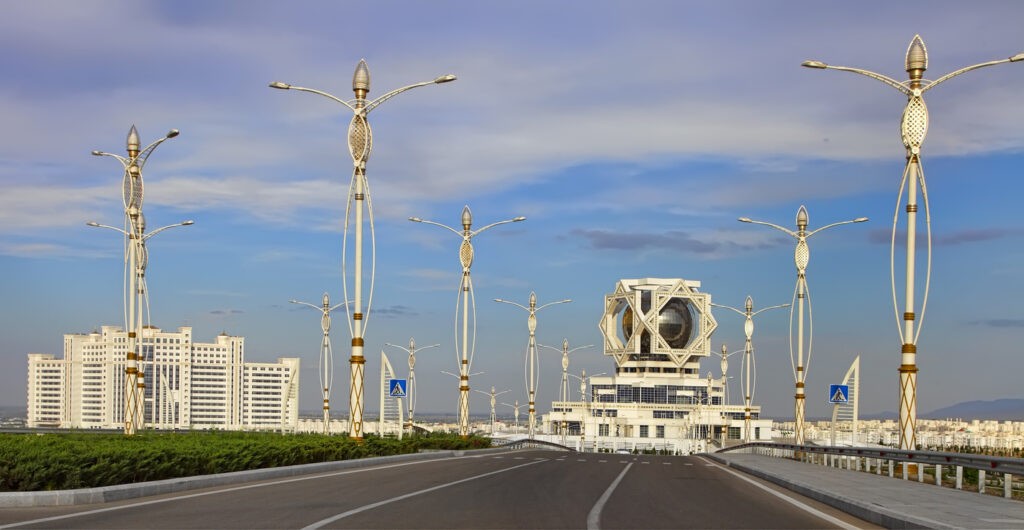
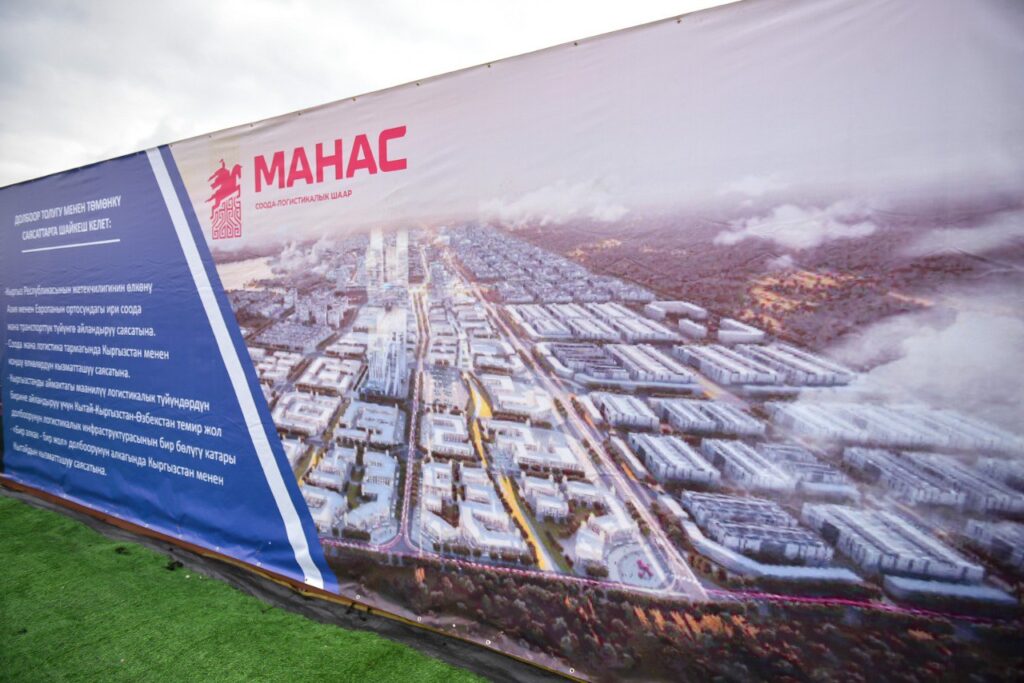
On October 14, Kyrgyzstan's President Sadyr Japarov signed a Decree to construct the eco-city "Asman" near the village of Toru-Aigyr on the northern shore of Lake Issyk-Kul, the country's  main region for tourism and recreation. Spanning 4,000 hectares, some 200km southeast of the capital Bishkek and dubbed a "smart city", Asman aims to become the country’s new economic and tourist hub and home to modern business, recreational and sports facilities, hi-tech parks, and financial institutions. It will also provide homes for around  500,000 residents. From a bird's eye view, Asman (the Kyrgyz word for "sky") will resemble a komuz, a traditional Kyrgyz string musical instrument and one of Kyrgyzstan's national symbols. According to Kyrgyz officials, the new city financed by foreign investors, will be built over the next 7-10 years but although the capsule-laying ceremony took place in June 2023, construction has yet to begin. Speaking at the ceremony, President Japarov remarked that “the city of Asman will become a financial hub connecting East and West, North and South.” As reported by the presidential press service, the construction of the eco-city is a “strategic task” for the country’s Cabinet of Ministers and local authorities of the Issyk-Kul region, with a key objective to protect the biosphere territory adjacent to the lake. According to the decree, the Cabinet of Ministers should develop and approve a concept for the construction of Asman by March 1, 2025, ensuring the preservation and protection of the environment during the city’s construction. It has also been recommended that a ban be placed in the city on hydrocarbon-fueled (gasoline, diesel, gas) transport in preference for electric transport and bicycles. For this purpose, the decree orders the creation of electric transport infrastructure and charging stations, as well as necessary conditions for the use of bicycles to ensure mobility of the city's population. In addition, the decree orders the use of energy-saving solutions and smart home technologies in the construction of buildings, and compliance with the World Health Organization's environmental standards for greening cities and introducing an environmentally safe waste management system. The realization of such a mega project has inevitably raised questions regarding finance, with construction costs currently estimated at around $20 billion. The Asman project shares similarities to the city of Arkadag in Turkmenistan. Unveiled in June 2023, the “smart” city of Arkadag was built from scratch 30 km south of Turkmenistan’s capital, Ashgabat. Designed to accommodate a population of  70,000, it cost billions of dollars to construct.

Leading UAE Hotel Chain Explores Options in Uzbekistan

A world-famous chain of hotels in the UAE is exploring entering the Uzbekistan market. The announcement  follows talks between Uzbek diplomats and Phillip Crouse, vice president of the United Arab Emirates' Jumeirah Group, and an introduction of the company's team to the recent reforms implemented in Uzbekistan, as well as programs and regulations to increase the country's tourist attractiveness, existing tourist routes, flights between the two countries, and hotels. Representatives were also presented with options to privatize or reconstruct large hotel complexes in the country. The entry of the Jumeirah brand into the Uzbekistan market will further increase the country's number of luxury hotels and enhance its ever-expanding tourist market. Over the past seven years, the number of foreign tourists visiting Uzbekistan has tripled, the volume of tourism services has increased fivefold, and the number of hotels and accommodation facilities has increased tenfold. Last year, more than 6.6 million tourists visited the country, providing a revenue of some 2.1 billion dollars, and according to recent reports, Uzbekistan aims to increase the number of foreign tourists to 15 million by 2030. Jumeirah, part of Dubai Holding, is a global luxury hotel company with 26 properties, including resorts, city hotels, and serviced residences across the Middle East, Europe, and Asia.

New Road Promised for Kyrgyzstan’s Highest Village

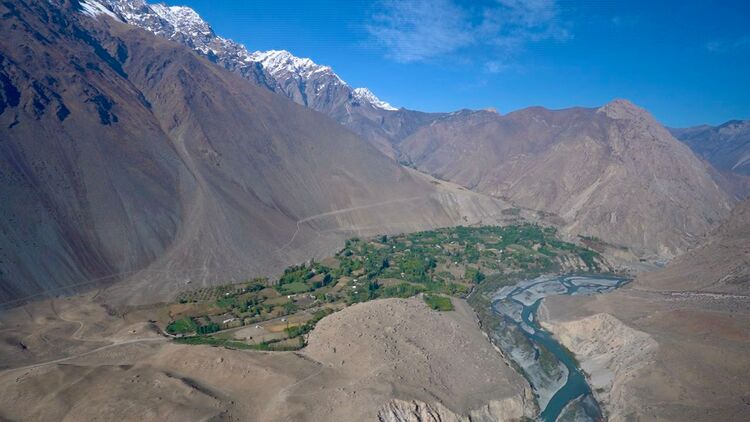
The Ministry of Transport and Communications of Kyrgyzstan has announced a tender for the construction of a road to Kyrgyzstan's highest village of Zardaly in the Batken oblast. Authorities have set aside 389 million KGS ($4.5 million) for the construction of the 4.2 kilometer road and according to published data, bids will be accepted until October 22 this year. The village of Zardaly is located in the highlands on Kyrgyzstan's border with Uzbekistan and Tajikistan. At present, only one narrow, stony road leads to the settlement, accessible only between May to October. With the onset of cold weather, snow makes it impossible to get to the village, and residents are cut off from the outside world. It should be noted that Zardaly lacks cellular communication, the recently installed internet only serves the local school, and there are significant problems with electricity. As a local proverb says, “If there is no urgent business - do not enter Zardaly." On the day prior to the announcement of the tender, Kyrgyz President Sadyr Zhaparov visited Zardaly by helicopter.  Whilst there, he promised residents that a highway would be built in the village in spring 2025, after which electricity would be supplied. He also instructed the presidential administration to solve the issue of cellular communications in the region. In earlier complaints about the situation in the village, Kyrgyzstan's ombudsman said that although Zardaly became a village in 2016, residents still require help accessing medical services and quality education.

Turkmenistan to Build New High-Speed Highway

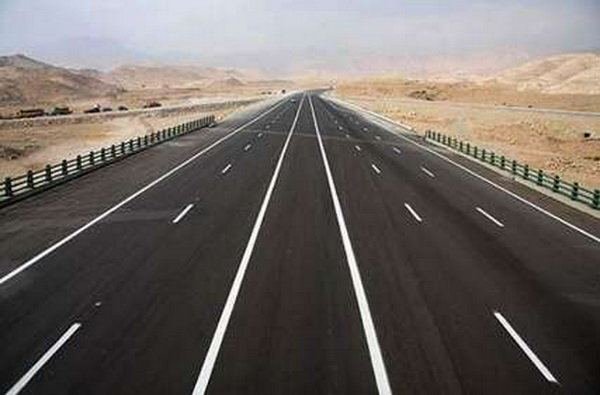
The private company "Ojar Asia" has signed a contract with the Eurasian representative office of China's Sino Hydro Bureau 12 Co. Ltd., for the parties to jointly build the Serakhs-Mary-Serkhetabat highway in Turkmenistan. This road will have a length of about 450 kilometers. The highway will be an important element of the country's transport infrastructure, and will improve conditions for foreign trade, including the export of Turkmenistan's natural resources. More than $2 billion in investment from Sino Hydro Bureau will finance it, and Ojar Asia will lead the construction. Turkmenistan is developing road infrastructure to improve transportation links and stimulate its economy. Road projects are strategically important as the country plans to integrate the new highways into international East-West and North-South transportation corridors. This helps increase transit transportation and natural resource exports, which are vital in diversifying an economy traditionally dependent on hydrocarbon exports.

Turkish Contractors Implement New Large-Scale Projects in Turkmenistan

The Turkish Ministry of Trade has reported that construction projects valued at $53.3 billion are being implemented in Turkmenistan; signifying Turkey's significant presence in this sector of the country. By comparison, the total value of projects implemented by Turkish contractors in Russia amounted to $102.3 billion, making it the largest market for the Turkish sector, whilst in Kazakhstan, its market share is  $29.5 billion. Statistics show that 13.9% of all realized foreign projects are related to the construction of highways, tunnels, and bridges, while 13.8% are for housing; 8.6% for power plants; 7.1% for shopping centers; and  6.6% for airports. In 2024, Turkish contracting companies completed 148 projects abroad worth $11.2 billion, while 433 international projects totaling $28.1 billion were completed last year. The average value of projects increased from $64.9 million in 2023 to $75.7 million in 2024. Following a meeting on September 2, between the National Leader of the Turkmen people, Gurbanguly Berdimuhamedov and Chairman of the Board of  Erman Ilydjak,  a new shopping center will be built in Ashgabat by Turkish company Rönesans Holding.

Kyrgyzstan Lacks Cement Amid Booming Construction

Kyrgyzstan is experiencing a cement shortage as new high-rise residential buildings and thousands of one- and two-story houses are being erected nationwide. This booming construction requires a large amount of cement, which has caused huge demand for the product. Local media quoted Syrgak Omorov, a representative of the Anti-monopoly Regulation Service, as saying that domestic producers are not capable of meeting the growing need. The Kant cement plant, the country’s largest cement producer, typically produces 600,000 tons of cement annually, but this year the production volume has already exceeded a million tons. According to Omorov, the Kant cement plant can produce up to 4,000 tons daily, but market demand is 5,000 tons. The official attributes the shortage to the unprecedented scale construction of housing and social facilities, such as schools. Earlier this month, the Chairman of the Cabinet of Ministers of the Kyrgyz Republic, Akylbek Japarov, announced that the number of new schools and residential buildings constructed in Kyrgyzstan has exceeded Soviet-era figures. Japarov cited data from the National Statistical Committee, saying that 1.560 million square meters of residential housing were built in Kyrgyzstan when it was part of the Soviet Union in 1990. In 2023, independent Kyrgyzstan constructed 1.587 million square meters of housing. The highest numbers of secondary schools were built in 1968 and 1987 — 50 in each of those years, while in 2023, Kyrgyzstan built 105 new schools. Last week, TCA reported that Kyrgyzstan is also suffering from a shortage of laborers, with the head of the construction agency in the Kyrgyz Republic stating that the construction industry alone urgently needs at least 10,000 workers.