• KGS/USD = 0.01143 0%
  • KZT/USD = 0.00205 0%
  • TJS/USD = 0.10724 0.09%
  • UZS/USD = 0.00008 0%
  • TMT/USD = 0.28571 0%
  • KGS/USD = 0.01143 0%
  • KZT/USD = 0.00205 0%
  • TJS/USD = 0.10724 0.09%
  • UZS/USD = 0.00008 0%
  • TMT/USD = 0.28571 0%
  • KGS/USD = 0.01143 0%
  • KZT/USD = 0.00205 0%
  • TJS/USD = 0.10724 0.09%
  • UZS/USD = 0.00008 0%
  • TMT/USD = 0.28571 0%
  • KGS/USD = 0.01143 0%
  • KZT/USD = 0.00205 0%
  • TJS/USD = 0.10724 0.09%
  • UZS/USD = 0.00008 0%
  • TMT/USD = 0.28571 0%
  • KGS/USD = 0.01143 0%
  • KZT/USD = 0.00205 0%
  • TJS/USD = 0.10724 0.09%
  • UZS/USD = 0.00008 0%
  • TMT/USD = 0.28571 0%
  • KGS/USD = 0.01143 0%
  • KZT/USD = 0.00205 0%
  • TJS/USD = 0.10724 0.09%
  • UZS/USD = 0.00008 0%
  • TMT/USD = 0.28571 0%
  • KGS/USD = 0.01143 0%
  • KZT/USD = 0.00205 0%
  • TJS/USD = 0.10724 0.09%
  • UZS/USD = 0.00008 0%
  • TMT/USD = 0.28571 0%
  • KGS/USD = 0.01143 0%
  • KZT/USD = 0.00205 0%
  • TJS/USD = 0.10724 0.09%
  • UZS/USD = 0.00008 0%
  • TMT/USD = 0.28571 0%

Viewing results 1 - 6 of 30

Kazakhstan Proposes Kenyan Trade Hub to Access Eurasian Markets

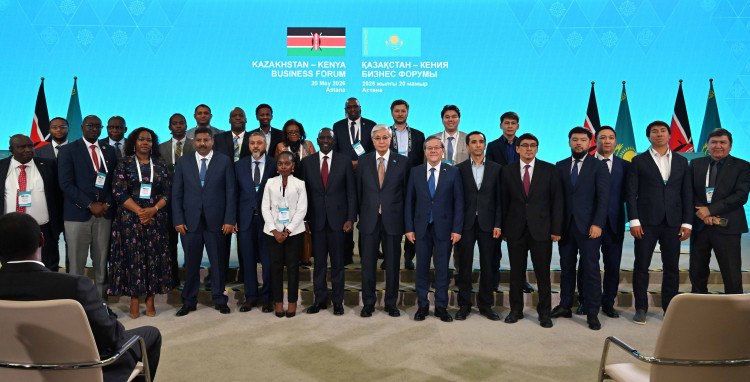
Kazakhstan has proposed establishing a Kenyan trade and logistics hub on its territory to facilitate the export of Kenyan goods to Eurasian markets, as Astana seeks to position itself as a key transit link between Asia, Europe, and Africa. The initiative was announced by President Kassym-Jomart Tokayev of Kazakhstan during the Kazakhstan-Kenya Business Forum, held as part of Kenya’s President William Ruto’s state visit to Astana. “We are committed to opening a Kenyan trade hub in Kazakhstan that will provide your businesses with direct access to the entire Eurasian region,” Tokayev told representatives of the Kenyan business community. Kazakhstan hopes to expand exports of grain and other agricultural products to Africa, while Kenya could increase supplies of tea, coffee, and flowers to Central Asian and broader Eurasian markets. Astana is also promoting itself as an important part of international transport corridors. According to Tokayev, approximately 85% of overland transit traffic between China and Europe passes through Kazakhstan. The country is actively developing the Trans-Caspian International Transport Route, commonly known as the Middle Corridor, which is increasingly viewed as an alternative to traditional transit routes through Russia. Tokayev proposed integrating the Middle Corridor with East African maritime routes by using the potential of China’s Belt and Road Initiative. Kazakhstan specifically expressed interest in cooperation with the ports of Mombasa and Lamu, which are regarded as the region’s largest logistics hubs. “It is necessary to connect the Middle Corridor with Africa’s vital maritime arteries,” Tokayev said. The two sides also discussed the development of direct cargo air links between Kazakhstan and Kenya, as well as the possibility of launching direct passenger flights between Astana and Nairobi in the future. Beyond logistics, Kazakhstan and Kenya plan to expand cooperation in the extraction of rare earth metals and critical minerals, resources in growing global demand amid the energy transition and the expansion of digital technologies. During the forum, Kazakhstan’s sovereign wealth fund, Samruk-Kazyna, and Kenya’s National Mining Corporation signed an agreement on joint geological exploration and subsoil development projects in Kenya. Tokayev also proposed establishing a Kazakhstan-Kenya Business Council and a specialized expert group focused on transport and logistics infrastructure development. According to the president, these steps should accelerate the creation of an intergovernmental commission on trade and economic cooperation. Ruto said Nairobi was interested in creating a “new economic bridge” between Central Asia and Africa. “The logistics ports of Mombasa and Lamu will be available to companies from Kazakhstan interested in entering East African markets,” Ruto said. The visit comes as Kazakhstan seeks to diversify its trade routes and expand economic ties with countries of the Global South. Earlier, authorities in Kazakhstan announced plans to expand the country’s maritime fleet on the Caspian Sea to increase the capacity of the Middle Corridor.

EAEU Trade Frictions Deepen Despite Shymkent Integration Push

The Eurasian Economic Union (EAEU) met in Shymkent on March 26-27 with a long agenda and a familiar promise: deeper integration, smoother trade, and a more modern common market. Kazakhstan, which holds the bloc’s 2026 chairmanship, used the meeting to push artificial intelligence, digital logistics, industrial cooperation, and the removal of internal barriers. Twelve documents were signed, covering areas including industrial cooperation, transport, and digital integration. “Kazakhstan aims to become a fully-fledged digital country. We have built a modern ecosystem, including Astana Hub and the Alem.ai AI center, and are ready to share experience with EAEU partners on digital regulation and economic transformation,” Kazakh Prime Minister Olzhas Bektenov stated. That sounds ambitious, but it also highlights the bloc’s central weakness. The EAEU has no shortage of plans; it has a shortage of trust between its members, and that matters more. The dynamics extend across the bloc, but are most visible in Kazakhstan and Kyrgyzstan. The EAEU was built to ensure the free movement of goods, services, capital, and labor across Armenia, Belarus, Kazakhstan, Kyrgyzstan, and Russia. But the reality keeps drifting away from the treaty. Kazakhstan’s chairmanship agenda calls for a barrier-free internal market, yet the bloc is entering a new phase of tighter controls, retaliatory measures, and disputes over who really benefits. Shymkent made that contradiction impossible to miss. Prime Minister Olzhas Bektenov promoted an AI-based system to coordinate cargo flows across the union and speed up transit. He also backed the full electronic handling of veterinary and phytosanitary checks, all of which are practical ideas. Central Asia needs faster, cheaper, and more predictable logistics, but digital tools do not solve a political problem. A system becomes more efficient only if its members want it to be open. When they want leverage instead, technology can only make the controls smarter. [caption id="attachment_46024" align="aligncenter" width="1920"] Image: primeminister.kz[/caption] Kazakhstan’s priorities already show where the friction lies. President Kassym-Jomart Tokayev opened his chairmanship by calling for digital transformation, better transport links, and the elimination of internal trade barriers. He also pushed a stronger external profile for the EAEU, with wider links across Asia, the Arab world, and the Global South. That is a serious agenda for a bloc trying to present itself as a Eurasian logistics hub. That push for external expansion comes at a time when internal frictions are becoming harder to manage. It sits uneasily beside everyday trade practice inside the union, where growing trade disputes have become part of the EAEU’s normal life, not an exception to it. The clearest recent example is Russia’s SPOT import-control system, which takes effect for road shipments from EAEU countries on April 1. Importers must submit shipment information two days before trucks reach the border and receive a QR code. Moscow has presented the change as a tax-compliance and anti-fraud measure, with additional financial guarantees expected in later phases of its implementation. In practice, it adds cost, time, and uncertainty before goods even reach the border, the opposite of what a customs union...

China’s Zhongyun to Partner on $300M Seaport Project in Aktau

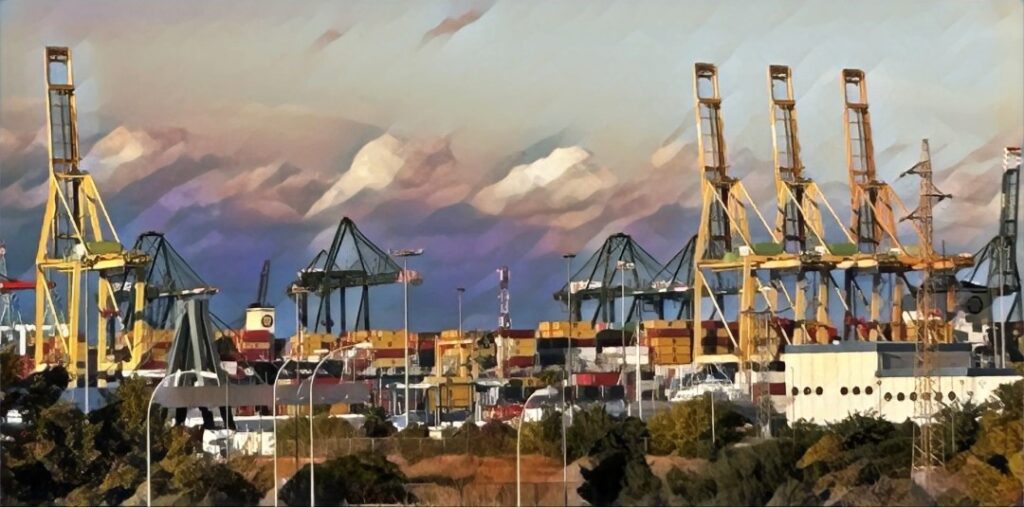
A new $300 million seaport is set to be built in Aktau, with China’s Zhongyun International confirmed as the strategic partner. The announcement was made by Nurdaulet Kilybay, Akim (Governor) of the Mangistau region, during a government meeting on November 25. Located on the Caspian Sea in western Kazakhstan, the port of Aktau connects to Azerbaijani ports Baku and Alyat to the west, and to the Iranian port of Bandar-e Anzali to the south. The Aktau-Alyat ferry crossing plays a key role in the Trans-Caspian International Transport Route, part of the larger Belt and Road Initiative linking China to Europe via Kazakhstan, Azerbaijan, Georgia, and Turkey. The route significantly shortens delivery times to the European Union. Aktau’s current cargo port has a capacity of 3.2 million tons of dry goods and 12.5 million tons of crude oil annually. In June 2025, the first phase of a $38 million container hub was launched in Aktau, expanding the port’s capacity from 140,000 to 240,000 twenty-foot equivalent units (TEU). Over the summer, Mangistau authorities held talks with several Chinese firms about building a modern seaport and logistics center in Aktau. Zhongyun International has since registered a local subsidiary and is preparing documentation for an investment agreement. “This project will contribute to the formation of a new international transport corridor: China-Kazakhstan-Aktau-Baku-Poti-Europe. Its implementation will cut delivery times by 7-15 days, reduce transport costs by 18-25%, and create new jobs,” Kilybay said. Additional Infrastructure at Kuryk Port At the same meeting, Minister of Trade and Integration Arman Shakkaliev reported on progress at the Sarzha multifunctional marine terminal in the port of Kuryk, located on the eastern Caspian coast near Aktau. The $189 million project is being developed with private investment. “The general cargo terminal and temporary storage facility are now operational, and cargo transshipment has already begun,” Shakkaliev said. Terminals for grain, bulk, chemical, and universal cargo, as well as a transport and logistics center, are currently under construction. The port of Kuryk now handles up to 6 million tons of cargo per year, 4.1 million tons via the railway terminal and 1.9 million tons via the road terminal. In 2024, dredging works in the port’s waters were completed ahead of schedule, enabling deeper drafts and the full loading of vessels.

Mirziyoyev Bets on the SCO to Boost Uzbekistan’s Security and Economy

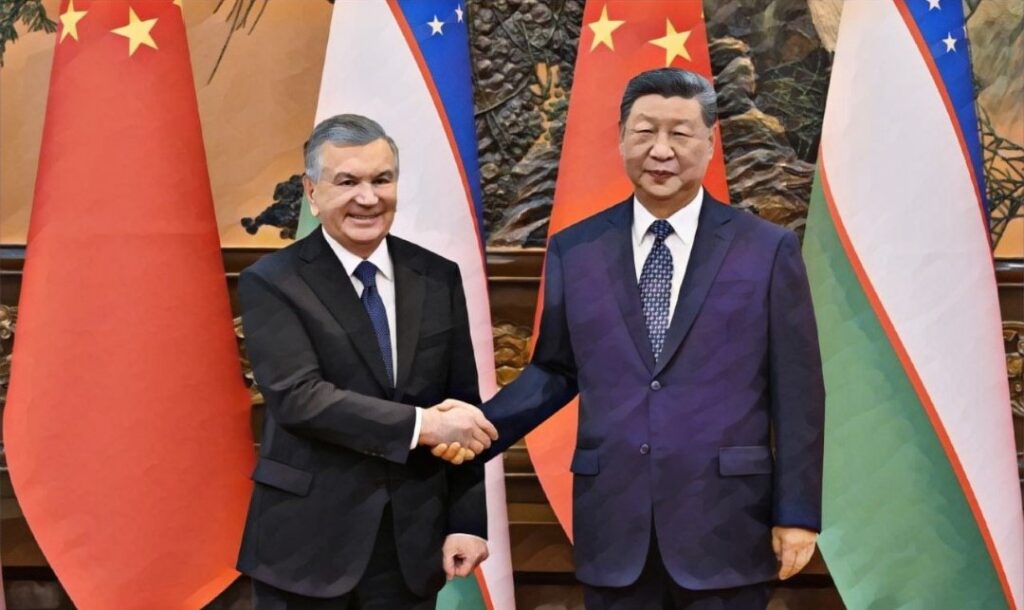
Tianjin, China - The recent Shanghai Cooperation Organization (SCO) summit drew wide attention as leaders from across Eurasia convened to emphasize the Organization’s growing importance. For smaller members, the meeting was a chance to show commitment to regional cooperation and alignment with the bloc’s major powers. Uzbekistan, under President Shavkat Mirziyoyev, stood out by using the platform to outline his intention to strengthen engagement within the SCO to advance both economic development and security. Mirziyoyev’s speech stressed solidarity in the face of global uncertainty, institutional renewal to improve effectiveness, and deeper cooperation in areas such as security and nuclear policy. He also endorsed expanding membership, particularly from the Global South, while presenting proposals to boost trade, logistics, and investment. These priorities are consistent with Uzbekistan’s ongoing strategy of aligning its national agenda with the SCO’s broader evolution into a forum with Eurasian and global relevance. Reinforcing Multilateral Solidarity Uzbekistan’s solidarity with the SCO has been in the making for years, as Tashkent aligns parts of its security and economic strategy with the Organization’s framework. In his latest address, Mirziyoyev emphasized the role of solidarity amid rising instability: “A systemic crisis of trust, the escalation of conflicts, the weakening of multilateral institutions, and the fragmentation of the global trading system are undermining the foundations of the international architecture of security and stability. In these circumstances, mutual understanding and solidarity among the SCO member-states are not only a valuable asset, but also the key to preserving peace in our vast region.” While Russia emphasizes the SCO’s role in fostering multipolarity and China focuses on resilient supply chains, Uzbekistan is leveraging the principle of solidarity to safeguard its national interests - reducing dependence on any single power. Uzbekistan is positioning itself within the SCO to align its domestic priorities with broader SCO agendas shaped by Russia’s focus on security and China’s emphasis on economic initiatives. Expanding Membership and External Engagement Mirziyoyev underscored the SCO’s “openness,” identifying expansion as central to its continued development. He welcomed greater engagement with new members and partners, though he did not specify particular regions. Uzbekistan’s growing cooperation with countries such as Iran and Saudi Arabia demonstrates how this vision of openness is taking shape in practice. Tashkent has actively supported Iran’s accession to the SCO and recently signed agreements on transport corridors that connect Central Asia to Iranian ports on the Persian Gulf, facilitating greater trade with Iran. In parallel, deepening ties with Saudi Arabia - particularly through ACWA Power’s renewable energy projects, now among Uzbekistan’s largest foreign-funded ventures - illustrate Uzbekistan’s broader engagement with the Global South in the areas of connectivity and investment. These moves parallel Russia’s and China’s efforts to expand the SCO’s influence beyond its founding region. For Uzbekistan, expansion offers new avenues for trade, energy cooperation, and investment partnerships, while reinforcing its image as a bridge-builder. By publicly supporting this process, Mirziyoyev signaled that Uzbekistan expects wider membership to enhance both the Organization’s and its own standing. Institutional Alignment with the SCO A...

Trilateral Summit in Turkmenistan Focuses on Transport, Energy, and Trade

On August 22, a trilateral summit was held in Turkmenistan’s Avaza National Tourist Zone, bringing together Uzbekistan President Shavkat Mirziyoyev, Chairman of the Halk Maslahaty of Turkmenistan Gurbanguly Berdimuhamedov, and Azerbaijan President Ilham Aliyev. The leaders focused on strengthening cooperation in trade, the economy, transport, energy, and humanitarian affairs, while also emphasizing the development of political, cultural, and multilateral ties. Transport and Transit Mirziyoyev presented several initiatives aimed at expanding regional transport routes and maximizing the region’s transit potential. He highlighted the strategic importance of integrating existing and new corridors to better connect China with South Asia, the Middle East, and Europe. Construction of the China-Uzbekistan railway is underway, and a memorandum has been signed with Pakistan and Afghanistan to establish the Trans-Afghan Corridor. According to Mirziyoyev, these projects could significantly enhance infrastructure utilization across Azerbaijan, Turkmenistan, and Uzbekistan. The development of the Middle Corridor and the Zangezur Corridor was also discussed. The leaders agreed to collaborate on increasing the capacity of regional transport hubs, constructing modern logistics infrastructure at the ports of Turkmenbashi and Baku, implementing a unified tariff policy, and digitizing freight systems. Uzbekistan expressed its willingness to reduce tariffs on a reciprocal basis to facilitate improved access to global markets for regional businesses. Energy Cooperation Energy cooperation was another key focus. The participants emphasized the need to expand collaboration in energy exports and to explore new supply routes. A proposed project to export “green” energy to Europe was described as promising. Additionally, in the hydrocarbon sector, the leaders proposed deeper cooperation in geological exploration and offshore field development in the Caspian Sea. “Joint efforts in the fields of transport, transit, and logistics will be of great importance not only for our countries but also for the wider region,” said President Aliyev, stressing the strategic nature of trilateral cooperation. Aliyev also noted that Azerbaijan’s state oil company SOCAR has begun developing an oil field in Uzbekistan, with results expected in the coming years. Trade and Industry According to summit participants, mutual trade volume between Uzbekistan, Turkmenistan, and Azerbaijan has doubled in recent years, with industrial goods making up 40% of this trade. Talks included preparations for a Comprehensive Action Plan aimed at developing trade and logistics chains, establishing wholesale distribution centers, unifying phytosanitary standards, introducing digital product labeling, and launching joint online platforms. The leaders also underscored the importance of regional engagement and called for increased organization of trade fairs and business forums under the auspices of national chambers of commerce and industry. Summit Outcomes The summit concluded with the endorsement of a new trilateral program for cultural and tourism exchanges, aimed at boosting regional tourism and promoting shared cultural heritage. A joint presidential statement was issued, alongside memoranda of cooperation in the fields of transport and logistics, shipbuilding, and aviation. Additionally, an agreement was signed on cooperation between national commodity and raw material exchanges. To ensure implementation, President Mirziyoyev proposed the development of a roadmap and the institutionalization of regular ministerial meetings focused on key cooperation areas.

Cholpon-Ata to Host ‘Day of German Economy in Kyrgyzstan’

On August 26, Kyrgyzstan will host one of its most prominent international business events of the year, the Day of German Economy in Kyrgyzstan, alongside the 4th meeting of the Kyrgyz-German Business Council. The events are organized by the National Investment Agency under the President of the Kyrgyz Republic. According to the agency, the forum will take place at two venues in the resort city of Cholpon-Ata: the Rukh Ordo Cultural Center and the No. 2 State Residence of the President of the Kyrgyz Republic. The event is expected to bring together high-level participants, including government officials, business leaders, industry associations, and investors from both Germany and Kyrgyzstan. Welcoming remarks will be delivered by Adylbek Kasymaliyev, Chairman of the Cabinet of Ministers of Kyrgyzstan, and Professor Reinhold Krämmel, Honorary Consul of Kyrgyzstan in Munich and Deputy Co-Chairman of the Kyrgyz-German Business Council. The forum will feature two thematic panel sessions: "Energy Projects for German-Kyrgyz Economic Cooperation" - focusing on opportunities in green energy and infrastructure development. "Export Potential and Logistics in the Transition Period: Opportunities of the Middle Corridor" - examining evolving trade routes and modern logistical challenges. In addition, Kasymaliyev will attend the meeting of the Kyrgyz-German Business Council. Discussions will center on the theme: “Kyrgyz-German Trade, Economic and Investment Cooperation: Finance as an Integral Part of the Partnership.” The primary aim of the event is to deepen economic dialogue, enhance trade and investment relations, and strengthen the strategic partnership between Kyrgyzstan and Germany.