• KZT/USD = 0.00217
  • TJS/USD = 0.10830
  • UZS/USD = 0.00008
  • TMT/USD = 0.29760
  • KZT/USD = 0.00217
  • TJS/USD = 0.10830
  • UZS/USD = 0.00008
  • TMT/USD = 0.29760
  • KZT/USD = 0.00217
  • TJS/USD = 0.10830
  • UZS/USD = 0.00008
  • TMT/USD = 0.29760
  • KZT/USD = 0.00217
  • TJS/USD = 0.10830
  • UZS/USD = 0.00008
  • TMT/USD = 0.29760
  • KZT/USD = 0.00217
  • TJS/USD = 0.10830
  • UZS/USD = 0.00008
  • TMT/USD = 0.29760
  • KZT/USD = 0.00217
  • TJS/USD = 0.10830
  • UZS/USD = 0.00008
  • TMT/USD = 0.29760
  • KZT/USD = 0.00217
  • TJS/USD = 0.10830
  • UZS/USD = 0.00008
  • TMT/USD = 0.29760
  • KZT/USD = 0.00217
  • TJS/USD = 0.10830
  • UZS/USD = 0.00008
  • TMT/USD = 0.29760
24 November 2026

Viewing results 1 - 6 of 91

Kazakhstan Faces Doubling of Construction Industry Labor Shortage by 2030

Kazakhstan's construction sector is grappling with a significant labor shortage, with approximately 111,000 positions currently unfilled. Prime Minister Olzhas Bektenov warned at a recent government meeting that this figure is expected to double by 2030, forecasting a deficit of over 200,000 skilled workers in the industry. Bektenov highlighted that the most affected roles include plasterers, painters, welders, masons, and concrete workers - essential positions for the sector’s operations. While the construction industry ranks third among sectors facing workforce shortages, it holds a critical place in Kazakhstan’s economy. According to government forecasts, education leads in expected vacancies, with 331,000 unfilled positions projected by 2030, followed by trade at 228,000. Despite ranking behind these sectors in terms of unmet demand, construction contributes the most to Kazakhstan’s GDP among the three, accounting for 5.6% of the country’s total economic output, according to the Ministry of Industry and Construction. This looming shortage poses challenges to sustaining growth in a sector vital to the nation’s development and economic stability.

Kyrgyzstan Opens New Village for People Resettled from Barak Exclave

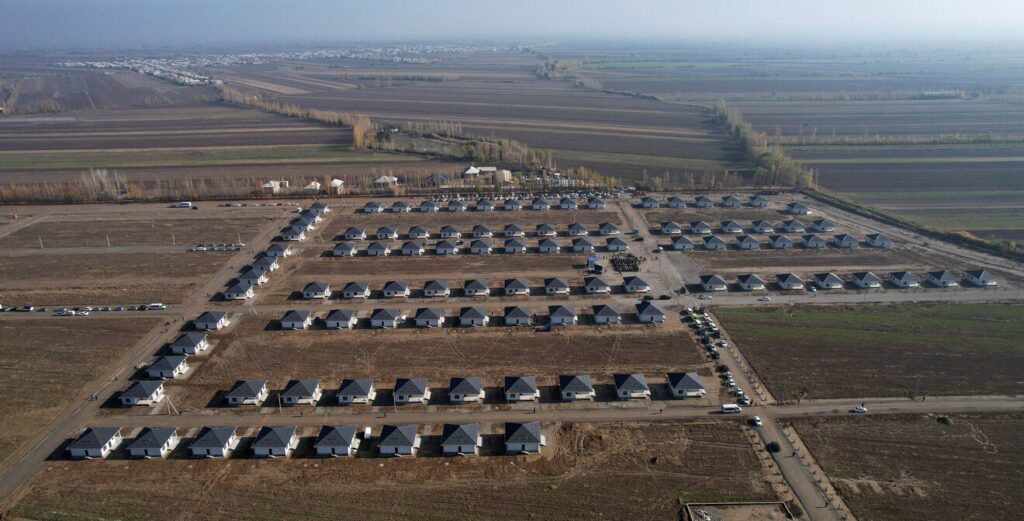
On November 15, Kyrgyzstan President Sadyr Japarov attended the opening of a new village, Jany-Barak, in the country’s southern Osh region. The village was constructed for Kyrgyz citizens resettled from the Barak exclave, previously Kyrgyzstan’s largest exclave, located in Uzbekistan’s Andijan region. For many years, the residents of the exclave experienced severe difficulties due to their partial isolation and the difficulty of traveling between the exclave and the Kyrgyz mainland. After signing a border delimitation agreement with Kyrgyzstan, Uzbekistan ceded a portion of its land to Kyrgyzstan in exchange for control of the Barak exclave. Construction of Jany-Barak (New Barak) was launched in May 2024 and is now complete. Speaking at the opening ceremony, Japarov emphasized that the construction of the new village marked a significant milestone. He highlighted that residents, who had relocated from the exclave, can now live and work in Kyrgyzstan, on their native land, in new homes, with renewed confidence in their future. Japarov highlighted the extensive work completed to establish infrastructure in the new village: 101 residential houses have been built, roads have been laid, electricity has been connected, and wells for clean drinking water have been drilled. The new village will have social amenities, including a school, a kindergarten, a park, a mosque, and a football (soccer) field. Plots have been allocated to residents for agricultural use.

New Guzor to Beinau Highway Brings Uzbekistan Closer to Europe

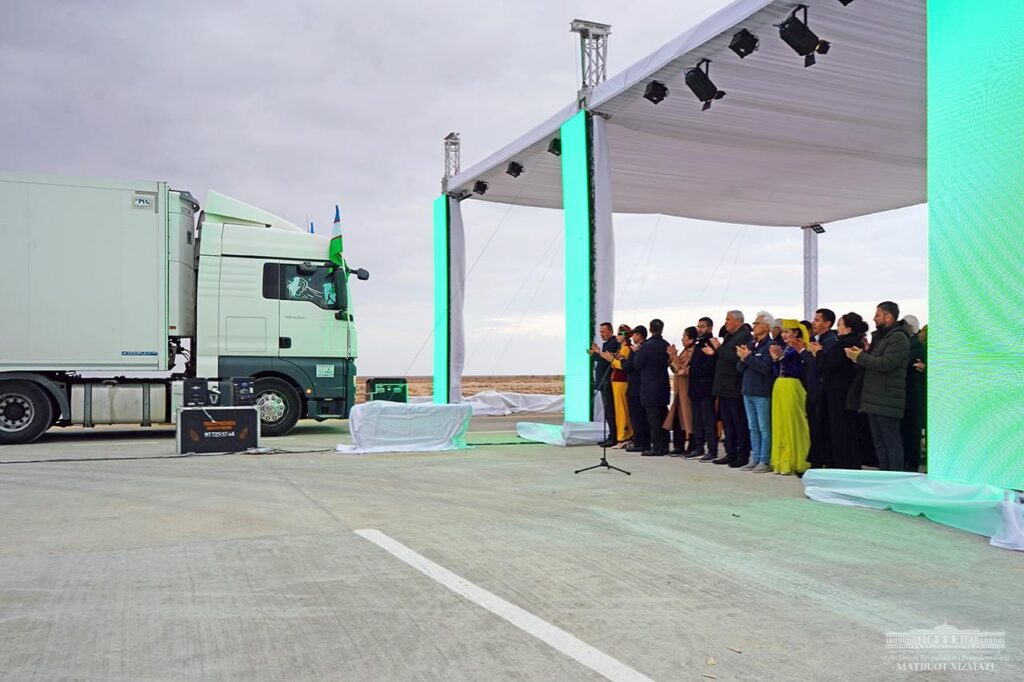
Uzbekistan has completed a new 240-kilometer section of the A380 highway connecting the cities of Guzor, Bukhara, Nukus, and Beineu, passing through the Kungirot district of Karakalpakstan. The road, built with a cement-concrete coating, is a strategic road connecting Uzbekistan with Europe. The Asian Development Bank allocated $274.9 million to the construction, while Uzbekistan contributed $108.5 million. Turkish and Azerbaijani companies managed the first 120 kilometers of the road, with Chinese companies managing the rest. The highway aims to boost the capacity and quality of international and national highways, cutting road maintenance costs by 2.5 times. This new road will reduce travel time by 2.2 times, double transit traffic, cut fatal accidents by half, and contribute to regional GDP growth. It will also reduce Uzbekistan's international transport distance to 1,000 kilometers, lowering shipping costs by 25%. New trade and service centers are planned alongside the highway, initially creating 2,000 jobs and an additional 5,000 expected. This development is projected to boost Karakalpakstan’s annual transit and service revenue by $200 million and exports by at least $300 million.

Ashgabat May Have a Metro System by 2035

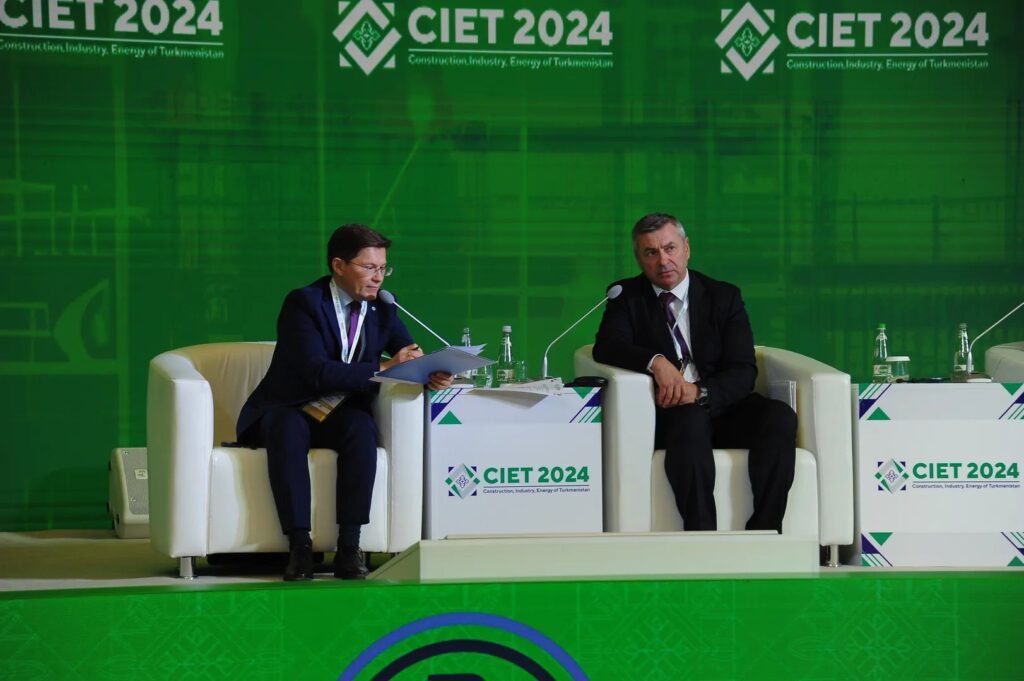
Vladimir Petruk, managing director of Interbudmontazh Company, told the CIET-2024 international conference that a metro system may be built in Turkmenistan's capital Ashgabat by 2035. Petruk said that specialists from the Japanese company Sumitomo, the Japanese Subway Association, and the German consulting group K2 have studied Ashgabat's geological and seismic conditions. The study's results confirmed the possibility of building the subway using reinforced concrete structures. The Ashgabat metro plan calls for an environmentally friendly transportation solution. In the future, it could connect the capital with the “smart city” Arkadag and the settlements of Geokdepe and Anau. According to forecasts, construction could be completed by 2035. “Given the growing wealth and the increasing number of cars, the metro will become essential to solve the city's transportation problems,” Petruk emphasized, noting the successful experience of operating metros in seismically active regions. Consultations with the Ministry of Construction and Architecture of Turkmenistan are ongoing, and the UN mission plans to cooperate with the country to support the urban infrastructure development program. Turkmenistan currently does not have a metro. The idea of building a metro in Ashgabat has been discussed since 2008 when the city mayor's office attracted companies from St. Petersburg to the project. In 2014, then-President Gurbanguly Berdymuhamedov instructed the Ukrainian construction association Interbudmontazh to consider the possibility of realizing this project. In 2020, the company presented the Ashgabat metro construction project developed jointly with Sumitomo and K2. However, specific dates for the start of construction and commissioning of the metro in Ashgabat have not yet been announced.

Uzbekistan Opens Strategic Highway Link to Europe

A 240km section of the Kungrad-Beineu highway in Uzbekistan has been reopened after reconstruction. The road runs through Uzbekistan’s northwestern region of Karakalpakstan to the border with Kazakhstan. It is part of a strategic highway corridor connecting Uzbekistan with European countries. Uzbekistan's President Shavkat Mirziyoyev said that the distance of international transportation through Uzbekistan will now be reduced to 1,000 kilometers, and transportation costs will be lowered by 25 percent. “This road will become part of the logistics network reliably connecting our country with European markets through the Caspian and Black Sea ports. On this section of the international corridor "A-380" that passes through Uzbekistan, the daily traffic flow will increase threefold,” Mirziyoyev noted. In recent years, double-landlocked Uzbekistan has been striving to become a key transit hub in trade turnover between the EU and Turkey and Kyrgyzstan, Tajikistan, and Afghanistan.

Chinese Investors to Build New Industrial Plants and Residential Compound in Kyrgyzstan’s Naryn

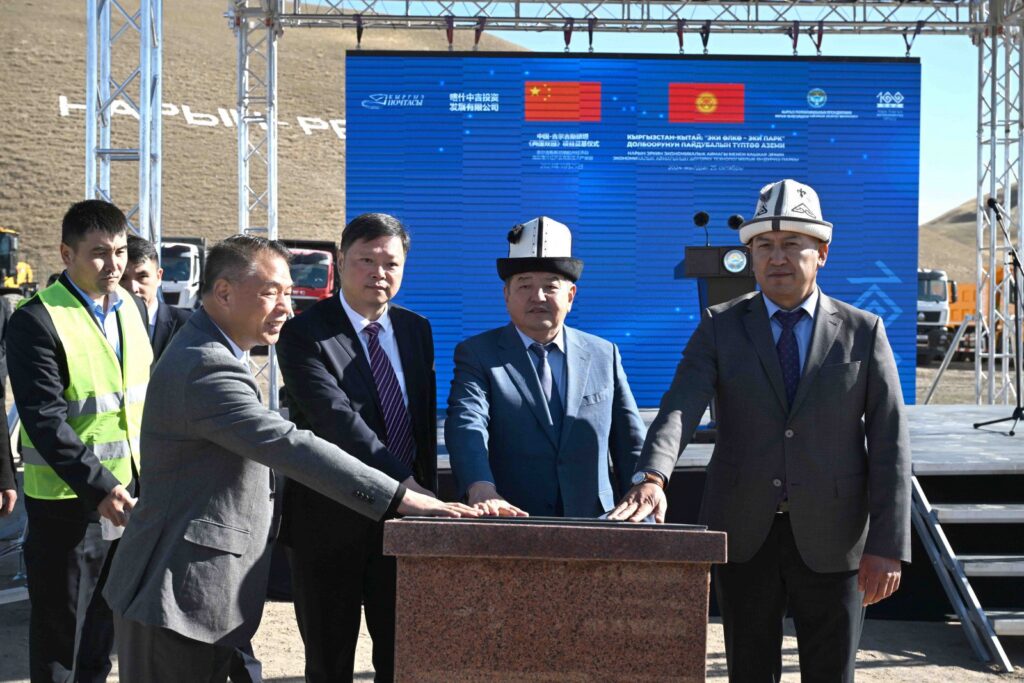
On October 25, Chinese investors launched the construction of four extensive production facilities in Kyrgyzstan's Naryn region: a car assembly plant, an LED lamp manufacturing plant, a toilet paper and napkin plant, and an agricultural drone manufacturing plant. At a capsule-laying ceremony, Akylbek Japarov, Chairman of the Cabinet of Ministers of Kyrgyzstan, emphasized that this event proves that Kyrgyzstan has reached “a new, higher level of relations” with its neighbor. Chinese partners will invest $130 million in the Naryn-Shumkar car assembly plant, which will manufacture more than 20,000 cars annually and create 1,000 jobs. $10 million will be invested in the LED lamp plant, which will produce 30 million lamps per year and create about 200 jobs. Another $10 million will be invested in the toilet paper and napkin plant, which will produce 6,000 tons of paper annually and create more than 100 jobs. On the same day, Japarov attended a ceremony to begin the construction of a new residential compound, Tien Shan City, in the town of Naryn. The residential compound will consist of six 10-storey apartment blocks. The developer, a construction company from the Chinese city of Kashgar, plans to complete high-quality modern housing construction within a year. The company will also build an administration house for all government services for the local population.