• KZT/USD = 0.00223
  • TJS/USD = 0.10830
  • UZS/USD = 0.00009
  • TMT/USD = 0.29850
  • KZT/USD = 0.00223
  • TJS/USD = 0.10830
  • UZS/USD = 0.00009
  • TMT/USD = 0.29850
  • KZT/USD = 0.00223
  • TJS/USD = 0.10830
  • UZS/USD = 0.00009
  • TMT/USD = 0.29850
  • KZT/USD = 0.00223
  • TJS/USD = 0.10830
  • UZS/USD = 0.00009
  • TMT/USD = 0.29850
  • KZT/USD = 0.00223
  • TJS/USD = 0.10830
  • UZS/USD = 0.00009
  • TMT/USD = 0.29850
  • KZT/USD = 0.00223
  • TJS/USD = 0.10830
  • UZS/USD = 0.00009
  • TMT/USD = 0.29850
  • KZT/USD = 0.00223
  • TJS/USD = 0.10830
  • UZS/USD = 0.00009
  • TMT/USD = 0.29850
  • KZT/USD = 0.00223
  • TJS/USD = 0.10830
  • UZS/USD = 0.00009
  • TMT/USD = 0.29850
02 October 2026

Viewing results 1 - 6 of 73

Charges Reclassified for Defendants in Crocus Terror Attack Case

The charges against the four defendants in the Crocus City Hall terrorist attack case have been reclassified, lawyer Alexander Yarin has told Russia's state-owned TASS news agency. “Aminchon and Dilovar Islomov, their father Isroil Islomov, and Alisher Kasimov are now charged under Part 3 of Article 205.1 of the Russian Criminal Code,” Yarin stated. Previously, the defendants were charged under paragraph “b” of Part 3 of Article 205 of the Criminal Code, which pertains to a terrorist act resulting in a fatality. The updated charges now reflect involvement in actions that facilitated the commission of a terrorist act. As previously reported by TCA, the terrorist attack at Crocus City Hall, located on the outskirts of Moscow, resulted in 144 fatalities and 551 injuries. The incident has created a climate of fear among Central Asian migrants living in Russia. In the aftermath of the attack, Tajik migrants have faced a surge of hostility and aggression, further exacerbating tensions within the migrant community.

Tajik MMA Fighter Chorshanbiev, Imprisoned For Criticizing Authorities, Faces New Charges

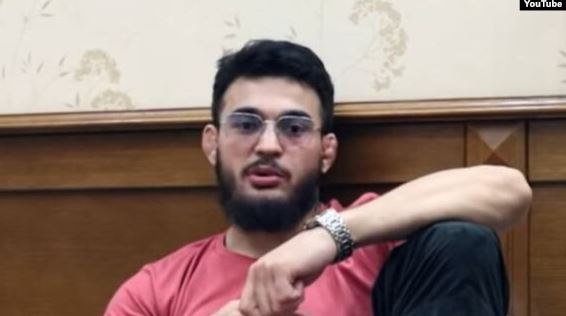
In Tajikistan, the well known MMA fighter and prominent blogger Chorshanbe Chorshanbiev, already serving an 8.5-year prison sentence, has been handed an additional four years on new charges. Journalist Anora Sarkorova reported the development on November 18, which was later confirmed by sources at Radio Ozodi. Chorshanbiev, known for criticizing Tajik authorities in the Gorno-Badakhshan Autonomous Region while residing in Russia, was deported to Tajikistan in December 2021. By May 2022, he was convicted of “public calls for violent change of the constitutional order” and sentenced to 8.5 years in prison. Details of the additional sentence remain unclear, but it is speculated to be related to either violations of prison regulations or involvement in a fight. Recently, Chorshanbiev was transferred from a penal colony in Khujand to a pre-trial detention center in Dushanbe. Chorshanbiev’s legal troubles began in December 2021 when he was deported from Russia for traffic violations. Upon his arrival in Dushanbe, he was arrested, and the Tajik prosecutor's office initiated charges against him, alleging incitement of social and national discord and calls to overthrow the state system. However, during the investigation, the first charge was dropped. His trial garnered significant public attention. Prominent athletes in Russia voiced their support for him, and his defense team argued that the case rested on a single piece of evidence: a video recorded in November 2021. In the video, Chorshanbiev commented on violent clashes in Khorog, during which three people were killed and dozens injured. The prosecution claimed his statements amounted to incitement of protests against the government. A political scientist’s analysis, presented during the trial, characterized Chorshanbiev’s remarks as a call for rebellion. However, his lawyers contested this interpretation and requested a re-evaluation of the video. In court, Chorshanbiev maintained that he had no intention of destabilizing the country. Despite the divided expert opinion, Chorshanbiev was convicted, and his case continues to provoke debate.

Out With the Old and in With the New: From Politicians to Felons: Part Two

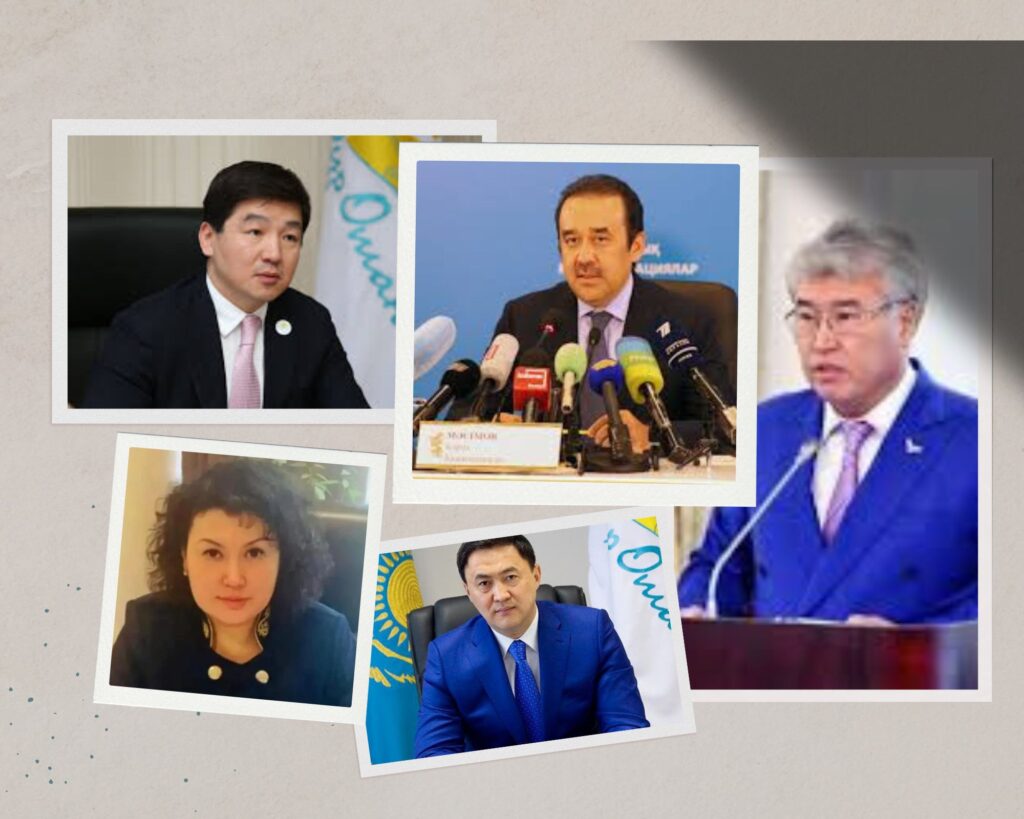
The end of the first president of Kazakhstan, Nursultan Nazarbayev’s era coincided with a wave of mass protests across the country. The widely-accepted cause was the death of five children in a fire in a dilapidated annex to a private house, the like of which there are many in the suburbs of Astana. This tragedy occurred on the night of February 4, 2019, when the girls, with ages ranging from a baby to twelve years old, were left home alone. The event sparked furious complaints from mothers of children across the country, and on March 19 of the same year, Nazarbayev resigned, handing power to the next in the constitutional hierarchy, Kassym-Jomart Tokayev, the speaker of the Senate (Kazakhstan's upper house of parliament). High-profile cases of the transition period From that moment until the events of January 2022, the country went through a transitional period, which is often spoken of as having been a time of dual power. By analogy with the “Kremlin Towers” (a popular theory about clans in Vladimir Putin's Russia being engaged in an irreconcilable struggle for resources and influence), the new president's entourage began to be called “Akorda” - after the head of state's residence in Astana. Supporters of Nazarbayev and the idea of his return to the presidency, meanwhile, were known as the “Library” – a reference to the Library of the First President. It was believed that the officials Tokayev inherited from his predecessor were more likely to run reports to the Library than to the Akorda. This division serves to explain how the new president was bound in his ability to implement changes. Tokayev initially announced a course of political, economic and social reforms, but only the latter were implemented, while the rest were sabotaged. Even support from the general public, which Tokayev managed to garner in the National Council of Public Trust, did not help matters.Even under such constraints, however, it was possible to begin a purge of the establishment. For example, in 2020, the country was shaken by the first high-profile criminal case under Tokayev, when Bulat Bakauov, akim of the Pavlodar region and a bellwether of high-profile scandals under Nazarbayev, was accused of abusing his authority and arrested. However, the influence of Nazarbayev's entourage remained strong, so the sentence handed down to the former Akim turned out to be a meagre restriction of freedom for 3.5 years. The court obliged Bakauov to refrain from leaving his residence and regularly report to the probation service. In addition, Bakauov was obliged to engage in a hundred hours of public labor, ordered to return $10,000, and banned from holding public office. In the same year, there was a glimmer of hope that the former Akim of Almaty, Bauyrzhan Baibek - who was elevated to the height of political power by his father's childhood friendship with Nursultan Nazarbayev – would be held to account. Urban legends still circulate about the illegal earnings of Baibek and his team from the reconstruction of the center of...

Uzbek Man Suspected of Kidnapping Italian Businessman Arrested

An Uzbek citizen has been detained in Italy on charges of orchestrating the kidnapping of Italian businessman Stefano Guidotti in Moscow. In June this year Guidotti was abducted and held hostage. According to Italian investigators, the alleged mastermind is a 44-year-old Uzbek national living near Ravenna, who holds a Russian passport. The suspect had previously worked for Guidotti’s business. The Bologna prosecutor’s office identified the Uzbek citizen as the primary organizer of the crime. Reports indicate he also personally initiated negotiations to establish a ransom for the release of Guidotti, who serves as the general director of the Russian office of SIAD Group. SIAD is one of Europe’s largest manufacturers of industrial gases. The kidnapping took place on the morning of June 28, when three men seized Guidotti in the courtyard of a residence in central Moscow. He was handcuffed, a bag was placed over his head, and he was forced into a car. Russian police rescued him the following day in the country's Bryansk region. The abductors reportedly included three Russian nationals and one foreigner.

In the Wake of Bishimbayev: From Politicians to Felons – Part One

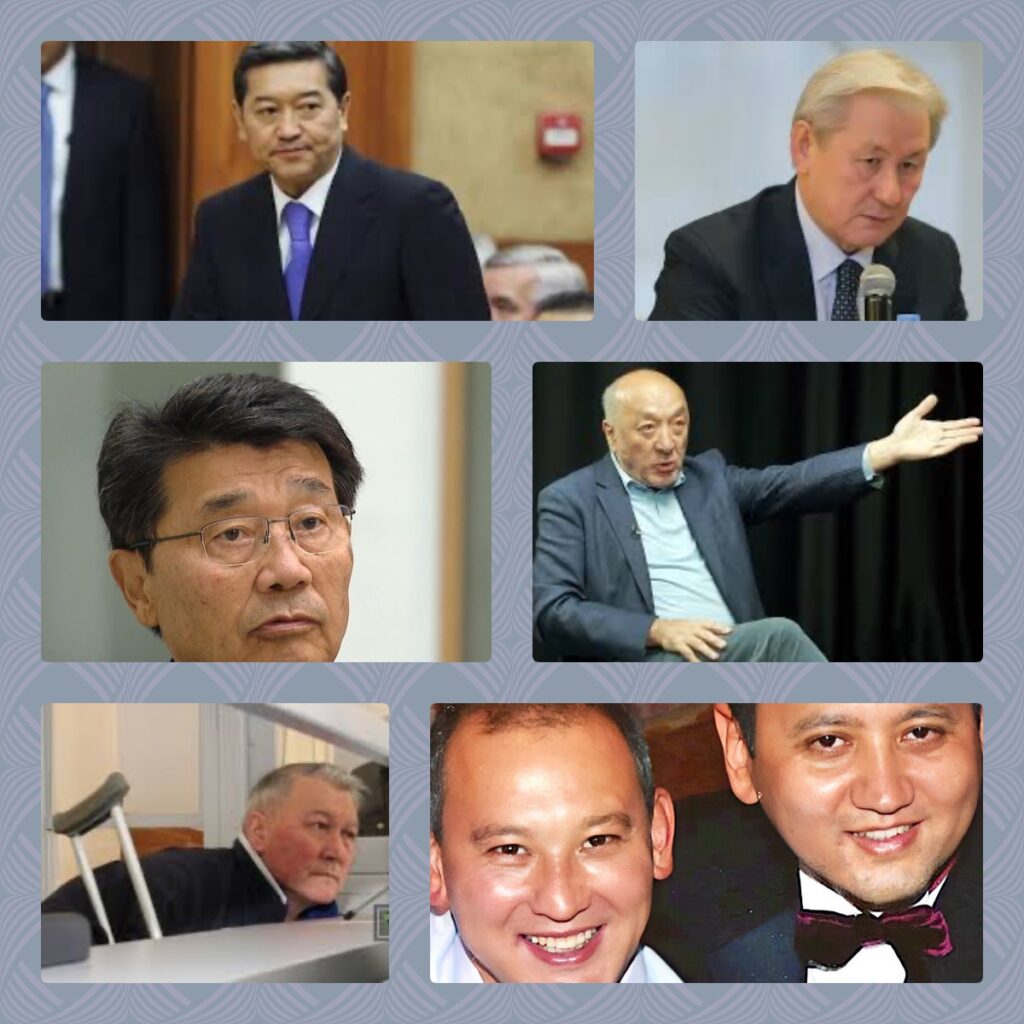
Eight days ago, a scandal shook Kazakhstani society: Kuandyk Bishimbayev allegedly escaped from the penal colony where he was serving his sentence. Bishimbayev is a former high-ranking official of the government of Nursultan Nazarbayev's era, who was sentenced to 24 years in prison for the brutal murder of his wife. The Interior Ministry's Criminal Correctional System Committee immediately denied this information and said that a criminal case had been opened over the dissemination of this misinformation. This is not the first time Bishimbayev has become a resident of a penal colony. In 2017, as the Minister of National Economy of Kazakhstan, he was arrested on suspicion of large-scale bribery and embezzlement. In 2018, he was sentenced to a ten-year term with the confiscation of property and deprivation of the right to hold public office for the rest of his life. However, he was released on parole in 2019. Kazakhstan has been shaken by Bishimbayev's new crime. The trial, which was broadcast live online for the first time in the country's history, was watched by millions of citizens, not only within the Republic, but also abroad in other post-Soviet countries, and even in the West. However, this is not the first and, in all likelihood, not the last sensational case in which a former high-ranking official becomes a defendant. The long list of convicted ministers and akims can be divided chronologically into three parts: the Nazarbayev era, the transition period, and the so-called “New Kazakhstan,” which started after the January Events - the failed coup in 2022. This article discusses the most notorious court cases from each of these periods. Akezhan Kazhegeldin Former Prime Minister Akezhan Kazhegeldin was a politician known not only in Kazakhstan, but also in the West. He led the Government of Kazakhstan from 1994 to 1997. After falling into disfavor, in 1998 he attempted to challenge Nazarbayev in the upcoming presidential election. Kazhegeldin was not allowed to participate and had to leave Kazakhstan under the pretense of receiving medical treatment in Switzerland for unspecified health problems. In 1999, Kazhegeldin was put on an international wanted list, and in 2001 he was found guilty in absentia by the Supreme Court of Kazakhstan of abuse of power and authority, extortion and repeated bribes of millions of dollars, illegal acquisitions, the storage and transfer of weapons and ammunition, and tax evasion. Kazhegeldin was sentenced to ten years in prison, but has not returned to the country since. He continued to influence Kazakhstan's domestic politics from abroad until 2001 through the Republican People's Party of Kazakhstan, which he organized for this purpose. It was alleged that Kazhegeldin received kickbacks from a contract awarded to Tractebel in 1996 to run Almaty's electric company and power grid. A year later, the Belgian company also won a concession to manage gas pipelines in the south and west of Kazakhstan. In the U.S., meanwhile, the DOJ investigated claims Kazhegeldin received illegal payments of $6 million as part of a bribery scandal known as ‘Kazakhgate’. This...

Kyrgyz Politician Irina Karamushkina Detained on Suspicion of Offering Cash for Votes

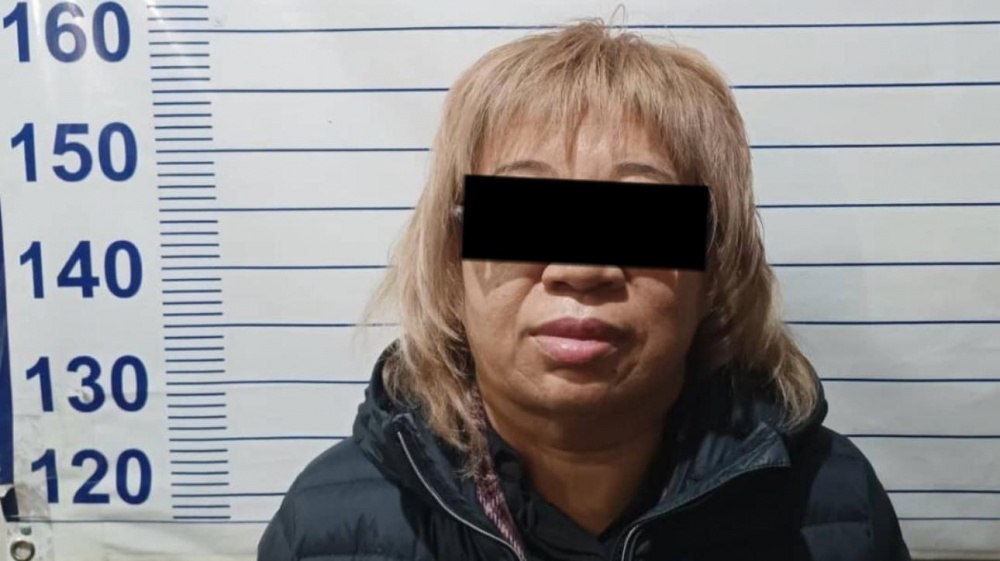
Irina Karamushkina, a senior member of the Social Democrats party and a former deputy of Kyrgyzstan's Parliament, the Jogorku Kenesh, has been detained in Bishkek on suspicion of buying votes ahead of local elections on November 17. The Social Democrats are one of about 20 parties whose candidates are registered in the elections. According to the press service of the city's police department, on November 13 an audio recording surfaced on social media in Kyrgyzstan, in which the chief of staff of the Social Democrats party, identified as "I.K.", allegedly discussed vote buying with a person named "D.C." ahead of Sunday's elections. In response, Bishkek police investigators launched a criminal case under Article 196 of the Kyrgyz Criminal Code, addressing election bribery. Later, the police distributed an audio recording allegedly capturing a conversation between Karamushkina and Daniyar Cholponbaev -- the party's candidate for deputy -- where they appear to discuss offering bribes for votes. The investigation found that "T.R.", a trustee of the Social Democrats, and "I.K." were involved in voter bribery, offering 1,000 Kyrgyz som ($12) per vote. During a search of the party headquarters, authorities seized lists indicating payments of 15,000 to 30,000 som ($175 to $350) to over 40 individuals, along with 28,300 som ($330) in cash, believed to be intended for offering bribes to voters. "T.R." and "I.K." were detained as suspects and are being held in a temporary detention facility. The investigation is ongoing. On November 13, police and special forces raided the Social Democrats’ headquarters, evacuating everyone from the premises. Party leader Temirlan Sultanbekov was taken in for questioning, and Karamushkina’s residence was also searched as part of the investigation.