• KGS/USD = 0.01143 -0%
  • KZT/USD = 0.00198 -0%
  • TJS/USD = 0.10899 0.93%
  • UZS/USD = 0.00008 0%
  • TMT/USD = 0.28490 -0.28%
  • KGS/USD = 0.01143 -0%
  • KZT/USD = 0.00198 -0%
  • TJS/USD = 0.10899 0.93%
  • UZS/USD = 0.00008 0%
  • TMT/USD = 0.28490 -0.28%
  • KGS/USD = 0.01143 -0%
  • KZT/USD = 0.00198 -0%
  • TJS/USD = 0.10899 0.93%
  • UZS/USD = 0.00008 0%
  • TMT/USD = 0.28490 -0.28%
  • KGS/USD = 0.01143 -0%
  • KZT/USD = 0.00198 -0%
  • TJS/USD = 0.10899 0.93%
  • UZS/USD = 0.00008 0%
  • TMT/USD = 0.28490 -0.28%
  • KGS/USD = 0.01143 -0%
  • KZT/USD = 0.00198 -0%
  • TJS/USD = 0.10899 0.93%
  • UZS/USD = 0.00008 0%
  • TMT/USD = 0.28490 -0.28%
  • KGS/USD = 0.01143 -0%
  • KZT/USD = 0.00198 -0%
  • TJS/USD = 0.10899 0.93%
  • UZS/USD = 0.00008 0%
  • TMT/USD = 0.28490 -0.28%
  • KGS/USD = 0.01143 -0%
  • KZT/USD = 0.00198 -0%
  • TJS/USD = 0.10899 0.93%
  • UZS/USD = 0.00008 0%
  • TMT/USD = 0.28490 -0.28%
  • KGS/USD = 0.01143 -0%
  • KZT/USD = 0.00198 -0%
  • TJS/USD = 0.10899 0.93%
  • UZS/USD = 0.00008 0%
  • TMT/USD = 0.28490 -0.28%
06 December 2025

Viewing results 1 - 6 of 15

Why Attacks on the Caspian Pipeline Consortium Could Alter Kazakhstan’s Strategic Plans

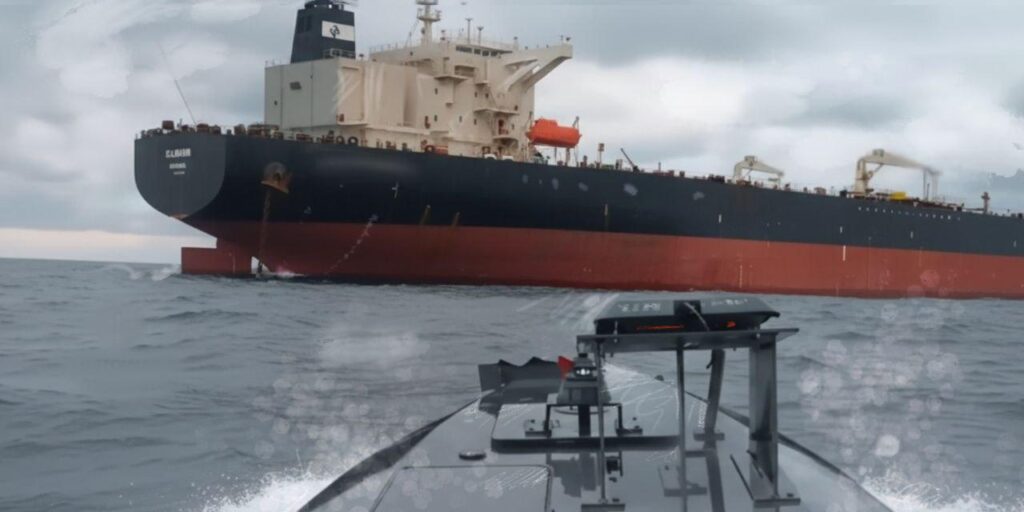
Attacks on the infrastructure of the Caspian Pipeline Consortium (CPC), reduced export flows, and volatility in commodity markets are generating serious pressures for Kazakhstan. In the coming years, both the country’s financial system and its domestic political balance may face significant tests. A number of experts warn that disruptions in oil logistics via the CPC, which remains the main artery for Kazakh crude exports, could depress budget revenues, strain national companies, and worsen the sovereign outlook. Kazakhstan pumps roughly 80% of its oil exports through the CPC system, and oil revenues account for more than half of the country’s total export earnings. Because CPC Blend is Kazakhstan’s primary export-grade crude, even short interruptions can reverberate through the state budget, the National Fund, and the balance sheets of national companies. This could trigger a domino effect, destabilizing broad swathes of the economy and undermining public finances. Already, the recent rounds of disruption around Black Sea oil shipping are eroding a substantial source of tax revenue for the state. Continued Risk of Strikes Political scientist Dosym Satpaev argues that Kazakhstan may be underestimating the intensity and persistence of the conflict surrounding Ukraine. He contends that both sides in that conflict have used strikes on energy infrastructure as key tools, a tactic that will likely continue. The recent strike targeted the CPC’s single-point moorings (SPMs) at Novorossiysk, a coastal terminal on the Russian Black Sea. These offshore loading points sit in relatively shallow waters and are physically exposed, making them susceptible to the naval drones Ukraine has increasingly deployed against Russian maritime infrastructure. Although the attack officially targeted Russian facilities, the collateral implications for Kazakh oil exports were immediate. According to Satpaev, that means further risks for the CPC. The fact that Kazakhstan remains heavily dependent on this single pipeline reflects a broader failure to diversify exports and reduce reliance on raw material transit.  The vulnerability is magnified by the CPC’s ownership structure: although Kazakhstan relies on it for most of its exports, the pipeline network and the Novorossiysk terminal lie on Russian territory and operate under Russian regulatory oversight. Russia holds a majority stake in the consortium, while U.S. firms such as Chevron and Exxon also have significant shares, creating a complex web of interests that limits Astana’s room for manoeuvre. Kazakhstan has already experienced how this dependence can be leveraged. In 2022, Russian regulators repeatedly halted CPC operations over alleged “environmental violations,” moves widely interpreted as political pressure at a moment of diplomatic friction. That precedent underscores how strategic vulnerability to CPC disruptions predates the current wave of attacks. Satpaev is skeptical that alternative export routes, such as via pipelines through the Caspian Sea to Baku-Tbilisi-Ceyhan or transit to China, can substitute for the CPC in the near term. Given the global trend toward reduced oil demand, he believes this leaves Kazakhstan exposed to long-term structural risks.  At the same time, Satpaev views as unlikely the possibility that Ukraine would attempt to directly stop the CPC’s operations, given the broader consequences such...

U.S. Eases Sanctions on Key Kazakh Oil Projects

The Caspian Pipeline Consortium (CPC), oil producer Tengizchevroil (TCO), and the Karachaganak field have been granted permission to resume services and conduct transactions related to their operational activities, following a United States Treasury Department decision to ease sanctions. The Tengiz and Karachaganak fields are located in Kazakhstan, and Kazakh oil is exported through the CPC system. In October, the U.S. Treasury added Russian oil giants Lukoil and Rosneft, along with 34 of their subsidiaries, to its latest package of sanctions. However, experts now suggest that the exemption of key projects in Kazakhstan could have a stabilizing effect on the country's oil sector and its broader economy. The U.S. Treasury’s Office of Foreign Assets Control (OFAC) issued General License No. 124B, allowing services and other transactions required to maintain the operations of the CPC, Tengizchevroil, and the Karachaganak project, even when sanctioned entities such as Lukoil and Rosneft are involved. The license does not permit any transactions related to the sale or transfer of shares in these projects. Kazakhstan’s Minister of Energy, Yerlan Akkenzhenov, confirmed on November 12 that the government is working to have the Karachaganak field fully exempt from the U.S. sanctions regime. The CPC system links oil fields in western Kazakhstan and parts of Russia with a marine terminal in Novorossiysk on Russia’s Black Sea coast. It remains the main export route for Kazakh oil, carrying more than 80% of the country’s crude. The system has an annual capacity of about 83 million tons. CPC shareholders include Kazakhstan, holding a combined 20.75% through KazMunayGas (19%) and Kazakhstan Pipeline Ventures LLC (1.75%). Other shareholders include Chevron Caspian Pipeline Consortium Company (15%), Lukoil International GmbH (12.5%), Mobil Caspian Pipeline Company (7.5%), Rosneft-Shell Caspian Ventures Limited (7.5%), BG Overseas Holdings Limited (2%), Eni International N.A. N.V. (2%), and Oryx Caspian Pipeline LLC (1.75%). The Russian government and Transneft also hold significant stakes. Tengizchevroil LLP, the operator of the Tengiz field, is a joint venture between Chevron (50%), ExxonMobil Kazakhstan Ventures Inc. (25%), KazMunayGas (20%), and Lukoil (5%). Tengiz is one of Kazakhstan’s largest oil fields, with reserves estimated at 3.1 billion tons. The Karachaganak field is among the world’s largest, with development carried out by the Karachaganak Petroleum Operating consortium. Shell and Eni serve as joint operators, and the partnership also includes Chevron (18%), Lukoil (13.5%), and KazMunayGas (10%). On November 13, it was reported that KazMunayGas is considering acquiring Lukoil’s stake in the Karachaganak project, reflecting efforts to manage shifting ownership dynamics under the sanctions environment.

Pipelines Under Pressure: Ukraine War Hits Kazakhstan Energy Arteries

The ongoing war between Ukraine and Russia continues to have indirect but notable implications for Kazakhstan’s energy sector. Following the September drone attack in Russia’s Novorossiysk that damaged the offices of the Caspian Pipeline Consortium (CPC) - which exports the majority of Kazakhstan’s oil - another incident has raised concern: the October 19 strike on Russia’s Orenburg Gas Processing Plant, which handles gas from Kazakhstan’s Karachaganak field. The CPC confirmed that its export terminal continued operating after the September 24 incident, though two employees were injured and part of its office complex was damaged. The consortium remains the backbone of Kazakhstan’s oil exports, handling over 80% of national crude shipments to world markets. This concentration has long been viewed as a vulnerability because nearly all flows depend on infrastructure inside Russian territory. The war has underscored that risk, prompting Astana to accelerate plans for alternative routes across the Caspian Sea toward Azerbaijan and Georgia. Astana has been working with Baku and Tbilisi to expand capacity along the Trans-Caspian International Transport Route (Middle Corridor), supported by EU and World Bank funding commitments. Kazakhstan’s Ministry of Energy confirmed that the plant, located about 150 kilometers northwest of Kazakhstan’s Karachaganak field across the Russian border, was temporarily shut down following the UAV strike. “According to information from PJSC Gazprom, on October 19, 2025, an emergency situation occurred at the Orenburg gas processing plant as a result of a UAV attack, in connection with which the plant temporarily stopped receiving raw gas from the Karachaganak field.” The Ministry added that gas supplies to domestic consumers remain unaffected and that consultations are underway with field operators to assess potential disruptions and losses. No details on the extent of the damage or repair timelines have been released by the Russian side. Ukraine’s military confirmed responsibility for the attack as part of its campaign against Russian energy infrastructure, according to statements reported by Interfax-Ukraine and Ukrainska Pravda. Industry analysts, however, remain cautious. Journalist Oleg Chervinsky noted that the Orenburg plant processes up to nine billion cubic meters of Karachaganak gas annually, a portion of which is returned to Kazakhstan’s northern regions. He warned that a prolonged shutdown could lead to supply shortages, particularly during the winter months. The timing of the Orenburg attack - just before the start of the heating season - adds a seasonal risk dimension. Olzhas Baidildinov, an expert in the energy sector, criticized delays in constructing a domestic gas processing facility at Karachaganak, arguing that reliance on foreign infrastructure heightens Kazakhstan’s vulnerability to regional conflict and economic disruptions. The replacement of damaged equipment, including components from France’s Technip, could also be complicated by sanctions and supply chain issues, ultimately impacting tariffs and consumer costs. The cumulative effect of reduced gas processing capacity and potential production slowdowns at Karachaganak could weigh on Kazakhstan’s already strained budget. While some observers note that reduced output may help the country align with its OPEC+ production commitments, previously exceeded at major fields including Kashagan, Tengiz, and Karachaganak, such...

Caspian Pipeline Attack After Zelenskyy-Tokayev Meeting Puts Kazakhstan in Delicate Position

A recent drone strike on the Caspian Pipeline Consortium (CPC) office in Novorossiysk has raised concerns in Kazakhstan, whose oil exports rely heavily on the pipeline route. The attack, which killed two people and damaged nearby infrastructure, occurred just one day after Kazakh President Kassym-Jomart Tokayev met with Ukrainian President Volodymyr Zelenskyy in New York. While there is no official indication that the CPC was a deliberate target, the incident has prompted debate over the implications for Kazakhstan’s economic security and diplomatic neutrality amid the ongoing war. According to CPC, the attack struck its administrative office in central Novorossiysk during the workday. The building sustained damage in addition to nearby residential blocks and a hotel. Two CPC employees were wounded and evacuated; the office’s operations were suspended. The consortium also said others in the building, not employed by CPC, suffered serious injuries.  Authorities in the Krasnodar region confirmed two deaths and seven injuries from the strike, declaring a state of emergency in the city.  Russian media reported extensive damage to residential buildings and a hotel near the CPC office.  In response, Kazakhstan’s Ministry of Energy issued a statement assuring that pipeline operations would continue as normal. The ministry said oil intake from Kazakh shippers remains unaffected, and the transportation and loading of oil via the CPC marine terminal is proceeding without restrictions. The ministry added that it is coordinating with CPC shareholders and monitoring developments in real time.  Notably, the attack followed just 12 hours after Tokayev’s meeting with Zelenskyy in New York. According to the Kazakh presidential press service, Zelenskyy expressed his view of the war’s trajectory while Tokayev emphasized the importance of sustained diplomacy. Ukraine’s version, via its presidential press service, was more expansive: Zelenskyy thanked Tokayev for support on sovereignty, insisted on a leaders’ summit, and said Kazakhstan’s mediation role was welcome. In a later interview, Zelenskyy even floated the possibility of meeting Russian President Vladimir Putin on neutral territory such as Kazakhstan.  When asked about that proposal after the Novorossiysk attack, Tokayev stated firmly that Kazakhstan does not see itself as a mediator in the Russia-Ukraine conflict. He reiterated that both sides should engage directly, while supporting continued talks. “Talks must continue,” he said.  Kazakh political analyst Daniyar Ashimbayev noted that Tokayev’s extended commentary suggested he may feel less enthusiastic about a repeat meeting with Zelenskyy. Oil expert Olzhas Baidildinov stated that around 80 percent of Kazakhstan’s oil exports transit via the CPC; he therefore warned the strike directly threatens Astana’s interests.  Baidildinov also suggested that Kazakhstan may need to consider a range of policy responses to ensure the security of its oil export routes, including enhanced monitoring of trade and transit channels. He noted that international companies operating in Kazakhstan, particularly those using the CPC pipeline, could be indirectly affected by any future disruptions. Kazakhstan’s Foreign Ministry has not issued a public statement on the incident. Meanwhile, diplomatic engagement continues at various levels. During his visit to New York, Tokayev also met with Chevron CEO Michael...

Opinion: Why Russia May Stop Oil Supplies via the CPC

The global confrontation between the West and East could, quite literally, devastate the economies of Central Asian countries in the near future. Some experts argue that the position Kazakhstan and its regional neighbors now occupy, four years into the war between Russia and Ukraine, has spiraled beyond anyone’s control. The disruption began with Ukrainian drone strikes on Russian infrastructure used by the Caspian Pipeline Consortium (CPC), which indirectly impacted oil flows from Kazakhstan to Europe. On August 2, several media outlets, citing sources within the Ukrainian military, reported an attack on the Central Asia-Center (SAC) gas pipeline running through Kazakhstan. The attack allegedly caused an indefinite halt in gas deliveries that Russia had been sending in reverse flow to Uzbekistan. Kazakhstan also uses this gas domestically. Shortly after, the energy ministries of both Uzbekistan and Kazakhstan denied reports of any damage to the pipeline. Nonetheless, Ukraine’s classification of the SAC pipeline as a legitimate target remains on record. Notably, although Kazakhstan’s Foreign Ministry has issued a formal protest to Kyiv over the CPC attacks, it has yet to reveal any official response from the Ukrainian side. Kazakhstan thus finds itself in an extremely vulnerable position: its national budget is heavily dependent on oil exports, while its southern infrastructure increasingly relies on imported gas. For example, the planned conversion of Almaty’s TPP-2 to gas is unfeasible without stable fuel supplies. In other words, Kazakhstan has become fully dependent on developments in the Russian-Ukrainian war. Compounding the geopolitical tension, U.S. President Donald Trump has pursued an aggressive and often unpredictable foreign policy approach. He has threatened sanctions against Russia’s economic partners if they continue buying oil from President Vladimir Putin. This pressure is primarily directed at China and India, both of which have already signaled they do not intend to comply with Trump’s ultimatum. In response, Russia may adopt symmetrical countermeasures targeting American companies, specifically, by halting oil flows via the CPC. That’s the view of JPMorgan analysts, who suggest that such a move could drive global oil prices up to $80 per barrel. This would benefit Russia but would deal a serious blow to Kazakhstan, which relies on CPC to export up to a million barrels of oil per day. Unfortunately, Kazakhstan lacks viable alternatives. The Baku-Tbilisi-Ceyhan (BTC) pipeline, often cited as a backup route, depends heavily on Caspian Sea shipping, which is increasingly hindered by shallow waters. Heavier oil barges dispatched from Aktau to Baku risk running aground. As a result, Kazakhstan's oil volume transported via BTC is expected to increase by only 300,000 tons this year, from 1.4 to 1.7 million tons. It's worth noting that CPC exports oil produced by American firms Exxon and Chevron, the British company Shell, Italy's ENI, and France’s TotalEnergies. These are the very firms Russia could target in retaliation. As Trump’s statements deepen the appearance of a Russia-versus-West conflict, energy infrastructure could increasingly become a battlefield. Hints of Moscow’s readiness to act have already emerged. In mid-July, President Putin signed a decree mandating...

Kazakhstan’s Oil Exports Uninterrupted Despite Caspian Pipeline Consortium Berth Suspensions

Despite the suspension of two out of three offshore berths operated by the Caspian Pipeline Consortium (CPC), Kazakhstan’s oil exports are proceeding without disruption, according to the Ministry of Energy of the Republic of Kazakhstan. The ministry stated that there are currently no restrictions on the receipt or shipment of oil through the CPC system. Transshipment is being carried out on schedule via VPU-3, the third remote mooring unit, which has been in operation since 2014. “Shipments are proceeding normally and according to schedule through the VPU-3 offshore mooring device, which remains operational,” the Ministry of Energy announced. Temporary Suspension of VPU-1 and VPU-2 Earlier, CPC announced the temporary suspension of VPU-1 and VPU-2 following an unscheduled inspection conducted by Russia’s Rostransnadzor. The inspections are part of a broader review of marine infrastructure safety across the Azov-Black Sea basin, launched in the wake of an oil product spill in the Kerch Strait in December 2024. Following the inspection, regulatory authorities issued protocols and directives mandating the temporary shutdown of the two berths until the violations identified are addressed. In the meantime, all CPC shipments have been consolidated through VPU-3. Consortium shareholders have been formally notified of the developments. Similar Measures at Transneft Facility The crackdown on safety violations has extended beyond the CPC. The eighth oil-loading berth operated by JSC Novorossiysk Commercial Sea Port (NCSP Group), part of Russia’s Transneft, has also been suspended for 90 days. The suspension followed the identification of safety violations related to the handling of hazardous cargo. Transneft has been ordered to correct the deficiencies by June 30. Strategic Significance of CPC The CPC is Kazakhstan’s most critical export route for crude oil, linking the giant Tengiz Field with the Yuzhnaya Ozereyevka Terminal on the Black Sea. The pipeline stretches 1,510 kilometers, including 452 kilometers within Kazakhstan, and has an annual capacity of up to 81.5 million tons. In 2024, Kazakhstan exported 54.9 million tons of oil via CPC, accounting for approximately 80% of the country's total oil exports. Security Concerns: Drone Attacks Raise Alarms Security concerns continue to loom over the CPC infrastructure. In February, the Kropotkinskaya station was targeted by seven drones. While the Ministry of Energy reassured that oil deliveries remained unaffected, the incident heightened concerns about operational stability. Although Russia and Ukraine later agreed not to target CPC facilities, Russia alleges that its air defense systems intercepted another drone attack on March 24, the third such incident in a month. Oil market analyst Olzhas Baidildinov voiced skepticism about the durability of the ceasefire arrangement. “We shouldn’t count on an end to attacks on CPC infrastructure,” Baidildinov said. “There’s unwarranted optimism in Kazakh media and among some experts, especially against the backdrop of record oil output in February-March. A decline in both oil production and exports seems inevitable, along with a drop in KazMunayGas’ dividend income from CPC and budget revenues.” He also warned that irregular operations could damage infrastructure designed for continuous, stable use. “Oil pipelines are engineered for consistent operational...