
• KGS/USD = 0.01144 0%
  • KZT/USD = 0.00203 0%
  • TJS/USD = 0.10647 -0.09%
  • UZS/USD = 0.00008 0%
  • TMT/USD = 0.28490 0%
  • KGS/USD = 0.01144 0%
  • KZT/USD = 0.00203 0%
  • TJS/USD = 0.10647 -0.09%
  • UZS/USD = 0.00008 0%
  • TMT/USD = 0.28490 0%
  • KGS/USD = 0.01144 0%
  • KZT/USD = 0.00203 0%
  • TJS/USD = 0.10647 -0.09%
  • UZS/USD = 0.00008 0%
  • TMT/USD = 0.28490 0%
  • KGS/USD = 0.01144 0%
  • KZT/USD = 0.00203 0%
  • TJS/USD = 0.10647 -0.09%
  • UZS/USD = 0.00008 0%
  • TMT/USD = 0.28490 0%
  • KGS/USD = 0.01144 0%
  • KZT/USD = 0.00203 0%
  • TJS/USD = 0.10647 -0.09%
  • UZS/USD = 0.00008 0%
  • TMT/USD = 0.28490 0%
  • KGS/USD = 0.01144 0%
  • KZT/USD = 0.00203 0%
  • TJS/USD = 0.10647 -0.09%
  • UZS/USD = 0.00008 0%
  • TMT/USD = 0.28490 0%
  • KGS/USD = 0.01144 0%
  • KZT/USD = 0.00203 0%
  • TJS/USD = 0.10647 -0.09%
  • UZS/USD = 0.00008 0%
  • TMT/USD = 0.28490 0%
  • KGS/USD = 0.01144 0%
  • KZT/USD = 0.00203 0%
  • TJS/USD = 0.10647 -0.09%
  • UZS/USD = 0.00008 0%
  • TMT/USD = 0.28490 0%
11 February 2026

Viewing results 1 - 6 of 15

Russian Philosopher Sparks Outrage by Questioning Sovereignty of Former Soviet States

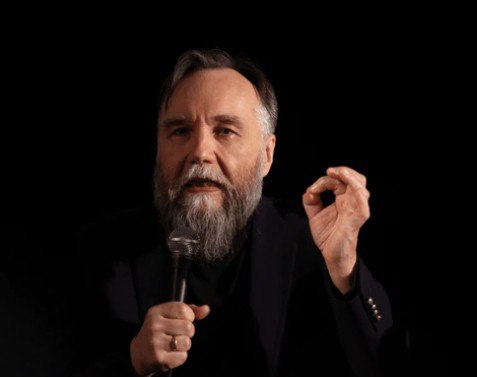
A fresh wave of controversy has erupted in Central Asia after Russian philosopher and political theorist Alexander Dugin publicly questioned the sovereignty of several post-Soviet states, including Uzbekistan. A video fragment of Dugin’s recent remarks circulated widely online, prompting strong backlash from regional analysts and commentators. In the recording, Alexander Dugin, founder of the International Eurasian Movement and often described as the ideologue of the so-called “Russian world,” said that national sovereignty should no longer apply to former Soviet republics. He specifically named Armenia, Georgia, Azerbaijan, Kazakhstan, Uzbekistan, Tajikistan, and Kyrgyzstan as states that, in his view, should not exist independently under any future political order. “Nothing sovereign can exist in this new model. That’s it. Sovereignty is over. National states are a thing of the past. This is garbage,” Dugin said, adding that “it is impossible to agree with the existence of a sovereign Uzbekistan.” Backlash from Uzbek Analysts Dugin’s remarks prompted immediate criticism in Uzbekistan. Journalist Ilyos Safarov described the comments as part of a broader ideological pattern rather than an isolated statement. “Yesterday it was Solovyov calling for a ‘special military operation’ in Central Asia. Today it is Dugin denying our sovereignty,” Safarov said. “This shows that post-imperial thinking is still alive in certain Russian political circles.” He warned that ignoring such rhetoric could further embolden these narratives. “Silence is often interpreted not as diplomacy, but as weakness. If these ideas are left unanswered, they begin to look acceptable to a wider audience,” Safarov said, noting that even unofficial figures can influence public discourse and political attitudes in Russia. Zavqibek Mahmudov, an associate professor at the Abdulla Avloniy National Institute of Pedagogical Excellence, echoed these concerns. He argued that ideological declarations, even from non-state actors, can translate into real-world political agendas. “History shows that radical political projects often begin with philosophical justifications,” Mahmudov said. He criticized Dugin’s rhetoric as part of a political chauvinism that categorizes countries as either "real" or "artificial." “When the existence of an entire nation is questioned, this is no longer academic debate, it is a direct challenge to international law and the principle of sovereign equality.” Mahmudov called for a coordinated legal and diplomatic response from all the countries mentioned in Dugin’s remarks. “A collective stance would be far more effective than individual national responses,” he noted. Official Distancing from Moscow The controversy follows recent remarks by Russian television host Vladimir Solovyov, who had floated the possibility of military action in Central Asia. That incident prompted a response from Russia’s Foreign Ministry. On January 16, ministry spokesperson Maria Zakharova stated that Solovyov’s views did not represent official Russian policy and reaffirmed that Moscow’s relationships with Central Asian countries are grounded in “partnership and respect for sovereignty.” Despite this distancing, analysts caution that repeated rhetorical assaults on Central Asian sovereignty, whether from state actors or affiliated intellectuals, may reflect deeper ideological currents that could have lasting consequences for regional stability.
Russian TV Host’s Talk of ‘Military Operations’ in Central Asia Triggers Backlash in Uzbekistan

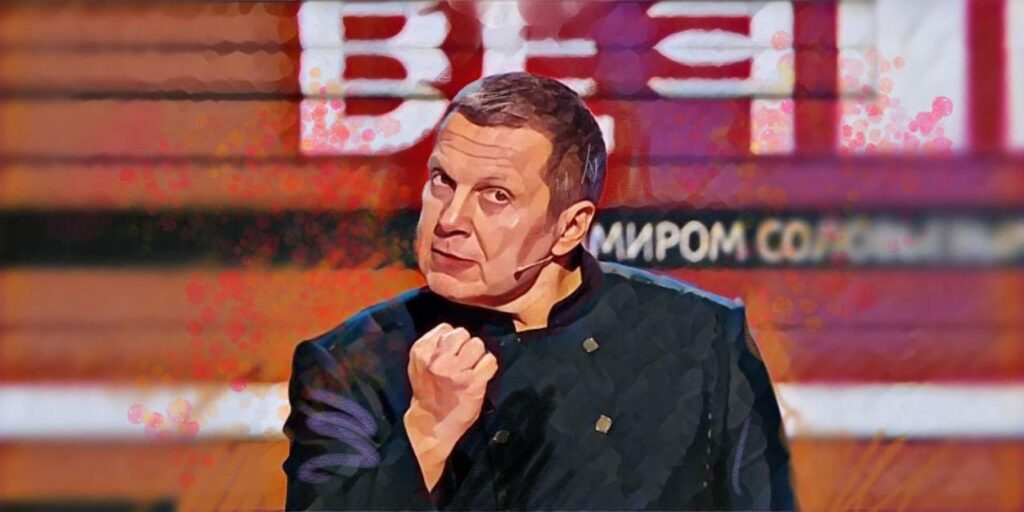
Controversial remarks by Russian television host Vladimir Solovyov, suggesting that Moscow could launch “special military operations” in Central Asia and Armenia, have provoked a strong backlash in Uzbekistan, where scholars, journalists, and political analysts warn that such rhetoric reflects dangerous political tendencies. Speaking on his Solovyov Live program, the prominent pro-Kremlin commentator claimed that regions like Armenia and Central Asia are far more critical to Russia’s national interests than distant allies such as Syria or Venezuela. He urged Russian authorities to abandon international law if it stands in the way of what he described as Russia’s national security. Solovyov was born in Moscow in 1963 and trained in economics and philosophy; after the collapse of the Soviet Union, he spent part of the early–mid-1990s living in the United States, where he worked as a businessman involved in commercial ventures rather than journalism or politics, before returning to Russia following financial difficulties. In the late 1990s and early 2000s, he entered radio and television, initially presenting himself as a liberal, pro-market commentator, but over time evolving into one of Russia’s most prominent pro-Kremlin television hosts, known for his hardline nationalist rhetoric and for aggressively promoting state narratives on domestic and foreign policy. “We must say openly: the games are over. International law and the international order mean nothing to us,” Solovyov declared, openly questioning why, if a so-called special military operation was justified in Ukraine, similar actions should not be carried out elsewhere within Russia’s claimed zone of influence. Solovyov characterized Central Asia as “our Asia,” framing it as part of Russia’s rightful sphere of influence. He warned that instability in the region represents a direct threat to Russia’s security and advocated for the Kremlin to clearly define the boundaries of its “zone of influence,” regardless of international norms. He also criticized Russia’s approach to the war in Ukraine, arguing that a lack of early harsh measures prolonged the conflict and resulted in greater losses. “We should stop casting pearls before swine and openly state that we do not care what Europe thinks,” he added. In recent years, tensions over Russian attitudes toward Central Asia have surfaced in regional discourse. In 2024, Uzbek political figure Alisher Qodirov publicly criticized what he called rising “Russian chauvinism,” responding to televised statements by Russian nationalists such as Zakhar Prilepin advocating territorial claims on Uzbekistan and Russian commentators on state TV asserting that peoples like the Uzbeks and Kazakhs did not exist before 1917, comments that Qodirov said were enough to call for cutting Russian broadcasts into Uzbekistan. Observers have also linked broader social trends in Russia - including xenophobic attacks on Central Asian migrant workers and statements by Russian officials linking Central Asian migration and security to Russia’s interests - to a narrative among some Russian public figures framing Central Asians as outsiders within Russia and Central Asia as a contested space. The remarks triggered immediate condemnation in Uzbekistan. Sherzodkhon Qudratkhodja, a political scientist and professor, said Solovyov had expressed, in plain terms, ideas...

Turkmen Activist Saddam Gulamov Faces Harsh Sentence for Government Criticism

Russia has extradited Saddam Gulamov, a Turkmen citizen and outspoken critic of the regime, to Turkmenistan, where he was sentenced to a lengthy prison term in 2024, according to a report by Turkmen.news. Born in 1991 in Ashgabat, Gulamov had publicly condemned the government's handling of the food crisis, its denial of the COVID-19 pandemic, and its silence following a devastating hurricane. He is reportedly being held in solitary confinement in prison alongside another activist. Gulamov had been residing in Russia, working in minor roles in theater and film. He was deported to Turkmenistan between late 2023 and early 2024 and convicted by the spring of 2024. The precise charges and length of his sentence have not been disclosed. Before his arrest, Gulamov had used social media to denounce the country's former president, Gurbanguly Berdimuhamedov, calling him a “dictator and thief,” and urging citizens to reject the culture of blind obedience toward Turkmenistan’s leadership. All of his online content has since been removed. His case is part of a broader crackdown on dissent that intensified in 2020, when the government's inaction during crises led to rising political awareness among citizens. This growing unrest sparked the formation of opposition movements abroad, with activists using social media to call for unity and reform. Turkmen intelligence services closely monitored these activities, and once pandemic-era border restrictions were lifted, many dissidents were forcibly repatriated. Several activists, including Farhat Meymankuliev, Rovshen Klychev, and Merdan Mukhammedov, were deported from Turkey, while others sought asylum in European Union countries. Russia, though less involved than Turkey, has also played a significant role in these forced returns. Notable cases include Azat Isakov, who disappeared in Moscow in 2021 after saying he was hiding from security agents, and Myalikberdy Allamuradov, who was deported in December 2023 and later imprisoned. The list of targeted activists now includes Gulamov. According to Turkmen.news, both he and Allamuradov are being held in solitary confinement in the LB-E/12 penal colony. His extradition follows a similar incident in May, when activist Umida Bekchanova was detained in Istanbul and faced possible deportation to Turkmenistan. Human rights groups warn these actions are part of an expanding campaign of transnational repression aimed at silencing critics abroad through intimidation and forced returns.

Climate Study’s Dire Forecast Undermined by Faulty Uzbekistan Data

A widely publicized climate study predicting severe global economic losses from climate change is under scrutiny following the discovery of a critical data error involving Uzbekistan. As reported by The Washington Post on August 7, the error significantly skewed the study’s projections, prompting renewed debate over the reliability of economic modeling in climate science. Published in Nature in 2023, the original study warned that unchecked climate change could reduce global GDP by 19% by 2050 and by an alarming 62% by 2100, nearly three times higher than earlier forecasts. The study attracted substantial media attention and became the second-most-cited climate paper in 2024, according to CarbonBrief. Its projections were used by U.S. government agencies and the World Bank in financial planning. However, a new commentary in Nature, led by Solomon Hsiang, director of Stanford University’s Global Policy Laboratory, revealed that the study’s extreme forecasts were largely driven by distorted GDP data from Uzbekistan. Once researchers excluded Uzbekistan from the model, the projected global GDP losses dropped sharply from 62% to 23% by 2100, and from 19% to 6% by 2050. The flawed dataset suggested that Uzbekistan’s GDP plummeted by nearly 90% in 2000, then rebounded by over 90% in certain regions by 2010, figures inconsistent with historical records. According to the World Bank, Uzbekistan’s actual annual growth between 1980 and 2020 ranged between -0.2% and +7.7%. “These extreme swings warped the study’s model, creating the illusion that global GDP was far more sensitive to climate than it really is,” Hsiang told The Washington Post. The original study’s authors, based at Germany’s Potsdam Institute for Climate Impact Research, acknowledged the error but stood by their conclusions. After revising the Uzbekistan data and adjusting the model, they reduced their 2050 forecast from a 19% to a 17% GDP loss. “We’re grateful for the scrutiny,” said co-author Leonie Wenz of the Technical University of Berlin. “But the main conclusions still hold.” Still, critics argue that retroactive methodological adjustments raise concerns about scientific integrity. “Science doesn’t work by adjusting experiments to get the answer you want,” Hsiang cautioned. The incident highlights both the power and the fragility of large-scale climate modeling and the importance of validating every data point, regardless of a country's size.

Kyrgyz Transport Minister Wears Camouflage Following Rebuke by State Security Chief

Kyrgyzstan’s Minister of Transport and Communications, Absattyr Syrgabaev, was seen wearing camouflage during a recent site inspection, days after facing public criticism from Kamchybek Tashiev, head of the State Committee for National Security (GKNB) and deputy chairman of the Cabinet. The incident took place during a working visit to the Jalal-Abad region. Tashiev’s reprimand was sparked by the poor condition of a local maternity hospital. He criticized hospital staff for neglecting basic maintenance, including watering trees and keeping the grounds tidy. “Is it really impossible to water them? Why do I have to come here and talk about this?” Tashiev said during the visit. Turning his attention to Syrgabaev, Tashiev accused the minister of ignoring broader infrastructure responsibilities beyond road construction. He urged Syrgabaev to change his appearance to reflect a more hands-on approach. “Until November, don’t wear a suit. Wear camouflage like me and work until nightfall. In winter, you can go back to suits. Otherwise, you’ll keep showing up in Naryn and Ton in business attire. You have to work! Do you hear me?” Tashiev said at a government meeting in Jalal-Abad. Demands for Constant Work Tashiev also directed harsh criticism at regional governors (akims) and other civil servants, insisting they work “around the clock without days off.” He emphasized that every official must act as a “strong manager.” “Stop working one day and resting two!” he demanded. Shortly after these remarks, Syrgabaev appeared in camouflage during a road reconstruction inspection in the Suusamyr Valley, aligning with Tashiev’s directive. The appearance drew attention from local media outlets. Context of Political Pressure This is not the first time Syrgabaev has come under scrutiny. In May 2025, Tashiev gave him a one-month deadline to complete the Balykchy to Cholpon-Ata highway. While the road was completed on time, unfinished sidewalks led to a “final warning” for the minister. A year earlier, he had been criticized for delays in constructing a bridge over the Ala-Archa River in Bishkek. The backdrop of heightened scrutiny comes amid ongoing corruption investigations. In recent months, authorities have arrested the mayors of Tokmok and Kara-Balta, the deputy mayor of Bishkek, and several contractors. In this climate, Tashiev’s public remarks are increasingly viewed as informal mandates, reflecting his growing influence within Kyrgyzstan’s state apparatus.

Kyrgyz Security Forces Warn Officials of Prosecution Over Inefficiency

The State Committee for National Security (GKNB) of Kyrgyzstan has issued a stern warning to municipal officials in Bishkek, threatening criminal prosecution for negligence and ineffective performance of official duties. The warning came during a meeting initiated by the GKNB and held at Bishkek City Hall. All heads of the capital’s territorial divisions were present. Officials were instructed to take a more responsible approach to their work, particularly regarding urban development, social services, and the responsible use of public funds. “All heads of local authorities are advised to draw their own conclusions so that their future activities will only benefit society and not cause harm,” stated Kamchybek Tashiev, head of the GKNB. Tashiev also criticized the procurement of cheap, low-quality goods through public tenders, emphasizing that quality and efficiency, not just cost, should guide spending decisions. The crackdown follows the high-profile arrest of Tokmok Mayor Maksat Nusuvaliyev, a move seen by analysts as a stark signal from the central government to regional administrations. Nusuvaliyev was detained during a similar meeting with Tashiev in Tokmok, in full view of his subordinates. He faces charges of corruption and misappropriation of funds intended for the construction of a sports school and a cultural park. His arrest followed complaints from local residents and concerns from central authorities over delays and inefficiencies in the projects. The government had previously allocated approximately $12 million for Tokmok’s urban improvement. However, President Sadyr Japarov later stated that the funds had yielded no tangible results. Along with Nusuvaliyev, two other officials and the head of the construction company overseeing the projects were also detained. A court has ordered that all four be held in pretrial detention for two months. Footage of the mayor’s detention was widely circulated online, further fueling public attention. In response to the scandal, Tashiev demanded immediate accountability from other local officials. They were given three days to either recommit to fulfilling their duties or resign voluntarily. In a striking directive aimed at reconnecting officials with local issues, Tashiev also ordered administrators in the Chui region to travel on foot through their districts to observe municipal problems firsthand.
