• KZT/USD = 0.00217
  • TJS/USD = 0.10810
  • UZS/USD = 0.00009
  • TMT/USD = 0.29760
  • KZT/USD = 0.00217
  • TJS/USD = 0.10810
  • UZS/USD = 0.00009
  • TMT/USD = 0.29760
  • KZT/USD = 0.00217
  • TJS/USD = 0.10810
  • UZS/USD = 0.00009
  • TMT/USD = 0.29760
  • KZT/USD = 0.00217
  • TJS/USD = 0.10810
  • UZS/USD = 0.00009
  • TMT/USD = 0.29760
  • KZT/USD = 0.00217
  • TJS/USD = 0.10810
  • UZS/USD = 0.00009
  • TMT/USD = 0.29760
  • KZT/USD = 0.00217
  • TJS/USD = 0.10810
  • UZS/USD = 0.00009
  • TMT/USD = 0.29760
  • KZT/USD = 0.00217
  • TJS/USD = 0.10810
  • UZS/USD = 0.00009
  • TMT/USD = 0.29760
  • KZT/USD = 0.00217
  • TJS/USD = 0.10810
  • UZS/USD = 0.00009
  • TMT/USD = 0.29760
26 August 2026

Viewing results 1 - 6 of 16

Kazakhstan Says $10 Billion AI Data Center Project Is Moving Into Deployment

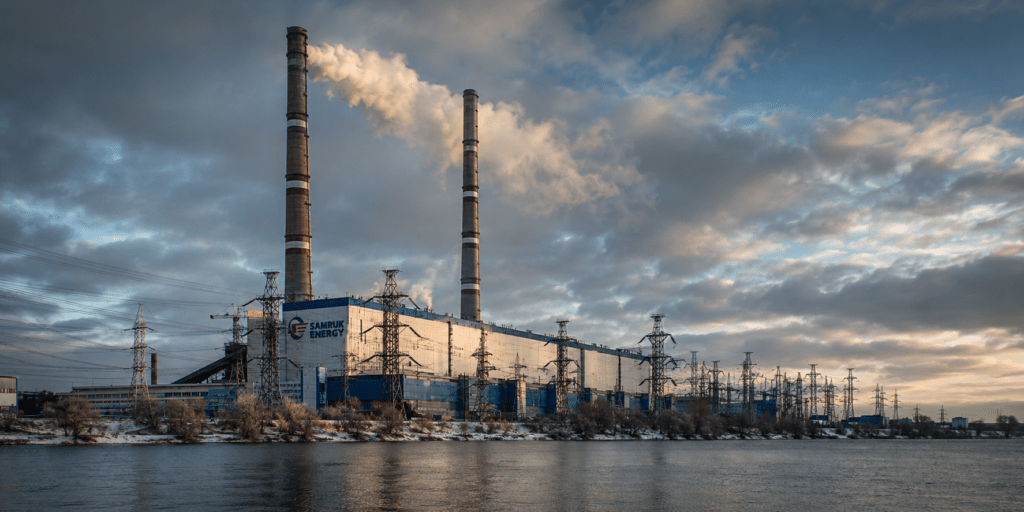
Kazakhstan says a $10 billion AI data center project in Ekibastuz is moving into deployment. Prime Minister Olzhas Bektenov told President Kassym-Jomart Tokayev on July 13 that partners were rolling out 250 megawatts of infrastructure. He said the project had attracted more than $10 billion in foreign investment. The statement gives firmer shape to a plan announced only six months ago. The northern-eastern Kazakh city of Ekibastuz grew around coal mines and giant power stations, but after the collapse of the Soviet Union, jobs disappeared, leaving the city to live in the shadow of its industrial peak. It has shared the wider population decline across the country’s north and east: despite fresh investment, the city lost more than 1,000 residents during 2025. The government now wants the city to export computing power as well as electricity, using its industrial grid to draw global AI companies to northern Kazakhstan. The site has moved beyond planning documents. By May 25, crews had completed geodetic work and started engineering and geological surveys. Workers were excavating pits for modular blocks, while equipment and personnel had reached the site. Tokayev announced the Data Center Valley in January as part of Kazakhstan's wider digital drive. The first 125 MW center is due in the first half of 2027, with a second facility of the same size planned for 2028. Bektenov has said all government data now sits in a 6 MW center in Astana, which shows the jump in scale. Those first two centers are only the beginning of a much larger development. Pavlodar officials have allocated 177 hectares, including 124.4 hectares for the opening phase. They expect later centers to enter service between 2029 and 2033, with up to ten facilities across the completed cluster. The site could eventually reach 1 GW, while an earlier government estimate put total investment near $30 billion. The first center will draw power from an existing 215 MW substation. Across the wider development, officials say 300 MW is already available, with capacity eventually rising to 1 GW. The Satpayev Canal will supply water for staff and site operations, with daily use estimated at 2,300 cubic meters. Separate reserves will be kept for fire protection. NVIDIA Vice President Rev Lebaredian put the case plainly in June: “Everything begins with energy. If you do not have energy, you cannot build the rest.” He added that Kazakhstan had energy “in abundance.” In Ekibastuz, cold that once made industrial life harder is being recast as a commercial advantage. The harsh winters can help cool server halls that produce vast amounts of heat. The planned Trans-Caspian fiber cable would then link the city’s abundant power to a faster international data route. That promise is still built on coal. Thermal plants generated 74.4% of Kazakhstan’s electricity in 2025, with the country still importing nearly 1.5 billion kilowatt-hours from Russia to cover the shortfall. A 250 MW data-center complex running day and night would consume about 2.19 billion kilowatt-hours a year, roughly 1.8% of Kazakhstan’s total...

Kazakhstan’s Pax Silica Accession Bodes Well for Foreign Investment

Kazakhstan’s accession to Pax Silica is more than a diplomatic ribbon-cutting. It is an investment signal. By joining an initiative supported by the United States and built around trusted supply chains for the new artificial intelligence economy, Kazakhstan has placed itself inside one of the most important emerging conversations in global industry about who will supply the minerals, energy, computing infrastructure, data centers, talent and manufacturing capacity behind the AI boom. Kazakhstan’s official readout was explicit about that ambition. Pax Silica, it said, brings partner countries together around artificial intelligence, critical minerals, semiconductors, data centers, energy infrastructure, high-tech manufacturing, research and talent development. Kazakhstan became the first country from its region to join, with Deputy Prime Minister and Minister of Artificial Intelligence and Digital Development Zhaslan Madiyev signing the accession declaration and the AI Opportunity Partnership statement in Washington on June 25. “Behind every AI solution are energy, critical minerals, computing capacity, data centers, semiconductors, engineering talent, and secure supply chains,” Madiyev said. Pax Silica is a supply-chain coalition whereby each participant brings a piece of the AI industrial base such as chips, energy, minerals, capital, cloud infrastructure, advanced manufacturing, regulatory alignment or technical talent. Reuters has described the initiative as a U.S.-led effort to secure the supply chains behind artificial intelligence, from energy and critical minerals to high-end manufacturing and AI models. Kazakhstan’s inclusion demonstrates that the country is being viewed as a potentially significant node in the physical infrastructure of the AI economy. Why Kazakhstan Fits the Pax Silica Map Kazakhstan has existing relevance in the AI supply chain as well as the capability to expand that role. That helps explain why Kazakhstan, rather than another regional state, became the first Central Asian node to plug into Pax Silica’s trusted supply-chain architecture. The U.S. International Trade Administration says Kazakhstan has substantial reserves of rare earth elements, copper, lithium, tungsten, tantalum and other materials essential for modern technologies and the energy transition. It also notes that the country’s policy focus is shifting from raw-material exports toward value-added processing and downstream production. With regard to the energy feedstock needed to power AI data centers, Kazakhstan has been the world’s leading uranium producer since 2009 and produced about 40% of global output in 2025. Nuclear energy is returning to the strategic conversation as governments and companies look for firm, low-carbon electricity. Kazakhstan also has a proven record as a resource partner for the U.S. and the West. U.S. energy majors helped build Kazakhstan’s modern oil sector, with Chevron beginning production from a $48 billion expansion of the Tengiz oilfield in 2025. In aerospace, Kazakhstan’s Ust-Kamenogorsk Titanium and Magnesium Plant supplies major global manufacturers, including Boeing and Airbus, and officials say titanium from Kazakhstan accounts for roughly one-fifth of the global aerospace titanium market. A New Layer in U.S.-Kazakhstan Alignment Pax Silica also follows a warming trend in U.S.-Kazakhstan relations under the Trump administration. Tokayev has already framed Kazakhstan as an active participant in several U.S.-backed initiatives, including the Abraham Accords, the...

Kazakhstan and U.S. AI Companies Sign Agreements Worth $10 Billion

Kazakhstan took a major step toward its goal of becoming an AI leader in the heart of the Eurasian continent when new investment deals were signed with U.S. companies NVIDIA and Firebird. Kazakh Prime Minister Olzhas Bektenov hosted NVIDIA Vice President Rev Lebaredian and Firebird co-founders Razmig Hovaghimian and Alexander Yesayan on June 15. They signed agreements on artificial intelligence and digital infrastructure cooperation worth up to $10 billion, for Kazakhstan’s Data Center Valley project. Top Ten in Global AI Infrastructure Representatives of the U.S. companies and Kazakh officials at the signing ceremony paid tribute to Kazakh President Kassym-Jomart Tokayev for declaring 2026 the Year of AI in Kazakhstan, saying the move emphasized Kazakhstan’s commitment to AI development. Firebird’s Hovaghimian said realization of the agreements signed on June 15 would contribute to putting Kazakhstan in the top 10 leading AI countries worldwide before the end of 2027. Lebaredian described AI development as a “five-layer cake.” “The first layer is energy. The second layer is chips, including those from NVIDIA. The third layer is infrastructure. The next layer is AI models, such as ChatGPT,” and applications, he explained. The NVIDIA vice president said, “Kazakhstan can participate at every level of this five-layer cake.” An Old Power Source for Developing New Technology In the first phase of the project, some $5 billion will go to developing the energy sector. The Data Center Valley is located in Kazakhstan’s northern city of Ekibastuz in the Pavlodar Province. The area has long been known for its vast coal deposits and huge Soviet-era thermal power plant that provides electricity to the area. Kazakh officials have promised an initial 300 megawatts (MW) of power for the AI center, with output gradually rising to some 1000 MW. Kaztelekom chief Bagdat Musin was at the signing and said, “Essentially, Kazakhstan is transforming Ekibastuz coal into digital export revenue.” Minister of Artificial Intelligence and Digital Development Zhaslan Madiyev said Kazakhstan expects to “generate at least $3 billion in annual export revenue, create new high-skilled jobs, (and) attract leading global technology companies.” Discussions are still underway about exactly how the remaining $5 billion would be spent in developing the second phase of the project. Madiyev mentioned that when finished, Ekibastuz would host a “large-scale computing cluster powered by 100,000 state-of-the-art GPU (graphics processing units) chips, including NVIDIA GB300 and Vera Rubin.” A press release posted by Firebird noted the “three-phase expansion strategy” would enable the project “to scale beyond 100,000 NVIDIA Blackwell and Vera Rubin GPUs by the end of 2027, creating one of the world’s largest AI computing platforms.” Firebird Labs Kazakhstan will also be established, based on Kazakhstan’s International Center for Artificial Intelligence in the capital, Astana. Era of Expanding Kazakh-U.S. Ties The agreements with NVIDIA and Firebird are the latest in a series of deals with U.S. companies since late 2025. President Tokayev announced the plan for the Data Center Valley project in January 2026. In May, a U.S.-linked international consortium signed a deal worth some $1 billion...

Financial Analyst Says Kazakhstan’s State Data Centers Are Priced Beyond Reach of Businesses

The cost of services offered by state-backed data centers in Kazakhstan is too high for many businesses, making overseas cloud providers a more economical alternative, financial analyst Rasul Rysmambetov said. His comments come as Kazakhstan invests heavily in digital infrastructure and artificial intelligence technologies. Last year, the country launched what authorities described as Central Asia’s most powerful supercomputer, saying its capacity would be made available to startups, universities, and private companies developing AI solutions. The government has also announced plans to create a Data Center Valley in the northeastern Pavlodar Region to support the digitalization of the economy. However, Rysmambetov argued that the pricing of state-supported data centers limits their appeal to the private sector. “A real digital economy is built on microservices, not giant buildings filled with computers,” Rysmambetov told the Atameken Business Forum. “Data centers depreciate at a tremendous pace. Today, state data centers in Kazakhstan charge prices so high that, as a financier, it is far cheaper and easier for me to buy cloud capacity directly in California.” Rysmambetov said that despite economic growth and rising foreign investment, many Kazakhstanis have yet to see significant improvements in living standards. In his view, the key challenge is not attracting investment but converting it into jobs and productive industries. He also argued that traditional investment incentives are losing effectiveness. “Tax breaks, subsidies, and state support measures no longer create a competitive advantage. Instead, they often generate a dangerous environment for corruption,” he said. “What matters today is the quality of institutions and the speed of decision-making.” According to Rysmambetov, Kazakhstan’s investor support system remains fragmented, with multiple agencies performing overlapping functions while coordination between central and regional authorities remains weak. As a result, some government directives are not implemented locally, requiring intervention by prosecutors to protect investors’ rights. Rysmambetov identified rare earth metals and tungsten as among the sectors attracting the greatest investor interest. However, he warned that Kazakhstan risks repeating the resource-dependent model that characterized its oil industry if it focuses primarily on exporting raw materials rather than developing domestic processing industries. “Foreign investors do not create growth, they join it,” he said. “Investors see a functioning economic model, recognize an opportunity, and participate in it. But if we ourselves do not believe in our development strategy, nobody from outside will come.” Kazakhstan aims to attract $62.7 billion in investment this year, including $25.5 billion from foreign investors, as part of its economic development strategy.

U.S.-Linked Consortium to Build $1.5 Billion Data Center in Kazakhstan

Kazakhstan has signed a memorandum of cooperation with an international consortium that includes Dornan Engineering Group and JMOT04 to develop a major high-capacity data center project in the country. Kazakhstan’s Ministry of Artificial Intelligence and Digital Development signed the agreement during GITEX AI Kazakhstan. According to the ministry, the project involves the construction of a Tier III–Tier IV high-reliability data center with planned capacity ranging from 50 MW to 200 MW. Investment in a 200 MW Tier IV facility is estimated at between $1 billion and $1.5 billion. To ensure a stable and independent power supply, the project also includes plans to build a gas-fired power plant with capacity of up to 250 MW. Investment in the energy facility is estimated at between $200 million and $400 million. The project will be implemented by Ample Solution Limited, one of Asia’s largest suppliers of electronic components, founded in 2008. “Kazakhstan has a unique geographic position, a favorable climate, and competitive electricity costs. These factors create a solid foundation for hosting international data centers and developing digital infrastructure,” said Zhaslan Madiyev, deputy prime minister and head of the Ministry of Artificial Intelligence and Digital Development. Authorities are currently selecting the optimal location for the project, prioritizing sites near gas infrastructure to ensure efficient electricity generation and operational reliability. The Times of Central Asia previously reported that Kazakhstan’s planned “data center valley” would be located in the northeastern Pavlodar region. Speaking after a government meeting on May 5, Deputy Energy Minister Sungat Yessimkhanov said the first facilities in the cluster are expected to appear as early as next year. According to Yessimkhanov, work is currently underway to formalize land allocations and ensure a stable electricity supply for the centers. “We are directly involved in the overall process. At the first stage, 300 MW will be required, and there are no issues with that volume,” he said. “The first facilities will appear in 2027, and uninterrupted electricity supply will be guaranteed by then.” During the GITEX AI forum, Kazakhstan’s Energy Ministry and the Ministry of Artificial Intelligence and Digital Development also signed cooperation memorandums with Ample Solution Limited and Dominor Partners Ltd covering the development of hyperscale data centers in Kazakhstan, including the creation of a specialized cluster combining digital and energy infrastructure. Under the agreements, the parties will cooperate on the development of supporting energy infrastructure, including power generation projects using gas, coal, and renewable energy sources to ensure a stable electricity supply for the data centers. Particular attention will also be given to localizing the production of equipment and technologies to strengthen technological independence and create new opportunities for industrial development. The agreements additionally provide for technology transfer, workforce development, and joint work on digital and energy infrastructure projects, including the Industrial & Digital Energy Hub initiative. According to Kazakhstan’s Energy Ministry, the projects are expected to attract investment, support the development of the digital economy, create jobs, and strengthen Kazakhstan’s position as a regional technology and energy hub.

Kazakhstan to Train “White Hat” Hackers and AI Engineers for the Energy Sector

Kazakhstan plans to train cybersecurity and AI specialists for the energy sector as part of its broader effort to digitally transform the industry, the country’s Ministry of Energy said. In 2026, declared the Year of Digitalization and Artificial Intelligence in the electricity and heat power sector, the ministry plans to develop a professional standard titled Digitalization and the Application of Artificial Intelligence in Energy. The document envisages the creation of new professions, including “white hat” hackers and AI engineers. A “white hat” hacker is a cybersecurity specialist who legally tests IT systems for vulnerabilities with the owners’ permission. Unlike malicious hackers, such experts identify weaknesses so they can be fixed before potential attacks, thereby protecting data and infrastructure. Following a meeting of the Sectoral Council for Electricity and Heat Power Engineering under the ministry, the new standard was expanded to include the following specialties: smart grid designer, engineer for the development and implementation of AI in power systems (Smart Grid), and energy grid cybersecurity specialist (“white hat” hacker). The ministry said these professions were formulated on the basis of Kazakhstan’s Atlas of New Professions and Competencies and are intended to adapt the education system to the demands of the digital economy. The development of Smart Grid systems is seen as one of the key tasks for the next five to ten years. In the future, some energy system management functions, including dispatch control, are expected to be handed over to intelligent algorithms, requiring new competencies at the intersection of energy and IT. As part of the digitalization of the fuel and energy complex, Kazakhstan also plans to create a system of digital models and “digital twins” for facilities within the Unified Energy System as early as 2026. “Our goal is not simply to digitize processes, but to create an intelligent model of the energy system. This will improve the quality of operational management and make it possible to take strategic decisions based on precise data rather than forecasts,” Vice Minister of Energy Bakytzhan Ilyas said. According to him, the introduction of vertical online monitoring using digital twins will make it possible to track key parameters in real time from generation volumes to energy production costs. This will form the basis for tariff-setting policy and investment attraction. Kazakhstan’s energy sector is already implementing a number of projects using artificial intelligence technologies. Among them is AI-based defect detection on power transmission lines using drones, computer vision, and machine learning. The technology can identify support structure defects, overheating, and deformations using data from 4K cameras, thermal imagers, and LiDAR. Another example is robotic diagnostics of heating networks using acoustic resonance, allowing the condition of pipelines to be assessed without excavation or shutting down the system. The ministry emphasizes that the digitalization of the energy sector requires not only technological solutions, but also systematic workforce training. As previously reported by The Times of Central Asia, Kazakhstan plans to expand the use of AI across various sectors from healthcare to the fiscal sphere, including early...