Tajikistan’s e-wallet numbers are striking. As of June 30, 2026, 28 credit financial institutions reported 19.8 million electronic wallets, up 25.9% from a year earlier. In the first half of 2026, e-wallets were used for 14.6 million non-cash transactions worth 3.6 billion somoni.
But those figures should not be read as if 19.8 million people are actively using wallets. The National Bank of Tajikistan’s published aggregate data do not state how many wallets belong to unique users or how many are active. Nor do they show how usage is distributed among them. Without that denominator, the headline figure tells us much less about actual use.
Tajikistan has clearly expanded digital access. It now needs a clearer picture of usage and stronger reasons for people and businesses to keep money inside the digital system.
I call this the shift from digital access to digital retention. The headline number is 19.8 million wallets out of an official population of 10.721 million as of January 1, 2026. The more useful number would be how many are meaningfully active.
Do Not Confuse Registration With Usage
A registered wallet is an access point, not proof of financial behavior. One person may hold several wallets, and some may sit dormant. Usage may also be concentrated among a smaller group of frequent users. Without active-wallet and unique-user data, none of those possibilities should be assumed as fact.
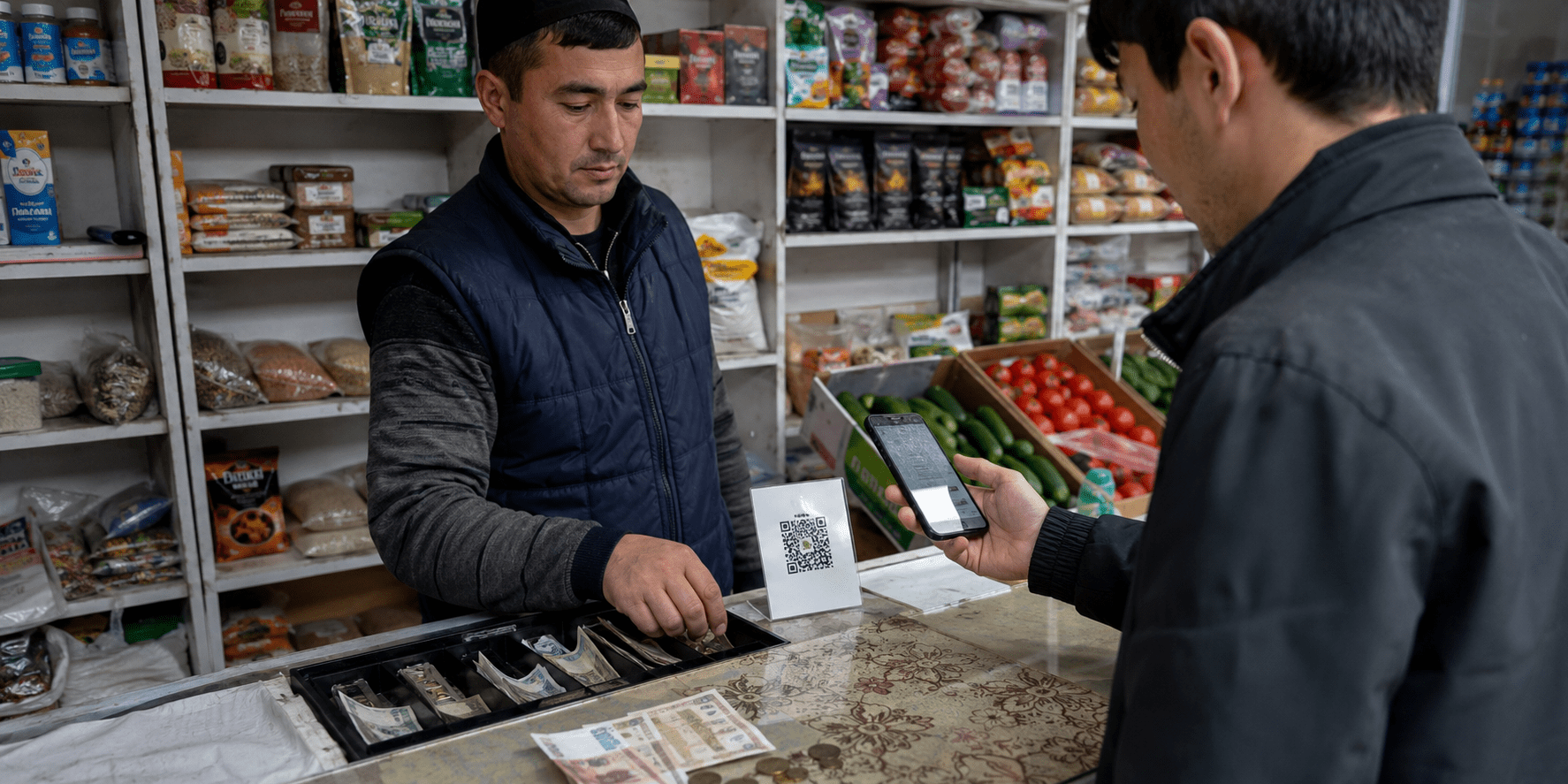
What we can say is that non-cash activity is growing. The National Bank reports that cashless payments for goods and services made with electronic payment instruments reached 41% in the first half of 2026, 13 percentage points higher than a year earlier. It also reports 9,425 POS terminals at trade and service points and 33,620 QR codes.
That 41% figure covers electronic payment instruments, including bank cards and e-wallets. It is not an e-wallet usage rate. To understand how wallets are actually being used, Tajikistan needs a clearer view of active wallets, transaction frequency, and what happens to money after it enters a digital account.
Trust Is Part of the Infrastructure
For many people, the move from cash to bank cards was already a significant behavioral change. They learned to trust money represented by a balance on a screen rather than notes in a hand.
Wallets, QR payments and app-based financial services require another layer of trust. Users need to know where their money is and whether a payment went through. They also need a clear route when something goes wrong. Fees should be easy to understand.
This is why simplicity is part of financial trust, not merely user experience.
Tajikistan’s Financial Literacy Program for 2026–2030 makes the same connection at a policy level. It links financial literacy and consumer protection with public confidence as digital financial services expand. A good digital-finance service should be usable by ordinary people without making money feel harder to understand. Users should not need fintech expertise to trust the product.
Merchants Need a Reason Not to Cash Out
Consumers are only one part of digital circulation. Merchants also need a business reason to keep value inside the system.
A merchant should not accept digital payments only because customers want it. Digital transactions should also make the business easier to run. That can mean clearer cash flow and simpler reconciliation, including payments to suppliers.
That visibility can create something more valuable than payment convenience: a financial history.
With appropriate consent and underwriting, transaction history can show revenue patterns and liquidity needs. It can also show how regularly a business pays suppliers. That can help lenders assess working-capital and supply-chain finance.
Transaction data does not eliminate credit risk. But it can turn a digital payment into the start of a broader financial relationship rather than the end of a transaction.
For a merchant, the reason to remain digital becomes stronger when the digital balance can help run and finance the business.
Make Staying Digital Useful
Discouraging cash withdrawals will not keep money digital. People and businesses will do that only if the next digital action is more useful.
For consumers, that may mean being able to pay, transfer or save money without cashing out. For merchants, it may mean using digital balances to pay suppliers or support working capital.
Digital income can move into a payment and become merchant revenue. From there, it can go to a supplier or another financial service.
Each useful step gives people and businesses less reason to cash out.
The same logic applies to government payments. Taxes and utility bills create recurring financial interactions, as do other public-service fees. Digitizing a payment to government is useful, but the wider gain comes when money can remain digital before and after that transaction.
A Wider Role for Payment Agents
Tajikistan already has a human distribution layer. As of June 30, 2026, financial institutions reported 1,564 bank payment agents and 51 sub-agents. Under current rules, agents can accept and disburse cash, provide electronic means of payment, and identify customers for specified services. The National Bank says its main activities are cash-in/cash-out services through self-service terminals and issuing payment cards.
That role can go further.
Where rules and provider models allow, agents can explain digital services and help people activate products or solve basic problems. In remote areas, or among customers with lower digital confidence, that human contact can make later self-service easier.
In some cases, the route to self-service starts with a person behind a counter.
Change the Dashboard
If the policy objective is deeper digital usage, wallet registrations should no longer dominate the dashboard.
I would add at least four measures: monthly active wallets, transactions per active wallet, merchant digital turnover, and the time or number of transactions before value is withdrawn as cash.
Two broader measures would also help.
The first is digital retention: the share of each 100 somoni entering a wallet or digital account that remains digital through payments, transfers, savings, or other financial services before cash-out. The second is digital circulation: how far value can move from a consumer to a merchant, then to a supplier or another economic activity without leaving the digital ecosystem.
These are proposed metrics, not statistics currently published by the National Bank. Their purpose is to shift attention from how many access points have been created to how useful the ecosystem has become.
The Number to Watch Is Usage
Digital payments have grown quickly in Tajikistan. E-wallet registrations and transaction value are up, and the country has more POS terminals and QR acceptance points. Cashless payments also account for a larger share of payments for goods and services.
But infrastructure can only take the system so far.
Consumers need trust, and merchants need a clear economic benefit. Financial institutions need products that turn digital activity into useful financial services. Agents and public services can help people become comfortable using them.
Tajikistan also needs better visibility into usage itself. A total of 19.8 million registered wallets is impressive, but registrations alone cannot show whether the system is becoming part of everyday financial life.
What those wallets are doing is the part that now needs to be measured. Success should eventually mean that staying digital is easier and more useful than returning to cash, without sacrificing safety.
The views expressed in this article are those of the author and do not necessarily reflect the official policy or position of the publication, its affiliates, or any other organizations mentioned.