Kazakhstan says a $10 billion AI data center project in Ekibastuz is moving into deployment. Prime Minister Olzhas Bektenov told President Kassym-Jomart Tokayev on July 13 that partners were rolling out 250 megawatts of infrastructure. He said the project had attracted more than $10 billion in foreign investment.
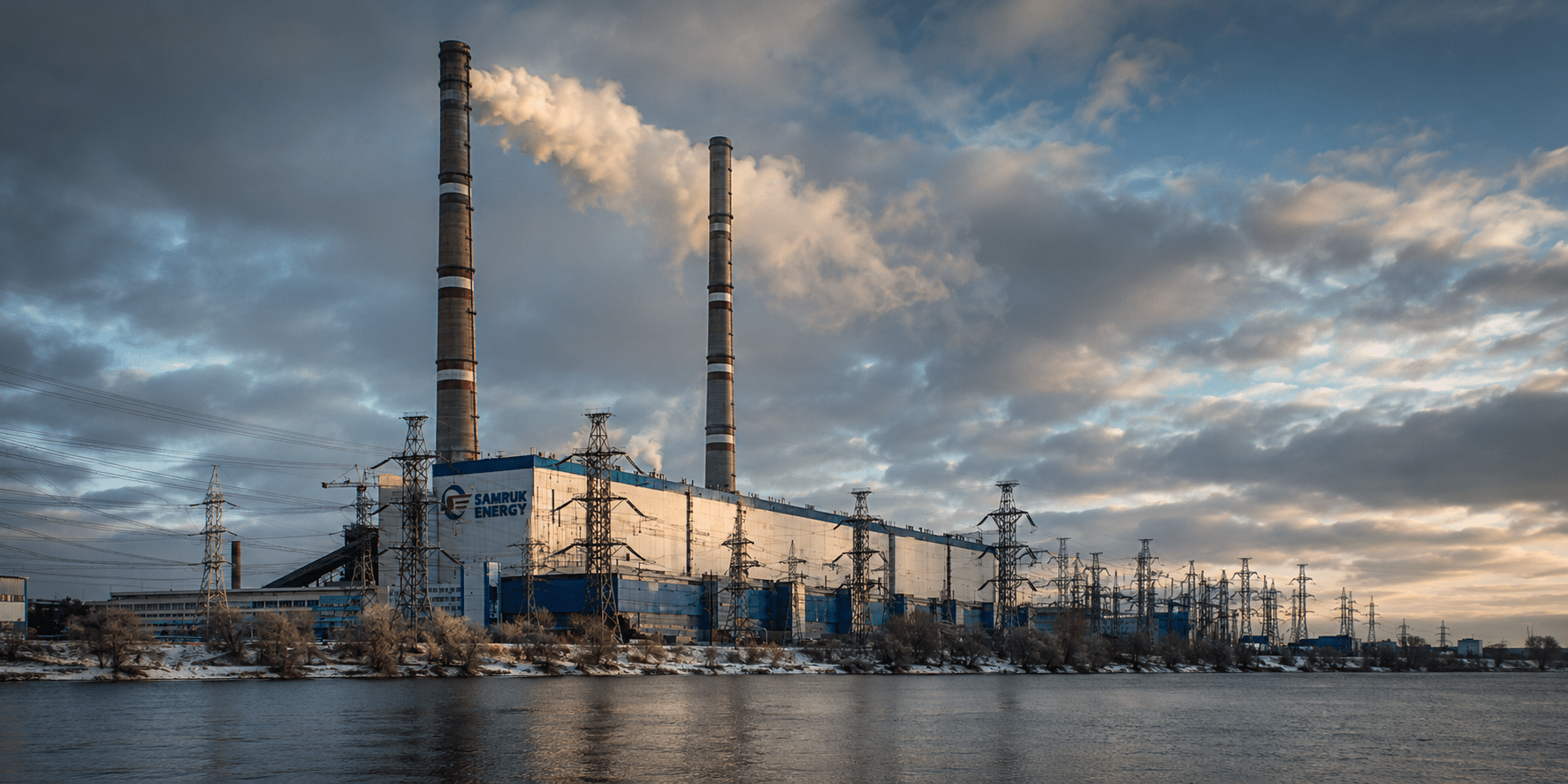
The statement gives firmer shape to a plan announced only six months ago. The northern-eastern Kazakh city of Ekibastuz grew around coal mines and giant power stations, but after the collapse of the Soviet Union, jobs disappeared, leaving the city to live in the shadow of its industrial peak. It has shared the wider population decline across the country’s north and east: despite fresh investment, the city lost more than 1,000 residents during 2025. The government now wants the city to export computing power as well as electricity, using its industrial grid to draw global AI companies to northern Kazakhstan.
The site has moved beyond planning documents. By May 25, crews had completed geodetic work and started engineering and geological surveys. Workers were excavating pits for modular blocks, while equipment and personnel had reached the site.
Tokayev announced the Data Center Valley in January as part of Kazakhstan’s wider digital drive. The first 125 MW center is due in the first half of 2027, with a second facility of the same size planned for 2028. Bektenov has said all government data now sits in a 6 MW center in Astana, which shows the jump in scale.
Those first two centers are only the beginning of a much larger development. Pavlodar officials have allocated 177 hectares, including 124.4 hectares for the opening phase. They expect later centers to enter service between 2029 and 2033, with up to ten facilities across the completed cluster. The site could eventually reach 1 GW, while an earlier government estimate put total investment near $30 billion.
The first center will draw power from an existing 215 MW substation. Across the wider development, officials say 300 MW is already available, with capacity eventually rising to 1 GW. The Satpayev Canal will supply water for staff and site operations, with daily use estimated at 2,300 cubic meters. Separate reserves will be kept for fire protection.
NVIDIA Vice President Rev Lebaredian put the case plainly in June: “Everything begins with energy. If you do not have energy, you cannot build the rest.” He added that Kazakhstan had energy “in abundance.”
In Ekibastuz, cold that once made industrial life harder is being recast as a commercial advantage. The harsh winters can help cool server halls that produce vast amounts of heat. The planned Trans-Caspian fiber cable would then link the city’s abundant power to a faster international data route.
That promise is still built on coal. Thermal plants generated 74.4% of Kazakhstan’s electricity in 2025, with the country still importing nearly 1.5 billion kilowatt-hours from Russia to cover the shortfall. A 250 MW data-center complex running day and night would consume about 2.19 billion kilowatt-hours a year, roughly 1.8% of Kazakhstan’s total electricity use in 2025.
Kazakhtelecom chairman Bagdat Mussin described the model in more vivid terms. Kazakhstan, he said, was “transforming Ekibastuz coal into digital export revenue.” Kazakhtelecom would provide power, cooling and telecoms, with Firebird’s Kazakh unit financing the AI hardware and related systems.
The funding is harder to pin down. In June, officials put the first phase at $5 billion, including $1 billion from Kazakhtelecom, with another $5 billion planned for a larger computing cluster. By July 13, however, the government was describing more than $10 billion as foreign investment, meaning that the published figures fail to show how the two versions add up.
At the June 15 ceremony, officials presented two documents as part of the $10 billion package. The AI ministry and Firebird signed a strategic cooperation agreement. KT-Telecom, a wholly owned Kazakhtelecom subsidiary, signed a binding term sheet with Firebird covering technical and organizational work. NVIDIA joined the talks and presented technology, but the two disclosed agreements did not name it as a signatory.
Firebird struck a more cautious note. It described the agreements as a “foundation for future collaboration,” but gave no investment figure. Mussin said Firebird had already secured service agreements with major global players, but named none of them and disclosed no contract values. There is no public timetable showing when the money will be committed or released.
The proposed hardware order would be enormous. AI and Digital Development Minister Zhaslan Madiyev said the cluster would use 100,000 GPUs, including NVIDIA GB300 and Vera Rubin technology. He forecast at least $3 billion in annual export revenue.
Firebird co-founder Razmig Hovaghimian said the 2027 launch would put Kazakhstan “among the world’s top ten countries in AI infrastructure.” Kazakhstan already has two systems on the June 2026 TOP500 list – Alem.Cloud ranked 104th, and AI-Farabium ranked 122nd, with both using NVIDIA H200 accelerators. The Ekibastuz project would serve a much larger commercial market.
The agreements also call for Firebird Labs Kazakhstan at Alem.ai to support research, startups and engineering talent. The local program supports the government’s case that the development will build domestic skills alongside export capacity.
Firebird points to Armenia as evidence it can build quickly. The first phase of its AI factory near Hrazdan is designed for 18 MW of power capacity and more than 6,000 NVIDIA Blackwell GPUs. Firebird said it had moved from initial construction to deployment readiness in just over six months. The first Ekibastuz center would be almost seven times larger by power capacity.
The scale will be visible in concrete and cables long before it is visible in local employment. Officials expect more than 1,500 temporary construction jobs and over 250 permanent posts once the facilities enter service. Data centers spend heavily on chips, electrical equipment and cooling, then run with relatively small teams. The larger economic promise depends on export customers using the computing capacity.
Tokayev has tied the valley to the Digital Qazaqstan strategy and promised personal oversight. He called it part of Kazakhstan’s “digital sovereignty” and a “high-tech hub along the New Silk Road.” The timetable is tight. By mid-2027, Ekibastuz must turn an excavation site into a working 125 MW data center, with power, cooling, fiber links, and computing hardware in place.