• KGS/USD = 0.01144 0%
  • KZT/USD = 0.00205 0%
  • TJS/USD = 0.10782 0%
  • UZS/USD = 0.00008 0%
  • TMT/USD = 0.28490 0%
  • KGS/USD = 0.01144 0%
  • KZT/USD = 0.00205 0%
  • TJS/USD = 0.10782 0%
  • UZS/USD = 0.00008 0%
  • TMT/USD = 0.28490 0%
  • KGS/USD = 0.01144 0%
  • KZT/USD = 0.00205 0%
  • TJS/USD = 0.10782 0%
  • UZS/USD = 0.00008 0%
  • TMT/USD = 0.28490 0%
  • KGS/USD = 0.01144 0%
  • KZT/USD = 0.00205 0%
  • TJS/USD = 0.10782 0%
  • UZS/USD = 0.00008 0%
  • TMT/USD = 0.28490 0%
  • KGS/USD = 0.01144 0%
  • KZT/USD = 0.00205 0%
  • TJS/USD = 0.10782 0%
  • UZS/USD = 0.00008 0%
  • TMT/USD = 0.28490 0%
  • KGS/USD = 0.01144 0%
  • KZT/USD = 0.00205 0%
  • TJS/USD = 0.10782 0%
  • UZS/USD = 0.00008 0%
  • TMT/USD = 0.28490 0%
  • KGS/USD = 0.01144 0%
  • KZT/USD = 0.00205 0%
  • TJS/USD = 0.10782 0%
  • UZS/USD = 0.00008 0%
  • TMT/USD = 0.28490 0%
  • KGS/USD = 0.01144 0%
  • KZT/USD = 0.00205 0%
  • TJS/USD = 0.10782 0%
  • UZS/USD = 0.00008 0%
  • TMT/USD = 0.28490 0%

Viewing results 1 - 6 of 3

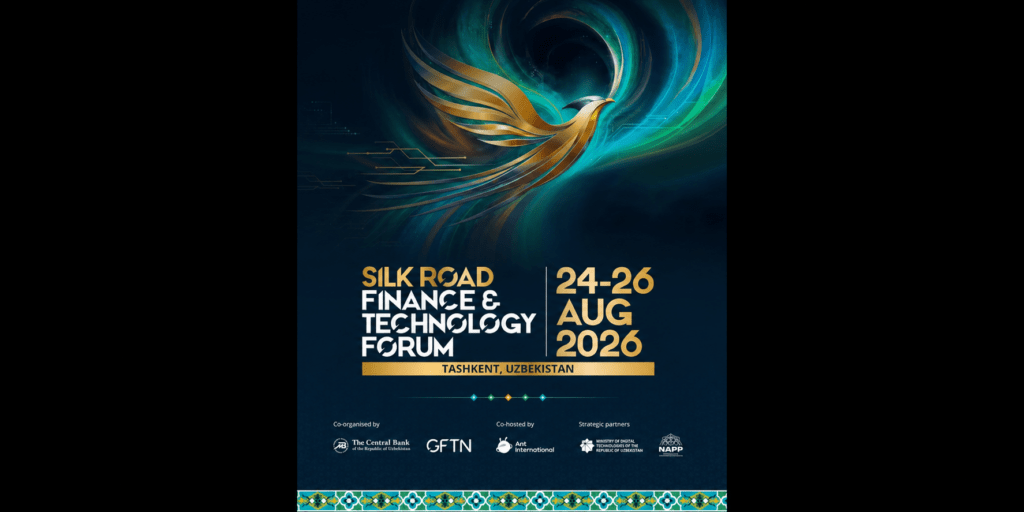
Uzbekistan to Host Inaugural Silk Road Finance & Technology Forum in August

Uzbekistan is set to host the inaugural Silk Road Finance and Technology Forum in August, a new international event aimed at advancing the country’s role as a regional hub for financial technology and innovation. According to a joint announcement by the Central Bank of Uzbekistan and the Global Finance & Technology Network (GFTN), the forum will take place in Tashkent from August 24 to 26, 2026. The event will be held at Central Asian Expo Uzbekistan and the Islamic Civilization Centre. It is expected to bring together policymakers, regulators, investors, entrepreneurs, and technology leaders from Central Asia and beyond. The organizers describe the forum as Uzbekistan’s flagship platform for discussions on finance, innovation, and public policy. It is being launched as the country pursues an ambitious strategy to become a leading fintech center in the region. Uzbekistan’s financial technology sector has expanded rapidly in recent years, driven by growing digital adoption and a young population of more than 37 million people. According to the organizers, nearly 70% of the population now uses digital services, creating favorable conditions for the development of financial technologies. The forum comes as Uzbekistan implements a presidential strategy for the sector through 2030. The plan includes attracting $1 billion in foreign investment, training more than 5,000 specialists, licensing more than 200 market participants, supporting more than 100 startup graduates from incubation programs, and testing digital currencies and stable tokens. The Central Bank has also announced plans to expand the country’s financial innovation infrastructure. These initiatives include the creation of a globally accessible Regulatory Sandbox 2.0, the Q-FINEX Quantum Finance Testbed, and a dedicated $50 million venture fund for fintech development. Authorities are also working on regulatory frameworks covering open banking, digital payments, buy now, pay later services, and cybersecurity resilience. The three-day forum will be organized around five main themes: open banking, digital assets and stablecoins, cross-border payments, Islamic finance, and innovation and investment. The event’s theme, “Al-Jabr,” references the Arabic concept of “bringing parts together,” which gave rise to algebra, and honors the legacy of the ninth-century scholar Al-Khwarizmi, who was born in Khwarezm, in present-day Uzbekistan. Organizers say the theme points to the forum’s goal of linking finance with technology policy. The forum is being co-hosted with Ant International and joins GFTN’s global network of events, which includes the Singapore FinTech Festival, the Point Zero Forum in Zurich, GFTN Forum Japan, and the Black Swan Summits. “Innovation flourishes when trust, talent and capital converge,” said Sopnendu Mohanty, group CEO of GFTN. He said the forum would help connect global expertise with regional ambitions and support Central Asia’s emergence as a center for financial innovation. GFTN is a Singapore-based not-for-profit organization established by the Monetary Authority of Singapore in 2024. It promotes financial innovation and inclusion through partnerships with public- and private-sector institutions.

Kyrgyzstan Connects to International Alipay+ QR Payment Network

Kyrgyzstan has launched international QR payments through Alipay+, allowing users of the national Elkart payment system to pay for purchases abroad through a mobile app without relying on cash or foreign payment apps. The launch of the project was announced by the Interbank Processing Center, operator of the national payment system Elkart, with support from the National Bank of Kyrgyzstan. According to the payment operator, the system is already functioning in Kazakhstan and Malaysia, while another 57 countries are expected to join the network within the next month. China is also scheduled to connect to the platform on June 15, enabling Kyrgyz users to pay through a unified QR infrastructure at millions of retail locations. “For Kyrgyzstan, this is a historic event and another important step in the development of the country’s digital financial ecosystem,” Elkart said in a statement. National Bank Chairman Almaz Baketaev described the launch of international QR payments as part of a national strategy to digitalize the financial market. “The National Bank of Kyrgyzstan places special emphasis on implementing modern digital solutions that simplify the integration of our financial system into the global space,” Baketaev said during a press conference in Bishkek. Authorities and market participants expect the new system to simplify payments for tourists, labor migrants, and businesses amid Kyrgyzstan’s expanding economic ties with China and other Asian countries. Integration of the payment systems began in September last year. Representatives of the processing center said the technical integration was completed in a relatively short period of time. Over the past five years, Kyrgyzstan has actively developed its digital financial infrastructure. According to the National Bank, more than 114,000 QR codes have already been installed at retail and service businesses across the country. In 2025, approximately 525 million transactions worth around $10.3 billion were processed through the national system, roughly ten times higher in transaction volume than the previous year.

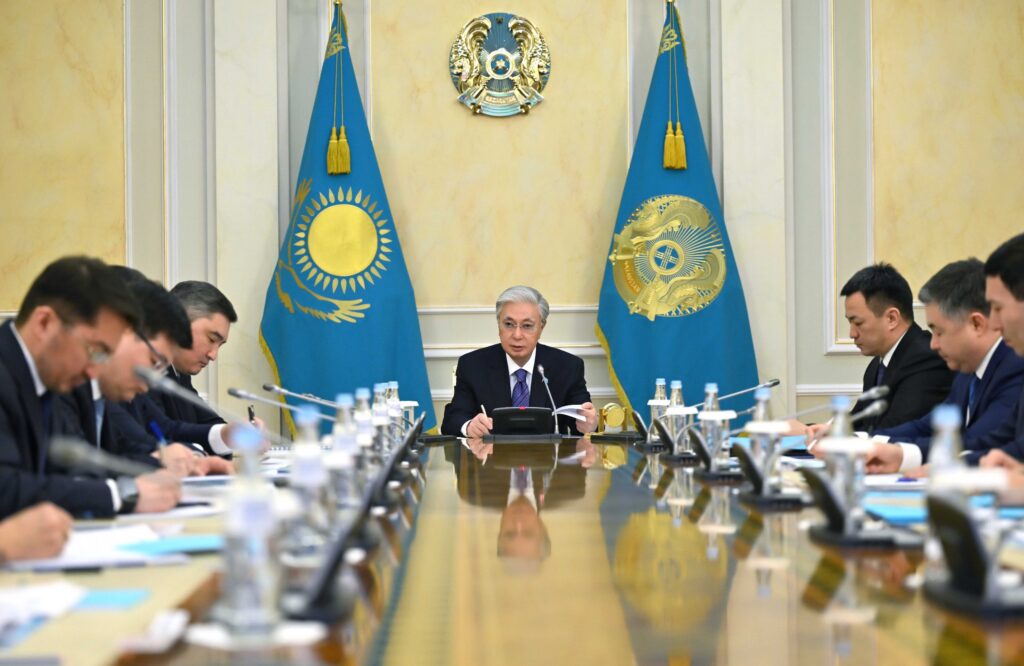
Tokayev Criticizes Banks Over Slow Adoption of Kazakhstan’s Digital Financial Infrastructure

Kazakhstan’s President Kassym-Jomart Tokayev has criticized the country’s banks for their slow adoption of state-developed digital financial infrastructure. He made the remarks during a meeting on the implementation of the Digital Qazaqstan project. During the meeting, the heads of ministries and government agencies presented reports on the rollout of digital solutions in public administration and the economy. In his comments, the president stressed the need for more active deployment of artificial intelligence in industry, as well as progress in developing digital payment infrastructure. According to Tokayev, the National Bank has already created a digital financial ecosystem that includes interbank QR payments and transfers, as well as settlements using the digital tenge. “This significantly reduces costs by shortening the chain of payment intermediaries. The requirement for all banks to connect to this infrastructure is enshrined in law, but the largest banks are delaying compliance,” the president said. Since September 2025, a unified QR code system for interbank payments has been operating in Kazakhstan. The service allows users to pay for goods and services through mobile banking applications. Customers simply scan a QR code at a merchant’s terminal and confirm the transaction. Initially, the service was available to clients of three banks. At present, 15 banks have signed participation agreements, although only six have completed technical integration with the system. The remaining institutions are required to connect by July 18, 2026. Speaking in November 2025, National Bank Chairman Timur Suleimenov said the rollout had been slowed by both technical and market issues, adding that large financial ecosystems were reluctant to share payment traffic. He also described the digital tenge as a tool for transparency and control in public spending rather than a competitor to commercial banks’ own payment products. Tokayev also emphasized that the widespread adoption of artificial intelligence technologies in the real economy is a strategic priority. He linked this goal to the country’s technological sovereignty and called for accelerating the digitalization of the state apparatus. According to the president, more than 90% of public services in Kazakhstan have already been moved online, yet many government information systems remain insufficiently integrated. “Speed and quality must be the priority at every stage. It is data that needs to flow, not people,” Tokayev said. He added that digital transformation is incompatible with outdated bureaucratic practices. “Digitalization and bureaucracy are as incompatible as ice and fire. We cannot force modern technologies to fit into old administrative models,” the president stated. Tokayev also expressed concern about the pace of Kazakhstan’s digital transformation. “I read news about the development of artificial intelligence; it is advancing so rapidly that I am becoming anxious about Kazakhstan’s digital future. It seems to me that the digitalization process is slowing down,” he noted. The Times of Central Asia previously reported that the adoption of artificial intelligence technologies in the financial sector across Central Asia remains uneven, although Kazakhstan is currently regarded as the regional leader.