• KGS/USD = 0.01144 0%
  • KZT/USD = 0.00208 0%
  • TJS/USD = 0.10516 0.77%
  • UZS/USD = 0.00008 0%
  • TMT/USD = 0.28571 0%
  • KGS/USD = 0.01144 0%
  • KZT/USD = 0.00208 0%
  • TJS/USD = 0.10516 0.77%
  • UZS/USD = 0.00008 0%
  • TMT/USD = 0.28571 0%
  • KGS/USD = 0.01144 0%
  • KZT/USD = 0.00208 0%
  • TJS/USD = 0.10516 0.77%
  • UZS/USD = 0.00008 0%
  • TMT/USD = 0.28571 0%
  • KGS/USD = 0.01144 0%
  • KZT/USD = 0.00208 0%
  • TJS/USD = 0.10516 0.77%
  • UZS/USD = 0.00008 0%
  • TMT/USD = 0.28571 0%
  • KGS/USD = 0.01144 0%
  • KZT/USD = 0.00208 0%
  • TJS/USD = 0.10516 0.77%
  • UZS/USD = 0.00008 0%
  • TMT/USD = 0.28571 0%
  • KGS/USD = 0.01144 0%
  • KZT/USD = 0.00208 0%
  • TJS/USD = 0.10516 0.77%
  • UZS/USD = 0.00008 0%
  • TMT/USD = 0.28571 0%
  • KGS/USD = 0.01144 0%
  • KZT/USD = 0.00208 0%
  • TJS/USD = 0.10516 0.77%
  • UZS/USD = 0.00008 0%
  • TMT/USD = 0.28571 0%
  • KGS/USD = 0.01144 0%
  • KZT/USD = 0.00208 0%
  • TJS/USD = 0.10516 0.77%
  • UZS/USD = 0.00008 0%
  • TMT/USD = 0.28571 0%

Viewing results 1 - 6 of 42

Kazakhstan Looks to Reduce Dependence on Russian Oil Transit Routes

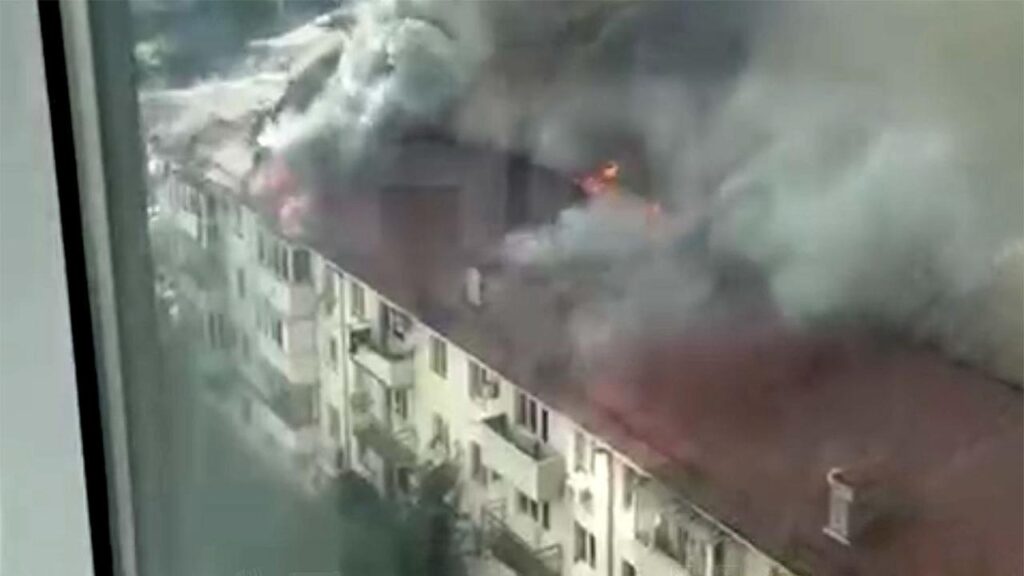
Escalating drone attacks on Russian infrastructure amid the ongoing war in Ukraine, including key facilities in Novorossiysk and the Orenburg region, are compelling Kazakhstan to accelerate its search for alternative oil export routes. In this context, the Caspian Pipeline Consortium (CPC), which transits Russian territory, is increasingly viewed as an unreliable option for transporting the country’s crude oil. In November, damage to the VPU-2 single-point mooring at the Yuzhnaya Ozereyevka terminal near Novorossiysk disrupted operations. Only VPU-1 remains functional, while VPU-3 is undergoing scheduled maintenance. As a result, CPC oil shipments have dropped. The pipeline accounts for over 80% of Kazakhstan’s oil exports, more than 1% of global production. The Kazakh Ministry of Energy clarified that exports were not fully halted and that efforts are underway to reroute shipments. First Kashagan Oil Shipment to China via Atasu-Alashankou On December 8, Reuters reported that Kazakhstan would begin exporting oil from the Kashagan field directly to China for the first time via the Atasu-Alashankou pipeline. The route, which leads to Xinjiang, has previously been used for other fields but not for Kashagan. According to the report, Kazakhstan plans to export 50,000 tons of crude oil through this channel. Of that, the Chinese oil company, China National Petroleum Corporation (CNPC), will receive approximately 30,000 tons, while Japan’s Inpex will take 20,000 tons. Although the pipeline’s annual capacity is around 10 million tons, it has been operating below capacity, averaging 85,000-86,000 tons per month. The Kazakh government had initially planned to ship 1 million tons via this pipeline in 2025, less than the 1.2 million tons exported in 2024. In the first ten months of 2025, shipments reached 858,000 tons, according to industry sources. Kashagan is among Kazakhstan’s most strategic assets and one of the largest oil and gas fields discovered globally in the past 40 years. Operated by the NCOC consortium, which includes ExxonMobil, Shell, TotalEnergies, CNPC, Inpex, and KazMunayGas, the field produces more than 15 million tons of oil annually. Until now, nearly all of this was transported via the CPC. Redirecting Oil Amid Infrastructure Damage On December 10, KazTransOil, the national oil pipeline operator, announced that it had redirected oil exports from the CPC system to alternative routes. In December 2025 alone, an additional 360,000 tons of oil are expected to be exported to Russia (via Samara), China, and across the Caspian Sea. Increases in exports from the original plan include: Atyrau-Samara pipeline: +232,000 tons; To China: +72,000 tons; and through the port of Aktau to the Baku-Tbilisi-Ceyhan (BTC) pipeline: +58,000 tons. KazTransOil has also stated it will allow oil companies to temporarily store oil at its tank farm. This would enable greater flexibility in shipment scheduling, optimize pipeline operations, and help maintain uninterrupted deliveries. Rail transport is also being considered to further diversify logistics. In 2024, Kazakhstan exported 54.9 million tons of oil through the CPC. Additional exports included 8.8 million tons via the Atyrau-Samara pipeline, 3.6 million tons via Aktau, and 1.2 million tons to China via Atasu-Alashankou. The BTC...

Protecting Critical Infrastructure: Lessons from the CPC Drone Attack

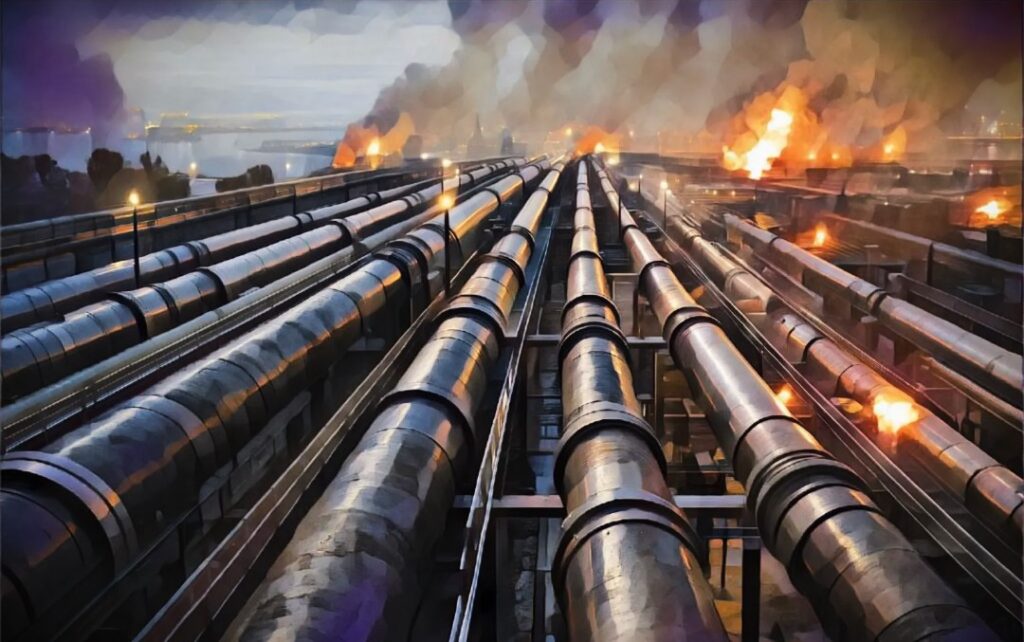
The attack by naval drones on the infrastructure of the Caspian Pipeline Consortium (CPC) on 29 November was an alarming signal, not only for Kazakhstan but for the global energy sector. The temporary suspension of shipments and the shift to operating through a single remote mooring facility struck at the heart of Kazakhstan’s economy. Around 80% of Kazakhstan’s oil exports – generating roughly 40% of its export revenues – pass through the CPC, which has handled over 60 million tons of crude annually in recent years. The vulnerability of CPC infrastructure serves as a reminder of how tightly global energy security is intertwined with regional conflicts. The consortium not only carries Kazakh crude; it also plays a stabilizing role for several international stakeholders, including European refiners and multinational shareholders, such as Chevron and ExxonMobil. Any prolonged disruption would reverberate across global markets, raising transport premiums, tightening supplies in Southern Europe, and undermining confidence in the safety of trans-Eurasian energy routes. For a world already grappling with supply shocks, the Novorossiysk incident underscored how the effects from a single strike can ripple far beyond the immediate impact zone. At the same time, the incident revealed a broader and more urgent issue. Military operations are not supposed to target civilian infrastructure, particularly when it belongs to neutral third parties uninvolved in the conflict. While international humanitarian law (IHL) explicitly prohibits attacks on such facilities unless they are being used for military purposes, the reality on the ground is far less clear-cut. In contemporary conflicts, the line between civilian and military use can blur quickly, creating space for competing interpretations and contested justifications. The Legal Grey Zone of Modern Warfare Although the legal framework is clear on paper, its practical application has become increasingly strained in recent conflicts. The increasing use of drones, long-range precision munitions, and cyber tools has blurred the distinction between civilian and military infrastructure and has outpaced the mechanisms designed to protect them. Energy pipelines, ports, and terminal facilities - which once lay far from the frontlines - can now be struck at minimal cost and with limited attribution. This technological shift has opened a grey zone that existing IHL was never designed to manage, heightening the urgency for clearer norms and enforcement tools. The real challenge lies not in the absence of legal norms but in the lack of mechanisms to enforce them, particularly in cases where neutral countries’ assets become collateral damage. There is, therefore, an argument for the introduction of a new international legal framework – or supplementing existing provisions via a UN protocol – to safeguard critical infrastructure. This is especially relevant in an era of precision weapons and drone warfare, where pipelines, energy terminals, and logistics hubs increasingly fall within potential strike zones. Yet the implementation of such a framework faces complications. Under existing IHL, dual-use infrastructure, such as pipelines that may carry resources for both civilian and military use, can be deemed legitimate military targets. Ukrainian officials have justified strikes on Russian energy...

Why Attacks on the Caspian Pipeline Consortium Could Alter Kazakhstan’s Strategic Plans

Attacks on the infrastructure of the Caspian Pipeline Consortium (CPC), reduced export flows, and volatility in commodity markets are generating serious pressures for Kazakhstan. In the coming years, both the country’s financial system and its domestic political balance may face significant tests. A number of experts warn that disruptions in oil logistics via the CPC, which remains the main artery for Kazakh crude exports, could depress budget revenues, strain national companies, and worsen the sovereign outlook. Kazakhstan pumps roughly 80% of its oil exports through the CPC system, and oil revenues account for more than half of the country’s total export earnings. Because CPC Blend is Kazakhstan’s primary export-grade crude, even short interruptions can reverberate through the state budget, the National Fund, and the balance sheets of national companies. This could trigger a domino effect, destabilizing broad swathes of the economy and undermining public finances. Already, the recent rounds of disruption around Black Sea oil shipping are eroding a substantial source of tax revenue for the state. Continued Risk of Strikes Political scientist Dosym Satpaev argues that Kazakhstan may be underestimating the intensity and persistence of the conflict surrounding Ukraine. He contends that both sides in that conflict have used strikes on energy infrastructure as key tools, a tactic that will likely continue. The recent strike targeted the CPC’s single-point moorings (SPMs) at Novorossiysk, a coastal terminal on the Russian Black Sea. These offshore loading points sit in relatively shallow waters and are physically exposed, making them susceptible to the naval drones Ukraine has increasingly deployed against Russian maritime infrastructure. Although the attack officially targeted Russian facilities, the collateral implications for Kazakh oil exports were immediate. According to Satpaev, that means further risks for the CPC. The fact that Kazakhstan remains heavily dependent on this single pipeline reflects a broader failure to diversify exports and reduce reliance on raw material transit.  The vulnerability is magnified by the CPC’s ownership structure: although Kazakhstan relies on it for most of its exports, the pipeline network and the Novorossiysk terminal lie on Russian territory and operate under Russian regulatory oversight. Russia holds a majority stake in the consortium, while U.S. firms such as Chevron and Exxon also have significant shares, creating a complex web of interests that limits Astana’s room for manoeuvre. Kazakhstan has already experienced how this dependence can be leveraged. In 2022, Russian regulators repeatedly halted CPC operations over alleged “environmental violations,” moves widely interpreted as political pressure at a moment of diplomatic friction. That precedent underscores how strategic vulnerability to CPC disruptions predates the current wave of attacks. Satpaev is skeptical that alternative export routes, such as via pipelines through the Caspian Sea to Baku-Tbilisi-Ceyhan or transit to China, can substitute for the CPC in the near term. Given the global trend toward reduced oil demand, he believes this leaves Kazakhstan exposed to long-term structural risks.  At the same time, Satpaev views as unlikely the possibility that Ukraine would attempt to directly stop the CPC’s operations, given the broader consequences such...

Pipelines Under Pressure: Ukraine War Hits Kazakhstan Energy Arteries

The ongoing war between Ukraine and Russia continues to have indirect but notable implications for Kazakhstan’s energy sector. Following the September drone attack in Russia’s Novorossiysk that damaged the offices of the Caspian Pipeline Consortium (CPC) - which exports the majority of Kazakhstan’s oil - another incident has raised concern: the October 19 strike on Russia’s Orenburg Gas Processing Plant, which handles gas from Kazakhstan’s Karachaganak field. The CPC confirmed that its export terminal continued operating after the September 24 incident, though two employees were injured and part of its office complex was damaged. The consortium remains the backbone of Kazakhstan’s oil exports, handling over 80% of national crude shipments to world markets. This concentration has long been viewed as a vulnerability because nearly all flows depend on infrastructure inside Russian territory. The war has underscored that risk, prompting Astana to accelerate plans for alternative routes across the Caspian Sea toward Azerbaijan and Georgia. Astana has been working with Baku and Tbilisi to expand capacity along the Trans-Caspian International Transport Route (Middle Corridor), supported by EU and World Bank funding commitments. Kazakhstan’s Ministry of Energy confirmed that the plant, located about 150 kilometers northwest of Kazakhstan’s Karachaganak field across the Russian border, was temporarily shut down following the UAV strike. “According to information from PJSC Gazprom, on October 19, 2025, an emergency situation occurred at the Orenburg gas processing plant as a result of a UAV attack, in connection with which the plant temporarily stopped receiving raw gas from the Karachaganak field.” The Ministry added that gas supplies to domestic consumers remain unaffected and that consultations are underway with field operators to assess potential disruptions and losses. No details on the extent of the damage or repair timelines have been released by the Russian side. Ukraine’s military confirmed responsibility for the attack as part of its campaign against Russian energy infrastructure, according to statements reported by Interfax-Ukraine and Ukrainska Pravda. Industry analysts, however, remain cautious. Journalist Oleg Chervinsky noted that the Orenburg plant processes up to nine billion cubic meters of Karachaganak gas annually, a portion of which is returned to Kazakhstan’s northern regions. He warned that a prolonged shutdown could lead to supply shortages, particularly during the winter months. The timing of the Orenburg attack - just before the start of the heating season - adds a seasonal risk dimension. Olzhas Baidildinov, an expert in the energy sector, criticized delays in constructing a domestic gas processing facility at Karachaganak, arguing that reliance on foreign infrastructure heightens Kazakhstan’s vulnerability to regional conflict and economic disruptions. The replacement of damaged equipment, including components from France’s Technip, could also be complicated by sanctions and supply chain issues, ultimately impacting tariffs and consumer costs. The cumulative effect of reduced gas processing capacity and potential production slowdowns at Karachaganak could weigh on Kazakhstan’s already strained budget. While some observers note that reduced output may help the country align with its OPEC+ production commitments, previously exceeded at major fields including Kashagan, Tengiz, and Karachaganak, such...

Caspian Pipeline Attack After Zelenskyy-Tokayev Meeting Puts Kazakhstan in Delicate Position

A recent drone strike on the Caspian Pipeline Consortium (CPC) office in Novorossiysk has raised concerns in Kazakhstan, whose oil exports rely heavily on the pipeline route. The attack, which killed two people and damaged nearby infrastructure, occurred just one day after Kazakh President Kassym-Jomart Tokayev met with Ukrainian President Volodymyr Zelenskyy in New York. While there is no official indication that the CPC was a deliberate target, the incident has prompted debate over the implications for Kazakhstan’s economic security and diplomatic neutrality amid the ongoing war. According to CPC, the attack struck its administrative office in central Novorossiysk during the workday. The building sustained damage in addition to nearby residential blocks and a hotel. Two CPC employees were wounded and evacuated; the office’s operations were suspended. The consortium also said others in the building, not employed by CPC, suffered serious injuries.  Authorities in the Krasnodar region confirmed two deaths and seven injuries from the strike, declaring a state of emergency in the city.  Russian media reported extensive damage to residential buildings and a hotel near the CPC office.  In response, Kazakhstan’s Ministry of Energy issued a statement assuring that pipeline operations would continue as normal. The ministry said oil intake from Kazakh shippers remains unaffected, and the transportation and loading of oil via the CPC marine terminal is proceeding without restrictions. The ministry added that it is coordinating with CPC shareholders and monitoring developments in real time.  Notably, the attack followed just 12 hours after Tokayev’s meeting with Zelenskyy in New York. According to the Kazakh presidential press service, Zelenskyy expressed his view of the war’s trajectory while Tokayev emphasized the importance of sustained diplomacy. Ukraine’s version, via its presidential press service, was more expansive: Zelenskyy thanked Tokayev for support on sovereignty, insisted on a leaders’ summit, and said Kazakhstan’s mediation role was welcome. In a later interview, Zelenskyy even floated the possibility of meeting Russian President Vladimir Putin on neutral territory such as Kazakhstan.  When asked about that proposal after the Novorossiysk attack, Tokayev stated firmly that Kazakhstan does not see itself as a mediator in the Russia-Ukraine conflict. He reiterated that both sides should engage directly, while supporting continued talks. “Talks must continue,” he said.  Kazakh political analyst Daniyar Ashimbayev noted that Tokayev’s extended commentary suggested he may feel less enthusiastic about a repeat meeting with Zelenskyy. Oil expert Olzhas Baidildinov stated that around 80 percent of Kazakhstan’s oil exports transit via the CPC; he therefore warned the strike directly threatens Astana’s interests.  Baidildinov also suggested that Kazakhstan may need to consider a range of policy responses to ensure the security of its oil export routes, including enhanced monitoring of trade and transit channels. He noted that international companies operating in Kazakhstan, particularly those using the CPC pipeline, could be indirectly affected by any future disruptions. Kazakhstan’s Foreign Ministry has not issued a public statement on the incident. Meanwhile, diplomatic engagement continues at various levels. During his visit to New York, Tokayev also met with Chevron CEO Michael...

Tashkent Medical University Accused of Forcing Students to Study in Russian City Reportedly Under Drone Attacks

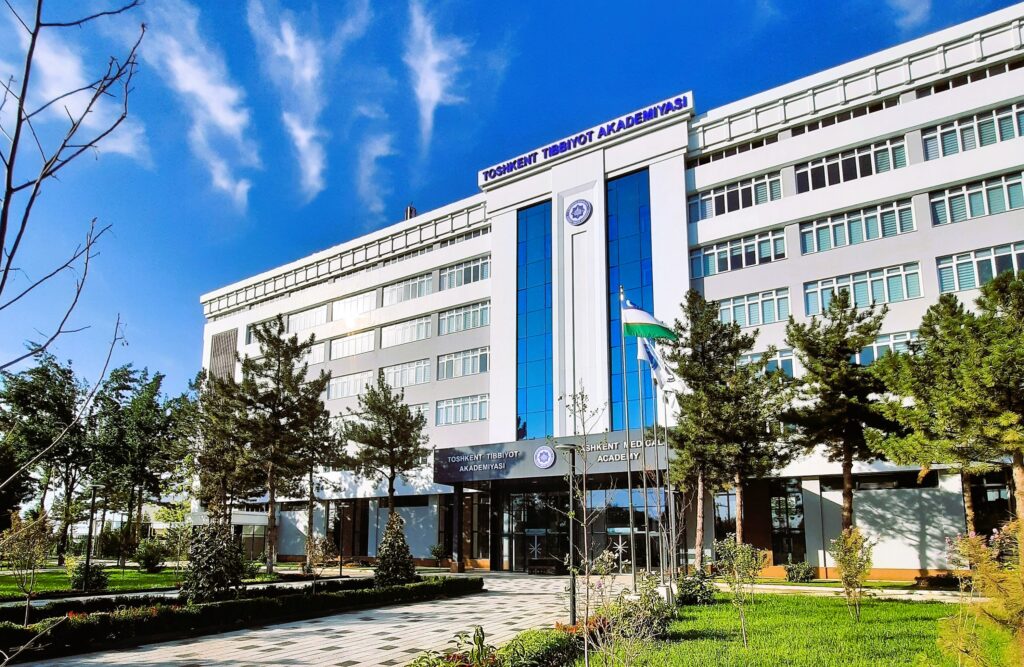
Tashkent State Medical University (TSMU) has rejected social media allegations that its students are being forced to study in Nizhny Novgorod, Russia, a city some reports claim is “under Ukrainian drone attacks.” The university called the reports “baseless and false,” stressing that the students are enrolled in a joint degree program requiring them to complete the final two years at a partner institution abroad. Videos shared by local media this week showed students opposing the move, citing recent drone strikes in the region that reportedly killed one person and injured several others. They claimed a previous rector had promised to transfer the program to Kazakhstan, but the current rector, Shukhrat Boymuradov, reversed that decision. Students alleged they were given an ultimatum: go to Russia or take academic leave and request to finish their fifth year in Uzbekistan. TSMU said all the students in question had signed contracts under a joint education program with Privolzhsky Research Medical University (PRMU) in Nizhny Novgorod, as stipulated by Uzbekistan’s Cabinet of Ministers Resolution No. 421 of July 6, 2021. The agreement requires participants to complete their fourth and fifth years at PRMU. According to the university, PRMU runs 12 joint programs with five Uzbek universities and currently hosts more than 400 Uzbek students. To ensure suitable conditions, TSMU and PRMU agreed on dedicated dormitories, a special dean’s office to help with administrative matters, and re-enrollment opportunities for students previously expelled from PRMU. The administration dismissed claims that Nizhny Novgorod is under martial law, noting that the city hosts active academic partnerships and that no state of war has been declared there. On August 11, Boymuradov met with students and parents to discuss the program, living arrangements, and support services. TSMU reported that most students expressed readiness to continue studies at PRMU, while a minority sought to remain in Tashkent, allegedly relying on “deliberately false information.” The university warned that spreading misinformation intended to mislead the public and damage its reputation could result in legal action under Uzbek law.