• KZT/USD = 0.00218
  • TJS/USD = 0.10820
  • UZS/USD = 0.00009
  • TMT/USD = 0.29760
  • KZT/USD = 0.00218
  • TJS/USD = 0.10820
  • UZS/USD = 0.00009
  • TMT/USD = 0.29760
  • KZT/USD = 0.00218
  • TJS/USD = 0.10820
  • UZS/USD = 0.00009
  • TMT/USD = 0.29760
  • KZT/USD = 0.00218
  • TJS/USD = 0.10820
  • UZS/USD = 0.00009
  • TMT/USD = 0.29760
  • KZT/USD = 0.00218
  • TJS/USD = 0.10820
  • UZS/USD = 0.00009
  • TMT/USD = 0.29760
  • KZT/USD = 0.00218
  • TJS/USD = 0.10820
  • UZS/USD = 0.00009
  • TMT/USD = 0.29760
  • KZT/USD = 0.00218
  • TJS/USD = 0.10820
  • UZS/USD = 0.00009
  • TMT/USD = 0.29760
  • KZT/USD = 0.00218
  • TJS/USD = 0.10820
  • UZS/USD = 0.00009
  • TMT/USD = 0.29760
24 August 2026

Viewing results 1 - 6 of 19

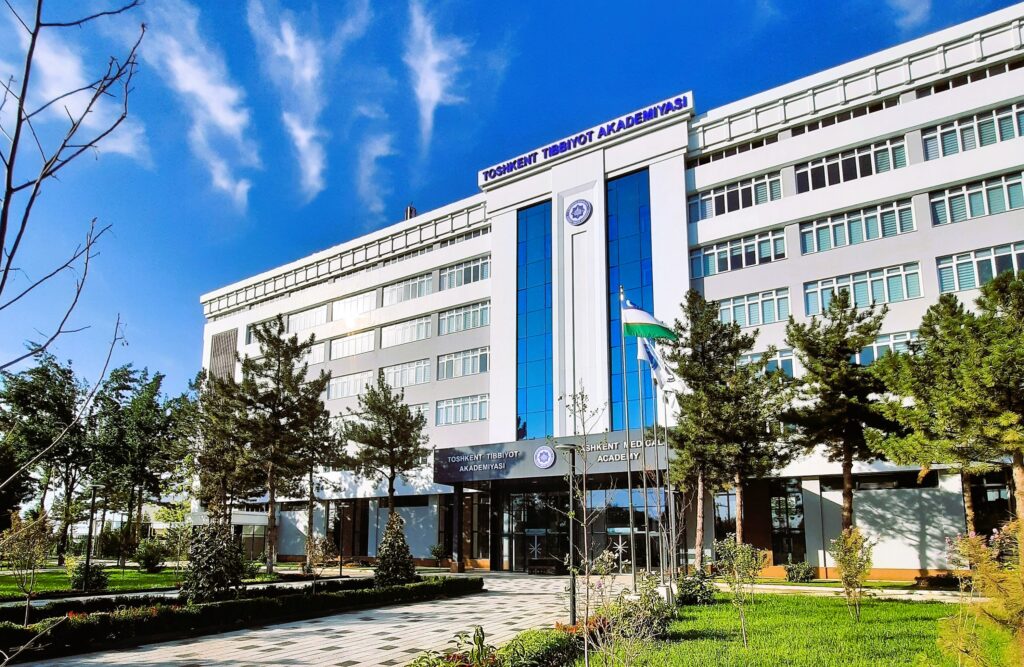
Tashkent Medical University Accused of Forcing Students to Study in Russian City Reportedly Under Drone Attacks

Tashkent State Medical University (TSMU) has rejected social media allegations that its students are being forced to study in Nizhny Novgorod, Russia, a city some reports claim is “under Ukrainian drone attacks.” The university called the reports “baseless and false,” stressing that the students are enrolled in a joint degree program requiring them to complete the final two years at a partner institution abroad. Videos shared by local media this week showed students opposing the move, citing recent drone strikes in the region that reportedly killed one person and injured several others. They claimed a previous rector had promised to transfer the program to Kazakhstan, but the current rector, Shukhrat Boymuradov, reversed that decision. Students alleged they were given an ultimatum: go to Russia or take academic leave and request to finish their fifth year in Uzbekistan. TSMU said all the students in question had signed contracts under a joint education program with Privolzhsky Research Medical University (PRMU) in Nizhny Novgorod, as stipulated by Uzbekistan’s Cabinet of Ministers Resolution No. 421 of July 6, 2021. The agreement requires participants to complete their fourth and fifth years at PRMU. According to the university, PRMU runs 12 joint programs with five Uzbek universities and currently hosts more than 400 Uzbek students. To ensure suitable conditions, TSMU and PRMU agreed on dedicated dormitories, a special dean’s office to help with administrative matters, and re-enrollment opportunities for students previously expelled from PRMU. The administration dismissed claims that Nizhny Novgorod is under martial law, noting that the city hosts active academic partnerships and that no state of war has been declared there. On August 11, Boymuradov met with students and parents to discuss the program, living arrangements, and support services. TSMU reported that most students expressed readiness to continue studies at PRMU, while a minority sought to remain in Tashkent, allegedly relying on “deliberately false information.” The university warned that spreading misinformation intended to mislead the public and damage its reputation could result in legal action under Uzbek law.

Operation Spider Web Rattles Russia as Kazakhstan Battles Disinformation

Sunday, June 1, was described by some Russian commentators as the country’s own “Pearl Harbor” following a Ukrainian drone offensive that struck multiple Russian military airfields. Dubbed Operation Spider’s Web, the strikes, targeting air bases in Murmansk, Irkutsk, Ivanovo, Ryazan, and Amur regions were carried out by Ukraine’s Security Service (SBU) and sent shockwaves through Russian society. As criticism mounted over the failures of Russia’s air defense and intelligence apparatus, some voices in Russia began directing attention toward Kazakhstan, attempting to link it, however tenuously, to the Ukrainian operation. The Operation and Its Tactics The Russian Ministry of Defense confirmed the June 1 drone attacks but reported fires at only two bases, in Murmansk and Irkutsk, with no casualties. Ukrainian President Volodymyr Zelensky hailed the operation as an "absolutely brilliant result,” emphasizing that it had been in development for 18 months. The method of using vehicles disguised as civilian freight, such as trucks carrying wooden houses filled with drones, was not new. Russian special services have previously intercepted similar transport efforts, and some military bloggers had already documented such tactics. Kazakhstan’s Alleged Involvement According to the Russian authorities, operational preparations for the June 1 attack began in December 2024. Officials in Irkutsk announced a manhunt for 37-year-old Artem Timofeev, a Ukrainian former DJ suspected of organizing the drone launches from vehicles registered to him. Timofeev’s background remains murky: while some sources say he was born in Zhytomyr, others claim Donetsk. He reportedly lived in Kyiv before relocating to Russia’s Chelyabinsk region. The only known connection to Kazakhstan is unconfirmed reports of Timofeev’s departure - along with his wife, an erotic fiction writer  - to Astana just days before the strikes. This limited detail, however, fueled speculation on Russian Telegram channels that drone components may have entered Russia via Kazakhstan or that its proximity made it a convenient staging point, with one baselessly claiming that "All the spare parts and explosives arrived via fraternal Kazakhstan." Official Response from Kazakhstan Kazakh officials quickly dismissed these allegations. Foreign Ministry spokesperson Aibek Smadiyarov stated, “There is no official confirmation of this. I will leave it to the theorists among our experts. I cannot comment on conspiracy theories and all sorts of mysteries.” Mazhilis deputy Konstantin Avershin characterized the accusations as “information sabotage” aimed at destabilizing Kazakhstan’s relations with Russia. “I regularly visit such production facilities and can officially state that neither components nor finished products could have fallen into the wrong hands,” he said. Military analyst and retired colonel Darkhan Daniyarov echoed this view, calling the allegations external propaganda. “Kazakhstan complies with all international norms, ensures transparent export controls, and remains a supporter of peace, neutrality, and good neighborliness,” he stated, adding that since 2022, Kazakhstan has introduced strict controls on dual-use goods to prevent their re-export for military purposes. Former KNB Chairman Nartay Dutbayev also questioned the plausibility of the claims, stating it would be easier to obtain explosives within Russia than to smuggle them from Kazakhstan. A Broader Narrative Accusations implicating Kazakhstan...

Ukraine’s Drone Attack: Russian Region Bordering Kazakhstan Cited as Possible Staging Point

Much remains publicly unknown about how Ukraine pulled off a complex drone attack that targeted several Russian air bases, but some initial, unconfirmed Russian reports say the drones were assembled at a rented warehouse in Chelyabinsk, a Russian city in a region that borders Kazakhstan. When asked about the reports, a spokesman for Kazakhstan’s Ministry of Foreign Affairs said at a briefing on Monday that he was aware of them and could not confirm speculation that Ukraine may have smuggled the drone components into Russia from neighboring Kazakhstan. "I am not an expert in military affairs. Of course, I saw these reports this morning, of course, anonymous Telegram channels are spreading them, there is no official confirmation of this, so I cannot confirm it. I will leave this to the realm of theory for our experts," ministry spokesman Aibek Smatdiyarov said in remarks reported by media in Kazakhstan. The Russian sources said they geolocated the warehouse in Chelyabinsk by studying photos that purportedly show the drones and their containers as well as the interior of the rented building where they were assembled. The photos were published by Ukrainian media. Additional unconfirmed reports say Russian investigators have questioned several truck drivers who said they drove from Chelyabinsk and were duped into delivering the drones to their target areas. The Russian reports have not been confirmed by officials in either Ukraine or Russia. The pro-Russian War on Fakes channel on Telegram said it was “worth noting” that the Chelyabinsk region borders Kazakhstan and that there was a possibility that the drone parts could have been smuggled into Russia from there. It did not offer any direct evidence to support its speculation. International media analysts have described the War on Fakes channel as a disseminator of disinformation, though Russian military bloggers on the war between Russia and Ukraine are closely monitored because they sometimes offer more information than that provided by the Kremlin and other official channels. Some international observers of the war circulated the Chelyabinsk report on social media. Ukrainian President Volodymyr Zelenskyy has said the “office” of the drone operation was next to a regional headquarters of the FSB, the Russian security agency. He did not identify the region. The border between Russia and Kazakhstan is about 7,600 kilometers, making it one of the longest borders in the world. The two countries have a robust trade relationship. Kazakhstan and other Central Asian countries have tried to project a neutral stance in the war between Russia and Ukraine. Ukraine’s security service, known by its acronym SBU, said on Telegram that it hit “34% of strategic cruise missile carriers at the main airfields of the Russian Federation” and that it will provide details about the operation “a little later.” Russia’s Ministry of Defense said attacks on military airfields in the Ivanovo, Ryazan, and Amur regions were repelled. “In the Murmansk and Irkutsk regions, as a result of the launch of FPV drones from the territory located in the immediate vicinity of airfields, several units...

Tashkent-Moscow Flight Diverted to Kazan Following Drone Attack Near Russian Capital

A Tashkent-Moscow passenger flight was forced to make an emergency landing in the Russian city of Kazan early Tuesday morning after a drone attack near Moscow led to a temporary closure of all the capital's airports. The incident was reported by the Russian Telegram news channel Ostorozhno, Novosti. Aeroflot flight SU1871 departed Tashkent at approximately 3:00 a.m. (local time) on May 28. Unable to land in Moscow due to the shutdown of the capital's airspace, the plane was diverted to Kazan, arriving there at 4:55 a.m. Passengers told Ostorozhno, Novosti they remained confined inside the aircraft for hours with no updates on when they would be allowed to continue their journey. “We were not given snacks, and no one told us what was going on,” said one passenger. “We heard the airspace is now open, but we’re still waiting.” Initially, there were reports that passengers would disembark in Kazan, but airline staff later instructed them to stay onboard pending further guidance. Eventually, travelers were informed their flight would be delayed for at least 12 more hours. Aeroflot representatives claimed crew fatigue as the reason for the delay, noting the crew had exceeded their regulated working hours and required rest. Additionally, Kazan airport authorities reportedly refused to permit passenger disembarkation due to overcrowding, causing further delays and confusion. A Broader Pattern of Risk The diversion follows another major aviation incident in the region just five months ago. On December 25, 2024, an Azerbaijani Embraer 190 aircraft traveling from Baku to the Russian city of Grozny crashed near Aktau, Kazakhstan, during what authorities suspect was a drone-related incident. The crash killed all 38 people on board, including both pilots. Russia claimed that Ukrainian drones were active in the area at the time. Although Russian President Vladimir Putin offered condolences and apologized to Azerbaijani President Ilham Aliyev, he did not acknowledge that the aircraft may have been struck by Russian fire. Kazakhstan is leading the investigation, supported by experts from Azerbaijan, Russia, and Brazil, the aircraft's manufacturer. The International Civil Aviation Organization (ICAO), a United Nations agency based in Canada, is also participating. Preliminary findings from the crash investigation align with early witness accounts and include data recovered from the plane’s black boxes, which were analyzed in Brazil. Mounting Safety Concerns These incidents have heightened concerns about the safety of civilian aviation in the region, particularly as drone warfare intensifies in areas adjacent to Central Asia. Both airlines and passengers are urging governments to adopt stronger safety protocols and to be more transparent in communicating risks and responses during emergencies.

Drone Attacks Intensify Security Worries Over Moscow Anniversary Event

Concerns about the security of dignitaries are circulating ahead of Russia’s plans for May 9 celebrations in Moscow of the 80th anniversary of the victory over Nazi Germany, an event that leaders from Central Asia are expected to attend as the Russo-Ukrainian war continues. The unease relates to Ukraine’s growing capacity in drone warfare, a dominant feature of the battlefield after years of war between Ukrainian troops and invading Russian forces. On Sunday, Moscow Mayor Sergei Sobyanin said air defense forces in the urban area of Podolsk, on the outskirts of Moscow, “repelled an attack” by four drones flying toward the capital. “According to preliminary data, there is no damage or casualties at the site of the fall of the debris. Emergency services specialists are working at the scene,” Sobyanin said on Telegram. Overnight, Ukrainian drones targeted Moscow again, disrupting operations at four of the city's airports. Sobyanin announced on Telegram that at least 19 Ukrainian drones were intercepted. Although no significant damage or injuries were immediately reported, debris from the intercepted drones landed on a major highway. On April 28, Russian President Vladimir Putin unilaterally declared a three-day ceasefire in the war with Ukraine from May 8 – 11 to coincide with the celebrations of victory in the Great Patriotic War, as the Soviet experience in World War II is called. But Ukraine rejected the proposal, saying it seems mainly designed to create a safe environment for its guests in Moscow and that a U.S-backed plan for a 30-day unconditional ceasefire would instead represent a serious step toward peace. Ukrainian President Volodymyr Zelenskyy has said Ukraine isn’t responsible for anyone’s safety on Russian territory on the day of the anniversary celebrations. Dmitry Medvedev, deputy chairman of Russia's Security Council, has warned of massive retaliation if Ukraine strikes Moscow during the May 9 event, saying on Telegram that “in the event of a real provocation on Victory Day, no one can guarantee that May 10 will come in Kyiv.” An analyst who tracks drone technology, Russian military weapons development and related issues said Russia’s concern about the May 9 parade stems from Ukraine’s growing expertise in drones. “Ukrainian long-range drones can already strike across the entire [of] Russia's European (west of Urals) territory,” Samuel Bendett, a researcher at the Center for Naval Analyses, said on X. The city of Sevastopol in Russia-controlled Crimea won’t hold a Victory Day parade for security reasons, said city Gov. Mikhail Razvozhayev, according to Russia’s state-run news agency TASS. Sevastopol hasn’t held a parade in the last couple of years because of similar concerns. In 2014, Russian forces occupied and annexed the Ukrainian territory of Crimea, where Ukraine has conducted periodic attacks with drones and other weapons since Russia’s full-scale invasion in 2022. The Kremlin says Chinese President Xi Jinping will visit Russia at Putin’s invitation on May 7-10 and will attend the Victory Day celebrations. Russian state media have reported that the leaders of the Commonwealth of Independent States, or CIS, will also attend....

Ukraine’s Drone Strike on Russian Oil Hub Sparks Concerns Over Kazakhstan’s Energy Security

On February 17, seven Ukrainian unmanned aerial vehicles (UAVs) attacked an oil transportation facility of the Caspian Pipeline Consortium (CPC), targeting the Kropotkinskaya oil pumping station in Russia. Following the attack, reports emerged that the volume of oil pumped from Kazakhstan through the CPC could decrease by 30% for a period of one and a half to two months. Conflicting Reports on the Impact On February 18, Ukraine officially confirmed the strike. "Yesterday, the Ukrainian defense forces carried out a pinpoint strike on strategic facilities of the military and fuel and energy infrastructure of the Russian Federation... The Kropotkinskaya and Andriapol oil pumping stations, which played a key role in transporting fuel for the occupiers, were hit. After the strike, they were put out of action, significantly complicating the logistics of fuel supplies to the aggressor," the General Staff of the Armed Forces of Ukraine stated. Shortly after, Transneft, the Russian shareholder in the CPC, warned that oil pumping volumes from Kazakhstan could drop by approximately 30% due to the damage.  Meanwhile, Russian Deputy Prime Minister Alexander Novak provided an even bleaker assessment. During a meeting with President Vladimir Putin, he stated: "We see a decrease in pumping volumes by about 30 - 40% compared to levels before the drone attack." Novak estimated that restoring the CPC infrastructure would take "several months, at least," citing the need to replace damaged Western-made equipment, including Siemens gas turbines.  However, later that day, Kazakhstan’s Ministry of Energy issued a statement disputing these claims. "Currently, there are no restrictions on Kazakh oil shipments via the CPC, and acceptance is proceeding as scheduled," the ministry said.  Despite this, Russian Foreign Minister Sergey Lavrov framed the attack as a direct assault on Kazakhstan’s energy infrastructure.  Expert Perspectives: Overreaction or Serious Threat? While officials issued conflicting statements, financial analyst Rasul Rysmambetov urged against panic. Writing on his Telegram channel ArtFinanze, he dismissed talk of a 30% reduction in pumping volumes as an "overreaction." However, he acknowledged that the attack exposed the risks of Kazakhstan’s reliance on foreign transit routes. "Geopolitical and other risks when exporting through third countries can easily double. It’s too early to panic; there are few catastrophic scenarios at this stage. But if attacks on infrastructure continue, it will become increasingly difficult to protect the underwater pipeline system, especially considering the Russian Black Sea Fleet’s recent losses. Kazakhstan’s oil facilities have been largely spared so far, but there’s no guarantee this will continue. Contrary to popular belief, the fact that companies like Chevron are involved won’t deter anyone; on the contrary, such infrastructure can be used to exert pressure on entire countries," he warned.  Kazakhstan’s Dilemma: Dependence on Russian Routes While experts downplay immediate consequences, Kazakhstan’s vulnerability is undeniable. Calls to boost domestic petrochemical production to reduce dependence on foreign pipelines remain largely aspirational. Meanwhile, efforts to diversify oil export routes have yielded little progress. Currently, 93% of Kazakhstan’s oil exports pass through Russian territory, leaving the country with limited alternatives: Caspian Pipeline Consortium...