• KGS/USD = 0.01143 -0%
  • KZT/USD = 0.00198 -0%
  • TJS/USD = 0.10899 0.93%
  • UZS/USD = 0.00008 0%
  • TMT/USD = 0.28490 -0.28%
  • KGS/USD = 0.01143 -0%
  • KZT/USD = 0.00198 -0%
  • TJS/USD = 0.10899 0.93%
  • UZS/USD = 0.00008 0%
  • TMT/USD = 0.28490 -0.28%
  • KGS/USD = 0.01143 -0%
  • KZT/USD = 0.00198 -0%
  • TJS/USD = 0.10899 0.93%
  • UZS/USD = 0.00008 0%
  • TMT/USD = 0.28490 -0.28%
  • KGS/USD = 0.01143 -0%
  • KZT/USD = 0.00198 -0%
  • TJS/USD = 0.10899 0.93%
  • UZS/USD = 0.00008 0%
  • TMT/USD = 0.28490 -0.28%
  • KGS/USD = 0.01143 -0%
  • KZT/USD = 0.00198 -0%
  • TJS/USD = 0.10899 0.93%
  • UZS/USD = 0.00008 0%
  • TMT/USD = 0.28490 -0.28%
  • KGS/USD = 0.01143 -0%
  • KZT/USD = 0.00198 -0%
  • TJS/USD = 0.10899 0.93%
  • UZS/USD = 0.00008 0%
  • TMT/USD = 0.28490 -0.28%
  • KGS/USD = 0.01143 -0%
  • KZT/USD = 0.00198 -0%
  • TJS/USD = 0.10899 0.93%
  • UZS/USD = 0.00008 0%
  • TMT/USD = 0.28490 -0.28%
  • KGS/USD = 0.01143 -0%
  • KZT/USD = 0.00198 -0%
  • TJS/USD = 0.10899 0.93%
  • UZS/USD = 0.00008 0%
  • TMT/USD = 0.28490 -0.28%
07 December 2025

Viewing results 1 - 6 of 8

New “Air Gates”: How Two Airports Will Transform Eastern Kazakhstan

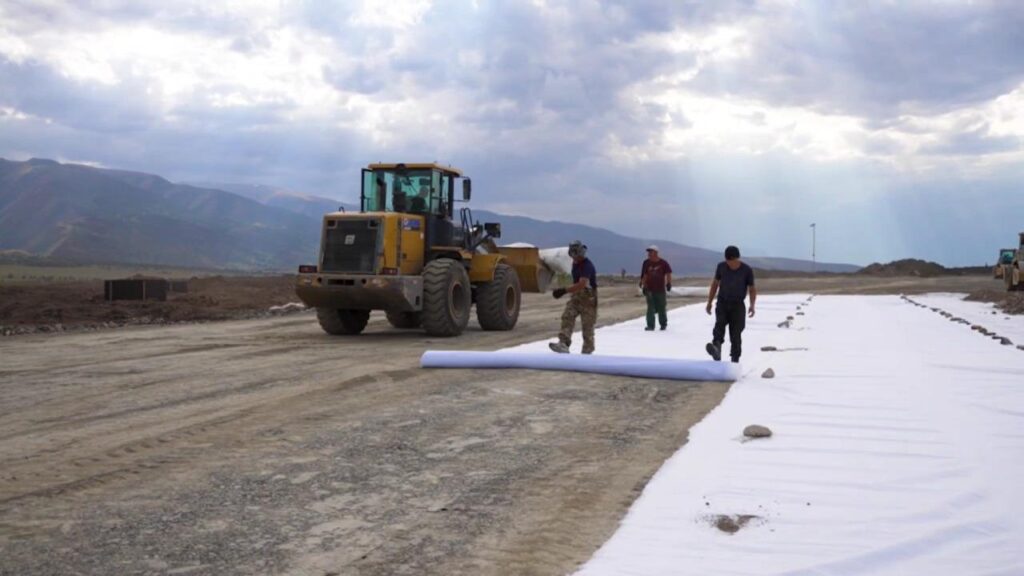
The construction of new airports in the Katon-Karagai and Zaisan districts of eastern Kazakhstan is entering its final phase. For these remote region, once accessible only by winding mountain roads, the arrival of runways, terminals, and control towers marks a historic milestone. But these projects are more than just transportation infrastructure. They are poised to become engines of regional development, restoring the area's appeal to both tourists and investors. An Airport in the Mountains Katon-Karagai is the heart of Kazakhstan’s Altai region. Between the villages of Belkaragai and Ornek, a large-scale construction effort is underway to build a modern airport complex. Spanning 266 hectares, the project includes a 2,260 meter runway, a terminal, a command-and-control center, and state-of-the-art navigation and meteorological equipment. According to project manager Nurzhan Eskendirov, 80% of the work is now complete. “Next summer, we will lay the final layer of asphalt. This airport is not just a construction project, it’s a new chapter in the region’s history,” he told TSA. [caption id="attachment_38662" align="aligncenter" width="300"] @gov.kz[/caption] For local residents, the construction has become the event of the decade. Workers from across the country have joined the effort. “The nature here is simply amazing,” said one of the builders, Manash Baigonov. “I want people from all over the world to be able to see it.” Katon-Karagai is renowned for its pristine lakes, snow-covered peaks, and protected nature reserves. The airport will drastically reduce travel time, making the region far more accessible to tourists who previously faced hours of rugged road travel. Zaisan: The Eastern Gateway In the Zaisan district, another major airport project is nearing completion near the village of Satpay. The runway and apron are fully finished, the drainage system is being finalized, and terminal and control tower construction is ongoing. This airport is expected to play a vital role in expanding cross-border tourism and logistics. Currently, Zaisan receives about 20,000 tourists annually, a number that could increase four- to five-fold once the airport opens. Regular flights are planned to Ust-Kamenogorsk, Almaty, and Astana, with future international routes to Urumqi in China and Lake Kanass. This would position Zaisan as Kazakhstan’s “eastern gateway,” linking the country to China not only by road, but also by air. “The airport is creating new routes, but more importantly, it’s creating meaning,” said one of the project’s designers. “It’s not just a runway, it’s the take-off of a region.” [caption id="attachment_38663" align="aligncenter" width="300"] @gov.kz[/caption] From Roads to People Airport development is also driving broader infrastructure upgrades. A new road to the village of Urunkhaika on Lake Markakol, planned in partnership with China’s Heilongjiang Province Bada Road, will connect even more of Altai’s secluded landscapes to the broader transport network. Until now, many of these areas were accessible only by footpaths. These infrastructure projects are transforming not just the regional map, but daily life. In Katon-Karagai, which was once served only by narrow serpentine roads and sporadic buses, officials are now preparing for the arrival of investors, climbers, photographers, and nature lovers....

A Cascade of Opportunity: How Hydropower Is Driving Growth in Eastern Kazakhstan

Eastern Kazakhstan is harnessing its hydropower potential to transform water into economic strength. In a region that holds over 40% of the country’s water resources, local authorities are positioning hydropower as a cornerstone of sustainable development and energy independence. At the recent Altai Invest-2025 international investment forum in Ust-Kamenogorsk, the regional capital of East Kazakhstan, officials signed memorandums for the construction of multiple hydroelectric power plants on the Ubi and Little Ulba rivers. The planned facilities are expected to deliver tens of megawatts of clean energy, generate hundreds of jobs, and reduce dependence on external electricity supplies.  Regional Potential and Water Strategy East Kazakhstan has long been regarded as the country’s renewable energy hub. The region already hosts seven operating hydroelectric power plants, including the Bukhtarma, Ust-Kamenogorsk, and Turgusun stations. With its climate less suited to solar and wind energy, hydropower remains the region’s most viable renewable resource. Local authorities have identified 95 potential sites for small-scale hydropower projects, with a combined capacity of approximately 2 gigawatts. These facilities aim to supply rural areas with electricity, regulate water balances, and support irrigation and flood prevention efforts. One of the largest agreements signed at the forum involves the construction of two hydropower plants on the Ubi River. According to a memorandum with Global Turbo Compressors, the projects will produce 150 MW and 50 MW, respectively. Small Stations, Big Returns CAPITAL DVP plans to construct two mini-hydropower plants with a combined capacity of 45 MW in the Altai region, near the village of Lesnaya Pristan. These projects will utilize modular technologies to accelerate construction timelines and reduce environmental impact.  Another project, spearheaded by Kazakh firm Zhel Kuat, involves a 15 MW station on the Little Ulba River. Developed in partnership with the regional energy administration, the facility aims to enhance energy supply stability and create local employment. [caption id="attachment_38407" align="aligncenter" width="300"] @TCA[/caption] The project also includes provisions for environmental impact assessments, fish protection systems, and technical adaptations suited to local conditions. For East Kazakhstan, hydropower serves not only as a renewable energy source but also as a catalyst for broader regional development. These facilities help regulate floodwaters, support agricultural irrigation, and sustain ecosystems. The Ubi River, a major tributary of the Irtysh, runs through the Shemonaikha district and flows into the Shulbinskoye reservoir. Planned hydropower sites along its course will leverage natural elevation differences, avoiding the need to flood large areas. The Turgusinskaya hydropower plant, launched in 2021, is frequently cited as a successful model. The 24.9 MW station has increased energy output, raised tax revenues, and created jobs, all while maintaining environmental standards. A Broader Development Vision At Altai Invest-2025, East Kazakhstan region head Nurymbet Saktaganov outlined a regional development strategy through 2030. Key goals include increasing the population to one million, revitalizing border areas, expanding gas infrastructure, and fostering job creation. “These are ambitious but realistic goals that combine economic growth and social development in the region,” Saktaganov emphasized.

“A Road Not for the Faint-Hearted”: How Austrian Prisoners of War Built a Tourist Path in East Kazakhstan

A winding mountain road in East Kazakhstan has become a point of fascination not only for tourists but also for historians, filmmakers, and researchers. Known variously as the Old Austrian Road, the Austrian Route, or Irek Zhol (“Winding Road”), this nearly 50-kilometer path connects the Katon-Karagai and Markakol districts, cutting through pristine wilderness in a national park and a state reserve. Today the path is being restored, but the road’s true value lies in a dramatic and little-known past that stretches back over a century. A New Chapter for an Old Road In July 2025, authorities announced the launch of extensive repair work on the Old Austrian Road. With a budget exceeding $1 million from the regional government, the project includes rebuilding a damaged bridge near Katon-Karagai, replacing culverts, reinforcing slopes, and rehabilitating impassable sections. The most challenging terrain lies near Lake Markakol, where the route crosses swampy stretches, sharp switchbacks, and granite outcroppings. Yet these obstacles have not deterred growing numbers of visitors, off-road enthusiasts, cyclists, hikers, and even horse riders, eager to explore the wild beauty of Eastern Kazakhstan. [caption id="attachment_35993" align="aligncenter" width="1280"] Image: TCA/Yulia Chernyavskaya[/caption] The Road’s Origins in War and Captivity Though few know it, this scenic mountain route has deep strategic and historical roots. Long before the 20th century, locals used it as a trail for horses and carts. But by the early 1900s, the Russian Empire decided to formalize the path, partly due to the road’s proximity to the Chinese border. Between 1914 and 1916, the road was reconstructed, largely by Austrian prisoners of war, mainly ethnic Czechs, Slovaks, Hungarians, and Galicians, captured during World War I. According to Vienna-based historian Lana Berndl, who has conducted extensive research on the topic, roughly 800 prisoners were transported from Austria via St. Petersburg and Omsk to the Irtysh River and then forced to march to the village of Altai (now Katon-Karagai). Around 600 reached their destination. Construction began simultaneously from Katon-Karagai and Alekseevka. Despite working only in the warmer months, the prisoners built a road whose difficulty rivals Alpine passes. During the harsh winters, many worked on local farms and integrated into village life. Some even married and remained in Kazakhstan permanently. [caption id="attachment_35994" align="aligncenter" width="1280"] Image: TCA/Yulia Chernyavskaya[/caption] Tragically, several were later repressed during Stalin’s purges. Among them was Ludwig Fritzen, a Hungarian prisoner who stayed, married a local woman, and was executed in 1937 after being accused of espionage. Remnants of this history remain: roughly 30 graves with Gothic-scripted crosses can still be found in old cemeteries throughout the region, silent testimonies to those who built the road under extreme duress. Film Rekindles Forgotten History In 2016, Austrian filmmaker Ruslana Berndl released a documentary titled The Austrian Road, which brought global attention to the forgotten story. She first learned about the road from a brief mention in a German travel guide that described it as “not for the faint-hearted” and built by Austrian POWs. Intrigued, Berndl, then a doctoral student at the University of...

German Company to Mine and Process Lithium in East Kazakhstan

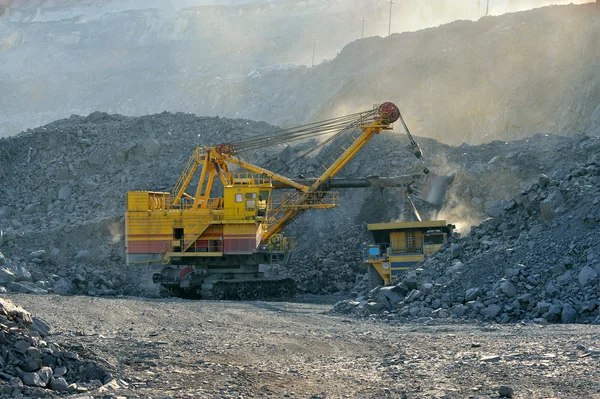
Two new industrial facilities dedicated to the mining and processing of lithium are set to be established in the Ulan district of East Kazakhstan Region by 2029. The announcement was made by Nurymbet Saktaganov, akim of East Kazakhstan Region, who noted that plans are underway for the construction of a mining and processing plant, as well as a pegmatite ore processing facility. $500 Million Investment from Germany The project will be implemented with the participation of HMS Bergbau AG, a German mining company that plans to invest $500 million into the development of a lithium deposit discovered in 2023. The initiative will include both the extraction of raw materials and the production of lithium oxide concentrate, a product in high demand across the global high-tech sector. Germany’s interest in Kazakhstan’s rare earth resources was discussed during a September 2023 meeting between President Kassym-Jomart Tokayev and Dennis Schwindt, Chairman of the Board of HMS Bergbau AG. Tokayev reaffirmed Kazakhstan’s openness to foreign investment and emphasized the country’s intention to become a key player in the supply of strategic raw materials. He highlighted lithium’s growing importance in modern industry, particularly for renewable energy and high-tech manufacturing. Operating in the USA, Singapore, South Africa, Poland, and several other markets, HMS Bergbau AG is considered a major independent force in the global solid minerals sector. Its new facility in East Kazakhstan will serve as a vital link in the international lithium supply chain, amid rising global demand driven by electric vehicles, portable electronics, and energy storage systems. $15.7 Billion Discovery by South Korean Researchers In a parallel development, researchers from the Korea Institute of Geosciences and Mineral Resources (KIGAM) announced in 2024 the discovery of a lithium deposit in East Kazakhstan valued at approximately $15.7 billion. Spanning 1.6 square kilometers, the site was previously mined for tantalum. The research, commissioned by the Kazakh government, was based on geological data indicating frequent co-location of lithium, cesium, and tantalum deposits. “KIGAM has been studying the area since last May at the request of the Kazakh government, given that tantalum usually comes with lithium and cesium,” The Korea Times reported. Lithium: A Cornerstone of the New Economy Globally recognized as one of the most critical and scarce elements, lithium is essential for producing lithium-ion batteries that power everything from smartphones and laptops to electric cars and grid-scale energy storage systems. Kazakhstan’s efforts to harness its lithium reserves in East Kazakhstan are expected to boost the country's role in the global energy transition and significantly enhance investment opportunities in the region.