• KGS/USD = 0.01144 0%
  • KZT/USD = 0.00208 0%
  • TJS/USD = 0.10864 0%
  • UZS/USD = 0.00008 0%
  • TMT/USD = 0.28571 0%
  • KGS/USD = 0.01144 0%
  • KZT/USD = 0.00208 0%
  • TJS/USD = 0.10864 0%
  • UZS/USD = 0.00008 0%
  • TMT/USD = 0.28571 0%
  • KGS/USD = 0.01144 0%
  • KZT/USD = 0.00208 0%
  • TJS/USD = 0.10864 0%
  • UZS/USD = 0.00008 0%
  • TMT/USD = 0.28571 0%
  • KGS/USD = 0.01144 0%
  • KZT/USD = 0.00208 0%
  • TJS/USD = 0.10864 0%
  • UZS/USD = 0.00008 0%
  • TMT/USD = 0.28571 0%
  • KGS/USD = 0.01144 0%
  • KZT/USD = 0.00208 0%
  • TJS/USD = 0.10864 0%
  • UZS/USD = 0.00008 0%
  • TMT/USD = 0.28571 0%
  • KGS/USD = 0.01144 0%
  • KZT/USD = 0.00208 0%
  • TJS/USD = 0.10864 0%
  • UZS/USD = 0.00008 0%
  • TMT/USD = 0.28571 0%
  • KGS/USD = 0.01144 0%
  • KZT/USD = 0.00208 0%
  • TJS/USD = 0.10864 0%
  • UZS/USD = 0.00008 0%
  • TMT/USD = 0.28571 0%
  • KGS/USD = 0.01144 0%
  • KZT/USD = 0.00208 0%
  • TJS/USD = 0.10864 0%
  • UZS/USD = 0.00008 0%
  • TMT/USD = 0.28571 0%

Viewing results 1 - 6 of 216

Uzbekistan and Tajikistan Launch 10 Joint Projects During Rahmon’s State Visit

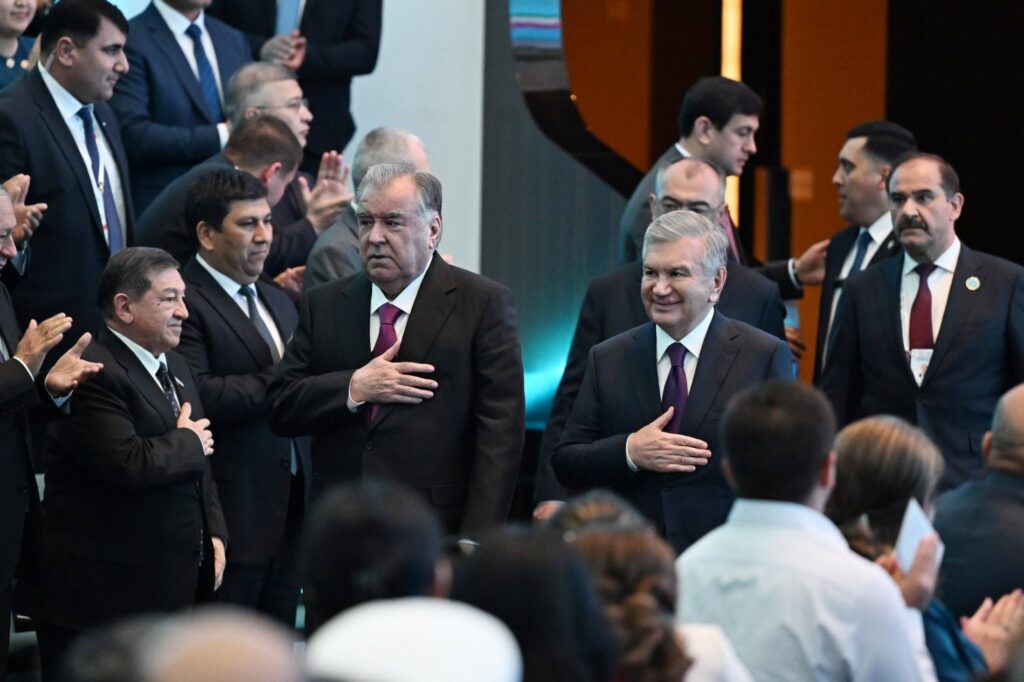
Uzbekistan's President Shavkat Mirziyoyev welcomed his Tajik counterpart Emomali Rahmon to Tashkent on March 26 for a state visit marked by high-level talks, and the launch of joint economic projects. Talks between the presidents followed, first in a one-on-one format and then during the inaugural meeting of the Supreme Interstate Council, a new platform aimed at deepening bilateral cooperation. Mirziyoyev described the visit as a landmark in bilateral relations, noting that the council would elevate cooperation and provide a mechanism for implementing joint initiatives. Both sides highlighted the increasing frequency of contacts between government institutions, parliaments, and agencies. In the lead-up to the visit, a series of events took place, including an intergovernmental commission meeting, an industrial exhibition, and forums involving regional leaders, academics, and youth. Uzbekistan also hosted Days of Tajik Culture and Cinema. During the discussions, Mirziyoyev and Rahmon reviewed opportunities to expand cooperation across key sectors, including trade, industry, transport, and water and energy security. Bilateral trade approached $1 billion last year, driven largely by the exchange of finished goods. The two countries aim to double this figure to $2 billion by 2030. Planned measures include accelerating the establishment of the Oybek-Fotekhobod border trade center, introducing digital certification systems and “E-Permit” mechanisms, and modernizing border infrastructure. The sides also agreed to adopt an industrial cooperation program covering mining, energy, agriculture, construction, and manufacturing. Following the council meeting, Mirziyoyev and Rahmon attended a ceremony to launch 10 joint projects. These include new enterprises producing furniture and leather goods, expanded household appliance manufacturing, textile production facilities in Tajikistan, and construction projects in Tashkent. Additional initiatives include food processing plants in Uzbekistan's Fergana region, dairy production in the city of Andijan, and facilities for making fruit juice and metal briquettes in the country's Surkhandarya region. A ceremony was also held to name a street in New Tashkent after Dushanbe, underscoring symbolic ties between the two capitals. The visit also featured the opening of a new building for Tajikistan’s embassy in Tashkent. The complex includes administrative offices, a consular section, a residence for the ambassador, and housing for diplomatic staff and their families. Cultural diplomacy formed another key part of the visit. Mirziyoyev and Rahmon attended a joint concert at the International Forums Palace featuring performers from both countries, with a program highlighting shared cultural heritage and longstanding ties between the Uzbek and Tajik peoples. The leaders also discussed regional and international issues, reaffirming their commitment to continued dialogue and cooperation within Central Asia. They agreed to strengthen coordination on security matters and expand interregional ties, as well as humanitarian, educational, and scientific exchanges. Given the presence of large diaspora communities in both countries, a proposal was put forward to adopt a five-year program aimed at strengthening cultural and humanitarian connections. At the conclusion of the visit, both sides agreed to develop a comprehensive roadmap to ensure implementation of the agreements reached, signaling continued efforts to expand cooperation across political, economic, and cultural spheres.

Xi Jinping and Berdymuhamedov Sr. Discuss Expansion of China-Turkmenistan Partnership

Chinese President Xi Jinping held talks with Gurbanguly Berdymuhamedov, Turkmenistan's former president and leader of its People's Council, during the latter’s official visit to China. The meeting took place on March 18 at the Diaoyutai State Guesthouse in Beijing, according to a statement from China’s Ministry of Foreign Affairs. Xi noted that China had recently completed its annual parliamentary meetings, commonly referred to as the “Two Sessions,” during which key socio-economic priorities were outlined. He said the country’s new development agenda would support modernization efforts and create additional opportunities for international cooperation. The Chinese president said that mutual political support remains central to the comprehensive strategic partnership between Beijing and Ashgabat. He reaffirmed China’s readiness to continue backing Turkmenistan on issues related to sovereignty, territorial integrity, and its internationally recognized policy of permanent neutrality. Xi and Berdymuhamedov discussed expanding cooperation in the energy sector, particularly natural gas supplies, as well as in trade, investment, transport connectivity, agriculture, artificial intelligence, the digital economy, and clean energy. Both leaders also highlighted the importance of aligning China’s Belt and Road Initiative with Turkmenistan’s plans to revitalize historic Silk Road trade routes. Humanitarian cooperation was another focus of the talks, including plans to develop educational and cultural exchanges and establish joint centers. The leaders also discussed coordination on regional security challenges, including efforts to counter terrorism, separatism, and extremism. Berdymuhamedov reaffirmed Turkmenistan’s commitment to the One China principle and expressed readiness to deepen bilateral cooperation in energy, infrastructure, and trade. He said closer ties with China were important for Turkmenistan’s long-term economic development and again noted Beijing’s support for the country’s neutrality policy. Chinese Foreign Minister Wang Yi also attended the meeting. As previously reported by The Times of Central Asia, the visit followed Berdymuhamedov’s trip to the United States in mid-February, the details of which were not fully disclosed. Shortly after his return, Turkmenistan’s President, Gurbanguly's son Serdar Berdymuhamedov, dismissed the country’s ambassador to the U.S. and its permanent representative to the United Nations. No official explanation was provided for the personnel changes.

UK and Kyrgyzstan Expand Financial Cooperation

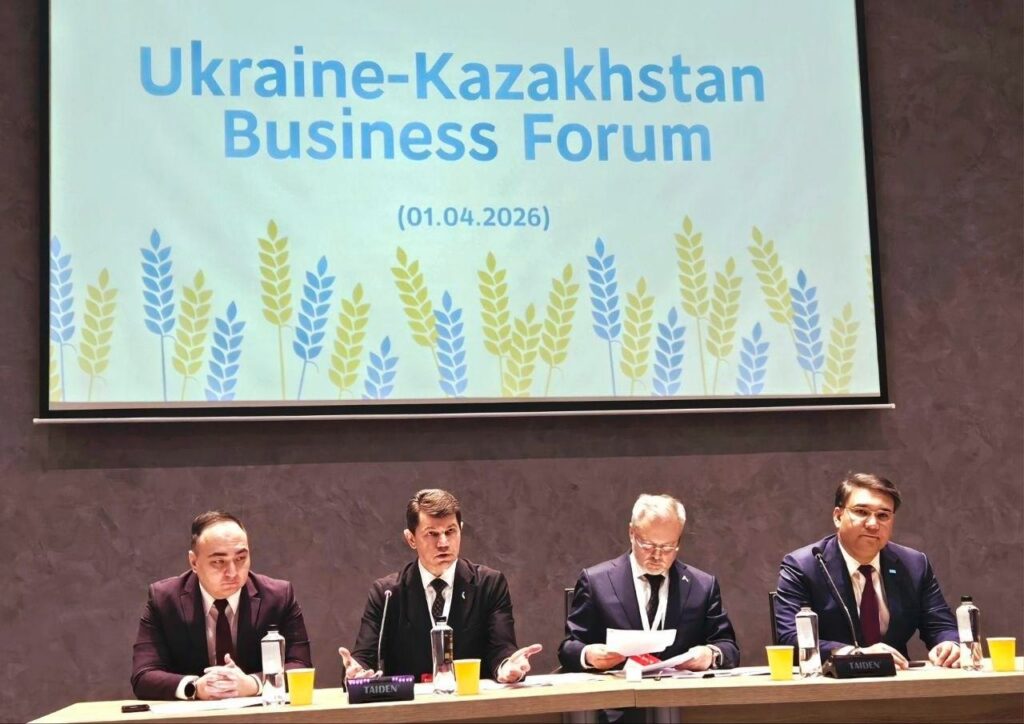
The Kyrgyz Republic Capital Markets Day was held in London, where representatives of the UK financial and investment community met with Kyrgyz officials to discuss prospects for expanding banking and investment cooperation. The Kyrgyz delegation was led by Deputy Minister of Economy and Commerce Mederbek Tumanov. During his working visit to London, Tumanov held meetings with representatives of the investment banks Oppenheimer and Citi, presenting Kyrgyzstan’s macroeconomic indicators for recent years and outlining the country’s fiscal policy and structural reforms. According to the Ministry of Economy and Commerce, Kyrgyzstan aims to improve its sovereign credit rating, which would facilitate the country’s access to international capital markets. During the discussions, particular attention was given to creating a predictable regulatory environment for investors. The Kyrgyz government also seeks to reduce the cost of external borrowing and strengthen the confidence of international investors. During the visit, the Kyrgyz delegation met with business representatives, including DG and Bankinvest, to discuss opportunities for attracting British private capital to key sectors of the Kyrgyz economy. According to the Kyrgyz Ministry of Economy, the British delegates expressed interest in expanding investment cooperation. Tumanov also participated in a meeting of the Kyrgyz-British Business Council, where participants discussed prospects for bilateral investment and the promotion of Kyrgyzstan’s economic priorities in the British market. During the event, the Kyrgyz representatives presented a number of potential investment projects to British investors, including initiatives related to the development of critical minerals, financial market development, and closer banking cooperation. According to Kyrgyz authorities, the interest shown by British businesses reflects growing international investor attention to Kyrgyzstan and the wider Central Asian region.

Three Main Principles of Kazakhstan’s Afghan Policy

August 15, 2026 will mark five years since the Taliban came to power in Afghanistan. This substantial period can be assessed in different ways, particularly given the widespread skepticism at the outset regarding the Taliban’s ability to govern effectively and build relations with other countries. The situation in Afghanistan remains complex and multifaceted, with diverging trends. On the one hand, the current Afghan leadership faces a wide range of internal challenges, primarily socio-economic. After the Taliban’s return to power, humanitarian assistance declined sharply. For many years, two-thirds of Afghanistan’s budget had been financed through foreign aid, and its reduction has significantly affected the social conditions of ordinary Afghans. According to the United Nations, only one-third of the $2.4 billion humanitarian response plan required for 2025 has been funded. Over 21 million Afghans require humanitarian assistance. The economic situation has been further complicated by the deteriorating humanitarian environment, largely due to the deportation of millions of Afghan refugees from Iran and Pakistan this year. In total, around 4.5 million Afghans have returned since 2023, primarily through deportations from Iran and Pakistan, resulting in a 10% population increase. Other pressing social issues remain. Several countries continue to focus on security and terrorist threats, as well as government inclusiveness and the rights of women and girls, particularly their access to employment and education. At the same time, nearly five years into Taliban rule, the anticipated “economic and political collapse” has not materialized. The national budget is gradually increasing, and small and medium-sized enterprises are emerging. Industrial parks aimed at developing domestic production have appeared in major cities such as Kabul, Mazar-i-Sharif, and Herat. Since 2023, relative macroeconomic stabilization has been observed, although growth rates remain insufficient to offset demographic pressures and reduce poverty. The World Bank forecasts Afghanistan’s gross domestic product (GDP) growth at 4.3% in 2025, with inflation projected to remain low at approximately 2%. According to the United Nations, the area under opium poppy cultivation has declined by 95% during the years of Taliban rule. At the same time, synthetic drug production has reportedly increased, reflecting trends observed in many other countries. Politically, the Taliban maintains consolidated control over most of the country. In other words, a more stable, albeit fragile, reality has emerged, one that Central Asian countries must engage with on a daily basis. Kazakhstan has adopted a pragmatic approach. Its policy toward Afghanistan is based on a model of “pragmatic engagement without recognition,” while developing an independent system of transport, energy, and humanitarian ties with the country. Kazakhstan’s decision to remove the Taliban from its list of banned organizations does not signify a departure from international law nor does it constitute automatic recognition of the current Afghan authorities. On the issue of formal recognition, Kazakhstan relies on decisions of the UN Security Council. From a foreign policy perspective, this step forms part of a broader strategy: Kazakhstan is adapting its instruments to a changed reality while remaining within international norms and avoiding symbolic gestures that could be interpreted as...

Tokayev’s U.S. Visit Advances Kazakhstan’s Economic Agenda

The visit of Kazakh President Kassym-Jomart Tokayev to the United States provided an opportunity for targeted negotiations with major international corporations and financial institutions, centered on long-term investment, production localization, and Kazakhstan’s integration into global value chains. One of the key outcomes was the signing of an investment agreement worth approximately $180 million between Kazakhstan’s Ministry of Agriculture and Mars, Incorporated. The company plans to build a pet food production plant in the city of Alatau. The project will focus on the deep processing of agricultural raw materials and the production of high-value-added goods. Mars CEO Poul Weihrauch noted that the Kazakhstan facility will serve as a base for expanding the company’s presence in Central Asia and neighboring regions. A separate round of negotiations focused on healthcare. During talks with Ashmore Group, discussions centered on a proposal to build an international clinic in partnership with Ashmore Healthcare International and Samruk-Kazyna Invest, with the involvement of the Mount Sinai Health System as the operator. The initiative aligns with Kazakhstan’s strategy to develop medical infrastructure and medical tourism, as well as the Open Investment Partnership program targeting high-tech sectors of the economy. Aviation was another major component of the visit. At a meeting with Boeing executives, Tokayev confirmed the interest of Kazakh carriers Air Astana, SCAT Airlines, and VietJet Qazaqstan in expanding cooperation. Air Astana expects to receive Boeing 787 Dreamliner aircraft in the second half of 2026, which could pave the way for the launch of direct flights between Kazakhstan and the U.S. SCAT, meanwhile, is considering both the acquisition of additional aircraft and the establishment of its first maintenance and repair center at Shymkent Airport in partnership with an American company. The visit concluded with negotiations involving the U.S. International Development Finance Corporation (DFC). Its CEO, Ben Black, said Washington views Kazakhstan as a key partner in Eurasia. The discussions focused on projects in the mining sector and the development of transport and transit infrastructure critical for regional and interregional trade. According to the World Investment Report 2025 (UNCTAD), Kazakhstan overwhelmingly dominates foreign direct investment (FDI) in Central Asia. In 2024, Kazakhstan’s inward FDI stock stood at about $151 billion, far exceeding Turkmenistan (about $45 billion), Uzbekistan (about $17 billion), and Kyrgyzstan and Tajikistan (around $4 billion each). The negotiations in Washington point to Kazakhstan’s focus on building long-term institutional partnerships rather than pursuing isolated investment deals, a signal intended to reassure international investors about the stability and openness of the market. As previously reported by The Times of Central Asia, Tokayev also took part in the inaugural meeting of the Board of Peace in Washington, where Kazakhstan signaled its willingness to contribute to Gaza’s reconstruction and broader stabilization efforts, including potential financial support and participation in peacekeeping initiatives.

Coordination Instead of Declarations: Astana Hosts Meeting of Regional Contact Group on Afghanistan

On Monday, Astana hosted an extraordinary meeting of the Regional Contact Group of Special Representatives of Central Asian Countries on Afghanistan, with delegations from Kazakhstan, Kyrgyzstan, Tajikistan, and Uzbekistan in attendance. The agenda focused on trade and economic cooperation with Afghanistan, including joint projects, investment protection, transit tariff policy, and the development of transport corridors through Afghan territory. The establishment of the group represents the practical implementation of agreements reached at the Sixth Consultative Meeting of the Heads of State of Central Asia, held in Astana in August 2024, and reflected in the Roadmap for Regional Cooperation for 2025-2027. The first meeting of the Contact Group took place on August 26 last year in Tashkent. As noted by Erkin Tukumov, Special Representative of the President of Kazakhstan for Afghanistan, Astana is interested in a constructive exchange of views and in identifying practical solutions to pressing issues of cooperation with Afghanistan. In recent years, Kazakhstan has consistently kept Afghanistan among its foreign policy priorities, avoiding rhetorical declarations in favor of a measured and systematic approach. President Kassym-Jomart Tokayev has paid particular attention to Afghanistan since the change of power in Kabul in 2021. In the first weeks after the Taliban assumed control, Astana began articulating its position on international platforms. One of the key statements was Tokayev’s address at the Shanghai Cooperation Organisation summit in Dushanbe on September 17, 2021. He advanced a thesis that has since been reiterated in various formats: Afghanistan should be viewed not only as a source of risk but also as a potential driver of regional development, provided that stability and economic recovery are achieved. This position was further elaborated days later at the United Nations General Assembly. At that time, Kazakhstan was among the first to emphasize the need for inclusiveness in Afghanistan’s future political system, not as an abstract requirement, but as a practical condition for stability. Another significant step was the creation last year of the post of Special Representative of the President for Afghanistan, to which Tukumov was appointed. This role goes beyond that of an interdepartmental coordinator: as a direct representative of the head of state, it elevates the Afghan portfolio to the level of strategic priority. The establishment of such a position signals a transition from a situational response to a more systematic policy. The Astana meeting confirmed the intention of regional countries to deepen cooperation through a regular platform capable of coordinating actions and presenting them externally in a consolidated manner. Some external observers suggest that Central Asian countries are only now beginning to develop a common position on Afghanistan. However, that position has largely taken shape in recent years. The current task is not to formulate it, but to coordinate it more precisely. The meeting in Astana demonstrated that, for Central Asian countries, the primary concern is not the nature of the regime in Kabul, but Afghanistan’s capacity to function as a predictable economic partner and responsible participant in international relations. For the region, it is essential that...