August 15, 2026 will mark five years since the Taliban came to power in Afghanistan. This substantial period can be assessed in different ways, particularly given the widespread skepticism at the outset regarding the Taliban’s ability to govern effectively and build relations with other countries.
The situation in Afghanistan remains complex and multifaceted, with diverging trends.
On the one hand, the current Afghan leadership faces a wide range of internal challenges, primarily socio-economic. After the Taliban’s return to power, humanitarian assistance declined sharply. For many years, two-thirds of Afghanistan’s budget had been financed through foreign aid, and its reduction has significantly affected the social conditions of ordinary Afghans. According to the United Nations, only one-third of the $2.4 billion humanitarian response plan required for 2025 has been funded. Over 21 million Afghans require humanitarian assistance.
The economic situation has been further complicated by the deteriorating humanitarian environment, largely due to the deportation of millions of Afghan refugees from Iran and Pakistan this year. In total, around 4.5 million Afghans have returned since 2023, primarily through deportations from Iran and Pakistan, resulting in a 10% population increase.
Other pressing social issues remain. Several countries continue to focus on security and terrorist threats, as well as government inclusiveness and the rights of women and girls, particularly their access to employment and education.
At the same time, nearly five years into Taliban rule, the anticipated “economic and political collapse” has not materialized. The national budget is gradually increasing, and small and medium-sized enterprises are emerging. Industrial parks aimed at developing domestic production have appeared in major cities such as Kabul, Mazar-i-Sharif, and Herat.
Since 2023, relative macroeconomic stabilization has been observed, although growth rates remain insufficient to offset demographic pressures and reduce poverty. The World Bank forecasts Afghanistan’s gross domestic product (GDP) growth at 4.3% in 2025, with inflation projected to remain low at approximately 2%.
According to the United Nations, the area under opium poppy cultivation has declined by 95% during the years of Taliban rule. At the same time, synthetic drug production has reportedly increased, reflecting trends observed in many other countries.
Politically, the Taliban maintains consolidated control over most of the country.
In other words, a more stable, albeit fragile, reality has emerged, one that Central Asian countries must engage with on a daily basis.
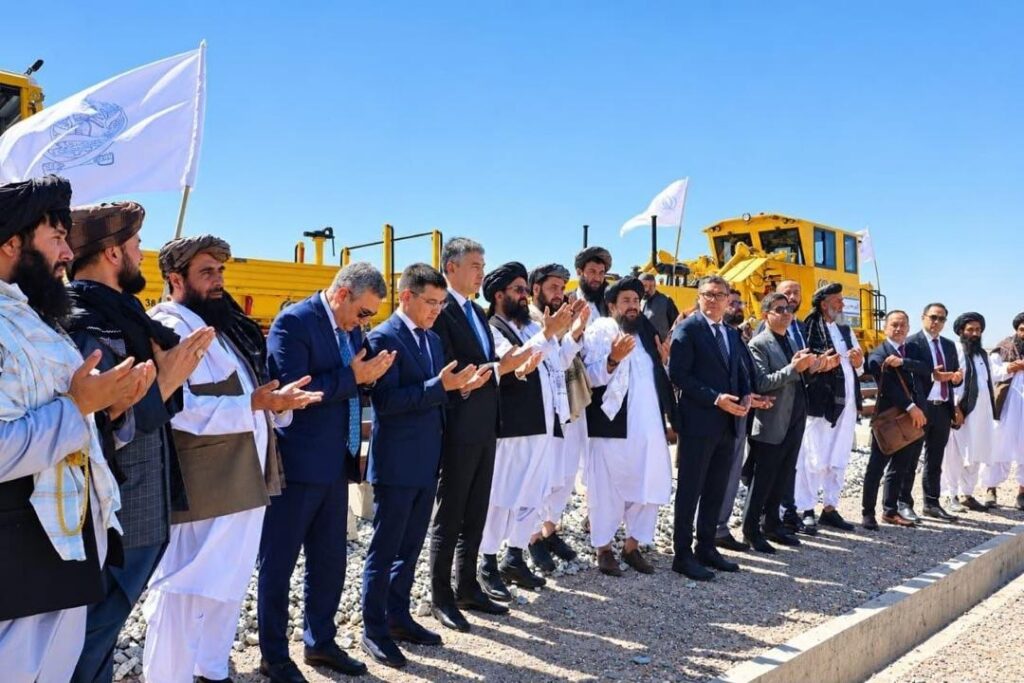
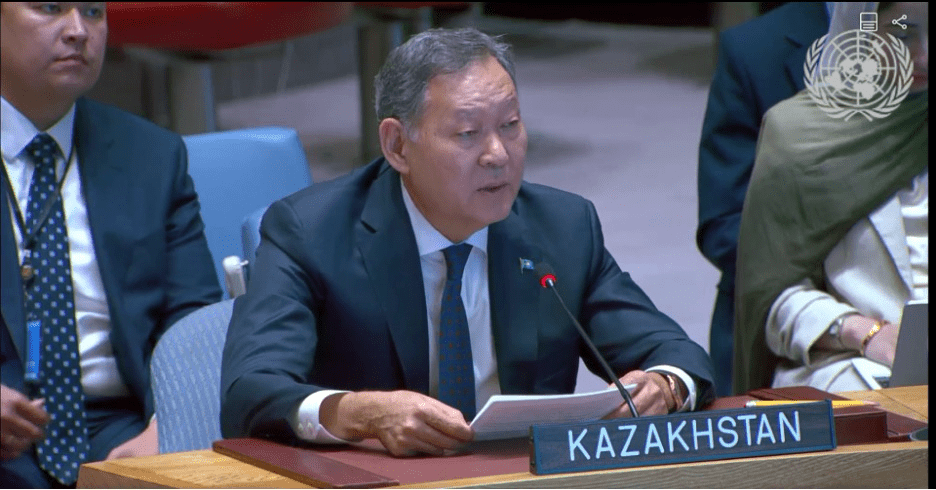
Kazakhstan has adopted a pragmatic approach. Its policy toward Afghanistan is based on a model of “pragmatic engagement without recognition,” while developing an independent system of transport, energy, and humanitarian ties with the country. Kazakhstan’s decision to remove the Taliban from its list of banned organizations does not signify a departure from international law nor does it constitute automatic recognition of the current Afghan authorities. On the issue of formal recognition, Kazakhstan relies on decisions of the UN Security Council.
From a foreign policy perspective, this step forms part of a broader strategy: Kazakhstan is adapting its instruments to a changed reality while remaining within international norms and avoiding symbolic gestures that could be interpreted as premature political endorsement.
Afghanistan should not be viewed solely as a source of regional security threats, but also in terms of opportunities for the region and for Kazakhstan. The country is no longer perceived merely as an object of foreign policy and geopolitics, but as a constant factor influencing security, trade, humanitarian conditions, and regional stability.
This approach is not limited to the countries of the region. As of February 2026, 18 foreign diplomatic missions are operating in Afghanistan, including embassies from all Central Asian states.
Kazakhstan’s policy is guided by long-term objectives and strategic vision. Quick results should not be expected, particularly in the implementation of projects or in assessing their risks and benefits.
Based on national interests, Kazakhstan has formulated three core principles of its Afghan policy.
First: Recognition of realities on the ground and the interdependence of regional and national security
An understanding of historical and political realities underpins Kazakhstan’s policy toward Afghanistan. Change must come through engagement rather than isolation.
Although Kazakhstan does not share a direct border with Afghanistan, it bears a degree of responsibility for developments in the country. This stems from the recognition that in Central and South Asia, and more broadly, including the Middle East, national security is inseparable from regional security.
In this context, Kazakhstan’s decision to join U.S. President Donald Trump’s “Peace Council” initiative and the Abraham Accords, aimed at reducing conflict and establishing new mechanisms for interaction in the Middle East, is noteworthy.
At first glance, such participation may appear beyond Central Asian priorities. However, when security is viewed as an interconnected space, where crises in one region generate risks far beyond its borders, the logic becomes clearer.
A priority for Afghanistan’s stable development lies in close cooperation with other Central Asian countries. There is a shared understanding that only through Afghanistan’s integration into regional cooperation frameworks can common threats, terrorism, illegal migration, and drug trafficking, be effectively addressed.
Particularly significant is the need to involve Afghanistan in legal frameworks governing cross-border cooperation on the Amu Darya, especially in light of the construction of the Qosh Tepa Canal. At the same time, the region does not require new institutional formats for engagement with Kabul. Since 1993, the International Fund for Saving the Aral Sea has operated as one of the few sustainable mechanisms of regional cooperation, demonstrating Central Asia’s capacity for collective action on the international stage.
Second: Priority of economic cooperation and development of transit potential
The development of trade and transit connectivity remains central to Kazakhstan’s Afghan policy.
Bilateral trade reached $545 million in 2024 and $541 million in 2025, with a target of $3 billion. Trade is primarily based on agricultural products, particularly Kazakh wheat and flour, which are well established in the Afghan market. In 2024, Kazakhstan’s exports totaled $523 million, of which $317 million consisted of flour.
This underscores Kazakhstan’s tangible presence in Afghanistan’s economy, contributing directly to the country’s food security.
Cooperation in the mining sector is also viewed as promising. Afghanistan remains one of the least explored yet potentially resource-rich countries in the region, with deposits of precious metals, rare earth elements, and other minerals. Major industrial enterprises in Kazakhstan have expressed interest in potential extraction and processing projects.
Opportunities are also being considered for establishing service centers and dealer networks for Kazakh vehicles and agricultural machinery.
Support for Afghanistan’s private sector, particularly women’s entrepreneurship, represents another important dimension. International organizations regard the private sector as a primary source of job creation, including for women, who are currently restricted from public-sector employment and higher education. Encouraging entrepreneurship could form a foundation for broader regional cooperation.
However, trade volumes are unlikely to expand significantly without improvements in transit infrastructure. Prolonged instability in Afghanistan has long impeded the movement of goods from Central Asia to South Asia, Pakistan, India, and beyond, representing a market of nearly 2 billion people. For Kazakhstan, as a landlocked country, route diversification and access to Indian Ocean ports are strategically important.
Discussion of corridor competition in Central Asia is often overstated. The region’s priority is not rivalry but harmonization of standards, procedures, and tariff policies to ensure that routes function predictably and complement the broader logistics architecture.
Kazakhstan’s transport priorities include developing multimodal routes, eliminating bottlenecks, digitalizing procedures, increasing terminal capacity, and creating transparent conditions for carriers and cargo owners. In this context, Kazakhstan supports cooperation with Pakistan, Iran, Central Asian states, and other interested partners.
Third: Assisting Afghanistan through the Sustainable Development Goals
One of the Taliban’s major challenges is a shortage of skilled professionals.
Upon coming to power, the authorities confronted urgent issues in education, healthcare, poverty reduction, and climate policy, all of which fall within the framework of the 17 UN Sustainable Development Goals (SDGs).
In 2025, the UN Regional Center for Sustainable Development Goals for Central Asia and Afghanistan was opened in Almaty. This institution may serve as a platform for coordinated work between Central Asian countries and Afghanistan, using UN resources.
Kazakhstan’s longstanding experience in training specialists across various sectors can help systematize SDG-related efforts concerning Afghanistan. As a leading educational hub in Eurasia, Kazakhstan continues to provide scholarships for Afghan students in priority fields such as medicine, agriculture, and engineering. Thousands of Afghan citizens have graduated from Kazakh universities.
Educational initiatives, both degree programs and short-term courses, could form the backbone of regional cooperation. Each Central Asian country offers specialized expertise. For example, Afghan water management specialists could receive training at Taraz University of Water Management and Irrigation, while agricultural training could be provided by universities in Uzbekistan or Turkmenistan.
Humanitarian support remains equally important. Kazakhstan is among Central Asia’s leading providers of humanitarian assistance. At least twice annually, and at the request of the Afghan side, the government allocates aid in the form of food, medicine, tents, and winter clothing. Kazakhstan also facilitates the delivery of assistance under various UN programs and through its national operator, KazAid.
Medical assistance has become an increasingly significant area of cooperation. In November 2025, following devastating earthquakes in eastern Afghanistan, Kazakhstan dispatched an interdisciplinary medical mission comprising specialists in traumatology, orthopedics, neurosurgery, and emergency medicine. Over ten days, Kazakh doctors treated more than 100 patients and performed 44 surgeries, including complex procedures for multiple traumas and traumatic brain injuries. In several cases, patients previously recommended for limb amputation received alternative treatment.
Beyond clinical care, the mission had a strong educational component. Joint consultations were conducted, complex cases reviewed, modern treatment methods demonstrated, and patient management strategies discussed with Afghan counterparts.
In conclusion, Kazakhstan’s policy toward Afghanistan is grounded in political realities. While it offers no quick solutions, it seeks to create conditions for long-term stability both for Afghanistan and for Central Asia as a whole. The core of the dialogue between Astana and Kabul lies in working with reality rather than with convenient interpretations of it.