• KGS/USD = 0.01144 0%
  • KZT/USD = 0.00205 0%
  • TJS/USD = 0.10771 0%
  • UZS/USD = 0.00009 0%
  • TMT/USD = 0.28571 0.28%
  • KGS/USD = 0.01144 0%
  • KZT/USD = 0.00205 0%
  • TJS/USD = 0.10771 0%
  • UZS/USD = 0.00009 0%
  • TMT/USD = 0.28571 0.28%
  • KGS/USD = 0.01144 0%
  • KZT/USD = 0.00205 0%
  • TJS/USD = 0.10771 0%
  • UZS/USD = 0.00009 0%
  • TMT/USD = 0.28571 0.28%
  • KGS/USD = 0.01144 0%
  • KZT/USD = 0.00205 0%
  • TJS/USD = 0.10771 0%
  • UZS/USD = 0.00009 0%
  • TMT/USD = 0.28571 0.28%
  • KGS/USD = 0.01144 0%
  • KZT/USD = 0.00205 0%
  • TJS/USD = 0.10771 0%
  • UZS/USD = 0.00009 0%
  • TMT/USD = 0.28571 0.28%
  • KGS/USD = 0.01144 0%
  • KZT/USD = 0.00205 0%
  • TJS/USD = 0.10771 0%
  • UZS/USD = 0.00009 0%
  • TMT/USD = 0.28571 0.28%
  • KGS/USD = 0.01144 0%
  • KZT/USD = 0.00205 0%
  • TJS/USD = 0.10771 0%
  • UZS/USD = 0.00009 0%
  • TMT/USD = 0.28571 0.28%
  • KGS/USD = 0.01144 0%
  • KZT/USD = 0.00205 0%
  • TJS/USD = 0.10771 0%
  • UZS/USD = 0.00009 0%
  • TMT/USD = 0.28571 0.28%

Viewing results 1 - 6 of 216

Tajikistan-Kyrgyzstan Trade Soars More Than 15-Fold in 2025

Trade between Tajikistan and Kyrgyzstan has surged dramatically in 2025, increasing more than fifteenfold compared to the same period last year, according to the Customs Service of Tajikistan, as reported by Asia-Plus. From January to May, total bilateral trade reached $6.35 million, up from just $405,100 during the same period in 2024. Tajik exports to Kyrgyzstan amounted to $1.59 million, while imports from Kyrgyzstan totaled $4.76 million. Analysts attribute the sharp rise to improving political relations and the state visit of Kyrgyz President Sadyr Japarov to Dushanbe on July 8-9, at the invitation of Tajik President Emomali Rahmon. Bilateral trade has experienced fluctuations over the past decade. Peak volumes were recorded in 2018-2019, when annual trade neared $60 million, with more than $48 million in Kyrgyz exports to Tajikistan and over $14 million in Tajik exports. Since 2020, however, trade had been in decline, dropping to $26.2 million in 2021, $15 million in 2022, and just $11.4 million in 2023. Figures for 2024 remained low at approximately $11.6 million. The strong recovery in 2025 is largely credited to progress on border delimitation, the opening of two new border checkpoints, and renewed political dialogue. Experts also cite a series of new intergovernmental agreements as contributing factors. On June 30, during the visit of Tajikistan’s Foreign Minister Sirojiddin Muhriddin to Cholpon-Ata, both sides reaffirmed their commitment to expand trade and economic cooperation. A new target has been set: increasing annual trade to $500 million. Since the beginning of the year, the two countries have signed 15 agreements, including border-related protocols and measures to strengthen both political and humanitarian ties.

Uzbekistan and Azerbaijan Forge $1B Trade Vision

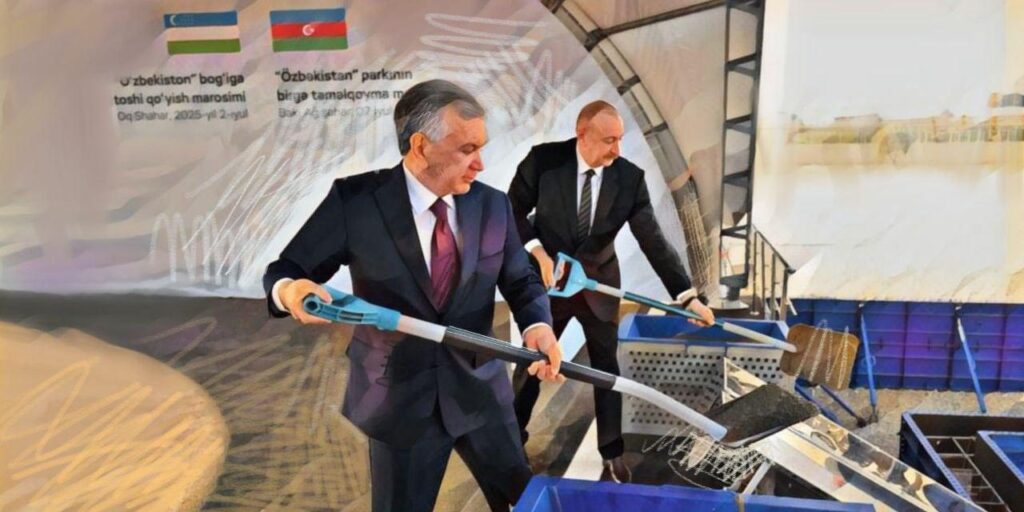
President Shavkat Mirziyoyev of Uzbekistan arrived in Baku on July 2 for a state visit at the invitation of Azerbaijani President Ilham Aliyev. He was received at the airport by Deputy Prime Minister Yagub Eyyubov and other senior officials, with an official reception taking place at the presidential residence in Zagulba.  A Thirty-Year Economic Partnership During bilateral talks, Presidents Mirziyoyev and Aliyev reaffirmed their commitment to enhancing the strategic partnership between Uzbekistan and Azerbaijan as the two nations mark 30 years of diplomatic ties. “Never in history have our relations been at such a high level as they are today,” said Mirziyoyev. Economic cooperation was a key focus of the discussions. Trade between the two countries has increased by 25% over the past year, and there are now approximately 300 joint ventures with a combined project portfolio valued at $4 billion. The leaders agreed to a new goal of boosting bilateral trade and investment to $1 billion annually by 2030. A comprehensive cooperation program was adopted to facilitate this, covering sectors such as industry, infrastructure, agriculture, healthcare, tourism, and banking. Advancing Transport and Logistics Links Significant progress was reported in the transport and energy sectors. The two presidents welcomed the growth of cargo transit along the Trans-Caspian International Transport Route, also known as the “Middle Corridor.” Uzbek cargo volumes on the route rose by 25% in 2024, surpassing one million tons, a development supported by the launch of a new electronic permit system in March. The leaders also committed to accelerating work on a joint green energy export initiative targeting European markets. Institutionalizing Strategic Ties Several bilateral documents were signed to formalize cooperation. These included a roadmap for implementing the 2023 Treaty on Alliance Relations through 2029, as well as agreements in environmental protection, science, higher education, and industry for the 2025-2026 period. Additional deals addressed agriculture, food security, social protection, maritime navigation, and municipal partnerships. New sister-city agreements were signed between Tashkent and Sumgayit, and between Navoi and Gabala. At a joint press briefing, Mirziyoyev lauded Azerbaijan’s efforts to restore its UN-recognized territorial integrity, stating, “You have fulfilled the long-standing dream of your father and every citizen of Azerbaijan.” He also praised infrastructure development in formerly disputed territories of Nagorno-Karabakh and described Azerbaijan as a “reliable ally and strategic partner.” The two leaders emphasized their shared positions on regional and global issues and pledged continued coordination in international forums. Mirziyoyev reaffirmed Uzbekistan’s commitment to the diplomatic resolution of conflicts. Cultural Diplomacy and Symbolism The visit featured symbolic and cultural highlights. In Baku’s Ag Sheher district, the presidents laid the foundation for Uzbekistan Park, a 4.5-hectare space celebrating Uzbek culture and architecture. They also inaugurated Uzbekistan’s new embassy in Baku, which includes halls named after different Uzbek regions, with Mirziyoyev proposing to name one of the halls after Karabakh as a gesture of friendship. The two leaders later toured the Sea Breeze resort complex on the Caspian coast, part of the broader Caspian Riviera tourism project. A similar development, Sea...

Uzbekistan and Mongolia Sign Joint Declaration to Deepen Bilateral Ties

President of Uzbekistan Shavkat Mirziyoyev arrived in Mongolia on June 24 for a historic state visit at the invitation of President Ukhnaagiin Khurelsukh. This marks the first official visit by a Uzbek head of state to Mongolia, signaling a significant step forward in bilateral relations. The official welcoming ceremony took place at Sukhbaatar Square in central Ulaanbaatar, where the two leaders reviewed an honor guard and greeted members of their respective delegations as national anthems were performed. In formal talks, both presidents reaffirmed their countries’ commitment to deepening cooperation. President Mirziyoyev expressed gratitude for Mongolia’s warm reception, and extended congratulations in advance of the country’s upcoming People’s Revolution Day celebrations. Expanding Economic Cooperation Discussions focused on strengthening economic ties, including cooperation in healthcare, education, e-commerce, agriculture, and construction materials. A recent Uzbek-Mongolian business forum held in Ulaanbaatar highlighted growing commercial engagement, while the opening of a Trade House for Uzbek goods in the Mongolian capital further cemented trade ties. The two presidents emphasized the importance of expanding trade in high value-added products, and expressed readiness to finalize agreements on preferential trade and investment protection. Areas such as mining, technology transfer, and vocational training were also on the agenda. To support these initiatives, Uzbekistan’s Ministry of Geology has opened a representative office in Ulaanbaatar. Agro-Industrial Development and Connectivity Agro-industrial collaboration will be advanced through the creation of joint clusters in meat, dairy, wool, and leather processing. Both sides are also exploring the possibility of launching direct flights between Tashkent and Ulaanbaatar by the end of 2025 to facilitate business and tourism. Humanitarian and Educational Exchange Humanitarian cooperation featured prominently in the dialogue. The leaders agreed to resume educational exchange programs, enabling Mongolian students to study at universities in Uzbekistan, thereby strengthening cultural and academic ties. Formalizing a Comprehensive Partnership The visit concluded with the signing of a joint declaration establishing a comprehensive partnership, outlining key areas for long-term cooperation and reaffirming mutual commitment to deeper ties. President Mirziyoyev also invited President Khurelsukh for a reciprocal visit to Uzbekistan.

China-Kazakhstan Economic Ties: Strong Trade, Weakening Investment

For the second consecutive year, China remains Kazakhstan's largest foreign economic partner. In 2023, China's share of Kazakhstan's total trade turnover surpassed 20%, up from 15.1% in 2019, according to analysts at Ranking.kz. Trade Dynamics: What Kazakhstan Sells and Buys Data from the National Statistics Bureau of the ASPiR RK show that bilateral trade between Kazakhstan and China reached $30.1 billion in 2023. Kazakhstan exported goods worth $14.9 billion to China, while imports from China totaled $15.2 billion. In the first quarter of 2025, trade turnover stood at $5.9 billion, a 5.1% decrease compared to the same period in 2024. Analysts attribute this dip primarily to reduced exports from Kazakhstan. Kazakhstan’s exports to China consist predominantly of raw materials: oil and gas, ores, metal concentrates, uranium, and agricultural products. China, in return, exports transport equipment, electronics, construction materials, clothing, and footwear to Kazakhstan. Notably, Kazakhstan spent over $100 million on Chinese sock imports last year. Digital technology also represents a significant share of imports, with Kazakh companies spending approximately $683.6 million on computers and laptops. Chinese Investment: From Energy to Industrial Zones China ranks among the top five foreign investors in Kazakhstan. In 2024, direct investment from China amounted to $1.2 billion, almost 50% less than the previous year. This decline mirrors broader trends affecting other major investor countries. Overall, 2024 marked a record low for gross foreign direct investment (FDI) inflows into Kazakhstan. Between 2015 and 2022, 25 joint projects valued at $7.4 billion were implemented. According to KAZAKH INVEST and Halyk Research, an additional 30 major initiatives worth $5.2 billion are in the pipeline. One flagship project is the $1.5 billion copper smelter in the Abai region, a joint venture between KAZ Minerals and Chinese investors, expected to be completed by the end of 2028. Another major initiative is an industrial town in the Zhetysu region’s special economic zone (SEZ), with investments totaling $638 million. The site will host enterprises in non-ferrous metallurgy, electronics, and food production, spanning over 1,000 hectares. China is also a key player in Kazakhstan’s renewable energy sector, financing wind farms in the Abai, Aktobe, Mangistau, and Ulytau regions at an estimated cost of $1.2 billion. As of May 1, 2025, more than 4,100 legal entities with Chinese participation were registered in Kazakhstan, which is 3.5 times the number recorded in 2019, according to the Bureau of National Statistics. Of these, approximately 40.7 percent (about 1,700 companies) are involved in trade, while others operate in industry (354 enterprises), construction (352), and mining (209).

Uzbek President Welcomes U.S. Officials and Business Leaders Ahead of Tashkent International Investment Forum

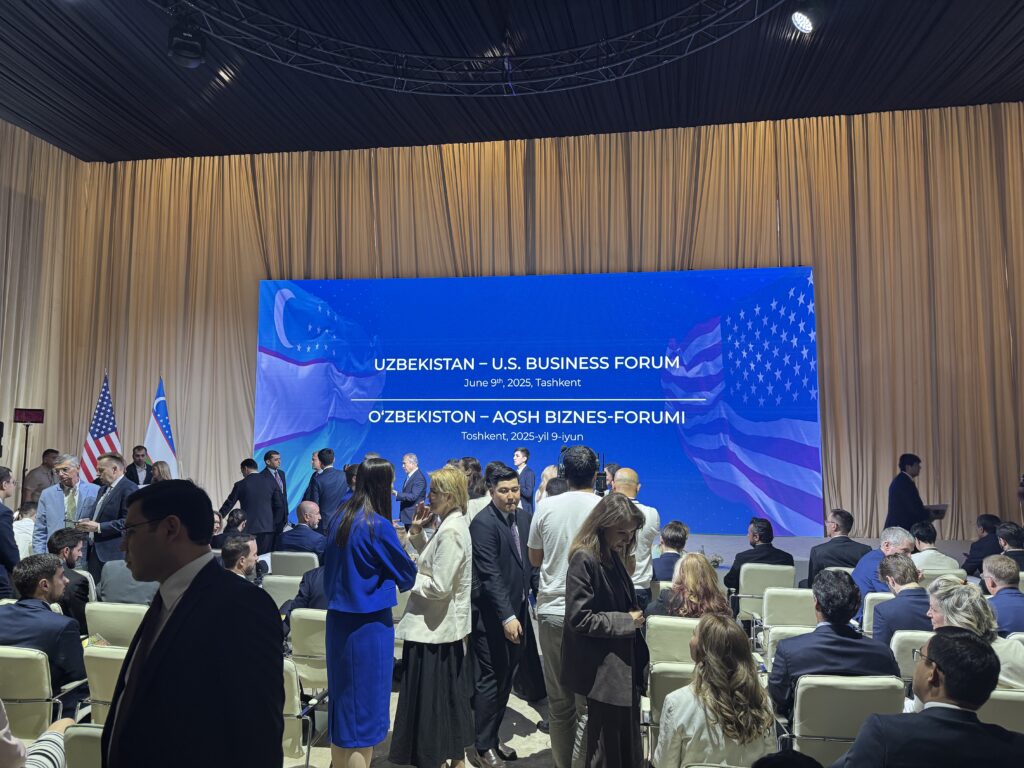
On June 9, ahead of the Tashkent International Investment Forum, President Shavkat Mirziyoyev welcomed a senior delegation of U.S. business leaders and government officials, underscoring deepening economic ties between Uzbekistan and the United States. Among the participants were U.S. Assistant Secretary of State Eric Meyer, U.S. International Development Finance Corporation (DFC) Vice President Bethany Brez, American-Uzbek Chamber of Commerce Chair Carolyn Lamm, and executives from Boeing, Visa, NASDAQ, Coca-Cola, Morgan Stanley, Franklin Templeton, FLS, Air Products, and others. Mirziyoyev noted that the meeting reflected growing U.S. interest in Uzbekistan’s reform-driven and investment-oriented economy. In 2024, bilateral trade between Uzbekistan and the U.S. reached $882 million, a 15.2% increase from 2023. Of this, Uzbek exports to the U.S. totaled $314.7 million, while imports stood at $564.3 million. Despite this growth, exports to the U.S. still account for only 1.2% of Uzbekistan’s total export volume, according to economist Mirkomil Kholboyev. During the Uzbekistan-U.S. Business Forum in Tashkent, DFC Vice President Brez led discussions on joint projects in critical minerals. The DFC, with a $60 billion mandate, supports global investment in sectors such as energy, infrastructure, and advanced manufacturing. [caption id="attachment_32862" align="aligncenter" width="2560"] Image: Uzbekistan–U.S. Business Forum[/caption] Digital innovation emerged as a key area of cooperation. According to a recent UNDP study, Uzbekistan plans to implement 100 priority artificial intelligence models by 2030 and establish supercomputing labs at major universities. USAID has previously supported this digital agenda by enabling Uzbek startups to engage with Silicon Valley investors and participate in TechCrunch Disrupt in October 2024, strengthening linkages with the U.S. tech ecosystem. Transport and energy infrastructure modernization also featured prominently in the talks. In January 2025, Uzbekistan Airways signed a memorandum with Boeing to acquire fourteen 787-8 Dreamliners, a multibillion-dollar deal with deliveries expected by 2032. Meanwhile, USAID partnered with Uzbekistan on energy sector reform, including support for drafting the “Law on the Electric Power Industry,” which introduces transparent tariff policies and facilitates private-sector entry. Tourism and small business development were additional focus areas. USAID’s five-year, $17.7 million Business Support Project has targeted key sectors such as ICT, tourism, textiles, and the green economy. Under this initiative, the Association of Private Tourism Agencies of Uzbekistan launched new training modules and classification standards for family-run guesthouses in Bukhara, Samarkand, and Tashkent, promoting sustainable, community-based tourism. Throughout the meeting, U.S. business leaders expressed support for Uzbekistan’s reform agenda and presented specific proposals, ranging from expanding fintech infrastructure to piloting AI-driven logistics platforms. The exchanges reflected a mutual commitment to strengthening the U.S.-Uzbek partnership across a wide range of strategic sectors.

Kyrgyzstan Moves to Join Chinese Banking Payment System

Kyrgyz Finance Minister Almaz Baketaev and National Bank Chairman Melis Turghanbaev met with Chinese Finance Minister Lan Fuan in Beijing to discuss expanding financial and economic cooperation between the two countries. A key outcome of the meeting was an agreement to establish a financial infrastructure for cross-border settlements and to deepen interbank cooperation. Among the proposals discussed was the connection of Kyrgyz state banks to China’s Cross-Border Interbank Payment System (CIPS), an alternative to the international SWIFT system, along with the opening of correspondent accounts in Chinese financial institutions. “This step will create a secure and stable channel for bilateral settlements in yuan, reduce transaction costs, and decrease dependence on settlements through third currencies,” noted the Kyrgyz Ministry of Finance. Toward Deeper Financial Integration Kyrgyz officials also expressed interest in acquiring or establishing a licensed payment organization in China. Such a move could streamline financial transactions with Chinese companies and individuals and connect Kyrgyzstan more directly to China's national payment systems. This would significantly enhance opportunities for Kyrgyz businesses operating in or with the Chinese market. Baketaev reaffirmed Kyrgyzstan’s commitment to maintaining a systematic dialogue with the People's Bank of China and the National Financial Regulatory Administration. The Kyrgyz delegation also participated in a meeting of finance ministers and central bank governors from member states of the Shanghai Cooperation Organization (SCO), reinforcing the regional dimension of Kyrgyzstan’s financial diplomacy.