• KGS/USD = 0.01143 0%
  • KZT/USD = 0.00207 0%
  • TJS/USD = 0.10465 0.1%
  • UZS/USD = 0.00008 0%
  • TMT/USD = 0.28571 0.28%
  • KGS/USD = 0.01143 0%
  • KZT/USD = 0.00207 0%
  • TJS/USD = 0.10465 0.1%
  • UZS/USD = 0.00008 0%
  • TMT/USD = 0.28571 0.28%
  • KGS/USD = 0.01143 0%
  • KZT/USD = 0.00207 0%
  • TJS/USD = 0.10465 0.1%
  • UZS/USD = 0.00008 0%
  • TMT/USD = 0.28571 0.28%
  • KGS/USD = 0.01143 0%
  • KZT/USD = 0.00207 0%
  • TJS/USD = 0.10465 0.1%
  • UZS/USD = 0.00008 0%
  • TMT/USD = 0.28571 0.28%
  • KGS/USD = 0.01143 0%
  • KZT/USD = 0.00207 0%
  • TJS/USD = 0.10465 0.1%
  • UZS/USD = 0.00008 0%
  • TMT/USD = 0.28571 0.28%
  • KGS/USD = 0.01143 0%
  • KZT/USD = 0.00207 0%
  • TJS/USD = 0.10465 0.1%
  • UZS/USD = 0.00008 0%
  • TMT/USD = 0.28571 0.28%
  • KGS/USD = 0.01143 0%
  • KZT/USD = 0.00207 0%
  • TJS/USD = 0.10465 0.1%
  • UZS/USD = 0.00008 0%
  • TMT/USD = 0.28571 0.28%
  • KGS/USD = 0.01143 0%
  • KZT/USD = 0.00207 0%
  • TJS/USD = 0.10465 0.1%
  • UZS/USD = 0.00008 0%
  • TMT/USD = 0.28571 0.28%

Viewing results 1 - 6 of 29

Kyrgyz Entrepreneurs Urged to Legalize Income

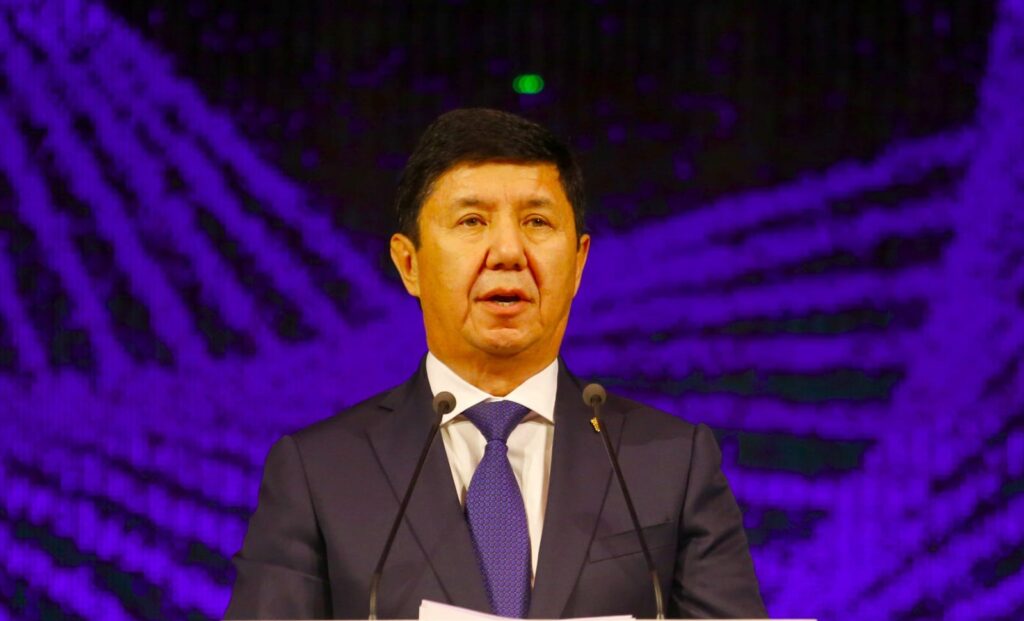
Kyrgyz entrepreneurs have been reminded to legalize their assets as the period for voluntary declaration of income and property nears its end on December 31, 2024. From January 2025, authorities are set to launch extensive inspections of businesses, prompting Temir Sariev, head of the Chamber of Commerce and Industry (CCI) of Kyrgyzstan, to call on business owners to act promptly. The law on voluntary legalization and amnesty of assets, introduced in 2023, offers citizens a chance to declare their assets with state guarantees of protection against criminal prosecution. By participating in the program, individuals and businesses can secure the preservation of their declared assets. As previously reported by The Times of Central Asia, in an effort to accelerate this process, President Sadyr Japarov set a public example in early 2024 by legalizing a multi-story building in Bishkek valued at $20 million. Temir Sariev emphasized that legalizing assets will improve economic transparency, protect citizens’ social and economic rights, and enhance Kyrgyzstan’s attractiveness to investors. “An obvious benefit of asset legalization is the reduction of the shadow economy,” Sariev noted. According to the Ministry of Economy and Commerce, the shadow economy accounted for approximately 20% of GDP in 2023, although unofficial estimates suggest it could be twice as high. International examples indicate that asset and income legalization reduces the size of the informal sector, increases transparency, fosters competition, and attracts new investments. While the potential advantages include increased tax revenues and improved public infrastructure, Sariev acknowledged the challenges for businesses transitioning out of the shadow economy. Small and medium-sized enterprises (SMEs) accustomed to operating informally may face difficulties adjusting to legal frameworks and potentially higher tax burdens. To address these challenges, Sariev highlighted the need for new accounting systems, staff training, and significant government investment in modernizing tax administration. This summer, the Kyrgyz government introduced changes to the taxation system, replacing voluntary patents - used by hundreds of thousands of businesses and individuals - with a mandatory payment system based on cash register accounting. The shift aims to increase transparency and accountability in the private sector. The Chamber of Commerce and Industry continues to encourage businesses to take advantage of the current voluntary declaration period to ensure smoother compliance with the evolving economic landscape.

Uzbekistan Aims to Join WTO by 2026

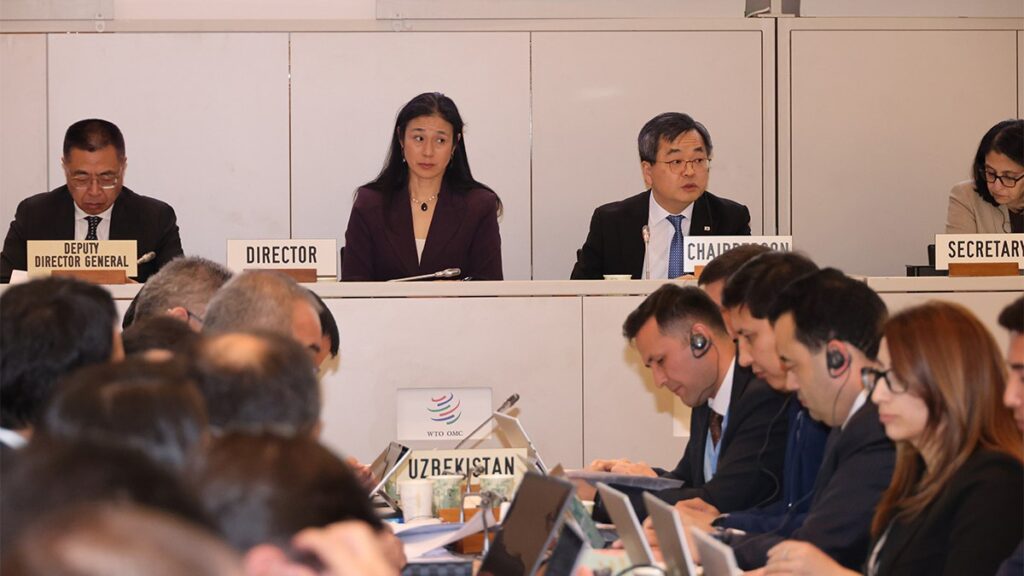
Uzbekistan is intensifying efforts to finalize its accession to the World Trade Organization (WTO), aiming for completion by 2026. At the ninth meeting of the Working Group on Accession, held December 5-6, a delegation led by Deputy Prime Minister Jamshid Khodjayev reaffirmed the country’s commitment to this timeline. WTO members expressed support for Uzbekistan’s high-level political engagement, and encouraged continued alignment of its trade regime with international standards. Khodjayev emphasized that WTO accession is not merely a technical procedure but a critical driver of internal reforms. “This goal demonstrates the inevitability of Uzbekistan's integration into the global trading system. In 2025, efforts will focus on completing negotiations and harmonizing legislation with WTO norms,” Khodjayev stated. The Uzbek delegation included Azizbek Urunov, the president's special representative on WTO issues, Deputy Economy Minister Ahadbek Khaidarov, and representatives from various agencies. Some officials joined the discussions virtually from Tashkent. Chief Negotiator Azizbek Urunov reported that Uzbekistan has concluded bilateral negotiations with nine additional WTO members, bringing the total to 22. This milestone underscores significant progress in the accession process. WTO Deputy Director General Xiangchen Zhang commended Uzbekistan for its ambitious reforms, including Presidential Decree DP-85, which aims to align national legislation with WTO norms. These efforts align with President Shavkat Mirziyoyev’s strategy to accelerate economic modernization. Chairman of the Working Group, Ambassador Yoon Seong-Dok of South Korea, also noted substantial progress at both bilateral and multilateral levels. He highlighted Uzbekistan’s productive cooperation with international organizations such as the IMF, World Bank, and WTO. The Working Group reviewed Uzbekistan’s draft report outlining commitments as a prospective WTO member and examined recent legislative changes. Since May 2024, Uzbekistan has enacted 192 legal acts to comply with WTO standards. Ambassador Yoon stressed the importance of sustained efforts in 2025 to meet the next milestones. “The coming seven to eight months will be crucial to achieve the goal of completing the process by 2026,” he said. The Times of Central Asia previously reported that Uzbekistan has secured China's agreement for its WTO accession. Joining the organization is a cornerstone of Uzbekistan’s broader economic reforms aimed at integrating the nation into the global trading system.

EDB Thinks Tajikistan and Kyrgyzstan Will Show Strongest Growth in 2025

The Eurasian Development Bank (EDB) forecasts that Tajikistan and Kyrgyzstan will lead regional economic growth in 2025. According to the bank’s Macroeconomic Forecast, published on November 5, GDP growth rates for Kyrgyzstan are given at 8.7%, Tajikistan at 8.4%, and Kazakhstan at 5.5%. For comparison, the corresponding figure for Russia is just 2.4%. Tajikistan’s robust growth is attributed to rising prices for gold and other export metals, coupled with reduced costs for imported energy and food products. These factors are expected to enhance economic efficiency by freeing up funds for consumption and investment. Additionally, the country’s rapidly growing population remains a central driver of its economic expansion. Similarly, Kyrgyzstan’s strong economic performance will be fueled by industrial development, high investment activity, and resilient domestic demand. However, in both Kyrgyzstan and Tajikistan, industrial growth and investment activity are anticipated to lag behind GDP expansion. Kyrgyzstan and Tajikistan are expected to grow above the global average, supported by steady exports and robust domestic demand. Kazakhstan’s economy will benefit from increased oil production, large-scale government infrastructure projects, and supportive fiscal policies. The EDB predicts that inflation across the region will gradually decline, from 7.9% in 2024 to 6.4% in 2025. High interest rates will remain a key tool in controlling inflation, with rates expected at 7.3% in Kazakhstan by the end of 2025. Inflation in Kyrgyzstan and Tajikistan is projected to remain within target levels, reaching 5.0% and 5.8%, respectively. These lower inflation rates are expected to support continued economic stability in both countries.

World Bank Chief Economist Owes a Bottle of Wine to Kyrgyzstan’s Cabinet Chief

During a conversation with Hugh Riddell, head of the World Bank’s office in Kyrgyzstan, Akylbek Japarov, Chairman of the Cabinet of Ministers, shared an anecdote about a wager made with the World Bank’s chief economist. “In 2022, at a World Bank session in Washington, your chief economist and I bet that Kyrgyzstan’s economic growth over the next 3-4 years would remain stable and exceed 7%. He doubted this was possible and was ready to wager a bottle of fine wine,” Japarov recounted at a recent event focused on Kyrgyzstan’s development. Japarov highlighted the latest economic figures to underscore his point: GDP growth for the first 11 months of 2024 stands at an impressive 9%. Confident in his position, Japarov announced his intention to claim his winnings. The anecdote reflects broader optimism about Kyrgyzstan’s trajectory. According to data presented by World Bank experts during discussions with the presidential administration, 89% of Kyrgyz citizens believe the country is moving in the right direction regarding political, social, and economic reforms​. The World Bank is actively monitoring socio-economic trends in Kyrgyzstan through its “Listening to the Kyrgyz Republic” project. This initiative conducts monthly panel surveys of 1,500 households across all regions, using telephone interviews to track citizens’ well-being and gather insights into national development trends.

S&P Global Ratings Predicts 5.6% Annual Growth for Uzbekistan Through 2027

S&P Global Ratings has reaffirmed Uzbekistan’s long-term sovereign credit rating at BB, forecasting strong economic growth averaging 5.6% annually from 2024 to 2027. This growth will be driven by public investment and private consumption. While rising public and external debt presents some risks, S&P expects fiscal and current account deficits to narrow after peaking in 2023. Economic Projections Uzbekistan’s gross general debt is projected to reach 39% of GDP in 2024, a level considered moderate by global standards. Most of this debt originates from official creditors under concessional terms. The agency’s stable outlook reflects robust growth prospects, balanced against challenges posed by debt accumulation. The country’s economy expanded by 6.6% in the first nine months of 2024, fueled by sectors such as construction, trade, and communications. Investments continue to play a pivotal role, with Uzbekistan maintaining one of the world’s highest investment-to-GDP ratios at 34%. Key investment areas under the “Uzbekistan - 2030” strategy include energy, transport, agriculture, and tourism. Diversification and Energy Goals As part of efforts to diversify energy sources, Uzbekistan is targeting 40% green energy by 2030. Saudi Arabia’s ACWA Power has pledged $7.5 billion in investments for electricity projects. The government is also expanding exports of critical resources such as copper, gold, silver, and uranium to boost revenue streams. Opportunities and Risks Despite challenges such as low GDP per capita and reliance on remittances, Uzbekistan benefits from a young workforce and rising foreign investment. However, risks remain, including potential sanctions on companies linked to Russia and difficulties in creating sufficient jobs. In 2024, remittance inflows - primarily from Russia, along with Germany and South Korea - increased by 35%, providing a significant economic boost. Trade with Russia also grew by 26%, and Uzbekistan signed a two-year gas import contract with Gazprom. Meanwhile, the government is taking steps to mitigate the risks of secondary sanctions stemming from its trade ties with Russia. Broader Context These developments align with Uzbekistan’s long-term economic strategies while highlighting both opportunities and vulnerabilities. S&P’s latest forecasts reaffirm the country’s growth trajectory, supported by strategic investments and economic reforms, yet underscore the importance of managing debt and external risks.

EBRD’s Transformative Investments in Kyrgyzstan: An Interview With Hüseyin Özhan, Managing Director for Central Asia

The European Bank for Reconstruction and Development (EBRD), established in 1991, has been working in the Kyrgyz Republic since 1992 and has invested in over 250 projects amounting to over €1 billion. TCA sat down with Hüseyin Özhan to discuss the bank’s operations in Kyrgyzstan. TCA: Could you briefly introduce the EBRD and its main objectives within Kyrgyzstan? Özhan: The European Bank for Reconstruction and Development (EBRD) is owned by 73 shareholders as well as the EU and the EIB and has been operating in Kyrgyzstan for over 30 years. During this time, we have invested in more than 250 projects, surpassing €1 billion in total investments across the country. As an international financial institution, our operations in Kyrgyzstan are guided by a country strategy jointly prepared by the EBRD and local stakeholders and approved by the Bank’s Board of Directors. This year marks a significant milestone, as we have approved a new five-year country strategy outlining our priorities in Kyrgyzstan. We focus on fostering private sector growth and enhancing competition and also invest in infrastructure and sovereign-guaranteed projects. These efforts position the EBRD as one of the most influential international players in Kyrgyzstan. TCA: You mention the bank recently approved its new five-year strategy for Kyrgyzstan; could you share what this plan entails? Özhan: Our country's strategies are built on diagnostics conducted to identify transition gaps. These strategies align with the EBRD’s Strategic and Capital Framework and the Bank’s medium-term strategy and combine elements of the reform agenda and investment needs. The new strategy for Kyrgyzstan focuses on three key priorities: private sector development and competitiveness, the green economic transition with an emphasis on decarbonization and energy efficiency, and improved connectivity across the country. These priorities align closely with Kyrgyzstan’s recent reform agenda and development goals, which aim to enhance competitiveness, attract foreign investment, boost trade, and strengthen the country’s regional relevance. Decarbonization and resource efficiency are particularly critical, as Kyrgyzstan is significantly impacted by regional water scarcity. This makes sustainable water management a central focus, with numerous projects planned to support sustainable development in this sector. Additionally, developing the private sector, particularly local businesses, is vital. The EBRD works closely with the government in this regard, not only by providing funding but also through initiatives like “risk-sharing networks” and advisory programs for small businesses. These efforts help enhance productivity, relevance, and competitiveness, ensuring that Kyrgyzstan’s private sector is well-equipped to thrive in the market. TCA: How does EBRD’s mission differ from other development banks or financial institutions in the region? Özhan: Our institution has a slightly different approach to delivering our work and fostering transition in Kyrgyzstan. Unlike some other international financial institutions (IFIs) that provide budget support, the EBRD operates on a project-by-project basis and channels most of its resources to support good private-sector initiatives. A recent example of project finance is the signing of water projects in three cities in Kyrgyzstan. These sovereign lending agreements, signed with the Ministry of Finance, aim to modernize regional water...