• KGS/USD = 0.01144 0%
  • KZT/USD = 0.00216 0%
  • TJS/USD = 0.10682 0%
  • UZS/USD = 0.00008 0%
  • TMT/USD = 0.28490 0%
  • KGS/USD = 0.01144 0%
  • KZT/USD = 0.00216 0%
  • TJS/USD = 0.10682 0%
  • UZS/USD = 0.00008 0%
  • TMT/USD = 0.28490 0%
  • KGS/USD = 0.01144 0%
  • KZT/USD = 0.00216 0%
  • TJS/USD = 0.10682 0%
  • UZS/USD = 0.00008 0%
  • TMT/USD = 0.28490 0%
  • KGS/USD = 0.01144 0%
  • KZT/USD = 0.00216 0%
  • TJS/USD = 0.10682 0%
  • UZS/USD = 0.00008 0%
  • TMT/USD = 0.28490 0%
  • KGS/USD = 0.01144 0%
  • KZT/USD = 0.00216 0%
  • TJS/USD = 0.10682 0%
  • UZS/USD = 0.00008 0%
  • TMT/USD = 0.28490 0%
  • KGS/USD = 0.01144 0%
  • KZT/USD = 0.00216 0%
  • TJS/USD = 0.10682 0%
  • UZS/USD = 0.00008 0%
  • TMT/USD = 0.28490 0%
  • KGS/USD = 0.01144 0%
  • KZT/USD = 0.00216 0%
  • TJS/USD = 0.10682 0%
  • UZS/USD = 0.00008 0%
  • TMT/USD = 0.28490 0%
  • KGS/USD = 0.01144 0%
  • KZT/USD = 0.00216 0%
  • TJS/USD = 0.10682 0%
  • UZS/USD = 0.00008 0%
  • TMT/USD = 0.28490 0%

Viewing results 1 - 6 of 55

Donor Delegation Visits Kyrgyzstan to Assess Progress on Kambarata-1 HPP

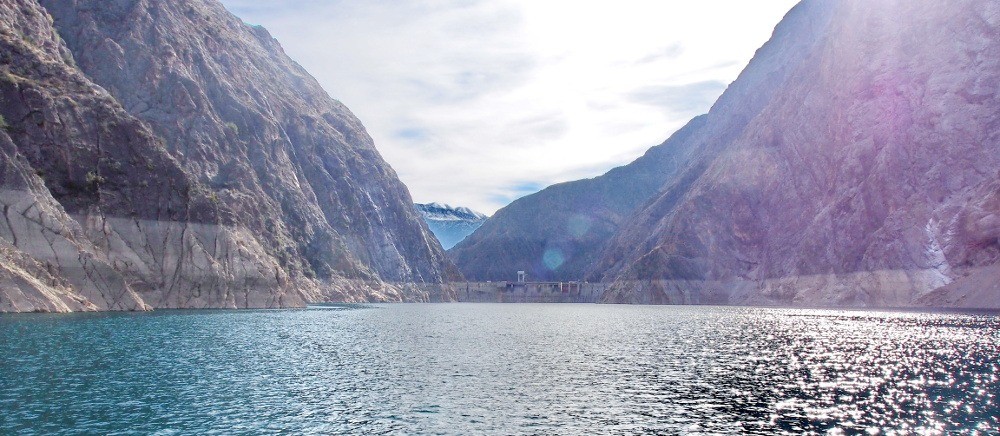
As reported by the Kyrgyz Ministry of Energy, on October 7-11 Kyrgyzstan received a delegation from the Donor Coordination Committee for the construction of the flagship Kambarata-1 Hydropower Plant (HPP) comprising representatives of the World Bank, the Asian Development Bank, the Islamic Development Bank, the European Union, the European Investment Bank, the United States Agency for International Development, and the UK Foreign, Commonwealth & Development Office. The Committee, established at the Kyrgyz Republic International Energy Investment Forum, in Vienna on June 10, 2024, comprises major international financial institutions and development partners, including the World Bank, the OPEC Fund, the Asian Development Bank, the Asian Infrastructure Investment Bank, the Islamic Development Bank, and the European Bank for Reconstruction and Development. The Kambarata-1 HPP, with a projected capacity of  1,860 megawatts and an average annual generation of 5.6 billion kilowatt-hours of electricity, is to be constructed at preliminary  cost exceeding $4 billion in the upper reaches of the Naryn River in Kyrgyzstan. Once completed, the largest hydropower plant in Kyrgyzstan is expected to end the country’s electricity shortages. In addition, the ambitious project, jointly implemented with Kazakhstan and Uzbekistan, aims to strengthen cooperation within Central Asia in water and energy resource management. During their visit, delegates reviewed progress on the Kambarata-1 HPP and in addition, met Kyrgyz Minister of Energy Taalaibek Ibrayev and representatives of Kazakhstan and Uzbekistan to discuss and establish a mechanism for regular consultations and data exchange to ensure effective cooperation on the project. Last month, Minister Ibrayev reported significant progress on the development of the HPP construction and said that all preparatory stages will be completed by next May. Early in September, Kyrgyzstan’s Cabinet of Ministers and the World Bank organized a roundtable on the selection of a dam for the Kambarata-1 HPP. The Swiss engineering company AFRY proposed various options for the project, and based on the type of dam chosen, the Kyrgyz Ministry of Energy stated that a feasibility study would be prepared by May 2025.

ADB Allocates $15 Million to Tajikistan for Power Grid Reconnection in Central Asia

The Asian Development Bank (ADB) has approved a grant of $15 million for a project to reconnect Tajikistan’s power lines to the Central Asian unified electricity grid. The reconnection, it is reported, will be carried out through mutual relations with Uzbekistan. “Through the Central Asia Regional Economic Cooperation (CAREC) program, ADB actively promotes regional power trade among countries in Central Asia and beyond,” said ADB Director General for Central and West Asia Yevgeniy Zhukov. “Our support improves the sustainability of the regional power system and helps reduce greenhouse gas emissions in the region.” The additional funding will build a new 22-kilometer, 500-kilovolt power line in northern Tajikistan, connecting the Sughd substation to the New Syrdarya substation in Uzbekistan. This will increase the ability to send and receive electricity between Kazakhstan, Kyrgyzstan, Tajikistan, and Uzbekistan and improve the infrastructure to prevent blackouts. The project will also help ensure that Tajikistan’s energy system is ready to provide regulatory opportunities for the continued integration of renewable energy in the region. In the long term, it will become a key component of the electricity evacuation scheme for the Rogun hydropower plant in Tajikistan. Previously, ADB approved $17.5 million in grant assistance to improve women's agricultural skills and ensure food security in Tajikistan.

U.S. Ready to Participate in Construction of Nuclear Power Plant in Kazakhstan

The U.S. has expressed its willingness to participate in constructing a nuclear power plant (NPP) in Kazakhstan. Senior Vice President of the U.S. Chamber of Commerce Khush Choksi made this statement during the visit of the U.S. business delegation to Almaty, Informburo.kz reports. “The U.S. has the best technologies for nuclear power plants. And we hope there will be an open tender, allowing American companies to participate,” said Choksi, answering journalists' questions. As The Times of Central Asia previously reported, the referendum on nuclear power in Kazakhstan was held on October 6. According to preliminary data, 71.12% of Kazakhstanis voted to build a nuclear power plant, but the official results have yet to be announced. Potential participants in constructing the nuclear power plant are also being discussed. Russia, China, France, South Korea, and France are among the countries that are considered suppliers of technologies for NPP construction. These states have proposed their projects, and the Kazakhstani authorities are considering them. It is expected that the winner may be an international consortium, and the final decision will be made based on technical and financial conditions. The preliminary cost of one NPP unit is estimated at $5 billion.

Kyrgyzstan Begins Construction of Another Small Hydropower Plant

The construction of a small hydroelectric power plant on the Ak-Buura River at the Papan reservoir in Kyrgyzstan’s southern Osh region has begun. The Ak-Buura River supplies water to Kyrgyzstan’s second-largest city, Osh. The Papan reservoir is located in the Papan Gorge, and the power plant will be constructed in the narrowest part of the Ak-Buura River valley. The small hydropower plant will have a capacity of 25 MW and will generate 103 million kWh of electricity per year. The project costs $27 million. "The construction of a small hydroelectric power plant at the Papan reservoir is another strategic step towards the country’s energy independence," Chairman of Kyrgyzstan’s Cabinet of Ministers Akylbek Japarov stated at the ceremony to launch the construction on October 5. In recent years, Kyrgyzstan has been working to expand its energy capacity by building small and large hydroelectric plants to address electricity shortages. Earlier this year, Kyrgyzstan constructed small hydroelectric power plants in Bala-Saruu in the northwestern Talas region and Kok-Art and Kainama small hydropower plants in the southern Jalal-Abad region. In 2023, Kyrgyzstan met 80% of its electricity demand, which totaled 17.2 billion kilowatt-hours. The remaining 20%, or 3.4 billion kilowatt-hours, was imported. Energy Minister Taalaibek Ibraev last week stated that despite an increase in water levels at Kyrgyzstan’s largest Toktogul hydroelectric power plant (HPP) reservoir this year, the country would still be facing an electricity deficit of about 3.9 billion kilowatt-hours. The positive is that Ibraev said in parliament on October 4 that there will be no scheduled blackouts this winter, as his ministry has done a good job preparing the power distribution system for the coming winter. The Energy Ministry has installed new and repaired all the existing transformers nationwide. In previous years, Kyrgyzstan practiced scheduled restrictions on electricity supply for several hours a day to save electricity during peak consumption hours in winter. The minister also announced that starting January 1, 2025, Turkmenistan will supply Kyrgyzstan with 1.7 billion kilowatt-hours of electricity.

Kyrgyzstan to Modernize Oil Refinery in Jalal-Abad

On September 28, Kyrgyzstan's largest oil refinery, located in the southern city of Jalal-Abad, began a large-scale modernization. Operated by Kyrgyz Petroleum Company, the refinery produces AI-80 gasoline, diesel fuel, and fuel oil. Kyrgyzstan's annual gasoline and diesel fuel demand is 1.4 million tons. The refinery in Jalal-Abad can meet only 6.5% of that demand. After the modernization project, the refinery will be able to meet 32% of the domestic demand. After modernization, AI-92 and AI-95 gasoline production would increase more than 12-fold, and diesel fuel production would grow by 40%. The total investment in modernizing the refinery will amount to $410 million, including $200 million in foreign investments and $110 million from the Kyrgyz government. Today, almost all gasoline and diesel fuel used by Kyrgyzstan is imported from Russia. The Times of Central Asia earlier reported that Kyrgyzstan proposed oil-rich Azerbaijan to sign a long-term contract to supply Azeri crude oil to Kyrgyzstan. Azeri crude oil is needed for Kyrgyzstan’s Junda oil refinery. Located in Kara-Balta, about 100 kilometers west of Bishkek, the refinery reopened late in August after a major overhaul. It now plans to reach its total annual capacity of processing 800,000 tons of crude oil by the end of this year.