• KGS/USD = 0.01144 0%
  • KZT/USD = 0.00217 0%
  • TJS/USD = 0.10640 0%
  • UZS/USD = 0.00008 0%
  • TMT/USD = 0.28530 0%
  • KGS/USD = 0.01144 0%
  • KZT/USD = 0.00217 0%
  • TJS/USD = 0.10640 0%
  • UZS/USD = 0.00008 0%
  • TMT/USD = 0.28530 0%
  • KGS/USD = 0.01144 0%
  • KZT/USD = 0.00217 0%
  • TJS/USD = 0.10640 0%
  • UZS/USD = 0.00008 0%
  • TMT/USD = 0.28530 0%
  • KGS/USD = 0.01144 0%
  • KZT/USD = 0.00217 0%
  • TJS/USD = 0.10640 0%
  • UZS/USD = 0.00008 0%
  • TMT/USD = 0.28530 0%
  • KGS/USD = 0.01144 0%
  • KZT/USD = 0.00217 0%
  • TJS/USD = 0.10640 0%
  • UZS/USD = 0.00008 0%
  • TMT/USD = 0.28530 0%
  • KGS/USD = 0.01144 0%
  • KZT/USD = 0.00217 0%
  • TJS/USD = 0.10640 0%
  • UZS/USD = 0.00008 0%
  • TMT/USD = 0.28530 0%
  • KGS/USD = 0.01144 0%
  • KZT/USD = 0.00217 0%
  • TJS/USD = 0.10640 0%
  • UZS/USD = 0.00008 0%
  • TMT/USD = 0.28530 0%
  • KGS/USD = 0.01144 0%
  • KZT/USD = 0.00217 0%
  • TJS/USD = 0.10640 0%
  • UZS/USD = 0.00008 0%
  • TMT/USD = 0.28530 0%

Viewing results 1 - 6 of 38

Kazakhstan’s Finance Ministry Cracks Down on Widespread Tax Evasion Among Small Businesses

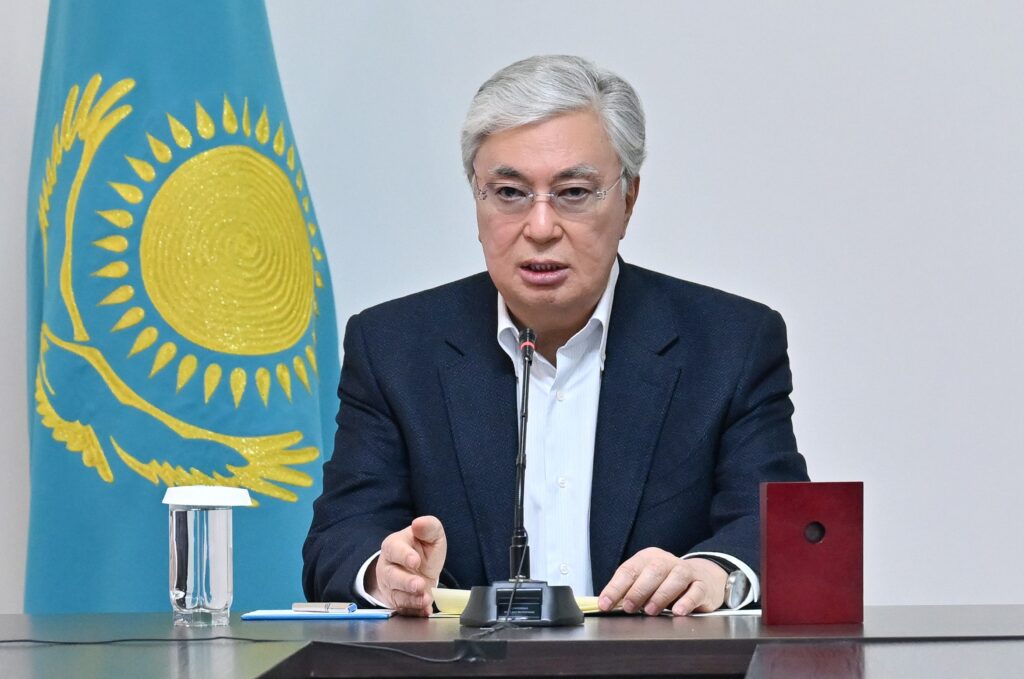
Kazakhstan’s Ministry of Finance has identified more than 260,000 entrepreneurs suspected of underreporting taxable income, Finance Minister Madi Takiyev said during a recent government meeting. According to Takiyev, in 2024, around 17,000 cash registers across the country failed to issue any receipts, while 260,000 taxpayers consistently reported either a single daily transaction or identical revenue amounts. However, enforcement efforts appear to be paying off, with 70,000 businesses now issuing receipts properly. The minister noted that tax evasion schemes remain widespread, including the mass registration of multiple companies at the same address. Currently, around 20,000 firms are registered at 3,576 locations, collectively owing over 60 billion KZT ($110 million) in unpaid taxes. Takiyev reported that the shadow economy declined slightly in 2024, accounting for 16.7% of GDP, a marginal improvement from the previous year. He highlighted notable progress in trade, education, and agriculture, supported by new digital tools such as Smart Data Finance, which uses artificial intelligence to detect tax evasion. The system currently integrates data from 74 sources, with 30 more expected to be added by the end of the year. Biometric identification has also played a role in strengthening compliance, helping authorities block fake invoices worth over 33 billion KZT ($60 million). Meanwhile, the E-Tamga system has processed 250 million electronic invoices and 500 million payments, potentially adding up to 100 billion KZT ($182 million) in annual tax revenue. To combat illicit trade, the authorities seized more than 1 million liters of alcohol, 6.6 million cigarette packs, and 37,000 tons of petroleum products in 2024, preventing estimated tax losses of over 7 billion KZT ($12.7 million). As The Times of Central Asia previously reported, Kazakhstan’s new Tax Code, raising the value-added tax (VAT) from 12% to 16%, is set to take effect in 2025.

EBRD Launches Online Mentoring Platform for Entrepreneurs in Tajikistan

Small and medium-sized enterprises (SMEs) in Tajikistan have a new avenue of support: the European Bank for Reconstruction and Development (EBRD) has launched an online platform offering mentoring and professional consultations. The initiative is funded by the Government of Switzerland. A Global Community for Tajik Entrepreneurs The new platform, MicroMentor.tj, connects Tajik business owners with a global network of more than 420,000 entrepreneurs and 120,000 mentors across 180 countries. Available in six languages, including Russian, the service is free and accessible to entrepreneurs even in remote regions of Tajikistan. The platform aims to expand opportunities for SMEs, foster innovation, support business development, and generate employment. Promotion of the platform within the country is supported by local partner Shedevr, headed by Muboriz Subkhonov. Mentoring as a Growth Tool The EBRD has long supported SMEs not only through financial instruments but also via non-financial services such as mentoring, sector-specific consultations, training, and educational events. According to the bank, 77% of entrepreneurs who engaged actively with mentors reported increased revenues. The new platform builds on the Mentoring for Women Entrepreneurs program, which supported more than 100 participants from Dushanbe, Khatlon, Sughd, and Gorno-Badakhshan Autonomous Oblast (GBAO), with guidance from 50 mentors from Kazakhstan, Kyrgyzstan, and Armenia. Over a nine-month period, 108 mentor-mentee pairs were formed. Nearly all participants reported tangible outcomes: 95% improved their business skills 93% expanded their businesses 90% created new jobs EBRD Updates Strategy for Tajikistan Coinciding with the platform’s launch, the EBRD approved a new country strategy for Tajikistan through 2030, prioritizing structural reforms, private sector development, and sustainable growth in energy, transport, and urban infrastructure. “The new strategy reflects our commitment to supporting Tajikistan’s economic development through a comprehensive approach combining financial resources, policy dialogue, and technical assistance,” the EBRD press service stated. The bank plans to support projects that enhance competitiveness and foster technological independence. To date, the EBRD has invested more than €1 billion in Tajikistan’s economy across 185 projects. According to the latest Regional Economic Prospects report, the EBRD forecasts Tajikistan’s GDP growth at 7% in 2025 and 5.7% in 2026. Key drivers include infrastructure investments, private sector expansion, and advancements in digital technologies and energy. The new strategy integrates investment, advisory support, and regulatory reform to create a more favorable business environment for Tajikistan’s growing economy.

Kyrgyz Authorities Introduce Incentives for Businesses to Avoid Inspections

The Ministry of Economy and Commerce of Kyrgyzstan has announced that companies included in the newly created Register of Conscientious Entrepreneurs will receive a range of state-backed privileges, including financial incentives and regulatory relief. “The Register of Conscientious Entrepreneurs is an official list of companies and businesspeople recognized by the state as reliable, honest, and socially responsible. In other words, it is a kind of ‘white list’ of businesses operating transparently and lawfully,” the ministry stated. Officials explained that the register is designed to support ethical entrepreneurship, strengthen reputations, and increase trust from clients, partners, and the state. Inclusion is expected to encourage lawful conduct and promote contributions to Kyrgyzstan’s economic development. Businesses listed in the register will be eligible for several benefits, including free advertising airtime on state television channels, priority service at tax authorities, and free participation in international exhibitions and trade fairs. Notably, they will also be exempt from inspections by supervisory bodies for a period of three years, except for certain audits conducted by the State Tax Service. Additional incentives include access to preferential financing through state-backed lending programs, the right to display a government-issued quality mark, and official confirmation of reliability. To qualify for the register, businesses must meet several criteria: Operate for at least three years; Pay taxes and insurance contributions fully and on time; Have no debts to the state; Provide decent wages to employees (no lower than the sector average); Demonstrate annual growth of at least 5% in taxes and budget contributions; Comply with labor rights regulations; Have no convictions for economic crimes. An interdepartmental commission met earlier this week to evaluate applications. Of the 48 businesses that applied, only a few were denied entry into the register.

Kazakh Entrepreneur in Paris Launches Perfume Inspired by the “Kiz-Jibek” Epic

An ethnic Kazakh living in Paris has launched a perfume called Kiz-Jibek on the French market. Its founder, Nurzhan Tolegen, was born in China’s Ili Kazakh region and grew up in Kulja before eventually settling in the French capital. “I am the grandson of a nomadic people. My grandparents left their homeland during the civil war, carrying with them the soul of Kazakhstan etched into their stories, their songs, and their memories. Yet I had never set foot on those vast steppes whose grandeur my mother, a professor of literature, so often evoked,” he shares on his personal website. [caption id="attachment_35686" align="aligncenter" width="466"] Nurzhan Tolegen; image: www.tolegenparis.com[/caption] In 2021, Nurzhan traveled to Kazakhstan for the first time, spending a month reconnecting with his ancestral homeland. Those four weeks felt like a rebirth for him and marked a turning point in his life. Returning to France, he established a luxury perfume house, Tolegen Paris: a tribute to both his surname and to a heroic figure celebrated in a 16th-century Kazakh epic. In May 2025 he introduced Kiz-Jibek, describing it as “a fragrance honoring eternal love” and “a scent laced with wormwood.” The Kiz-Jibek epic, a cornerstone of Kazakh cultural heritage, reflects the values of traditional society. It emphasizes unity and loyalty to the homeland while exploring universal themes of love, virtue, honesty, and beauty. Through the character of Kiz-Jibek, one encounters the timeless image of the Kazakh woman—gentle yet resilient, modest yet dignified. [caption id="attachment_35688" align="aligncenter" width="624"] The epic characters Kiz-Jibek and Tolegen[/caption] For over five centuries, Kazakhs have sung the tale of Kiz-Jibek. Its central figures—Bazarbai, Tolegen, Kiz-Jibek, and Sansyzbai—are believed to have lived in history, with the story unfolding along the Ural River among the Jagalbaily tribe. In both the epic and the famous film, Tolegen is treacherously slain by Bekezhan, after which Kiz-Jibek, devastated by grief, throws herself into the river.

Kyrgyzstan Launches Registry of Reliable Entrepreneurs

The Ministry of Economy and Commerce of Kyrgyzstan has opened applications for a newly established Registry of Reliable Entrepreneurs, aimed at promoting transparent and responsible business practices. According to officials, companies listed in the registry will receive a range of incentives and benefits from the state. The registry is open to all eligible businesses, including large companies and individual entrepreneurs operating under patent regimes. To qualify, applicants must meet several criteria: At least three years of operational history No outstanding debts related to taxes or social contributions Timely payment of wages at or above the industry average Compliance with labor laws and standards A clean criminal record for company leadership in relation to economic offenses An Official “White List” of Trusted Businesses The Chamber of Commerce and Industry (CCI) of Kyrgyzstan, which has experience in compiling similar business listings, has been tasked with managing the registry. “The Registry of Reliable Entrepreneurs is an official list of companies and individual business owners recognized by the state as trustworthy, honest, and socially responsible. In other words, it serves as a white list of the best representatives of business operating transparently and legally,” the CCI stated. Applications must be submitted by August 5, 2025. A joint commission comprising representatives from the Ministry of Economy and the CCI will review applications and issue decisions accordingly. Incentives for Registered Businesses Business leaders say inclusion in the registry will enhance corporate reputation, foster trust among customers and government agencies, and encourage ethical business practices. “The registry encourages businesses to operate honestly, comply with laws, and contribute to the country’s economic development,” noted one participant. In addition to reputational benefits, companies listed in the registry will enjoy several practical advantages: Exemption from government inspections for up to three years Priority service at tax offices Free advertising slots on national television during designated times Complimentary participation in international exhibitions, trade fairs, and forums organized by the Kyrgyz government Moving from Private to State-Backed Recognition Previously, similar registries were compiled only by private initiatives. Business associations, including the CCI itself, created so-called “elite lists” funded through membership fees and shared with potential foreign partners to facilitate business cooperation. Unlike those earlier efforts, the new government-backed registry is free of charge and formally recognizes businesses that operate transparently and in full compliance with Kyrgyz law.

In Kyrgyzstan, 13,000 Low-Income Families Receive Funds to Launch Businesses

Over the past two years, 13,333 families in Kyrgyzstan living below the subsistence level have signed social contracts with the state. Through this initiative, each family received an interest-free loan of $1,700 to start a small business. According to the Ministry of Labor, the social contract program is designed to help families break the cycle of poverty by providing both start-up capital and practical support. Recipients use the funds to establish businesses, engage in subsistence farming, or purchase tools and equipment. In addition to financial assistance, the program offers training and consulting in sustainable agriculture and income-generating practices. How the Program Works Participants can use the funds to acquire equipment, materials, and other business essentials. The initiative has supported the creation of sewing workshops, food production facilities, apiaries, and small-scale poultry farms. Many recipients now produce honey, natural juices, felt goods, and meat products. The program is open to both new ventures and the expansion of existing microbusinesses. Specially trained consultants guide participants through the process of launching and managing their businesses, helping to increase long-term viability. Results and Regional Reach Although the social contract program was launched five years ago, its most significant impact has been seen in the past two years. More than 13,000 families have become self-sufficient and no longer require government aid. The majority of successful projects have emerged in Kyrgyzstan’s southern provinces, particularly Jalal-Abad and Osh, where rural entrepreneurship has rapidly expanded. Government data indicates that over 280 different products have been developed through the program. While most are sold domestically, a small number are now being exported abroad. This social contract initiative is a cornerstone of the government’s strategy to combat poverty and promote self-employment. Authorities emphasize its role in stimulating economic activity in rural areas and encouraging entrepreneurship among vulnerable populations.