• KZT/USD = 0.00222
  • TJS/USD = 0.10840
  • UZS/USD = 0.00009
  • TMT/USD = 0.29850
  • KZT/USD = 0.00222
  • TJS/USD = 0.10840
  • UZS/USD = 0.00009
  • TMT/USD = 0.29850
  • KZT/USD = 0.00222
  • TJS/USD = 0.10840
  • UZS/USD = 0.00009
  • TMT/USD = 0.29850
  • KZT/USD = 0.00222
  • TJS/USD = 0.10840
  • UZS/USD = 0.00009
  • TMT/USD = 0.29850
  • KZT/USD = 0.00222
  • TJS/USD = 0.10840
  • UZS/USD = 0.00009
  • TMT/USD = 0.29850
  • KZT/USD = 0.00222
  • TJS/USD = 0.10840
  • UZS/USD = 0.00009
  • TMT/USD = 0.29850
  • KZT/USD = 0.00222
  • TJS/USD = 0.10840
  • UZS/USD = 0.00009
  • TMT/USD = 0.29850
  • KZT/USD = 0.00222
  • TJS/USD = 0.10840
  • UZS/USD = 0.00009
  • TMT/USD = 0.29850
05 October 2026

Viewing results 1 - 6 of 26

U.S. Program Promotes Women Entrepreneurship in Turkmenistan

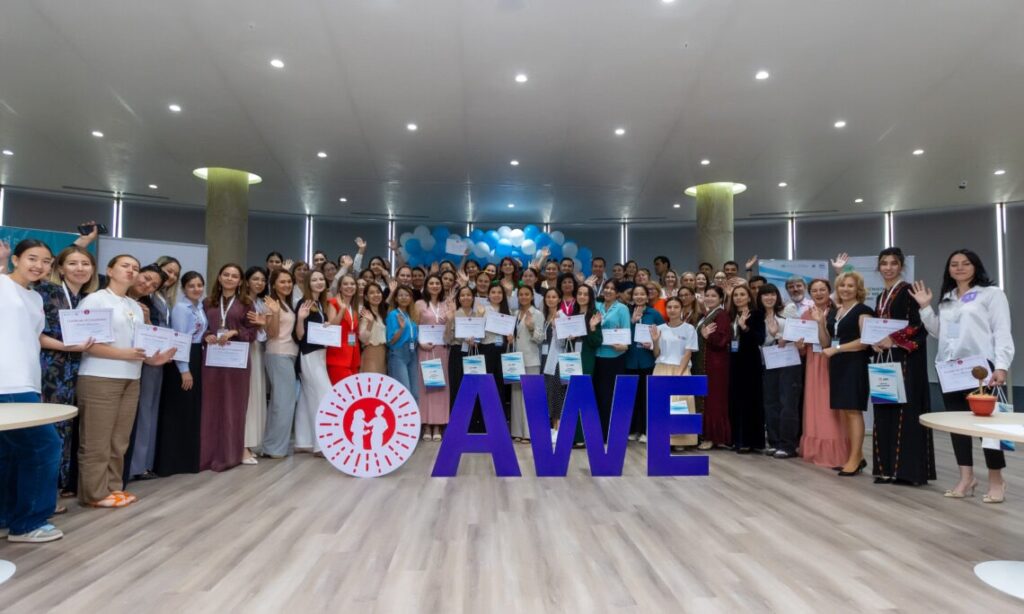
On June 8, participants in the first Academy for Women Entrepreneurs (AWE) program in Turkmenistan submitted their business proposals to a panel of experts in Ashgabat. The event marked the conclusion of the AWE program launched by the U.S. Embassy in Turkmenistan in partnership with the Union of Economists of Turkmenistan in March this year. As reported by the U.S. Embassy, the ‘graduation’ ceremony was the culmination of three months’ work, consisting of an online business course developed by Arizona State University’s Thunderbird School of Global Management, weekly face-to-face sessions, and the development of a business plan. AWE is a U.S. State Department program that provides women entrepreneurs with the knowledge, networks and access required to start and grow successful businesses. The first 50 Turkmen graduates of the program now join a global community of over 25,000 AWE alumnae. Opening the event, U.S. Chargé d’Affaires Vaida Vidugiris said: “We are so pleased that this year, Turkmenistan joined more than 100 participating countries of AWE. I am especially proud that this program took place not only in Ashgabat, but also in Dashoguz, Mary, and Turkmenabat where we have our American Corners. It underscores our belief in the untapped potential of women entrepreneurs who, with the right support and resources, can transform economies, uplift communities, and inspire future generations.”    

Kyrgyzstan President Announces New Social Welfare Measures

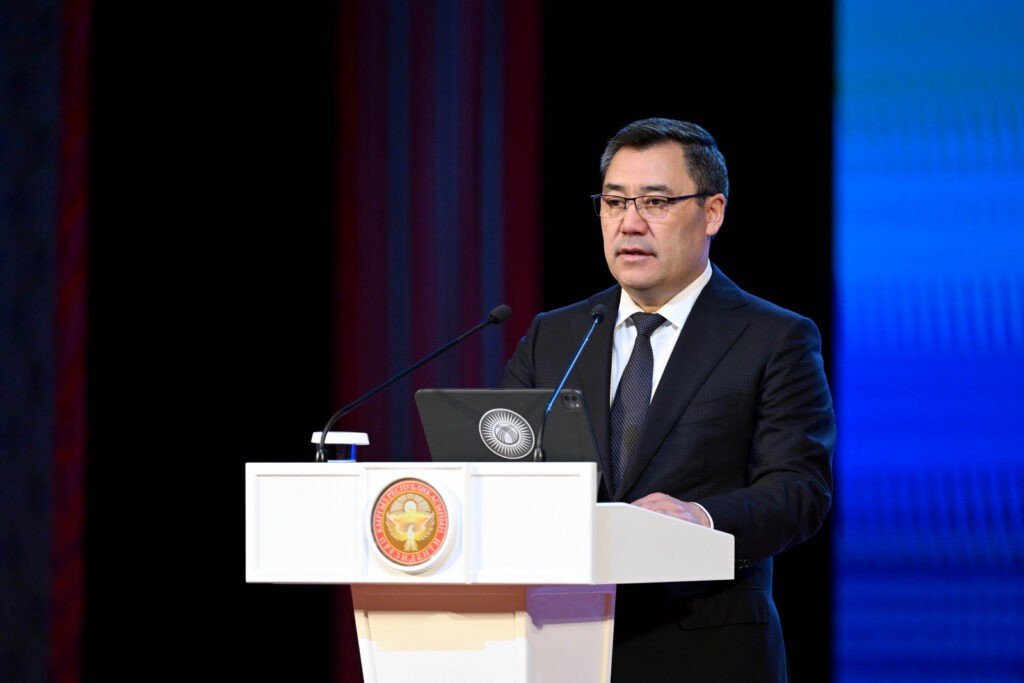
In his address at the National Congress on Social Mobilization on 22 May, Kyrgyzstan President Sadyr Japarov announced several initiatives aimed at raising the standard of living of the country’s citizens. The event was attended by participants of a nationwide Social Contract program through which the Ministry of Labor, Social Security and Migration provides grants of 100 thousand soms/ $1,130, to low-income families wishing to open small businesses. Launched three years ago, the program has enabled some 13,000 people to develop their businesses, created jobs, and generally enhanced the livelihoods of families and local communities. Highly effective, the initiative has to date, benefited over 70,000 people across the country. In addition to a government allocation of 2 billion soms to maintain the program, the president announced plans to boost the economy and improve the wellbeing of Kyrgyzstan citizens, by establishing new enterprises, industrial facilities and in turn, more jobs. President Japarov stated that the Cabinet of Ministers and local authorities had been tasked to support entrepreneurs at all levels from small workshops, fruit processing plants and retail outlets to tourist bed and breakfast services and cafes. To ease the financial burden on small and medium-sized businesses, the president announced a reduction in social tax from 27 percent to 12 percent. In addition, the president has introduced a strict moratorium on inspections of businesses to further support entrepreneurs. Referencing amendments to the Constitution made in 2021 which guaranteed that pensions would not fall below the minimum living wage, the head of state announced that from 1 October, 2024, pensions in Kyrgyzstan will exceed the minimum living wage of 6,800 soms/ $77. The president confirmed the government’s commitment to its provision affordable housing and reported that the construction of multi-storey buildings through the State Mortgage Company has enabled public sector employees and private individuals alike, to obtain mortgages on apartments. He continued by stating that 11,495 apartments are currently being built across the country and the construction of 12,000 apartments will begin before the end of this year. In the healthcare sector, the president has instructed that from 1 July, the number of doctors participating in the program to locate medics in remote areas, small towns, and villages, is to increase from 200 to 500. Regarding the shortage of doctors in the regions, the president has approved the introduction of an additional monthly payment of 20,000 soms/ $226 to paediatricians, neonatologists, surgeons, anaesthesiologists, and resuscitation doctors working outside Bishkek

Innovating in Uzbekistan: Council Aims to Nurture Young Scientists

TASHKENT, Uzbekistan - Uzbekistan has this to say to any young Uzbek citizen interested in science: Step up and collaborate. Uzbekistan’s Council of Young Scientists, or CYS, is seeking to expand the ranks of fledgling scientists, overseeing financial and other support as well as programs to attract researchers. The group, founded in 2017 under a presidential initiative, had more than 10,000 members in 2022 and the number has tripled since then, according to director, Sayyora Saidova. In an interview with The Times of Central Asia, Saidova talked about the surge of interest in science in Uzbekistan. “Even though the age limit for membership in the organization is 30, scientists under 45 are also members of our organization,” said Saidova, who has a PhD in philosophy. “We are ready to accept every young person interested in science as a member of the organization. In most cases, young scientists apply to CYS to find a scientific supervisor.” The non-governmental group has organized free online and in-person conferences, offering a platform for young people to publish articles that are checked for quality by an editorial board. Young inventors are encouraged through forums and competitions, and it helps to patent their ideas, Saidova said. The council introduced the “PhD sari qadam” (Step to PhD) project through social networks to support aspiring female scientists. In its second season, organizers selected a hundred women who were trained for two months on how to complete a PhD. Saidova spoke to The Times of Central Asia, or TCA, after the project’s closing ceremony on April 5. Dilorom Mamadjanova, a participant in the “PhD sari qadam” project, said Uzbekistan offers adequate opportunities for young researchers. “In our country, as in countries such as Germany, Finland, and the Czech Republic, doctoral students do not pay any fees,” said Mamadjanova, a PhD student at Tashkent State Pedagogical University. However, she pointed out difficulties. “In some higher education institutions, doctoral students are required to come to the university every day, [as] daily attendance is taken,” she said in written remarks to TCA. “I believe that doctoral students should spend time in research facilities for their research work - libraries and similar places useful for dissertation work.” Mamadjanova also noted that there were “small obstacles” when a doctoral student wants to use the database of another university’s library and is required to get a letter of application from his or her own university in order to do so. “I believe that this is a time-consuming, bureaucratic process,” she said. Saidova said the Council of Young Scientists cooperates with the Ministry of Innovation, helping young researchers in chemistry and physics get permission to use laboratories and access international literature. “Although CYS does not have its own fund, it participates in many state and international grants. We directly mediate between international organizations and researchers,” Saidova said. “Last year, the UNICEF organization announced a grant to fight against corruption. CYS brought together all young scientists doing scientific work in this field. The organization directly helped young...

Uzbekistan to launch an entrepreneurship sustainability rating

As reported by the press service of the President of the Republic of Uzbekistan on its website, Uzbekistan plans to launch a rating of entrepreneurs' sustainability by March 1, 2024, which will constitute a new incentive for entrepreneurial activity in the country. The rating list is planned to have four main categories, which in turn will be based on 23 criteria, including such areas as the duration of activity, level of profitability, payment discipline, participation in providing employment and the level of wages. The list will be compiled on the basis of data from fundamental state services, such as tax, justice and judicial authorities, among others. The aim of the project is to motivate entrepreneurs to join the ranks of disciplined businessmen. Accordingly, benefits of securing a top spot on the list will include: Exemption from all types of tax audits; Value Added Tax will be returned to these entrepreneurs in full amount within 24 hours, and overpayment of other types of taxes in three days; Customs and tax authorities will be able to offset VAT on import and sale of goods; The term of payment for acquired state property or land plots purchased at auction will be extended from three to five years; Annual interest will not be charged on the remaining amount if the initial installment is not less than 15%. The press service also notes in regards to this rating that entrepreneurs will be evaluated not by the tax service, but by an electronic system, which in turn will increase the level of fairness of accrual of subsidies, benefits and preferences. In addition, the rating will give entrepreneurs reliable information about competitors as well as provide warnings about possible risks, dubious transactions and unfair competition. This is expected to reduce the level of "shadow economy", according to the report.

Twelve Regional IT-Hubs Operating in Kazakhstan

The development of regional IT hubs is one of the priorities of the Ministry of Digital Development, Innovation and Aerospace Industry of Kazakhstan, the ministry stated on January 3rd. The goal of regional IT hubs is the development of innovative projects in the regions and the training of specialists in the field of information technology. These platforms are also a space for creating local IT communities, bringing together startups and investors. The main task of regional IT hubs is to help young entrepreneurs organize startup projects. President Kassym-Jomart Tokayev also spoke about the importance of expanding the innovation ecosystem at a regional level when delivering his Address to the Nation last year. Today, 12 regional IT-hubs are officially open and successfully functioning across Kazakhstan: Abai IT Valley (Semey, Abai Oblast), Kyzylorda Hub (Kyzylorda city), Digital Jetisu (Taldylkorgan city), Zhambyl Hub (Taraz city), Oskemen IT Hub (Oskemen city), Jaiq Hub (Uralsk city), Turkistan IT Hub (Turkistan city), Qostanai IT Hub (Qostanai city), Aqtobe IT Hub (Aqtobe city), Pavlodar Hub (Pavlodar city), Aqmola IT Hub (Kokshetau city), and Terricon Valley (Karaganda city). These IT-hubs have presented 194 promising startup projects from the regions.

Government to Support Projects of Young Investors and Entrepreneurs

On December 25th, Deputy Minister of Investment, Industry and Trade, Khurram Teshabayev took part in a dialogue between the Ministry and young Uzbek investors and entrepreneurs, the Ministry’s official website reported. The event gathered senior officials of the ministry and more than 500 representatives of the younger generation - successful investors and business people from all regions of the country, in online and offline formats. Opening the meeting, Teshabayev emphasized the importance of involving young people in entrepreneurial and investment activities, saying that a number of opportunities have been created in Uzbekistan to realize the potential of young people, including within the framework of the “Uzbekistan-2030 Strategy”. Today, the task of providing comprehensive support to young entrepreneurs and investors has been elevated to the level of state policy, the Deputy Minister said. Youth industrial-entrepreneurial zones with preferential treatment for manufacturers have been created, a fund to support young entrepreneurs has been established, which provides assistance in the implementation of investment projects and entrepreneurial initiatives, covering the production of products and the provision of services, startup projects and scientific research. Young entrepreneurs can receive support both by obtaining an infrastructurally developed territory for organizing production facilities, and in the form of financial assistance for the implementation of projects for the production of import-substituting products that are in high demand in foreign markets. To date, the Fund for Support of Young Entrepreneurs has allocated funds for the implementation of about 700 youth projects, with about 150 of them located in Youth Industrial Zones.