• KZT/USD = 0.00221
  • TJS/USD = 0.10830
  • UZS/USD = 0.00008
  • TMT/USD = 0.29760
  • KZT/USD = 0.00221
  • TJS/USD = 0.10830
  • UZS/USD = 0.00008
  • TMT/USD = 0.29760
  • KZT/USD = 0.00221
  • TJS/USD = 0.10830
  • UZS/USD = 0.00008
  • TMT/USD = 0.29760
  • KZT/USD = 0.00221
  • TJS/USD = 0.10830
  • UZS/USD = 0.00008
  • TMT/USD = 0.29760
  • KZT/USD = 0.00221
  • TJS/USD = 0.10830
  • UZS/USD = 0.00008
  • TMT/USD = 0.29760
  • KZT/USD = 0.00221
  • TJS/USD = 0.10830
  • UZS/USD = 0.00008
  • TMT/USD = 0.29760
  • KZT/USD = 0.00221
  • TJS/USD = 0.10830
  • UZS/USD = 0.00008
  • TMT/USD = 0.29760
  • KZT/USD = 0.00221
  • TJS/USD = 0.10830
  • UZS/USD = 0.00008
  • TMT/USD = 0.29760
16 October 2026

Viewing results 1 - 6 of 58

Kyrgyzstan Asks IAEA for $45 Million for Nuclear Waste Remediation

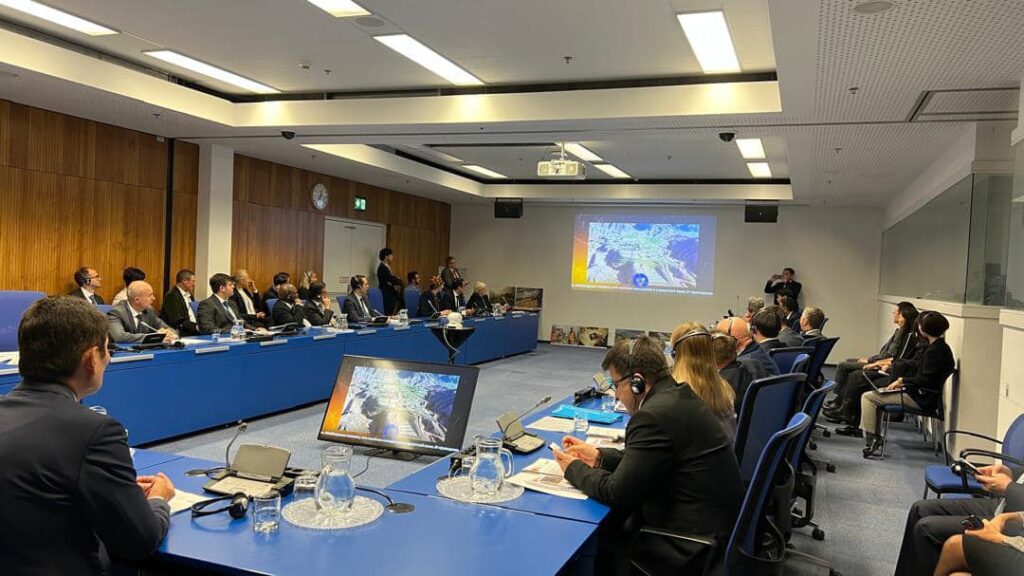
Kyrgyzstan's Deputy Minister of Emergency Situations, Azamat Mambetov, has asked for support from Central Asian countries at the International Atomic Energy Agency's General Session in Vienna, Austria. The 68th session of the IAEA General Conference is taking place from September 16 to 20, 2024. An official from the Kyrgyz Republic Ministry of Emergency Situations made a speech that called for attention to be paid to the importance of ensuring environmental safety in the region. “In his speech, Azamat Mambetov emphasized the importance of the problem of radiation safety in Central Asia and called for the intensification of international efforts to reclaim uranium tailings in the region,” the Ministry of Emergency Situations stated. The IAEA adopted a resolution on “The Role of the International Community in Preventing Radiation Threats in Central Asia.” A strategic master plan was developed to reclaim uranium sites in the region and create a special account for environmental remediation in Kyrgyzstan, Uzbekistan, and Tajikistan. The Deputy Minister of Emergency Situations of Kyrgyzstan informed IAEA members about the process of completing the reclamation of two nuclear waste sites in the country's south. This has allowed about 80,000 people in that area to live safely. The Kyrgyz Ministry of Emergency Situations stressed that it is grateful to all countries and international organizations that have made a significant contribution to the environmental rehabilitation of the tailing dumps left over from Soviet-era uranium mining in Central Asia. However, approximately another $45 million is needed to implement the Strategic Master Plan fully. According to the Kyrgyz Ministry of Emergency Situations, there are currently 92 toxic and radioactive waste dumps in the country. Of these, 23 tailings contain uranium elements, while the rest contain radioactive rock residues, heavy metals, and cyanide.
Climate Crisis May Drastically Reduce Production in Central Asia

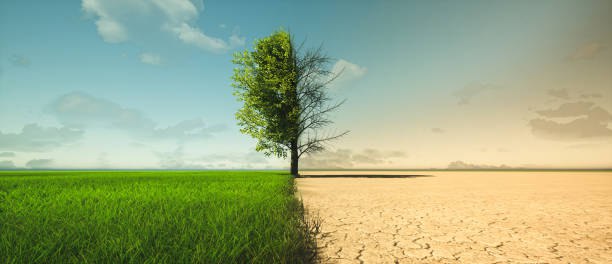
Central Asia may face serious economic losses due to climate change, which may reach a 6.5% annual decline in production by 2060. These figures were announced by Bo Li, Deputy Managing Director of the International Monetary Fund (IMF), at the “New Economic Challenges for Long-Term Development” forum. According to Bo, the Caucasus and Central Asia region is particularly vulnerable to climate change. Soaring temperatures and increasing frequency of droughts and floods are reducing crops, destroying infrastructure, and lowering living standards. “According to IMF estimates, if no action is taken to slow down climate change, Central Asia will lose up to 6.5% of its output annually by 2060,” Bo said. He noted that possible losses could be reduced with joint actions such as reducing carbon emissions, transitioning to a green economy, and adapting to changing climate conditions. As an example, Bo noted the efforts of Kyrgyzstan, that has already started to increase electricity tariffs and reduce energy subsidies, allowing the country to adapt to climate challenges and create new jobs in the “green” sector. Many Central Asian countries are taking steps to reform the energy sector and introduce “green” technologies. For example, Kazakhstan is actively cooperating with several countries to develop renewable energy and reform the energy sector. One key example is the partnership with the United States under the USAID Power Central Asia program. This initiative supports Kazakhstan and other Central Asian countries in modernizing energy markets, introducing clean energy, and encouraging private investment in renewable energy. Uzbekistan is undergoing a major reform of its energy system to reduce subsidies and promote renewable energy. The country plans to increase the share of renewable energy to 25% by 2030, which includes solar and wind energy projects. These measures will help Uzbekistan improve energy efficiency and reduce carbon dioxide emissions. In Tajikistan, USAID is implementing the Power Central Asia program, which supports energy cooperation in the region and encourages using renewable energy to help reduce dependence on fossil fuels and modernize energy systems.

Kazakhstan to Hold Nuclear Plant Referendum on October 6

A popular vote on the need to build a nuclear power plant in Kazakhstan will be held on October 6. President Kassym-Jomart Tokayev announced this during his annual address to the nation. “Given the growing global energy deficit, we need reliable and environmentally friendly energy sources. Therefore, I believe it is necessary to pay close attention to the development of nuclear energy. This type of generation can largely meet the rapidly growing needs of our economy. About 200 nuclear power plants are operating in 30 developed and developing countries,” the head of state said. Discussions on constructing a nuclear power plant in Kazakhstan have been ongoing for many years. The idea of the need for a nuclear power plant first appeared after the closure of the Soviet reactor in Aktau in 1999. Since then, the country has repeatedly raised questions about the development of nuclear power, especially in the context of improving energy security and climate change resilience. However, public opinion is divided: many people in the country remember the consequences of nuclear tests at the Semipalatinsk test site and fear environmental risks. In 2021, discussions about constructing a nuclear power plant intensified when a possible site for Kazakhstan's first atomic power plant began to be considered in Almaty region, near the village of Ulken. These plans sparked lively public debate and protests among residents and environmentalists. According to Tokayev, Kazakhstan should consider the future, taking into account long-term national interests and the country's specifics. “Every step important for the country's life should be made with the support of the people. So, it should be done by referendum on the nuclear power plant; this topic has been on the public agenda for a year. I believe this is the time for citizens to make an informed decision. The upcoming referendum will be another manifestation of a broad national dialog and a vivid example of realizing the concept of a 'listening state.' In fact, with such steps, we form a new socio-political culture and lay new standards for making key state decisions,” he said.

CAREC Think Tank Development Forum to Focus on Climate Solutions

The 8th CAREC Think Tank Development Forum (CTTDF) will be held on August 27 and 28 in Almaty. Themed “The Climate Challenge: Thinking Beyond Borders for Collective Action,” the forum aims to address regional climate challenges by fostering collaborations for policy recommendations and joint research. The CAREC Institute, the Eurasian Development Bank, the Asian Development Bank, and other partners will organize the forum, which will bring together policymakers, experts, and leaders from across Asia to advance regional cooperation on climate action. Headquartered in Urumqi in China’s Xinjiang, the CAREC Institute is an intergovernmental organization contributing to the Central Asia Regional Economic Cooperation (CAREC) Program through knowledge generation and capacity building. The Institute is jointly shared and governed by the CAREC's eleven member countries: Afghanistan, Azerbaijan, China, Georgia, Kazakhstan, Kyrgyzstan, Mongolia, Pakistan, Tajikistan, Turkmenistan, and Uzbekistan. The forum participants will engage in meaningful policy discourse to identify solutions for a climate-resilient region, explore joint research opportunities, and facilitate innovative climate studies beyond mainstream agendas. Representatives from international organizations, high-level government officials, esteemed university scholars, and experts from leading think tanks will be key speakers. The Director of the CAREC Institute and the Vice President of the Asian Development Bank will address the opening ceremony. The forum will include a research presentation by Arman Akhunbaev, Eurasian Development Bank’s head of the Center for Infrastructure and Industrial Research, with insights into the financial solutions to close the investment gap in Central Asia's drinking water and sanitation infrastructure. The forum will also feature presentations, panel discussions, case studies, and interactive sessions designed to foster dialogue and develop actionable strategies for climate resilience in the CAREC region.

Who Will Benefit if Kazakhstan Refuses To Build Nuclear Power Plants?

Kazakhstan is facing a growing energy deficit while having large reserves of uranium which would allow the country to develop its nuclear power industry. However, so far, uranium mined in the country is used solely for export, and every year difficulties with supply chains only increase. All these problems can be solved in one elegant way, but this solution is what a part of the Kazakhstani public actively opposes.   Difficulties with production and supplies Kazakhstan ranks second in the world in terms of proven reserves of natural uranium. About 14% of the world's proven reserves are concentrated in the country's subsoil. According to estimates, the country's explored reserves contain more than 700,000 tons of uranium. In 2009, Kazakhstan became the world's largest uranium producer and continues to maintain its leading position in the global market, producing approximately 40% of the world's uranium. In 2021, uranium production in Kazakhstan amounted to 21,800 tons, but by 2023 this had decreased to 21,112 tons. Moreover, due to difficulties related to the availability of sulfuric acid, the national company Kazatomprom reduced production plans for 2024. According to the initial plan, between 25,000 and 25,500 tons were to be produced; now, the plan is to produce 21,000 to 22,500 tons. Kazatomprom has also stated that if limited access to sulfuric acid continues through 2024 and the company fails to reduce the construction backlog at new sites, it could have a negative impact on production plans for 2025. Uranium mining in Kazakhstan is carried out solely by in-situ leaching, the most environmentally safe and lowest-cost method available. The Russia-Ukraine conflict could not help but affect this area of Kazakhstan's exports. This year, it became known that Kazakhstan is working on diversifying its uranium export routes, bypassing Russia. This is stated in the report on implementing the concept of development of Kazakhstan's fuel and energy complex for 2023. As part of this, Kazatomprom is working on an agreement with the Chinese companies CNUS, CNEIC, and CNNC to provide uranium transit services through China. Kazakhstan currently transports uranium products to customers in North America and Europe through the port of St. Petersburg. An alternative way is to use the Trans-Caspian international transportation route, with shipments through the ports of Aktau (Kazakhstan), Alyat (Azerbaijan), and Poti (Georgia).   Nuclear deadlock Obviously, some of the concerns of Kazakhstan's leadership and Kazatomprom regarding the sale of uranium products could be alleviated by developing the country's own nuclear industry, meaning that uranium mined in the country would feed its own nuclear power plants. Talks about the need to build nuclear plants in the country have regularly been raised since the beginning of the 2000s. Kazakhstani nuclear physicists and nuclear specialists, with the persistence of a Don Quixote have periodically rush to attack the windmills of Kazakhstani radio-phobia, which, however, did not arise without reason. The Semipalatinsk Nuclear Test Site (SNTS) and the Chernobyl disaster are two significant elements of this phobia. In the early 1990s, when the SNTP was closed, the...

Will Kumtor’s ‘Tails’ Benefit or Harm Kyrgyzstan?

The Finnish company Metso is set to  develop a tailings pond at Kyrgyzstan's Kumtor goldmine but local environmentalists are sceptical, claiming that recycling the waste will bring more damage to the environment than economic benefits. "Tailings" are liquid and solid metal (pulp) remnants of ore processing and according to various estimates, Kumtor's tailings pond contains 70 to 130 tons of gold that could not be mined at the plant.  The remnants of precious metal with harmful waste are mothballed, making secondary mining extremely difficult. The Kyrgyz government however, believes that cooperation with the Finns could provide the state with an annual revenue of some $3.5 billion. Isakbek Torgoev, head of the geo-environmental monitoring laboratory at the Institute of Geomechanics and Subsoil Development of Kyrgyzstan and a candidate of technical sciences, told the Times of Central Asia that the Kumtor tailings pond, grandiose in volume, has over a hundred million tailings. "Throughout the entire phase of the mine -over 30 years - ores were taken from different parts of the Kumtor deposit. At times, ores containing 1.8 grams of gold per ton were dumped in the tailings pond. By comparison, at the Boruu gold mine in Mongolia, that amount of gold is contained in the mined rock, but here it is in the tailings. This is a lot," notes Torgoev. The scientific institute believes that dangerous chemical processes occur in the abandoned ores. "Frankly speaking, I am sceptical about such a development, given that very few successful examples exist worldwide. Especially at Kumtor, with its difficult climatic conditions and frigid winters. Theoretically, the work can be carried out, but practically, we'll see," commented the scientist. According to Torgoev, the price of gold may fall, and because of unprofitability, the Finnish company could refuse to process tailings. Moreover, the reclamation of tailings is a very complicated technological process. In addition to constructing water drains, a layer of a meter thick soil is required to cover them. Otherwise, the waste will go into the rivers and soil, harming the environment. The former owners of Kumtor, the Canadian company Centerra Gold, accumulated about $60 million for the reclamation of the tailings pond after the mine was depleted (tentatively in 2027). However, after the nationalization of the mine, the fate of these funds remains unknown. According to the Ministry of Emergency Situations of Kyrgyzstan, there are 92 burial sites for toxic and radioactive substances in the country. Of these, 23 tailings contain uranium elements, while the rest are buried with radioactive rock residues, heavy metals, and cyanide.