• KGS/USD = 0.01143 0%
  • KZT/USD = 0.00202 0%
  • TJS/USD = 0.10599 -0.19%
  • UZS/USD = 0.00008 0%
  • TMT/USD = 0.28575 0%
  • KGS/USD = 0.01143 0%
  • KZT/USD = 0.00202 0%
  • TJS/USD = 0.10599 -0.19%
  • UZS/USD = 0.00008 0%
  • TMT/USD = 0.28575 0%
  • KGS/USD = 0.01143 0%
  • KZT/USD = 0.00202 0%
  • TJS/USD = 0.10599 -0.19%
  • UZS/USD = 0.00008 0%
  • TMT/USD = 0.28575 0%
  • KGS/USD = 0.01143 0%
  • KZT/USD = 0.00202 0%
  • TJS/USD = 0.10599 -0.19%
  • UZS/USD = 0.00008 0%
  • TMT/USD = 0.28575 0%
  • KGS/USD = 0.01143 0%
  • KZT/USD = 0.00202 0%
  • TJS/USD = 0.10599 -0.19%
  • UZS/USD = 0.00008 0%
  • TMT/USD = 0.28575 0%
  • KGS/USD = 0.01143 0%
  • KZT/USD = 0.00202 0%
  • TJS/USD = 0.10599 -0.19%
  • UZS/USD = 0.00008 0%
  • TMT/USD = 0.28575 0%
  • KGS/USD = 0.01143 0%
  • KZT/USD = 0.00202 0%
  • TJS/USD = 0.10599 -0.19%
  • UZS/USD = 0.00008 0%
  • TMT/USD = 0.28575 0%
  • KGS/USD = 0.01143 0%
  • KZT/USD = 0.00202 0%
  • TJS/USD = 0.10599 -0.19%
  • UZS/USD = 0.00008 0%
  • TMT/USD = 0.28575 0%
14 February 2026

Viewing results 1 - 6 of 19

Kyrgyz President Dismisses Right-Hand Man to “Prevent a Split in Society”

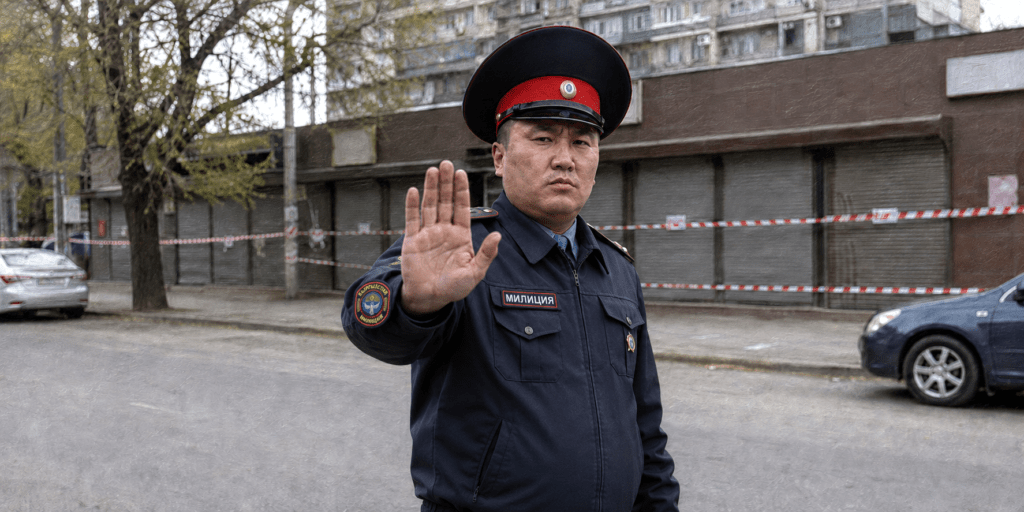
A political earthquake hit Kyrgyzstan on February 10. The tandem of President Sadyr Japarov and security chief Kamchybek Tashiyev was seemingly broken when Japarov dismissed Tashiyev from his post. The reason given for relieving Tashiyev of his position was that it was “in the interests of our state, in order to prevent a split in society, including between government structures,” which hinted that something serious had caused the rift. Old Friends After the brief tumultuous events of October 5-6, 2020, that saw the government of President Sooronbai Jeenbekov ousted in the wake of parliamentary elections plagued by violations, Japarov came to power and appointed Tashiyev to be head of the State Committee for National Security (GKNB). The two have remained in those positions and were often referred to as a tandem. Some believe Tashiyev has actually been the one making many of the important state decisions. Their relationship goes back much further, to the days when Kurmanbek Bakiyev was Kyrgyzstan’s president from 2005-2010. In August 2006, Japarov, Tashiyev, and some other politicians from Kyrgyzstan’s southern Osh area cofounded the Idealistic Democratic Political Party of Kyrgyzstan, which later became the foundation for the Ata-Jurt party. Both Japarov and Tashiyev were supporters of President Bakiyev. When Bakiyev was forced to flee the country after the 2010 revolution in Kyrgyzstan, the Ata-Jurt party became the strongest opposition party to the government that emerged after the revolution. Ata-Jurt won the most seats, 28, in the snap October 2010 parliamentary elections, and among the party’s deputies were Japarov, Tashiyev, and another politician named Talant Mamytov. The three Ata-Jurt deputies helped organize anti-government protests, and during one outside the government building in Bishkek in October 2012, Japarov, Tashiyev, and Mamytov jumped the fence and led an armed crowd to the building. All three were convicted in 2013 of trying to overthrow the government. They were sentenced to a mere 18 months in prison, but did not even serve that, with all three being released in July 2013. Japarov helped lead a protest in Kyrgyzstan’s northeastern Issyk-Kul Province in October that year. A local official was captured and briefly held by protesters, and after order was restored, Japarov was charged with hostage-taking. He fled the country and only returned in March 2017. Japarov was immediately arrested and sentenced to 11 ½ years in prison. A crowd released Japarov from prison when unrest started on October 5, 2020. Tashiyev was among those who quickly put forth Japarov to be Kyrgyzstan’s next leader, and by October 15, Japarov was both acting prime minister and acting president. He appointed Tashiyev to be GKNB chief on October 16. Mamytov was elected speaker of parliament on November 4, 2020. The Dismissal Tashiyev was in Germany receiving medical treatment when Japarov dismissed him. On February 11, Tashiyev commented from Germany on his dismissal, calling it unexpected, but said he would heed the president’s decision. “I served our state, people, and president honorably, and I'm proud of it,” Tashiyev said, and expressed his “gratitude...

Kyrgyzstan’s Sanctions Dilemma: Drifting from the Central Asian Consensus?

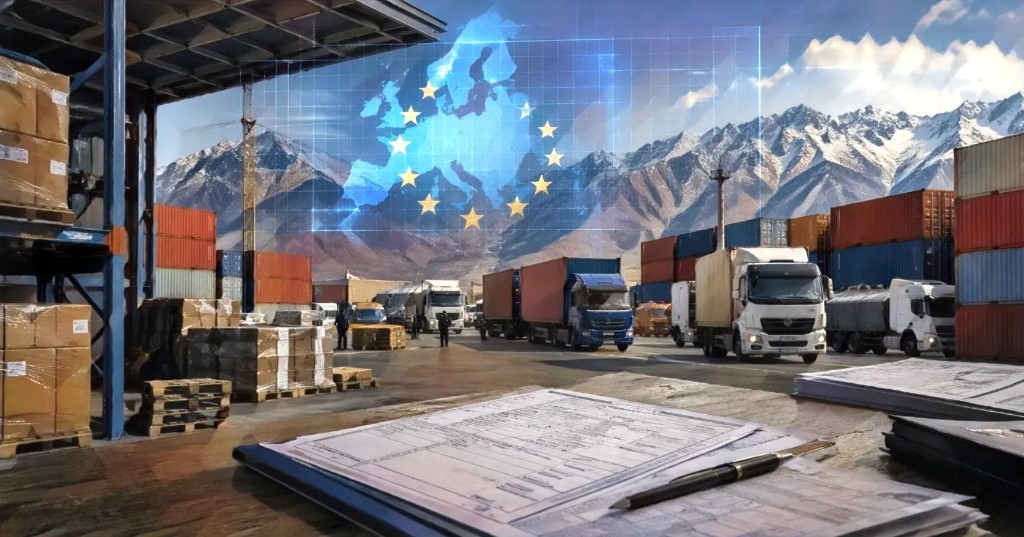
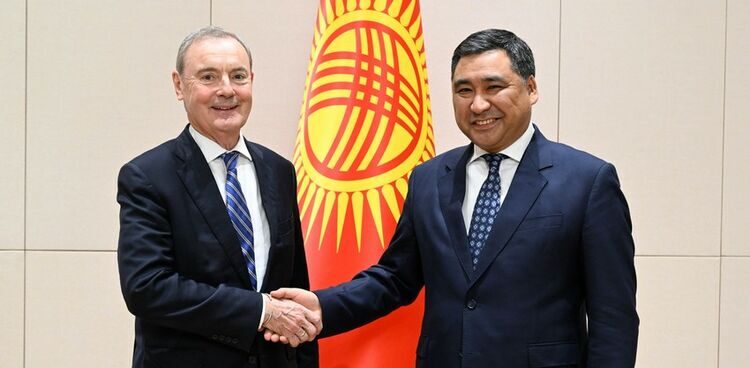
While Kyrgyzstan is improving relations with the United States by hosting the second B5+1 forum in its capital, with the participation of U.S. Special Representative for South and Central Asia Sergio Gor, Bishkek’s relations with Brussels appear to be deteriorating. The European Union is discussing possible sanctions against Kyrgyzstan, and is reportedly considering a ban on the import of certain categories of goods into the country. According to Bloomberg, which was the first to disclose details of the EU’s upcoming 20th package of sanctions against Russia, Brussels is prepared to restrict Kyrgyzstan’s trade in machine tools and radio equipment over allegations of helping the Kremlin circumvent existing bans. The Kyrgyz government has already responded to the report. On February 3, Deputy Prime Minister Daniyar Amangeldiev held a video conference with EU sanctions envoy David O’Sullivan, during which the sides agreed to engage in “constructive and substantive dialogue on issues related to sanctions.” Further discussions are expected during O’Sullivan’s visit to Bishkek at the end of the month, scheduled for February 26. Even before the EU representative’s visit, Kyrgyz officials have publicly commented on the prospect of sanctions, offering a clear sense of the tone likely to shape the dialogue. In an interview with Azattyk, Amangeldiev stressed that Kyrgyzstan has imposed restrictions on the export of dual-use goods, including weapons, and therefore sees no grounds for measures against the state. He also suggested that any potential restrictions might not take the form of sanctions against Kyrgyzstan itself, but rather recommendations to individual EU member states not to supply certain goods to the republic. Deputy Chairman of Kyrgyzstan's Cabinet of Ministers, Edil Baisalov, emphasized that Bishkek consistently communicates its position to European officials, arguing that its “trade relations with Russia do not cause any damage to third countries.” As a negotiating advantage, Baisalov pointed to what he described as growing international attention toward Kyrgyzstan. “Compared to the past, interest in our country and in the history of its socio-economic strengthening has grown significantly,” Baisalov said. “I believe the European authorities have enough patience, wisdom, and understanding not to damage relations with the Kyrgyz Republic. There is no need to create the impression that they intend to restrict us in any way or undermine our policy of national development and economic strengthening.” At the same time, small and medium-sized businesses in Kyrgyzstan are already facing serious difficulties due to the existing sanctions regime, even though these measures do not directly target the country’s key economic sectors. The logistics sector has been hit hardest. Delivery times have increased, costs have risen, visa requirements for drivers have tightened, and the volume of required documentation has expanded significantly. International payments have emerged as a separate challenge. Transfers in dollars, euros, and other currencies are increasingly delayed. Banks demand additional explanations, scrutinize the origin of funds, and in some cases suspend transactions indefinitely, creating cash-flow gaps. To reduce risks, companies are spreading payments across multiple banks: one for ruble transactions, another for Europe, and a third for...

How U.S. and EU Sanctions Are Rippling Through Central Asia

Russia’s economy has faced renewed pressure following a fresh round of sanctions imposed this past week by both the European Union and the United States. After abruptly canceling a planned meeting with Vladimir Putin in Budapest, President Donald Trump shifted to a more hardline stance, announcing new sanctions. While these sanctions may not cripple Moscow, they are already having secondary effects on Central Asia, particularly on Kazakhstan’s banking and energy sectors. The EU's 19th sanctions package, adopted on October 22, introduces a phased ban on Russian liquefied natural gas (LNG). According to Reuters, short-term contracts will be terminated within six months, while long-term contracts are to expire by January 1, 2027. The package also includes a total ban on transactions with Russian oil giants Rosneft and Gazprom Neft, an expanded blacklist of so-called "shadow fleet" vessels, and sanctions against 45 companies in Russia and third countries supplying military-related technologies. Of growing concern in Central Asia is the inclusion of several regional financial institutions in the EU's sanctions list. These include the Kazakh branch of Russia’s VTB Bank, Kyrgyz banks Tolubai and Eurasian Savings Bank, and Tajik banks Dushanbe City Bank, Kommertsbank of Tajikistan, and Spitamen. These restrictions are scheduled to take effect between November and December 2025. Both Kyrgyzstan’s President Sadyr Japarov and the nation's Foreign Ministry have publicly expressed dismay over the sanctions, with Japarov urging Western leaders to stop “politicizing the economy.” In his speech at the UN General Assembly in New York in September, Japarov criticized the impact of unilateral sanctions, while the Foreign Ministry has stated that the country adheres to its international obligations and maintains an open dialogue with the EU to prevent risks associated with possible sanctions circumvention. The ministry has proposed launching an independent, internationally recognized audit and forming a joint “Kyrgyzstan-European Union” technical working group to facilitate data exchange, transaction monitoring, and risk assessments. In Kazakhstan, the National Bank downplayed the impact of sanctions against VTB. Deputy Chairman Yerulan Zhamaubayev noted that the bank had already been under nominal restrictions, and handles few transactions. “VTB does not affect the country’s financial stability, and we do not expect serious risks for the economy,” Zhamaubayev stated. However, the latest U.S. sanctions may prove more consequential for Kazakhstan, particularly amid efforts to strengthen bilateral trade with the United States, including through the repeal of the Jackson-Vanik amendment. The U.S. Treasury Department has sanctioned Russian oil majors Rosneft and Lukoil. The latter has deep economic ties with Kazakhstan. Just days before the announcement, on October 14, President Kassym-Jomart Tokayev personally attended the 30th anniversary of Lukoil’s operations in Kazakhstan, awarding CEO Vagit Alekperov the Order of Barys, first class. Oil and gas journalist Oleg Chervinsky reported that the joint venture Kalamkas-Khazar Operating LLP, co-owned by Lukoil and KazMunayGas, is directly affected. “Only the Tengiz and CPC projects, which Lukoil operates with American partners, have been exempted from the sanctions,” Chervinsky noted. A final investment decision for Kalamkas-Khazar was expected in December 2025. Yerkanat Abeni, a member of...

EU Grants Kazakhstan Exemption to Transit Coal Through Sanctioned Russian Ports

The European Union has granted Kazakhstan an exemption permitting the transit of Kazakh coal through select Russian ports previously restricted under EU sanctions. The decision, included in the EU’s 18th package of sanctions, aims to secure Kazakhstan’s coal exports to Europe. The exemption follows months of negotiations led by the Ministry of Trade and Integration, the Ministry of Foreign Affairs, and Kazakhstan’s Permanent Mission to the EU. The talks were prompted by sanctions introduced in February 2024 under the 16th EU sanctions package, which included a ban on transactions with Ust-Luga port, one of the main routes for Kazakh coal shipments to the EU. “To resolve the situation, work was carried out at various levels and an official request was sent to the European Commission asking for changes to the sanctions regime,” the ministry stated. “As a result, the 18th package of EU sanctions contains amendments allowing transactions with a number of Russian ports for the transit of coal of Kazakh origin.” Conditions of the Exemption The exemption is conditional and tightly regulated: Only coal of Kazakh origin may be transited; Ownership of the cargo must not involve entities from countries under EU sanctions, including Russia and Belarus; The designated Russian ports may be used solely for transit purposes, specifically loading and dispatch, without any procurement or production activities on site. Trade Impact Kazakhstan remains a key coal supplier to the European market. In 2022, it exported 4.4 million tons of coal to the EU, generating $419.2 million, representing 45% of total coal exports. Although volume increased to 6.1 million tons in 2023 (54.3%), falling global prices reduced revenue to $382 million. In 2024, exports declined to 5.2 million tons worth $312.5 million (51.8%). During the first five months of 2025, Kazakhstan exported 1.6 million tons to the EU, generating $82.9 million and accounting for 38.5% of total coal exports over that period. “Despite the temporary decline in indicators, the measures taken are creating conditions for the restoration of export flows and increased stability of logistics routes,” the ministry said. “Kazakhstan will continue to work to protect trade interests, support national exports, and strengthen economic ties with key partners.” As previously reported by The Times of Central Asia, domestic coal consumption in Kazakhstan is expected to decrease due to government plans to phase out pilot coal-fired power plants in favor of renewable energy and low-carbon technologies, including gas. 

Does the European Parliament Judge Central Asia Fairly?

In 2024, European Parliament (EP) resolutions on Central Asia emphasized its increasing significance in a world that is being reshaped by Russia’s war on Ukraine and China’s growing assertiveness. They focused on strengthening the EU’s partnerships with Central Asia while seeking to advance democratic values and human rights. These Enhanced Partnership and Cooperation Agreements aim to support economic reforms, foster sustainable development, and encourage regional cooperation. At the same time, reflecting the EU’s strategic focus on stability and resilience in the region, the EP’s resolutions urged the Central Asian states to decrease their dependency on Russian energy and avoid facilitating sanctions evasion. For the Central Asian countries, all these initiatives present opportunities to address pressing challenges and pave the way for growth. Advancing democratic governance and protecting fundamental rights, for example, can foster more inclusive and stable societies. Deeper engagement with the EU also offers access to advanced technologies and investments (as well as global markets), which are necessary for innovation and infrastructure upgrades. Likewise, the diversification of energy sources enhances regional self-reliance, reducing vulnerabilities that are tied to over-dependence on a single partner. Alignment with EU priorities, including resistance to autocratic pressures, gives Central Asia a better chance to develop its resilience and interconnected future. Some voices in the region, however — particularly among government officials and more traditionally-minded citizens — view the European Parliament's 2024 resolutions as overly critical, indeed influenced by special interests that fail to take into account the region’s unique challenges and priorities. From a Central Asian perspective, the criticisms contained in the EP’s resolutions lack essential context, focus narrowly on perceived shortcomings, and fail to give adequate consideration to the complex situation underlying governmental decisions. Such a one-sided approach, they suggest, overlooks essential cultural, historical, socio-political, and geopolitical factors. The result is a significant gap between the EU’s expectations on the one hand, and, on the other, what is reasonable to expect given the realities on the ground. The drafters of these documents often focus excessively on identifying deficiencies in democratic processes. They report violations without contextualizing the governments’ choices and often omit any mention of the views of the general public. The unfortunate consequence is that such criticisms vitiate good-faith attempts to build cooperation and partnership. The ideal becomes the enemy of the possible. Most Europeans still have a poor understanding of Central Asia. Many MEPs lack the time or resources to grasp the region’s complexity. Instead, their decisions are too often informed by resolutions that are drafted by a small group of “experts”. The language of these resolutions often reflects the drafters’ personal biases, which in turn risk deforming Europe’s strategic relationships with the region. A lack of proper scrutiny is all the more alarming in light of the Qatargate scandal, which exposed how state-funded lobbyists can distort human rights narratives to advance specific agendas. Maria Arena, the former head of the European Parliament's Subcommittee on Human Rights (DROI), played a central role in shaping judgments on democratic practices in Central Asia,...

U.S. Sanctions on Gazprombank Put Uzbekistan’s $4.8 Billion Copper Ambitions at Risk

Uzbekistan faces a significant economic challenge as U.S. sanctions on Russia’s Gazprombank disrupt the $4.8 billion Yoshlik mine expansion project. The project, managed by state-owned Almalyk Mining and Metallurgical Combine (MMC), is critical to Uzbekistan’s plan to nearly double its copper production by 2026, according to The Diplomat. However, with Gazprombank now excluded from the international payments system, the project’s financing is at risk. The Russian Government directly owns 36.44% of Gazprombank's capital. Financing Challenges The Yoshlik mine expansion aims to increase copper output by 78% and gold production by 50%, making it a cornerstone of Uzbekistan’s economic development strategy. However, Almalyk MMC’s reliance on Gazprombank leaves it vulnerable to delays and potential secondary sanctions. This situation exacerbated earlier difficulties after U.S. and EU sanctions in 2022 suspended an $800 million tranche from Russian development bank VEB.RF, another key financial backer. Almalyk MMC must now urgently secure alternative financing to keep the project on track. Russia’s Role in Uzbekistan’s Economy Russia remains Uzbekistan’s largest trading partner, and remittances from Uzbek workers in Russia account for 18% of Uzbekistan’s GDP. Russia’s involvement in the Yoshlik project began in 2021 when Gazprombank and VEB.RF pledged $2 billion to finance mining equipment purchases. Impact on European and British Partners The Yoshlik project also involves significant participation from European and British firms: Germany: Engineering firms such as Thyssenkrupp have supplied critical equipment. Germany’s KfW IPEX-Bank recently arranged $2.55 billion in financing for the project. However, U.S. sanctions on Gazprombank could create legal and logistical hurdles, putting pressure on Germany’s government to reassess its support for exports to Uzbekistan. United Kingdom: The UK has taken a complex position. While it sanctioned Gazprombank in 2014, British firms, including Weir Group, remain involved in the project. In 2024, the U.K.’s export credit agency guaranteed a refinancing deal through Spain’s Santander Bank, reflecting the mine’s importance to British exporters. As reported by TCA, earlier this week, the UK Export Finance (UKEF) guaranteed a €12.6 million ($13.25 million) loan to the Almalyk Mining and Metallurgical Complex to refinance the purchase of fully automated vehicles. Urgency for Alternative Financing For Uzbekistan, securing alternative sources of funding is critical. Almalyk MMC must navigate a challenging sanctions landscape while keeping the Yoshlik project on schedule. Failure to do so could not only isolate the company but also hinder Uzbekistan’s broader economic goals, particularly its ambitions to expand its mining sector and boost foreign investment.