• KZT/USD = 0.00216
  • TJS/USD = 0.10800
  • UZS/USD = 0.00008
  • TMT/USD = 0.29850
  • KZT/USD = 0.00216
  • TJS/USD = 0.10800
  • UZS/USD = 0.00008
  • TMT/USD = 0.29850
  • KZT/USD = 0.00216
  • TJS/USD = 0.10800
  • UZS/USD = 0.00008
  • TMT/USD = 0.29850
  • KZT/USD = 0.00216
  • TJS/USD = 0.10800
  • UZS/USD = 0.00008
  • TMT/USD = 0.29850
  • KZT/USD = 0.00216
  • TJS/USD = 0.10800
  • UZS/USD = 0.00008
  • TMT/USD = 0.29850
  • KZT/USD = 0.00216
  • TJS/USD = 0.10800
  • UZS/USD = 0.00008
  • TMT/USD = 0.29850
  • KZT/USD = 0.00216
  • TJS/USD = 0.10800
  • UZS/USD = 0.00008
  • TMT/USD = 0.29850
  • KZT/USD = 0.00216
  • TJS/USD = 0.10800
  • UZS/USD = 0.00008
  • TMT/USD = 0.29850
17 August 2026

Viewing results 1 - 6 of 307

Tajik Migrants Embrace Free English Courses to Pursue Jobs in Europe

Tajikistan has launched a free English online course for migrant workers aiming for employment in Europe and the Commonwealth of Independent States (CIS). The course, developed in partnership with the International Organization for Migration (IOM) and the Smarthub educational platform, is part of the UK Seasonal Worker Program. This initiative provides participants with an opportunity to enhance their language skills at no cost. According to the IOM, over 200 participants have already completed the program. The curriculum covers essential communication skills, ranging from basic phrases and personal introductions to professional vocabulary necessary for workplace interactions. This initiative comes as Tajikistan explores alternative destinations for labor migration, prompted by stricter migration rules in Russia and Western sanctions limiting access to its labor market. Increasing numbers of Tajik workers are finding employment in Germany, Poland, the Baltic States, Romania, and the United Kingdom. In 2023, approximately 1,000 Tajik citizens traveled to the UK for seasonal agricultural work, including fruit and vegetable harvesting.
EU-Funded Electronic Queue Management System Aims to End Border Delays in Kyrgyzstan

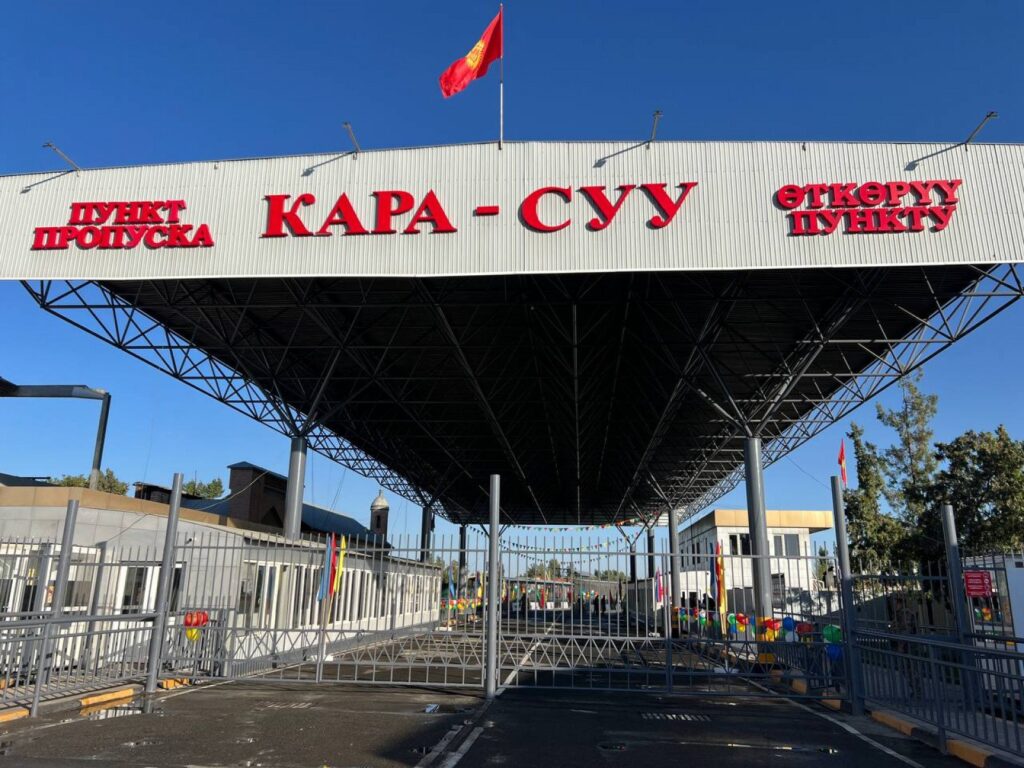
Kyrgyzstan’s State Customs Service has launched a pilot Electronic Queue Management System (eQMS) at the Kyzyl-Kiya road border crossing with Uzbekistan. The system is designed to simplify and expedite border-crossing procedures for truck drivers. Using the eQMS website, drivers can reserve time slots and access a designated waiting zone at their scheduled time, according to the Delegation of the European Union to the Kyrgyz Republic. European Union Support Funded by the European Union, the eQMS is part of Kyrgyzstan’s broader effort to enhance economic and regional trade integration. The initiative is implemented with technical support from the International Trade Centre (ITC), a United Nations agency, under the Ready4Trade Central Asia: Fostering Prosperity Through the Trans-Caspian Transport Corridor project. Marilyn Josefson, Ambassador of the European Union to the Kyrgyz Republic, emphasized the significance of the initiative: “The European Union is proud to support Kyrgyzstan's efforts to modernize its border management through the eQMS pilot initiative. Improving soft connectivity and facilitation of trade and border procedures is a crucial step in advancing the operational efficiency of the Trans-Caspian Transport Corridor and supporting the internationalization of Central Asian businesses, ultimately fostering sustainable economic development and stronger regional integration,” said Josefson. Advancing Border Efficiency Almaz Saliev, deputy chairman of the State Customs Service of Kyrgyzstan, highlighted the transformational nature of the project: “This system is not only an operational improvement but also a commitment to a modern, user-centered approach to border management.” The new system addresses longstanding issues faced by Kyrgyz exporters and freight forwarders, particularly delays at border crossings. While the pilot project focuses on the Uzbekistan border, border delays have also been a recurring problem for Kyrgyz trucks crossing into Kazakhstan. These delays have disrupted goods transit to Russia and other destinations, prompting periodic complaints from Kyrgyzstan about excessive queues. The eQMS pilot project marks a significant step toward more efficient, transparent, and reliable border management, paving the way for smoother trade flows and stronger regional connectivity.

Kyrgyzstan’s Airlines Could Be Removed from EU Blacklist in 2025

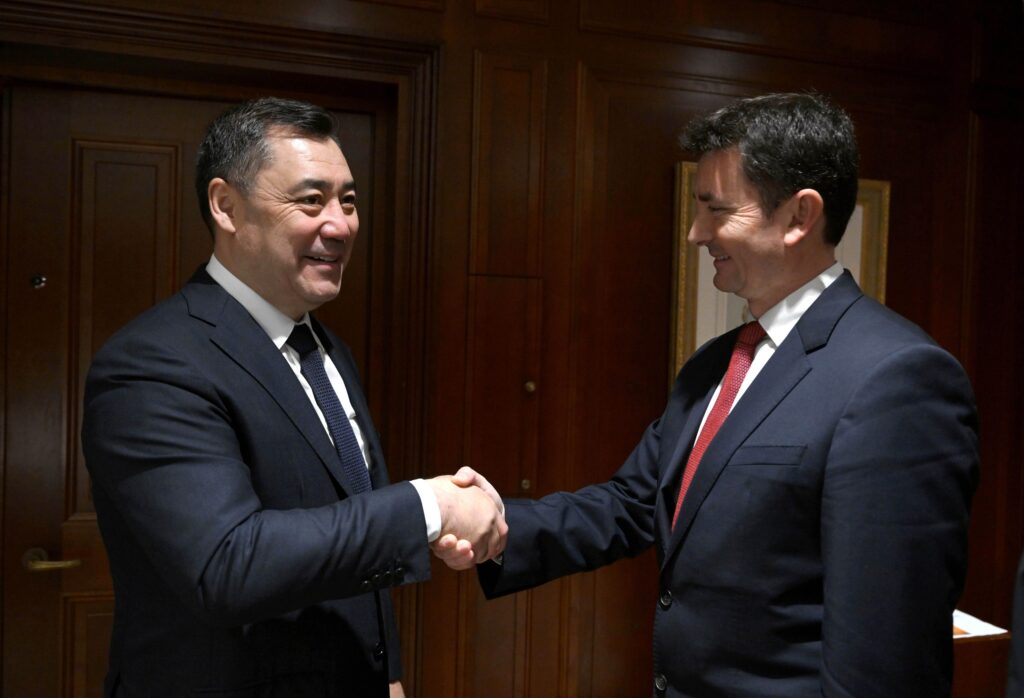
Kyrgyzstan’s airlines may soon achieve a significant milestone by being removed from the European Union’s Air Safety List, which currently bans them from operating flights to Europe. Kyrgyz President Sadyr Japarov made this announcement on November 27 during a meeting in Berlin with Johan Pelissier, the head of Airbus Europe, where they discussed the future of Kyrgyzstan’s aviation sector. Japarov emphasized the government’s concerted efforts to enhance aviation safety, implement international standards, and modernize infrastructure. He expressed optimism that these measures have significantly improved the likelihood of lifting restrictions on Kyrgyz airlines. As part of these developments, Japarov highlighted the government’s support for the national carrier, Asman Airlines. Under an initial agreement with Airbus, the airline plans to lease two A320 or A321 aircraft to establish direct routes to Europe, including destinations such as Paris, Berlin, and London. This initiative marks a critical step toward integrating Kyrgyzstan into the global aviation network. Looking ahead, Kyrgyzstan aims to expand its fleet and deepen cooperation with Airbus, fostering stronger connections with the international aviation community. At the conclusion of the meeting, Japarov extended an invitation to Pelissier to visit Kyrgyzstan for further discussions with local aviation representatives. Background: A Longstanding Ban Kyrgyz airlines was added to the EU’s Air Safety List in 2006 after failing to meet international safety standards. This decision, based on assessments that the country’s legal framework did not adequately ensure flight safety, has prohibited Kyrgyz airlines from flying to EU destinations for over 18 years. The ban has had a profound impact on the aviation sector, limiting its operational scope and market reach. Efforts to address these shortcomings represent a turning point, with the potential removal from the blacklist signaling a new chapter for Kyrgyz aviation. If successful, this move could open up significant opportunities for growth and international collaboration.

Kyrgyzstan Seeks to Boost Food Exports to EU Markets

Kyrgyzstan is set to increase its agricultural exports to the European Union following an agreement with British certification company Intertek. Minister of Economy and Commerce Daniyar Amangeldiev recently met with Jeremy Gaspar, Vice President for Government and Trade Services at Intertek, in Berlin to discuss the initiative. The agreement will help Kyrgyz companies certify their products according to international standards, significantly improving their competitiveness in EU markets. The Ministry of Economy is optimistic that this collaboration will expand the country's export capacity while modernizing its quality assurance systems. Beyond agriculture, the ministry is also exploring certification opportunities for the manufacturing sector, particularly Kyrgyzstan's garment industry, which holds significant potential for international growth. As part of the next phase of the project, Intertek experts will visit Kyrgyzstan to conduct a comprehensive analysis of the country's laboratories and certification infrastructure. Intertek, a global leader in product certification and quality control, will work closely with local authorities to align Kyrgyzstan’s systems with international standards. “A visit by Intertek specialists will mark a crucial step in modernizing our laboratories and integrating Kyrgyzstan’s national certification framework into global quality assurance practices,” the ministry stated. Last month, a Kyrgyz delegation visited an Intertek laboratory in Bremen, Germany, to review European methodologies and initiate arrangements for European specialists to visit Kyrgyzstan. These specialists will evaluate the functionality of Kyrgyz laboratories and recommend improvements to ensure compliance with EU requirements. Kyrgyzstan views this partnership as a critical step toward enhancing the quality and competitiveness of its export products, ultimately strengthening its presence in international markets.

Uzbekistan and EU Look to New Areas of Cooperation

On November 5, the government of Uzbekistan and the European Union held the 7th meeting of their Subcommittee for Development Cooperation in Tashkent, Uzbekistan. The parties reviewed the EU’s ongoing projects in Uzbekistan and agreed to closer cooperation in transport, critical raw materials, digitalization, and territorial planning. As reported by the EU Delegation to Uzbekistan, the parties discussed the progress of the ongoing EU-funded project, “Further Improvement of Public Services Delivery in Uzbekistan,” which has increased Uzbek citizens’ access to public services in rural areas; projects addressing corruption; and budget support and expertise worth 27 million euro for agricultural reforms. The EU and the Uzbek government also addressed potential new areas of cooperation, such as critical raw materials, transport, territorial planning of urban and rural areas, and women’s economic empowerment. As part of the Multi-annual Indicative Program for 2021-2027, the EU will allocate around 43 million euros for new bilateral programs to be launched between 2025 and 2027. An additional 30 million euros will be allocated to regional programs supporting border security, digitalization, including access to the Internet, and national migration policies. The Multi-annual Indicative Programme for 2021-2027 sets the priorities for the EU-Uzbekistan cooperation. The priority areas are effective governance, green and digital growth, and sustainable agri-food sector. In April 2024, the European Commission and Uzbekistan signed a Memorandum of Understanding for a strategic partnership on critical raw materials (CRMs), which marked a significant step towards a diversified and sustainable supply of CRMs for green and digital transitions in both the EU and Uzbekistan. Rich in copper, molybdenum, and gold, Uzbekistan has the second-largest reserves of CRMs in Central Asia (after Kazakhstan).

EU and Turkmenistan Launch Coordination Platform of Trans-Caspian Transport Corridor

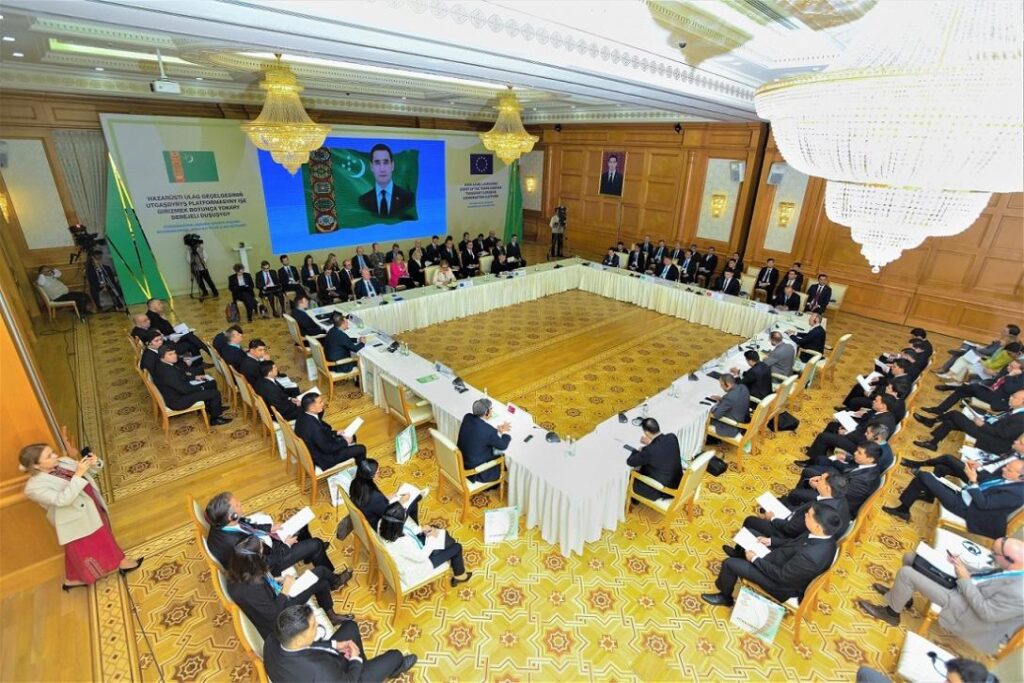
On October 3 in Ashgabat, the European Union and Turkmenistan launched the Trans-Caspian Transport Corridor Coordination Platform. The platform aims to strengthen connectivity by developing transport routes within Central Asia and the European Union. The event brought together the European Union, representatives of the countries along the Trans Caspian Transport Corridor in Central Asia, the South Caucasus, and Türkiye, and international financial institutions. The European Union delegation was led by European Commissioner for International Partnerships Jutta Urpilainen. As reported by the EU Delegation to Turkmenistan, the Trans-Caspian Transport Corridor is a flagship of the EU’s Global Gateway investment strategy, and the establishment of the Coordination Platform is one of the key deliverables of the Global Gateway Investors Forum for EU-Central Asia Transport Connectivity held in January 2024. European and international financial institutions at the Forum committed to mobilizing €10 billion for sustainable transport connectivity in Central Asia. The EU aims to work with partners towards a modern route that boosts trade and facilitates the flow of goods between Central Asia and Europe while driving economic development and regional integration. The platform's main role will be to promote the corridor and coordinate efforts to implement priority projects in hard and soft infrastructure in Central Asia. It will also coordinate with investments and activities in the South Caucasus and Turkey that are relevant to strengthening operational efficiency and seamless connections across the Trans-Caspian Transport Corridor. Urpilainen said: “Central Asia, as a region at the crossroads of Europe and Asia, plays a pivotal role in the EU Global Gateway investment strategy and connectivity vision. The Trans-Caspian Transport Corridor is a critical artery linking Europe and Asia, boosting trade, facilitating exchanges, and driving prosperity across our regions while ensuring improved connectivity, cooperation, and economic growth between all Corridor countries. Harnessing this potential will require massive infrastructure investments in the coming years; I am pleased to see governments from countries along the Corridor, key International Financing Institutions, EU Member States, G7 countries, and other partners coming together.” Urpilainen said that to the European Union, Turkmenistan is an important partner in Central Asia. She also emphasized the European Union's commitment to supporting Turkmenistan's transition to a sustainable, green economy while enhancing its business environment. The EU has further allocated €18 million to strengthen its partnership with Turkmenistan, highlighting its dedication to fostering sustainable development and economic growth.