• KZT/USD = 0.00216
  • TJS/USD = 0.10800
  • UZS/USD = 0.00008
  • TMT/USD = 0.29850
  • KZT/USD = 0.00216
  • TJS/USD = 0.10800
  • UZS/USD = 0.00008
  • TMT/USD = 0.29850
  • KZT/USD = 0.00216
  • TJS/USD = 0.10800
  • UZS/USD = 0.00008
  • TMT/USD = 0.29850
  • KZT/USD = 0.00216
  • TJS/USD = 0.10800
  • UZS/USD = 0.00008
  • TMT/USD = 0.29850
  • KZT/USD = 0.00216
  • TJS/USD = 0.10800
  • UZS/USD = 0.00008
  • TMT/USD = 0.29850
  • KZT/USD = 0.00216
  • TJS/USD = 0.10800
  • UZS/USD = 0.00008
  • TMT/USD = 0.29850
  • KZT/USD = 0.00216
  • TJS/USD = 0.10800
  • UZS/USD = 0.00008
  • TMT/USD = 0.29850
  • KZT/USD = 0.00216
  • TJS/USD = 0.10800
  • UZS/USD = 0.00008
  • TMT/USD = 0.29850
18 August 2026

Viewing results 1 - 6 of 307

Alisher Usmanov Wins Court Case Against German TV Channel ARD

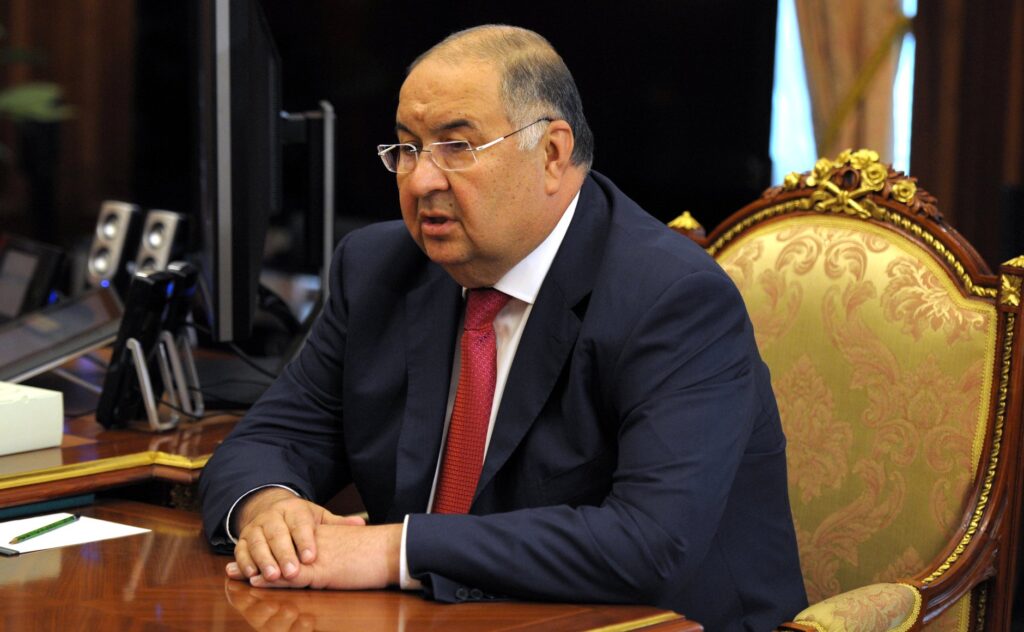
The Hamburg court news about Uzbek-born billionaire Alisher Usmanov was broadcast by the German TV channel ARD as unreliable. ARD accused Alisher Usmanov of creating a system of bribing International Fencing Federation (FIE) judges. According to the report, the court found the information published by the ARD channel unreliable and banned its distribution as “inappropriate news based on suspicion.” If the court order is violated, the violator will be fined up to 250,000 euros per episode or imprisoned. Alisher Usmanov’s press service highlighted that between 2022 and 2024, several European media outlets, particularly in Germany, acknowledged their inability to substantiate accusations against the businessman and signed written agreements to cease their unlawful dissemination of information. To date, approximately 30 such declarations have been made in favor of Usmanov. As a result of legal proceedings, the businessman’s legal team obtained numerous orders preventing the spread of false information by European media. “One of the most significant was the court decision issued in January 2024 to ban the statements made about Usmanov by the American magazine Forbes, which became one of the key elements in justifying the introduction of EU sanctions against him. Earlier, Usmanov also won a lawsuit against the Austrian newspaper Kurier,” the press service emphasized. The court appeal was triggered by two articles and a video report about fencing at the Paris Olympic Games, aired by Germany’s ARD channel in August 2024. In them, journalist Hans-Joachim Seppelt accused Alisher Usmanov, who stepped down as FIE president in early 2022 due to EU sanctions, of creating a system to “bribe referees.” The FIE management officially denied these accusations. According to the press service, the German Internet publication Sport1.de and the Austrian newspaper Krone.at, which republished ARD's false statements, corrected their materials at the request of Usmanov’s lawyers. However, the ARD TV channel refused to fix the inaccurate information voluntarily. “There is no evidence other than gossip spread by dubious witnesses, invented insinuations, speculation, and rumors. Respect for truth, human dignity, and the dissemination of reliable information are the foundations of the German code of journalistic ethics, which was grossly violated by the state broadcaster,” summarized lawyer Joachim Steinhöfel, representing Usmanov in court. As of August 15, 2024, Russian billionaire Alisher Usmanov is the 132nd richest person in the world, with a wealth of estimated $15.4 billion.
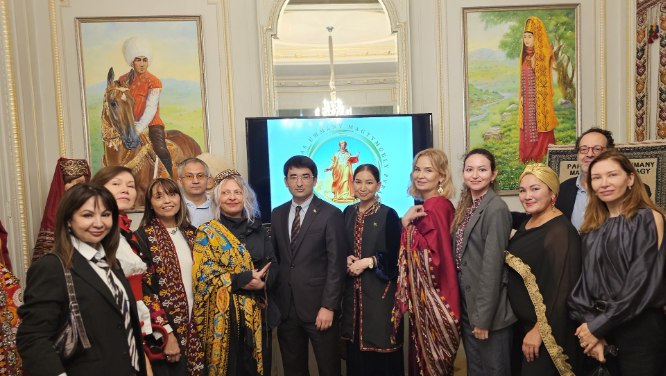
Turkmen Designers Present Their Works at an Evening of Art in Brussels

An evening dedicated to Turkmen art and traditions, organized by the Embassy of Turkmenistan within the framework of cultural exchange, was held in Brussels. The event brought together cultural sector representatives from Central Asia and Europe, including fashion and art figures. The Ambassador of Turkmenistan to Belgium, Sapar Palvanov, opened the meeting, noting that Turkmen culture is a heritage that needs to be protected and passed on to new generations. The diplomat emphasized the role of cultural diplomacy as a means of strengthening ties between peoples. “Culture has always been a neutral sphere that unites people," Palvanov stated. An essential part of the program was a speech dedicated to the 300th anniversary of the great poet, Makhtumkuli. The Ambassador spoke about how his ideas continue to inspire not only Turkmen, but people of other nations, influencing Turkmenistan's cultural ties with Europe. The evening's guests were presented with the works of talented Turkmen designers, Sheker Akiniyazova, Shemshat Tachmammedova, and Ogulbeg Berdimiradov. Their collections combined traditional elements with modern fashion. The designers also participated in the Brussels cultural program and presented at European institutions. Elena Kharitonova, founder of Caravan Cultura CreArt Agency in the Netherlands who co-organized the event emphasized the preservation of cultural values through modern projects and her support for young Turkmen designers.

Redefining Diplomacy: Kazakhstan’s Strategic Shift in Relations With Afghanistan

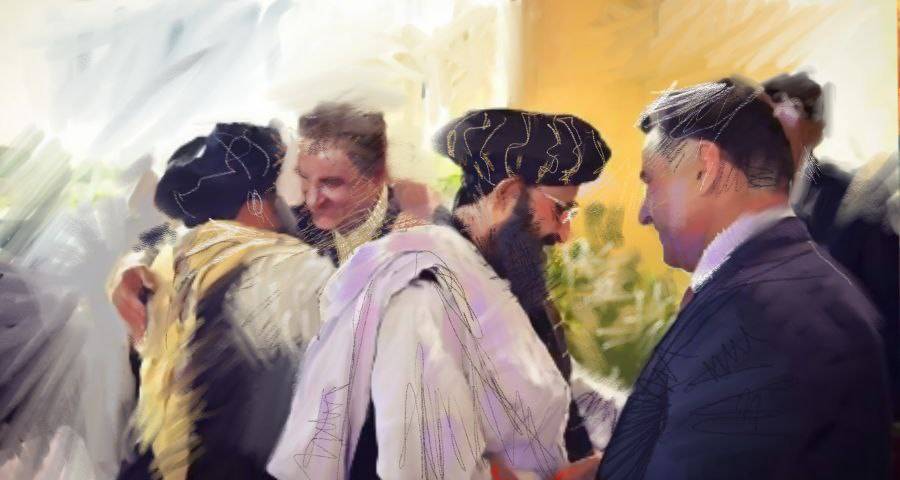
On September 9, 2024, President Kassym-Jomart Tokayev signed a decree dismissing Alimkhan Yesengeldiyev from the position of Kazakhstan's Ambassador to Afghanistan. Yesengeldiyev has been at the post since April 2018. Local media have not yet reported on the appointment of a new ambassador. Previously, Astana has made bold diplomatic steps towards normalizing relations with Afghanistan under Taliban rule. For instance, Kazakhstan accredited Taliban diplomats in April 2023, and removed the Taliban from its list of banned organizations in December 2023. On August 21 of this year, Kazakhstan accredited the head of the Afghan diplomatic mission as charge d'affaires in the country. Astana continues to increase trade, economic, and humanitarian cooperation with the de facto authorities, and has actively engaged in various international platforms for initiatives in Afghanistan. Moreover, President Tokayev outlined Kazakhstan's position on the situation in Afghanistan just a month after the Taliban seized Kabul, when the world was still in shock. “Kazakhstan sees the future Afghanistan as a truly independent and united state living in peace with itself and its neighbors," he stated. "At this crucial historical moment, the multinational people of Afghanistan should not be left alone in the face of unprecedented difficulties.” By changing the head of its diplomatic mission in Kabul, it appears that the authorities in Kazakhstan intend to qualitatively improve the state of their relations with the Taliban. The eventual appointment of a new head of the Kazakh embassy will symbolize a new page in relations. In all likelihood, according to recognized international practice, a diplomat will be presented to the Taliban not in the rank of Ambassador Extraordinary and Plenipotentiary but as the Charge d'Affaires of Kazakhstan. This will preserve the principle of parity and be understandable given international disputes surrounding recognition of the Taliban. Overall, Kazakhstan's foreign policy steps have always been characterized by consistency and an unwavering focus on international law. It seems that the world as a whole is now acclimatizing to the idea of pragmatic dialog with the authorities in Kabul, with whom it is necessary to maintain constant bilateral and multilateral diplomatic contacts. On September 27, at the official request of the British government, the embassy of the former Islamic Republic of Afghanistan in London will officially cease operations. The embassy building will not be handed over to the Taliban or any other political representation. The embassy in Oslo representing the former government in Afghanistan has also ceased functions since September 12 at the request of the authorities there. Neither the British nor the Norwegian authorities are currently commenting on the situation. A few days ago, Deutsche Welle reported that the German Foreign Ministry has accepted the Taliban's application to recognize their consulate general in Munich as the sole center for providing consular services in Germany. In July, the Taliban Foreign Ministry declared that documents issued by 14 Afghan missions abroad are illegitimate. They were located in Britain, Berlin and Bonn in Germany, Belgium, Switzerland, Austria, France, Italy, Greece, Poland, Australia, Sweden, Canada, and Norway. Currently, the...

Rahmon Invites German Chancellor to Cooperate on Rogun HPP

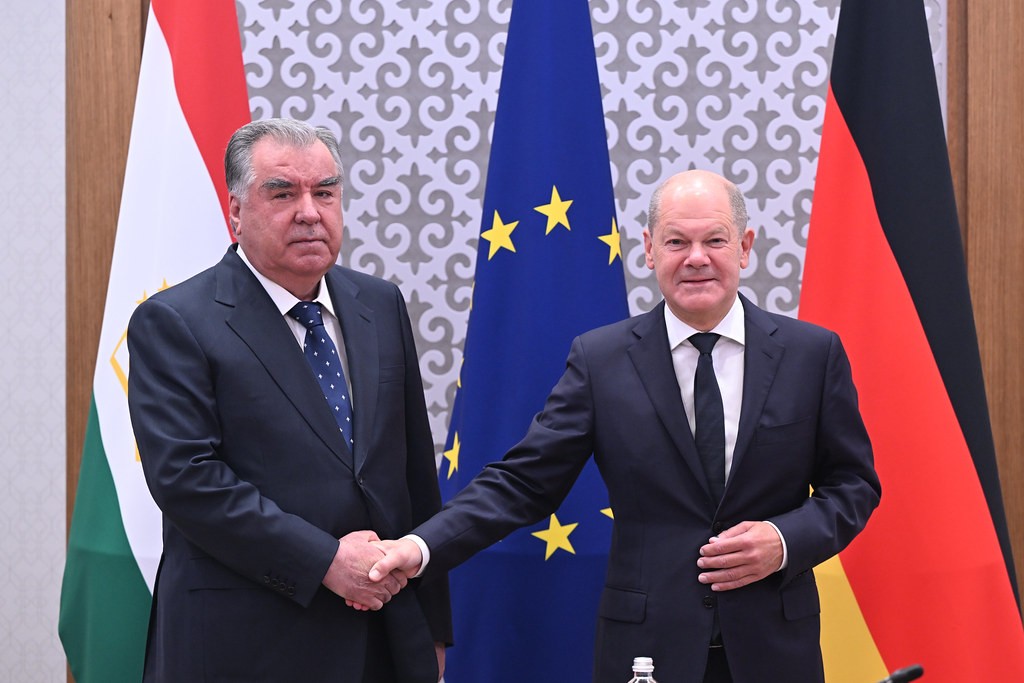
During the summit of Central Asian countries and Germany on September 17 in Astana, Tajik President Emomali Rahmon spoke with German Chancellor Olaf Scholz on expanding Tajikistan’s cooperation with Germany and furthering Germany's business interests in the country. The president noted the significant contribution made by the German Society for International Cooperation and the German Development Bank to Tajikistan's implementation of its national strategies. With regard to future projects, the parties discussed developing effective cooperation in economy and trade, industry, hydropower, solar and wind energy, transport, and agriculture. The two leasers also exchanged views on mining and processing minerals and scarce earth metals, the expansion of bilateral cooperation in industry and agriculture, and the prospects of exporting products from Tajikistan to Germany. Talks also covered global problems related to drinking water, melting glaciers, climate change, and food security. Olaf Scholz confirmed Germany's interest in cooperating with Tajikistan in energy fields, including hydropower and other green energy sources, mining, environmental protection, and security, and emphasized,   “we encourage cooperation with Tajikistan to global German companies." According to the president's press service, Emomali Rahmon recalled Germany’s contribution to the construction of the Tajikistan and Sebzor power plants in Badakhshan and the modernization of the Nurek hydroelectric power plant. Looking ahead, the president expressed confidence that such cooperation could continue on the Rogun power plant. The estimated  cost of completing the construction of the Rogun HPP is $6.4 billion, and when fully operational, about 70% of the electricity produced will be exported to other Central Asian countries. The meeting closed with Rahmon inviting Scholz to come to Tajikistan on an official visit.

Kazakhstan Hosts Summit of Central Asian Countries and Germany

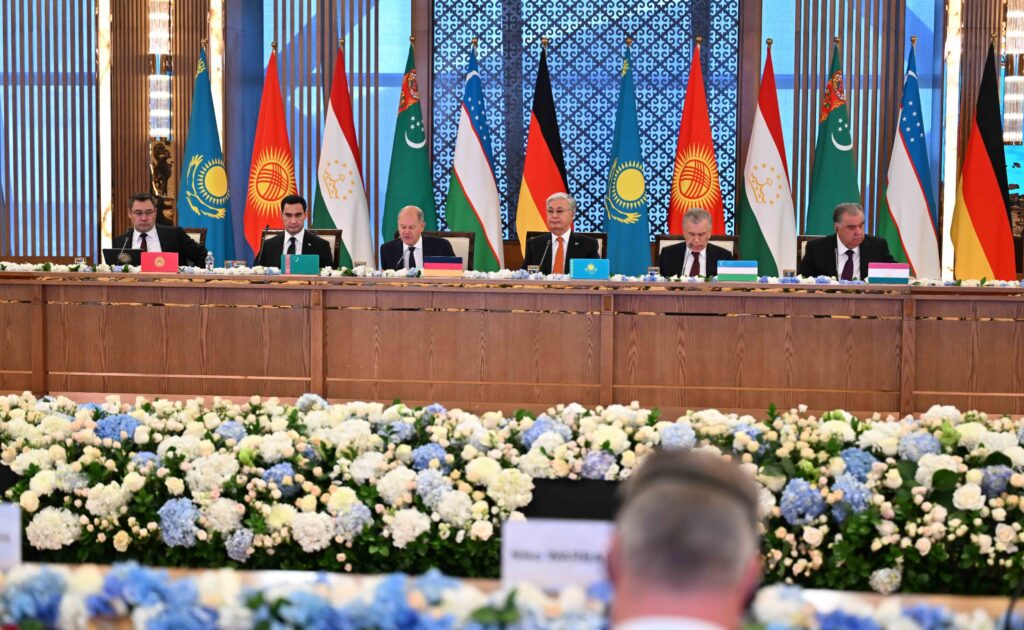
Opening the summit in Astana, Kazakh President Kassym-Jomart Tokayev expressed gratitude to Federal Chancellor Olaf Scholz and Central Asian leaders for their participation and support of regional cooperation. Noting the strengthened relationship following the high-level dialog launched in Berlin last September, he stated, “I believe this is evidence of interest and aspiration from the Central Asian states and Germany for comprehensive development of strategic partnerships. Our meeting is called to summarize joint work and outline new ways to deepen cooperation. Today, we will discuss important trade, investment, energy, ecology, transportation and logistics, education, and science issues. I am confident that our constructive discussions will lead to concrete solutions that will benefit all our countries.” According to the President of Kazakhstan, Germany's socio-economic, scientific, and technological progress is an example for many countries. The positive impact of German technologies and investments in various spheres of the economy cannot be overestimated. Hence, full-scale partnership with Germany, one of the world's most developed countries and the largest economy in the European Union, is a priority for Kazakhstan and other Central Asian states. The most promising areas of cooperation between Central Asian states and Germany include increasing trade turnover, cooperation in the energy sector, development of industrial cooperation, transportation and logistics interconnection, and development of scientific and educational ties. With reference to the above, Tokayev stated: “Wide investment prospects are opened by the development of the Middle Corridor, including the modernization and digitalization of the Caspian Sea ports and construction of cargo terminals. Further integration of Central Asian and European transportation and logistics systems remains urgent. Kazakhstan welcomes the decision of European partners to allocate 10 billion euros under the Global Gateway program for the development of the Middle Corridor. We count on Germany's assistance connecting this route with the Trans-European Transport Network (TEN-T) and the Global Gateway strategy." Citing the need for sustained focus on strengthening and ensuring international security and stability,  Tokayev then emphasized: “Our countries closely cooperate in a multilateral format, including within the framework of the United Nations. We intend to continue to strongly support the efforts of this non-alternative universal Organization in the fight against terrorism, extremism, illegal migration, climate change, peacekeeping, and disarmament. Kazakhstan is ready to participate in the UN reform process. We believe that several developed countries, including Germany, certainly deserve a place as permanent members of the UN Security Council. I want to take this opportunity to wish the Kyrgyz Republic success in promoting its candidacy for the post of a non-permanent member of the UN Security Council for 2027-2028. I am confident that Kyrgyzstan will be able to significantly contribute to strengthening stability and security in Central Asia and beyond." Following speeches by Federal Chancellor of Germany Olaf Scholz, President of Kyrgyzstan Sadyr Japarov, President of Tajikistan Emomali Rahmon, President of Turkmenistan Serdar Berdimuhamedov and President of Uzbekistan Shavkat Mirziyoyev, a Joint Declaration was adopted by the Heads of the Central Asian states and the Federal Chancellor of Germany.

Mirziyoyev and Scholz Agree to Grow Uzbekistan-Germany Cooperation

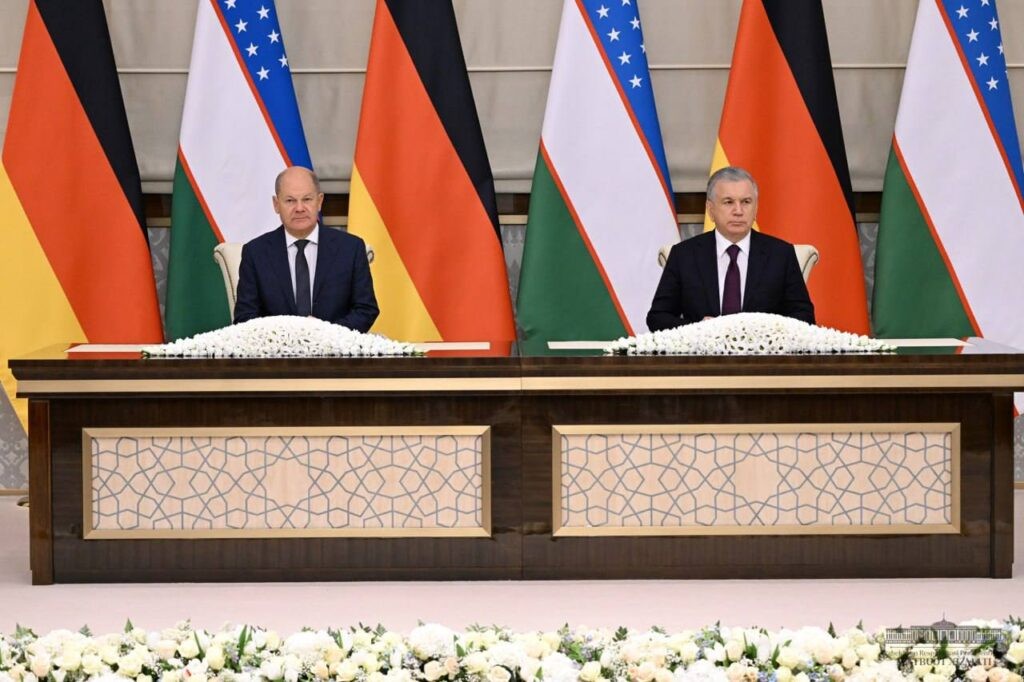
On September 15, German Chancellor Olaf Scholz met with Uzbek president Shavkat Mirziyoyev in Samarkand. Last year the volume of trade between Uzbekistan and Germany exceeded 1 billion euros for the first time. Since the beginning of 2024, German companies have invested over 800 million euros into the Uzbek economy, while in June, the eighth meeting of the Uzbek-German Business Council was successfully held in Tashkent. At the end of the negotiations, Mirziyoyev and Scholz signed eight bilateral documents, including agreements in the fields of migration, use of water resources, essential minerals, transport and climate change. Additionally, Mirziyoyev and Scholz participated in the opening ceremony of the new Academy of Public Administration, which the Uzbek government has recently built in cooperation with the Hans Seidel Foundation and the Bavarian School of Public Administration. Scholz will also participate in a C5+1 meeting in Kazakhstan on September 17 with the leaders of Kazakhstan, Kyrgyzstan, Uzbekistan, Turkmenistan, and Tajikistan.