• KGS/USD = 0.01144 0%
  • KZT/USD = 0.00209 0%
  • TJS/USD = 0.10820 0.28%
  • UZS/USD = 0.00008 0%
  • TMT/USD = 0.28490 0%
  • KGS/USD = 0.01144 0%
  • KZT/USD = 0.00209 0%
  • TJS/USD = 0.10820 0.28%
  • UZS/USD = 0.00008 0%
  • TMT/USD = 0.28490 0%
  • KGS/USD = 0.01144 0%
  • KZT/USD = 0.00209 0%
  • TJS/USD = 0.10820 0.28%
  • UZS/USD = 0.00008 0%
  • TMT/USD = 0.28490 0%
  • KGS/USD = 0.01144 0%
  • KZT/USD = 0.00209 0%
  • TJS/USD = 0.10820 0.28%
  • UZS/USD = 0.00008 0%
  • TMT/USD = 0.28490 0%
  • KGS/USD = 0.01144 0%
  • KZT/USD = 0.00209 0%
  • TJS/USD = 0.10820 0.28%
  • UZS/USD = 0.00008 0%
  • TMT/USD = 0.28490 0%
  • KGS/USD = 0.01144 0%
  • KZT/USD = 0.00209 0%
  • TJS/USD = 0.10820 0.28%
  • UZS/USD = 0.00008 0%
  • TMT/USD = 0.28490 0%
  • KGS/USD = 0.01144 0%
  • KZT/USD = 0.00209 0%
  • TJS/USD = 0.10820 0.28%
  • UZS/USD = 0.00008 0%
  • TMT/USD = 0.28490 0%
  • KGS/USD = 0.01144 0%
  • KZT/USD = 0.00209 0%
  • TJS/USD = 0.10820 0.28%
  • UZS/USD = 0.00008 0%
  • TMT/USD = 0.28490 0%

Viewing results 1 - 6 of 16

Bold Pavilions, Big Statements: Central Asia at Osaka Expo 2025

On a sweltering August day, The Times of Central Asia arrived at the Osaka Expo 2025. The theme, "Designing Future Society for Our Lives," set the stage for a carnival of new ideas and technology. Pavilions buzzed with invention, each one a world of its own. Central Asia turned heads - with all five countries represented - with vibrant stalls, bustling booths, and grand castle-like showpieces that drew crowds from every corner. [caption id="attachment_35420" align="aligncenter" width="2560"] Kazakhstan Pavilion; image: TCA, Stephen M. Bland[/caption] Kazakhstan’s pavilion presents the theme “Born Bold” in the “Connecting Lives” zone, alongside South Korea, Germany, Luxembourg, Nepal, Azerbaijan, Iran, Monaco, and Türkiye. At its heart rises the shanyrak, the sacred crown of the yurt, once a symbol of roots and now a beacon of unity, mirroring the Expo’s spirit of innovation and shared horizons. The story begins with the essence of the Kazakh people. Generations, history, culture, and traditions unfold from the Kazakh Khanate and the vast steppe to Abai’s poetry and the nation’s sporting heroes. It is a narrative of memory and strength, where the past is not closed, but carried forward as a living value. [video width="1280" height="720" mp4="https://timesca.com/wp-content/uploads/2025/08/KZ1-REMOVE-AUDIO-Videobolt.net_.mp4"][/video] From history, the focus shifts to unity. Every guest becomes part of the experience as their face is woven into a digital mosaic, a vivid symbol of belonging. Interactive technologies present Kazakhstan as a country where diversity does not divide but connects. From past to present, the spotlight then falls on a Kazakhstan that is inventive and future-ready. Visitors explore the country’s energy transition, green initiatives, digitalization, and work in artificial intelligence, alongside its rise as an investment hub. [caption id="attachment_35413" align="aligncenter" width="2560"] Prolonging life - ALEM at the EXPO; image: TCA, Stephen M. Bland[/caption] The final chapter places pride and place on the groundbreaking ALEM (Astana Life Ex-situ Machine) developed by Kazakh scientists. Created by the Heart Center Foundation, it is already redefining the possibilities of transplantation. The window for organ transplants is short, from just a few hours for a heart or lungs to more than a day for a kidney. ALEM changes the game. By replicating the body’s internal conditions, it can keep a donor heart alive for 24 hours, opening new possibilities. Only a few models currently exist, including the one on display in the pavilion. [caption id="attachment_35414" align="aligncenter" width="2560"] The Turkmenistan Pavilion; image: TCA, Stephen M. Bland[/caption] The Turkmenistan Pavilion dazzles with three lavish floors beneath an iconic, rounded-triangular ceiling that symbolizes circulation, sustainability, and the flow of life. On the ground level, an epic immersive video left the Japanese audience gasping as it honored Turkmenistan’s great men, legendary horses, and loyal dogs, while women appeared only in fleeting roles. [video width="1280" height="720" mp4="https://timesca.com/wp-content/uploads/2025/08/TK1.mp4"][/video] The second-floor shifts to the present, celebrating modern achievements, from the smart city of Arkadag to advances in industry, finance, and science. The space unfolds as an eclectic mix of books, jewelry, rugs, and even everyday objects like bottles of oil. At its center, a glowing...

Altynai Osmo’s New Show in New York: Restoring Female Narratives

In the heart of Tribeca in New York, the Sapar Contemporary Art Gallery has launched a new exhibition, Beneath the Earth and Above the Clouds, which brings Central Asian narratives to the forefront. This dual show – which runs until May 15, 2025 - features Altynai Osmo and Aya Shalkar, two artists who have been devoted to exploring female narratives in the region, and do this through works that are both steeped into tradition, and modern and vibrant at the same time. The Times of Central Asia spoke with Altynai Osmo, a multimedia artist from Kyrgyzstan whose work weaves the threads of nomadic heritage with contemporary expression. Born in Bishkek and nurtured by the serene shores of Lake Issyk-Kul, Osmo's artistic journey is deeply rooted in the traditions of her homeland. A graduate of Central Saint Martins in London, she seamlessly blends mediums — textiles, metals, video, and installation — to explore themes of identity, matriarchy, and the evolving role of women in Central Asian societies. Her works such as Blessing Yurt, a red fringed costume inspired by the Kyrgyz nomadic traditional dwelling, not only pay homage to ancestral practices but also challenges present-day socio-political narratives. Speaking with TCA, Osmo reflects on the layers of meaning in her new series, her enduring engagement with mythology and matriarchy, and how her practice bridges personal memory and collective history. [caption id="attachment_31131" align="aligncenter" width="2231"] Image courtesy of Altynai Osmo/Sapar Contemporary Art Gallery[/caption] TCA: Can you tell me about how your previous practice led to this new series for the show? My previous work has always involved exploring the intersections of feminine identity, cultural memory, and inherited spirituality in Central Asia, particularly in Kyrgyzstan. This new series evolved naturally from that foundation. It reflects a more layered and intentional engagement with Central Asian history, mythology and matriarchal histories — particularly the symbolic and spiritual dimensions that have often been erased, distorted and forgotten. The materials and narratives I use now draw more explicitly from the Kyrgyz epic, Manas, ancestral craftsmanship, and belief systems like Tengrism, allowing me to express deeper reflections on women's roles across time. TCA: Your Kyrk Kyz series reinterprets the legendary warrior women of Central Asia. How does this mythology resonate with contemporary Kyrgyz identity and gender roles? The Kyrk Kyz legend, with its origin in female strength and collective action, presents a striking contrast to the more patriarchal norms that dominate present-day Kyrgyz/Central Asian society. Revisiting these stories reminds us that women were once seen as the protectors of land, lineage, and cultural continuity. By reimagining these warriors through my art, I want to challenge modern gender expectations and inspire a reconnection to a more empowering view of womanhood that is already rooted in our collective past. [caption id="attachment_31132" align="aligncenter" width="2560"] Image courtesy of Altynai Osmo/Sapar Contemporary Art Gallery[/caption] TCA: The use of felt in your masks ties your work to nomadic traditions. How does the choice of materials reinforce the themes of your work? Felt is not just a...

Uzbek Artifacts from Italian Museums and Private Collections to be Exhibited in Tashkent

A collection of Uzbek cultural heritage masterpieces housed in Italian museums and private collections will be showcased at an upcoming exhibition in Tashkent. The event coincides with the opening of the Center for Islamic Civilization in Uzbekistan. As part of the preparations, a delegation from the Center for Islamic Civilization, led by its director Firdavs Abdukhalikov, visited Italy in mid-February. During the visit, negotiations were held with representatives of several museums and private collectors, who expressed support for the international exhibition. Over the centuries, Uzbek artifacts have become part of prestigious museum and private collections worldwide. “Collections of Uzbek relics housed in Italian museums were published in the 35th volume of the multimedia project Cultural Heritage of Uzbekistan in the Collections of the World. This initiative, supported by the state and business sector, has already resulted in the publication of 80 volumes documenting Uzbek cultural monuments abroad,” said Elmira Gul, the project’s scientific coordinator. Several renowned Italian institutions have contributed artifacts to the exhibition, including: University of Bologna Library - home to a Hebrew manuscript by Abu Ali ibn Sina (Avicenna). Giuseppe Tucci National Museum of Oriental Art (Rome). Museum of Asian Art (Turin). Stibbert Museum (Florence). Mudec Museum of Cultures (Milan). Antonio Ratti Textile Foundation (Como). Private collection of Milanese collectors Alberto and Anna Levi. According to the Center for Islamic Civilization, the exhibition will feature Afrasiab ceramics with epigraphic inscriptions, Medieval metalwork from Khorasan and Maverannahr, including a legendary bowl of the Karakhanid rulers, and Uzbek textile masterpieces from the 19th and early 20th centuries. This exhibition marks a significant step in promoting Uzbekistan’s rich cultural history on the international stage.

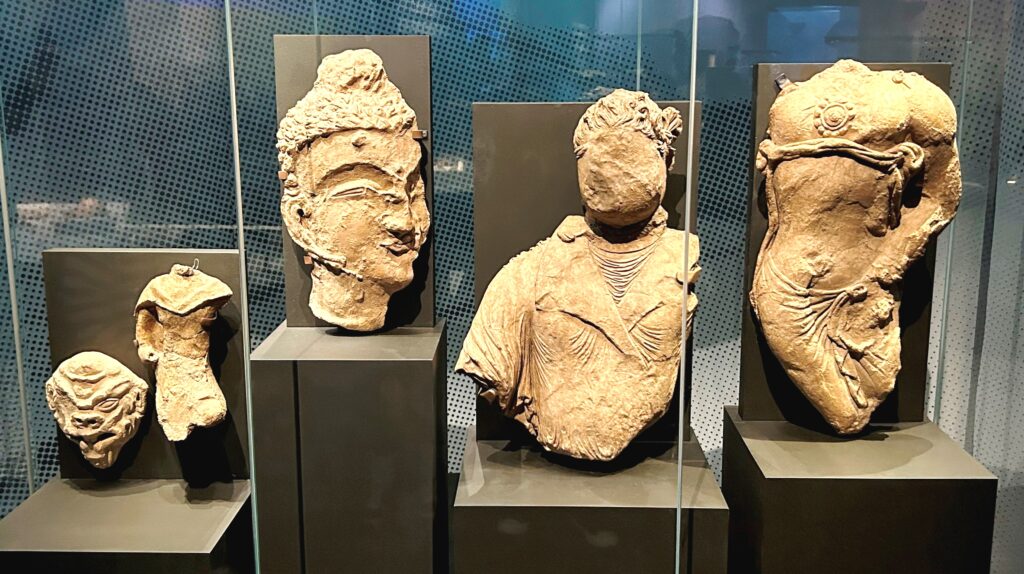
Silk Roads Exhibition: Beating Heart of the Ancient World

On a gloomy winter’s day, The Times of Central Asia visited the Silk Roads Exhibition at the British Museum. The sight of a significant queue wrapped around the museum for entry was startling. Once inside, the exhibit thronged with visitors snaking their way to peruse artifacts arranged by region and era. Concerned about blocking display views as you read descriptions? No need to worry — thick guidebooks with full narratives greeted you at the entrance to borrow during your visit. The exhibition envisions the Silk Road as the beating heart of the ancient world, with arteries stretching across seas, mountains, and deserts. With over 300 artifacts spread across five geographical zones, it can be hard to know where to start. I observed a nearby gentleman in tweed who offered a simple tip: start with a place that interests you and go from there. Then I overheard that he was going to Cairo. New partnerships with Uzbekistan’s Art and Culture Development Foundation (ACDF) and Tajikistan’s museums had seen fresh items loaned to the exhibit. These collaborations highlight Central Asia's important role in this sweeping narrative, helping to connect the dots in this continent-spanning story. Immersed in the culture and history, I couldn’t help but wonder — what did the audience think? After a few unsuccessful attempts, I spoke with an English visitor named Georgie Bennett. [caption id="attachment_27908" align="aligncenter" width="2029"] Georgie Bennett visiting the Silk Roads Exhibition; image: TCA, Stephen M. Bland[/caption] TCA: What drew you here today? I think the thing for me is I have a really poor knowledge and understanding of this bit of history. So, I heard the exhibition was on and some of my friends already booked tickets, I said yes, I’ll absolutely come along because… I wanted to learn more. TCA: What’s the one item that’s caught your eye the most? I really like the story of the silk princess; it was a very humanizing story about this lady who’s newly married and brings the knowledge of how to make silk to her husband’s kingdom… I feel like I've learned so much. I’m enjoying it, though I almost wish I had a notebook and pen because I'm getting a general impression without knowing any of the details. [caption id="attachment_27909" align="aligncenter" width="2560"] Charred wooden door panel from Kafir Kala, near Samarkand, Uzbekistan, circa AD 500, on loan from the State Museum reserve[/caption] The Times of Central Asia also spoke to one of the curators, Luk Yu-Ping to delve deeper into the Silk Road experience. TCA: Globalism is considered a modern concept of interconnectivity, but looking at the vast connections and influence within the Silk Road Exhibition it’s implied that this concept may have been prevalent in the past along these trade routes. Could you expand on this? This exhibition highlights the movement of people, objects, and ideas across Asia, Africa, and Europe during the period 500 to 1000 CE. The focus is not only on trade but also other ways of contact and exchange. Audiences might be...

Turkmen-Iranian Tourism Festival Held in Ashgabat

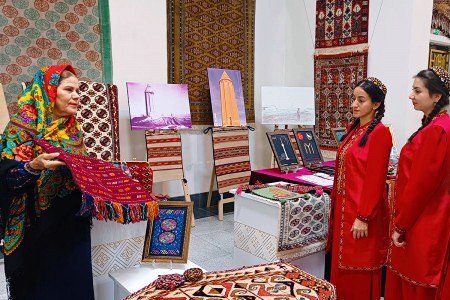
The Second Turkmen-Iranian Tourism Festival united representatives from the two states' tourism industry, cultural figures, and craftsmen. The opening ceremony was held in the Exhibition Hall of the Academy of Arts of Turkmenistan in Ashgabat. During the ceremony, visitors familiarized themselves with Iran's rich tourism potential, saw the works of Iranian craftsmen, and evaluated the proposals of Turkmen tourist companies. The festival's business program included a professional conference. Experts discussed the prospects of bilateral cooperation and new opportunities for increasing tourist flow between the countries. The organizers paid special attention to the cultural component of the event. The festival is designed to strengthen cultural ties between Turkmenistan and Iran and create a platform for the development of joint tourism projects. Earlier, the Academy of Arts of Turkmenistan exhibition hall hosted the opening of the Turkmen-Iranian Specialized Exhibition of Fashion and Clothing. The visitors could experience the latest achievements in Turkmenistan and Iran's fashion and textile industries. The first Turkmen-Iranian Tourism Festival was held in October last year. Visitors familiarized themselves with unique items of traditional folk crafts, handmade art products, national heritage, and modern trends of Turkmen and Iranian art masters.

Almaty to Host Exhibition of Afghan Products

Kazakhstan’s Ministry of Trade and Integration has announced that an exhibition of Afghan carpets, jewelry, construction materials, household and industrial chemicals, vegetables, fruit, and food products will run from October 20 -22, at the Atakent Exhibition Center in Almaty. Afghanistan’s TOLOnews reported that a delegation led by the Taliban Minister of Industry and Commerce and 250 Afghan traders will participate in the exhibition. Akhundzada Abdul Salam Jawad, spokesperson for the Afghan Ministry of Industry and Commerce, further confirmed that 69 companies from Afghanistan will participate in the exhibition, with displays promoting various products, including carpets, dried fruit, saffron, and precious and semi-precious stones. Early in June, Kazakhstan’s President Kassym-Jomart Tokayev announced that his country had removed the Taliban from its list of terrorist organizations, in a move to develop trade and economic ties with Afghanistan. In late August, Kazakhstan’s Foreign Ministry then accredited a chargé d’affaires of Taliban-led Afghanistan to expand trade, financial, and humanitarian cooperation between the two countries.