• KGS/USD = 0.01144 0%
  • KZT/USD = 0.00216 0%
  • TJS/USD = 0.10659 0%
  • UZS/USD = 0.00008 0%
  • TMT/USD = 0.28530 0%
  • KGS/USD = 0.01144 0%
  • KZT/USD = 0.00216 0%
  • TJS/USD = 0.10659 0%
  • UZS/USD = 0.00008 0%
  • TMT/USD = 0.28530 0%
  • KGS/USD = 0.01144 0%
  • KZT/USD = 0.00216 0%
  • TJS/USD = 0.10659 0%
  • UZS/USD = 0.00008 0%
  • TMT/USD = 0.28530 0%
  • KGS/USD = 0.01144 0%
  • KZT/USD = 0.00216 0%
  • TJS/USD = 0.10659 0%
  • UZS/USD = 0.00008 0%
  • TMT/USD = 0.28530 0%
  • KGS/USD = 0.01144 0%
  • KZT/USD = 0.00216 0%
  • TJS/USD = 0.10659 0%
  • UZS/USD = 0.00008 0%
  • TMT/USD = 0.28530 0%
  • KGS/USD = 0.01144 0%
  • KZT/USD = 0.00216 0%
  • TJS/USD = 0.10659 0%
  • UZS/USD = 0.00008 0%
  • TMT/USD = 0.28530 0%
  • KGS/USD = 0.01144 0%
  • KZT/USD = 0.00216 0%
  • TJS/USD = 0.10659 0%
  • UZS/USD = 0.00008 0%
  • TMT/USD = 0.28530 0%
  • KGS/USD = 0.01144 0%
  • KZT/USD = 0.00216 0%
  • TJS/USD = 0.10659 0%
  • UZS/USD = 0.00008 0%
  • TMT/USD = 0.28530 0%

Viewing results 1 - 6 of 44

Kazakhstan Doubles Barley Exports, with Iran and China Leading Demand

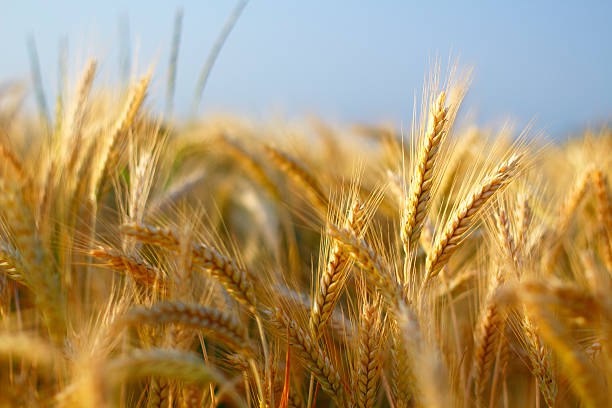
Kazakhstan has doubled its barley exports in the 2024-2025 marketing year, strengthening its position as a key player in the global grain market. According to the Ministry of Agriculture, the country exported 1.82 million tons of barley between September 2024 and August 2025, twice the volume recorded in the same period the previous season. The sharp increase was driven by a strong harvest of 3.84 million tons, robust demand from major markets such as Iran and China, and competitive pricing. Iran emerged as the largest buyer, importing 1.064 million tons, nearly 30 times more than the previous year. China followed with 414,400 tons, while Uzbekistan imported 125,200 tons. The surge in international demand has also pushed up domestic barley prices, providing a boost to local producers. In September 2024, prices ranged between KZT 50,000 and 52,000 per ton; by early August 2025, they had climbed to KZT 85,000-87,000 per ton. The Ministry projects total barley exports for the 2024-2025 season will reach 1.9 million tons. Kazakhstan has also reported a significant rise in wheat exports. Between September 2024 and July 2025, the country exported 12.4 million tons of wheat and flour, a 34% increase compared to the 9.3 million tons exported during the same period in 2023-2024.

Kazakhstan to Use Industrial Hemp for Passport Production

Kazakhstan will begin producing high-security paper from domestically cultivated industrial hemp, which will be used in the manufacture of passports and national ID cards, the Ministry of Agriculture (MoA) has announced. As previously reported by The Times of Central Asia, Kazakh authorities first considered cultivating industrial hemp in 2016, though the initiative remained dormant until recently. In spring 2025, a draft law legalizing the cultivation of non-narcotic hemp was submitted to parliament. It was approved by deputies in June and subsequently signed into law by President Kassym-Jomart Tokayev. The legislation authorizes the government to determine which hemp varieties are eligible for industrial use, explicitly excluding strains used for narcotics, and outlines procedures for cultivation and processing. High-Security Applications and Export Potential At a government briefing on Tuesday, Deputy Minister of Agriculture Azat Sultanov explained the rationale behind the initiative. “The main product will be high-security paper, which is a valuable export commodity used for the production of identification documents such as passports and other special forms,” Sultanov said. “The range of products being considered by the investor is wide. Market demand will be taken into account, and we believe all the output will go for export.” The North Kazakhstan Region is currently being considered as the site for the production facility. Regulated THC Levels and Licenses Issued Earlier, the Ministry of Agriculture confirmed that the allowed level of tetrahydrocannabinol (THC), the psychoactive component of cannabis, in cultivated industrial hemp would not exceed 0.3%. In contrast, wild hemp found in Kazakhstan can contain up to 15% THC, rendering the industrial variant non-psychoactive. Deputy Minister of Internal Affairs Sanjar Adilov noted in April that four licenses for industrial hemp cultivation had already been issued. One licensed farming enterprise in Kostanay Region, adjacent to North Kazakhstan Region, is already engaged in hemp cultivation and processing.

Kyrgyzstan’s Jewelry Industry Emerges from the Shadows

The jewelry industry in Kyrgyzstan is experiencing rapid growth, marked by a surge in exports, an expanded geographic reach, and a significant rise in foreign trade operations, according to official statistics. According to the National Statistical Committee, Kyrgyz jewelers quadrupled the volume of foreign trade in jewelry made from precious metals during the first four months of 2025. This figure encompasses both exports and imports. Approximately 100 kilograms of jewelry, valued at around $600,000, were exported. Export revenues increased fourfold compared to the same period in 2024. Meanwhile, imports reached 15.6 tons, worth $5.8 million, more than double the previous year’s figures. Russia and Italy were the primary destinations for Kyrgyz jewelry exports. Business Legalization and Tax Incentives Stalbek Akmatov, president of the Kyrgyz Jewelers' Union, told The Times of Central Asia that this growth was driven by the industry’s formalization, which allowed jewelers to operate legally, pay taxes, and submit accurate reports. "First of all, I would like to thank our authorities, the Jogorku Kenesh and the Cabinet of Ministers," Akmatov said. "Recently, significant changes were introduced to the Tax Code and legislation concerning precious metals. Instead of three separate taxes, VAT, sales tax, and income tax, a single tax of 0.25% has now been implemented." Akmatov noted that the new tax policy has provided a substantial boost to production and exports, while significantly reducing the size of the shadow economy, which previously accounted for over 90% of the sector. Experts estimate that less than half the industry now remains informal. Entry into the Kazakh Market Kyrgyz jewelers are also exploring new markets. Akmatov highlighted that one company has already exhibited twice at a jewelry fair in Almaty and has begun selling products featuring national designs. "The current volume of exports to Kazakhstan is small, just a few kilograms, but it's only the beginning. The potential in this direction is enormous," he told TCA. Persistent Challenges: Scrap Gold and Regulation Despite these advancements, challenges remain. One major issue is the high cost of scrap gold for local producers. As was the case five years ago, scrap gold is sold with a 5% markup over the London gold price, even though Kyrgyzstan annually produces several dozen tons of gold and even more silver. Akmatov also pointed to restrictive regulations on the circulation of precious metals. "If gold could be traded freely like a currency, our sales would increase significantly," he stated. The Jewellers' Union is currently in talks with the Ministry of Economy and Commerce on liberalizing precious metals circulation within the country.

Tokayev: Kazakhstan Ready to Supply Oil, Gas, and Uranium to Slovakia

Kazakhstan is prepared to begin supplying hydrocarbons and nuclear raw materials to Slovakia, President Kassym-Jomart Tokayev announced following talks with Slovak Prime Minister Robert Fico in Astana. Speaking at a joint press briefing, Tokayev reaffirmed Kazakhstan’s commitment to strengthening ties with Slovakia across both bilateral and multilateral platforms, with particular emphasis on expanding economic cooperation. In 2024, trade between the two countries reached $140 million. According to Tokayev, new opportunities are emerging in sectors such as energy, industrial production, agriculture, logistics, digitalization, critical raw materials, education, and tourism. “Kazakhstan is ready to export oil, gas, uranium, food products, and other goods to Slovakia,” Tokayev said. According to Kazakhstan’s Ministry of Energy, the country exported 68.6 million tons of oil to foreign markets in 2024. This year, exports are projected to increase to 70.5 million tons. The bulk of these exports, 57.05 million tons, will be shipped via the Caspian Pipeline Consortium (CPC). Additional routes include the Atyrau-Samara pipeline (8.8 million tons), the Druzhba pipeline to Germany (1.2 million tons), and the Atasu-Alashankou route to China (1 million tons). Kazakhstan also plans to ship 3.6 million tons of oil through the port of Aktau, with 1.5 million tons continuing via the Baku-Tbilisi-Ceyhan pipeline. Following his meeting with Fico, Tokayev also highlighted potential cooperation in military-technical fields. The two leaders discussed leveraging the Trans-Caspian International Transport Corridor, which links China and Europe through Kazakhstan. “I invited our Slovak partners to participate in this project, which could open new horizons for bilateral trade,” Tokayev said. Prime Minister Fico expressed interest in deepening cooperation in both the oil and nuclear energy sectors. “We have five reactors, and a sixth will soon be operational. We’re also planning to purchase a 1.5 MW nuclear power plant. If our Kazakh colleagues are interested, we’re ready to cooperate,” Fico stated. He also noted discussions on utilizing the Druzhba pipeline corridor through Russia and Belarus to supply oil to Slovakia. Meanwhile, Kazakhstan is moving forward with plans for its first nuclear power plant. As previously reported by The Times of Central Asia, the country’s Atomic Energy Agency is expected to announce by the end of this month which foreign company will be awarded the construction contract.

Kazakhstan Reduced Fish Exports Last Year

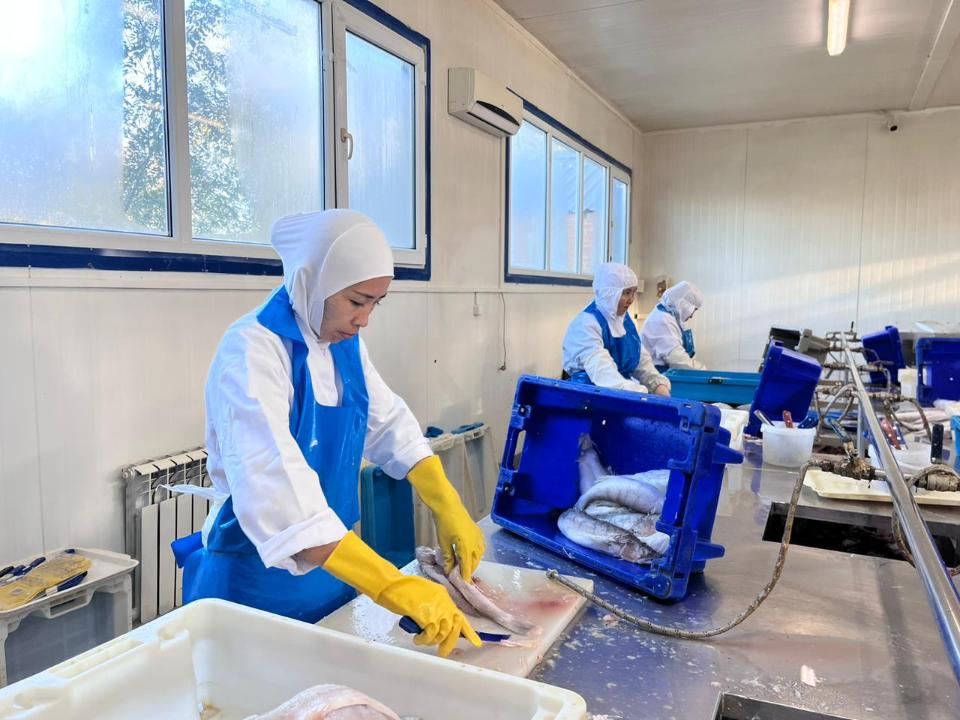
Kazakhstan exported 23,400 tons of fish products in 2024, marking a decline from the previous year despite an overall 7% growth in domestic fish production. The figures point to a significant rise in domestic consumption of fish. According to the Ministry of Agriculture of Kazakhstan, 72 enterprises are currently engaged in fish processing, with 20 of them supplying products to the European Union. Kazakhstani fish products, over 50 types in total, are exported to 21 countries. However, the 2024 export volume fell short of the 25,300 tons reported in 2023, which included 11,800 tons of processed fish, a slight increase over 2022. In contrast, domestic consumption has surged. The domestic market absorbed 94,600 tons of fish products in 2024, up 7% compared to 2023. “The state actively supports the development of aquaculture. Subsidies to the industry have increased ninefold since 2021, reaching KZT 4.5 billion ($8.7 million) in 2024. Kazakhstan provides reimbursement of up to 25% of investment costs, 30% of feed costs, and 50% of the cost of purchasing young fish, broodstock, and veterinary drugs,” the Ministry of Agriculture stated. The number of fish farms in Kazakhstan has doubled in the past three years, reaching 600. In 2024, investments in fixed assets in the fishing industry exceeded KZT 5.2 billion ($10.1 million). Despite this growth, concerns remain about the ecological health of regional fish stocks. As previously reported by The Times of Central Asia, the Caspian sturgeon population has plummeted by 90% amid an ongoing environmental crisis.

Kyrgyzstan Exports Over 8 Million Eggs to Kazakhstan Amid Shifting Trade Policies

Between January and March 2025, Kyrgyzstan exported 8.8 million chicken eggs to neighboring Kazakhstan, according to Kyrgyzstan's Ministry of Water Resources, Agriculture and Processing Industry​. This marks the second consecutive year that Kyrgyzstan has achieved near-total self-sufficiency in egg production, enabling it to maintain consistent exports. In a move to support domestic poultry and egg producers, the Kyrgyz government has exempted feed and feed additives for the industry from value-added tax (VAT). Earlier this month, Kyrgyz authorities announced a temporary ban on egg imports to further protect domestic producers. As a result, the country currently imports no table eggs, though imports of hatching eggs, essential for poultry reproduction, continue. In the first quarter of 2025, Kyrgyzstan imported 2.26 million hatching eggs from five countries: Turkey, Uzbekistan, Russia, France, and Denmark. Meanwhile, in a parallel development, Kazakhstan introduced a six-month ban on chicken egg imports starting April 9. The Kazakh Ministry of Agriculture cited the need to protect local poultry farms during a period of seasonally low demand as the reason for the temporary restriction​. These shifting trade dynamics highlight the strategic importance of the poultry sector in Central Asia and underscore the balancing act between supporting domestic production and ensuring market stability.