• KGS/USD = 0.01144 0%
  • KZT/USD = 0.00207 0%
  • TJS/USD = 0.10407 -0.29%
  • UZS/USD = 0.00008 0%
  • TMT/USD = 0.28571 0%
  • KGS/USD = 0.01144 0%
  • KZT/USD = 0.00207 0%
  • TJS/USD = 0.10407 -0.29%
  • UZS/USD = 0.00008 0%
  • TMT/USD = 0.28571 0%
  • KGS/USD = 0.01144 0%
  • KZT/USD = 0.00207 0%
  • TJS/USD = 0.10407 -0.29%
  • UZS/USD = 0.00008 0%
  • TMT/USD = 0.28571 0%
  • KGS/USD = 0.01144 0%
  • KZT/USD = 0.00207 0%
  • TJS/USD = 0.10407 -0.29%
  • UZS/USD = 0.00008 0%
  • TMT/USD = 0.28571 0%
  • KGS/USD = 0.01144 0%
  • KZT/USD = 0.00207 0%
  • TJS/USD = 0.10407 -0.29%
  • UZS/USD = 0.00008 0%
  • TMT/USD = 0.28571 0%
  • KGS/USD = 0.01144 0%
  • KZT/USD = 0.00207 0%
  • TJS/USD = 0.10407 -0.29%
  • UZS/USD = 0.00008 0%
  • TMT/USD = 0.28571 0%
  • KGS/USD = 0.01144 0%
  • KZT/USD = 0.00207 0%
  • TJS/USD = 0.10407 -0.29%
  • UZS/USD = 0.00008 0%
  • TMT/USD = 0.28571 0%
  • KGS/USD = 0.01144 0%
  • KZT/USD = 0.00207 0%
  • TJS/USD = 0.10407 -0.29%
  • UZS/USD = 0.00008 0%
  • TMT/USD = 0.28571 0%

Viewing results 1 - 6 of 8

Kazakhstan Increases Export Revenues from Processed Agricultural Products by One-Third

Kazakhstan significantly increased exports of high value-added agro-industrial products in 2025. Revenue from exports of processed agricultural goods rose by nearly one-third compared to the previous year, according to Minister of Agriculture Aidarbek Saparov. By the end of 2025, food production reached $8.1 billion, an 8.1% increase year-on-year. Exports of processed agricultural products totaled $3.2 billion for the first 11 months of 2025, marking a 33.8% increase compared to the same period in 2024. By contrast, total exports of high value-added products in 2024 stood at $2.7 billion, with annual growth not exceeding 15%. The share of processed goods in total agro-industrial exports reached 52% in 2025. According to the Ministry of Agriculture, this reflects a systematic policy aimed at diversifying agricultural exports and shifting toward products with greater added value. The expansion of processing capacity has also increased the sector’s investment appeal. Investments in fixed capital in agriculture doubled, reaching $791.5 million. The structure of exports is also evolving. Previously, Kazakhstan exported raw lentils and imported processed groats at higher prices. Today, domestic processing and packaging facilities enable the country to fully supply the domestic market and export finished products. Kazakhstan ranks sixth globally in lentil exports and retains further growth potential. The oilseed segment has become one of the key drivers of profitability in crop production. In 2025, the oilseed harvest reached 4.9 million tons, up 48% year-on-year. Sunflower oil exports increased to 600,000 tons, placing Kazakhstan eighth globally in export volumes. To support this trend, four major projects were launched in 2024-2025 to expand and modernize oil processing plants. The projects have a combined capacity of approximately 1 million tons and a total investment value of $117 million. A lecithin production line, supplying the food and cosmetics industries, has been launched in the East Kazakhstan region. A similar facility is planned in the North Kazakhstan region. Deep grain processing is also developing. Three enterprises with a combined capacity exceeding 500,000 tons are already operating, producing gluten, bioethanol and starch products. Six additional investment projects worth $3.8 billion are scheduled for implementation over the next three years. These projects involve the production of amino acids, including glutamate, threonine, leucine and lysine, and will be located in the Turkestan, Zhambyl, Akmola and Kostanay regions, as well as in Astana. As previously reported by The Times of Central Asia, Kazakhstan has set a strategic objective for the agricultural sector to become one of the world’s three largest exporters of sunflower oil and to increase total exports of oil and fat products to $1 billion by 2028.

Almaty Scientists Develop Innovative Method to Extract Valuable Materials from Agricultural Waste

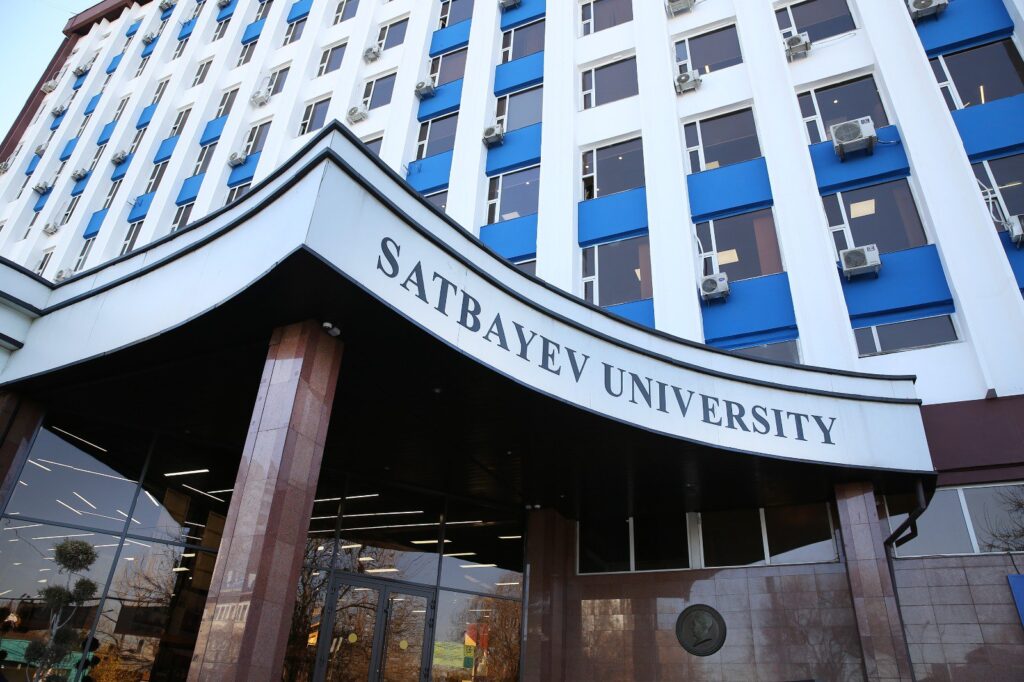
Researchers at Satbayev University in Almaty have unveiled an innovative technology that extracts high-value materials from sugar beet pulp, the primary byproduct of sugar production, accounting for up to 80% of all biomass. Under the guidance of Associate Professor Sana Kabdrakhmanova, postdoctoral researcher Faisal Kholiya and PhD student Meruert Imanbek employed advanced hydrothermal synthesis techniques to derive high-quality pectin suitable for use in the food and pharmaceutical industries, cellulose with a yield of approximately 35%, and photoluminescent carbon quantum dots ranging from 8 to 14 nanometres, all from sugar beet waste. The extracted materials have diverse applications, including product shelf-life extension technologies, drug delivery systems, modern diagnostic medicine, and various nanotechnology solutions. “Our project is a striking example of the transformation of agricultural waste into high-quality, premium materials,” said Kabdrakhmanova, who leads the project. The research was conducted at the International R&D Center for Advanced Functional Materials and Composites, part of the Department of Chemical Processes and Industrial Ecology at the Omirkhan Baikonurov Institute of Mining and Metallurgy at Satbayev University. The findings underscore the potential of agricultural waste processing as both a sustainable and economically viable approach. Particular attention has been given to the photoluminescent carbon quantum dots produced through the project. These nanoscale particles are used in medical diagnostics, biological sensors for cellular research, LED components in electronics, and nanodevices in photonics. As previously reported by The Times of Central Asia, Kazakh scientists are actively pursuing other innovative recycling technologies. One such project, led by the Kazakh Road Research Institute, involves developing methods to restore worn asphalt for reuse in road repair and construction.

Kazakhstan Plans to Boost Agricultural Exports to Serbia

Kazakhstan plans to expand agricultural exports to Serbia, as discussed at the fourth meeting of the Kazakh-Serbian Intergovernmental Commission (IGC) held in Almaty late last week. Co-chair of the IGC, Deputy Prime Minister and Minister of National Economy Serik Zhumangarin, said agriculture is one of the most promising areas of bilateral cooperation, along with healthcare, tourism, science, biotechnology, education, and culture. In the first half of 2025, trade in agricultural products between the two countries rose 1.5 times, reaching $4 million. Kazakhstan aims to increase supplies of grains and legumes, vegetable oils, fish, meat, and dairy products. Deputy Minister of Agriculture Yermek Kenzhehanuly noted that the European Commission has approved requirements for the export of Kazakh fish products to EU countries, with 20 enterprises now authorized to supply pike perch fillets and other fish. In February, Kazakhstan also received permission to export honey to the European Union, and four major producers are ready to begin shipments. Work is ongoing to open access to the EU market for aquaculture products and horse meat. Kazakhstan has proposed joint investment projects in the processing of livestock and crop products. Scientific cooperation was also identified as a promising area, including training specialists in breeding and seed production, conducting field trials of grain, oilseed, and vegetable crops across various regions, plant hybridization, and producing biopesticides. According to the Ministry of Agriculture, food production in Kazakhstan has grown 1.4 times over the past three years, from KZT 2.3 trillion ($4.2 billion) in 2021 to KZT 3.3 trillion ($6.1 billion) in 2024. In the first half of 2025, gross agricultural output totaled KZT 1.8 trillion ($3.3 billion), 3.7% higher than the same period last year. Food production rose by 10%, while beverage production increased by 5%. Exports of agricultural products grew 1.3 times, from $3.8 billion to $5.1 billion. Investments in fixed assets in agriculture increased 1.2 times to KZT 919 billion ($1.7 billion), while investments in food production rose from KZT 118.3 billion to KZT 180.3 billion (from $220 million to $333 million). Labor productivity in the sector reached KZT 5 million ($9,200) per employee, up from KZT 3.4 million ($6,300) in 2021. State support has led to a doubling of fertilizer use from 626,000 tons to 1.3 million tons, an increase in the renewal rate of agricultural machinery from 4.3% to 5.5%, a 1.38-fold rise in the yield of grain and legumes from 11.0 to 15.2 cwt/ha, a 1.82-fold increase in land cultivated with water-saving technologies to 470,100 hectares, a 10% rise in cattle numbers to 4.3 million head, and a 17.3% increase in small ruminants to 11.6 million head. As previously reported by The Times of Central Asia, in January, Minister of Agriculture Aidarbek Saparov met with Russian Agriculture Minister Oksana Lut in Moscow to discuss lifting restrictions on the import and transit of agricultural products and boosting Kazakh food exports to Russia.

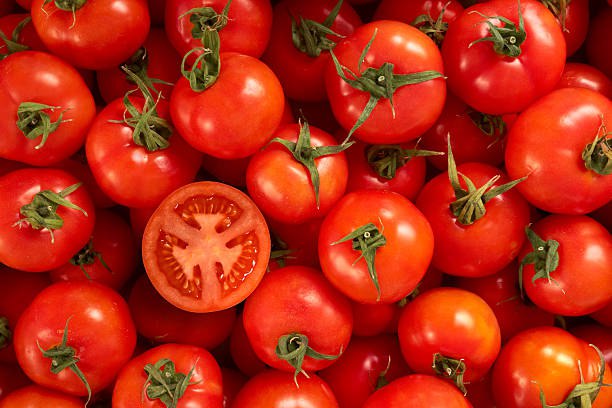
Italian Company Eyes Tomato Product Manufacturing in Kazakhstan

Italy’s Tramite Group is exploring opportunities to establish a tomato paste production facility in Kazakhstan, as part of broader efforts to boost agro-industrial cooperation between the two countries. On April 1, Kazakhstan’s Minister of Agriculture, Aidarbek Saparov, met with Gianantonio Tramet, founder and general manager of Tramite Group, to discuss tomato cultivation and processing in Kazakhstan, according to a statement from the Ministry of Agriculture. Tramet noted that his company is actively seeking partners to supply natural food products from Kazakhstan, citing the country's favorable climate for growing high-quality produce. Italy currently imports 180,000 tons of tomato paste annually, and Tramite Group is considering shifting part of this demand to be met through production in Kazakhstan and other Central Asian countries. Agro-Industrial Cluster in Shardara Tramite Group plans to collaborate with Kazakhstan’s Agriqa Farms LLP, which has launched a project to develop an export-oriented agro-industrial cluster in town of Shardara, in the central Turkestan region. The initiative will begin in May 2025 with the construction of a 22-hectare greenhouse complex. It will also include: A tomato paste processing plant with a planned capacity of 3,360 tons per day An alfalfa granulation facility A fruit and vegetable drying and freezing plant In 2026, the project will expand to install drip irrigation systems across 8,000 hectares of farmland. Saparov welcomed the initiative and reaffirmed Kazakhstan’s commitment to supporting large-scale agro-processing ventures. He assured Tramite Group of comprehensive government assistance for the joint Kazakh-Italian enterprise.