• KGS/USD = 0.01144 0%
  • KZT/USD = 0.00212 0%
  • TJS/USD = 0.10803 0%
  • UZS/USD = 0.00008 0%
  • TMT/USD = 0.28571 0%
  • KGS/USD = 0.01144 0%
  • KZT/USD = 0.00212 0%
  • TJS/USD = 0.10803 0%
  • UZS/USD = 0.00008 0%
  • TMT/USD = 0.28571 0%
  • KGS/USD = 0.01144 0%
  • KZT/USD = 0.00212 0%
  • TJS/USD = 0.10803 0%
  • UZS/USD = 0.00008 0%
  • TMT/USD = 0.28571 0%
  • KGS/USD = 0.01144 0%
  • KZT/USD = 0.00212 0%
  • TJS/USD = 0.10803 0%
  • UZS/USD = 0.00008 0%
  • TMT/USD = 0.28571 0%
  • KGS/USD = 0.01144 0%
  • KZT/USD = 0.00212 0%
  • TJS/USD = 0.10803 0%
  • UZS/USD = 0.00008 0%
  • TMT/USD = 0.28571 0%
  • KGS/USD = 0.01144 0%
  • KZT/USD = 0.00212 0%
  • TJS/USD = 0.10803 0%
  • UZS/USD = 0.00008 0%
  • TMT/USD = 0.28571 0%
  • KGS/USD = 0.01144 0%
  • KZT/USD = 0.00212 0%
  • TJS/USD = 0.10803 0%
  • UZS/USD = 0.00008 0%
  • TMT/USD = 0.28571 0%
  • KGS/USD = 0.01144 0%
  • KZT/USD = 0.00212 0%
  • TJS/USD = 0.10803 0%
  • UZS/USD = 0.00008 0%
  • TMT/USD = 0.28571 0%

Viewing results 1 - 6 of 50

Iran Conflict Drives Food Price Pressures Across Central Asia

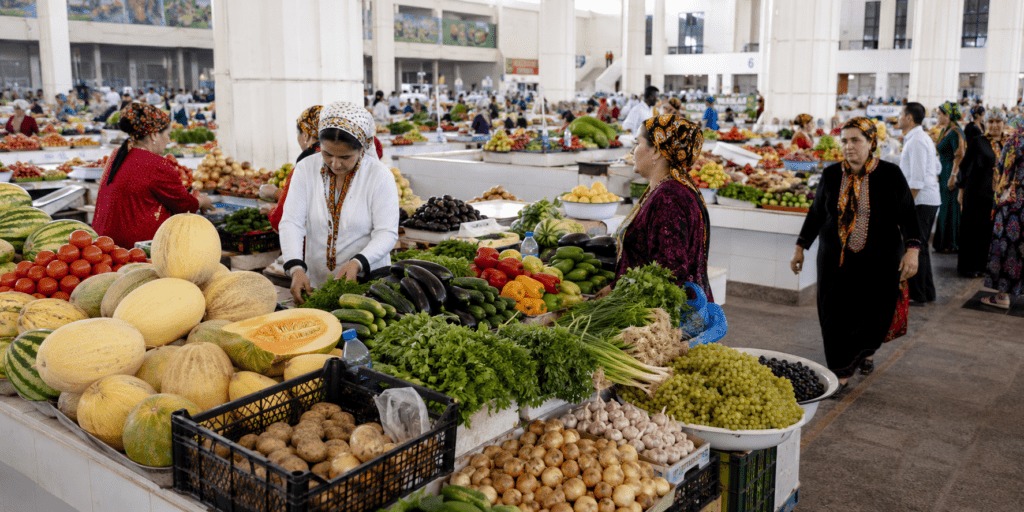
The war around Iran is beginning to push up food price risks in Central Asia as disruptions to shipping through the Strait of Hormuz raise fertilizer and fuel costs, while Tehran’s halt to some food exports adds pressure in regional markets. The impact is not manifesting as shortages, but as rising costs across the systems that produce, move, and sell food. The United Nations has warned that the crisis is disrupting one of the world’s most important trade corridors for energy and agricultural supplies. A large share of global fertilizer trade passes through the Strait of Hormuz, and reduced shipping traffic is tightening supply and pushing up prices. Higher fuel costs are adding a second layer of pressure on farmers and transport networks. Fertilizer and fuel are among agriculture’s highest costs. Even modest increases can compress margins quickly, forcing farmers to cut usage or pass costs on, with pressure moving through to retail prices. Central Asia is particularly exposed to this shift in costs. The region relies on imported fuel and fertilizers, and depends on long, multi-stage transport routes. When costs increase at any point in that chain, they accumulate before goods reach markets. The second layer of pressure comes from Iran itself. On March 3, Tehran imposed a ban on exports of food products as part of wartime economic measures. Reporting in Tajikistan indicates that the move could affect the availability and pricing of goods such as dairy, sugar, fruit, and spices, particularly in wholesale and lower-cost retail markets. Iran is not a dominant supplier, but plays a role in specific markets. Tajikistan is the clearest example. Tajikistan has also expanded its economic relationship with Iran in recent years, supported by cooperation in industry and transport. Iranian goods are widely present in retail supply chains, and trade between the two countries has grown steadily in recent years. That growth is part of a broader trend. Iran’s economic ties with Central Asia have expanded under new trade arrangements and bilateral initiatives. Kazakhstan and Iran have discussed increasing trade turnover to $3 billion, reflecting the rising use of Caspian routes and port infrastructure, which are now under threat. [caption id="attachment_46480" align="aligncenter" width="1600"] Aralsk Bazaar. Rising transport and fertilizer costs are beginning to push up food prices across the region. Image: Michael J. Bland[/caption] Transport adds a third layer of pressure. As risks rise across the Middle East, airlines and freight operators are avoiding large swathes of Iranian airspace and surrounding routes, forcing rerouting and raising costs across supply chains. European aviation safety authorities have issued conflict-zone bulletins warning of heightened risks in the region, and carriers have adjusted accordingly. Rerouting increases fuel use, extends journey times, and raises insurance costs. Those increases affect cargo as well as passengers, and over time, higher logistics costs feed into the price of imported goods, including food. On land, the same pattern is visible. As southern routes become less predictable, more freight is shifting toward the Trans-Caspian International Transport Route - the Middle Corridor -...

Kyrgyzstan Urges EAEU to Remove Import Duties on Key Goods

Kyrgyzstan has appealed to its partners in the Eurasian Economic Union (EAEU) to eliminate import duties on a range of socially significant goods, arguing that the measure would help ease the impact of global inflation and slow domestic price growth, according to an official government statement. The proposal was presented during a meeting of the Eurasian Economic Commission (EEC) held in Moscow on March 13. Kyrgyz officials stressed that the country’s economic conditions differ markedly from those of the bloc’s larger member states, making more flexible trade mechanisms necessary. The initiative covers goods considered critical for food security, including flour, vegetable oil, fruits and vegetables, as well as cocoa powder used in the confectionery industry. Authorities in Bishkek believe that removing import duties on these items would lower procurement costs and reduce the transmission of global price increases to the domestic market. “We are seeing rising inflation worldwide, including for the goods we import, particularly agricultural products. In effect, when we import goods at higher prices, we are also importing inflation. Eliminating duties will help reduce the cost of these products,” said Elimbek Kanybek uulu, head of the EAEU Coordination Department, at a press conference in Bishkek. The full list of goods eligible for preferential treatment, along with import volume thresholds, is expected to be published within a month after the EEC formally approves the decision. According to Kanybek uulu, Kyrgyzstan has previously sought similar temporary measures for meat imports. At that time, the suspension of duties contributed to a reduction of around 10% in the price of imported meat. Food security remains a major policy priority. President Sadyr Japarov has said that Kyrgyzstan is currently self-sufficient in six of the nine staple food items included in the national food basket. The government plans to gradually expand domestic production of the remaining products, including flour, vegetable oil, and certain types of fruit. Analysts say future food price dynamics in Kyrgyzstan will depend on both global commodity trends and decisions within the EAEU regarding trade preferences and tariff policy.

Spring Sowing Begins in Kyrgyzstan as Officials Stress Food Security

Spring sowing has begun in Kyrgyzstan, where agricultural crops are expected to be planted on a total of 1.25 million hectares in 2026, according to the Ministry of Water Resources, Agriculture, and Processing Industry. Of this area, about 818,000 hectares are irrigated land and 432,000 hectares are rainfed. As of March 12, sowing was underway in the southern regions of Osh, Jalal-Abad, and Batken, as well as in the Chui Valley. Fieldwork has not yet started in the colder regions of Talas, Issyk-Kul, and Naryn. Farmers have so far planted grain crops, including wheat and barley, along with potatoes and various vegetables. The ministry has recommended that farmers prioritize crops considered important for national food security. Turatbek Idrisov, head of the ministry’s Department of Plant Growing, Horticulture, and Cooperatives, said producers should focus on socially significant crops such as wheat, barley, potatoes, onions, and sugar beet. He noted that grain crops and sugar beet are included in the country’s list of strategic food reserves. According to ministry monitoring data, the expansion of livestock farming in recent years has led to increased cultivation of fodder crops, particularly barley and maize. Officials also noted that crops such as maize, raspberries, and strawberries have demonstrated relatively high profitability for farmers. The ministry is encouraging producers to adopt water-saving irrigation technologies, including drip and sprinkler systems. Farmers who implement such methods are eligible for state-supported concessional loans with reduced interest rates. Authorities say Kyrgyzstan is currently fully self-sufficient in six of nine socially significant food products, potatoes, milk, meat, vegetables, eggs, and sugar. However, the country remains partially dependent on imports of three key staples: bread products (including flour and grain), vegetable oil, and fruit.

Japarov Outlines Development Priorities at Fourth People’s Kurultai

Kyrgyzstan’s fourth People’s Kurultai, a national forum for direct dialogue between citizens and state leadership, was held in Bishkek on December 25-26. Addressing delegates, President Sadyr Japarov outlined the government's economic, social, and environmental priorities for the coming years. Sustained Economic Growth Japarov described the past three years as a period of strong economic performance, with average annual GDP growth of 9.8%. Real GDP grew by 10.2% in the first 11 months of 2025. GDP per capita in 2024 reached approximately $2,513. Unemployment dropped to 3.7%, while the poverty rate declined from 29.8% to 25.7% year-on-year. Small and medium-sized enterprises (SMEs) have emerged as the backbone of the economy, with their contribution to GDP rising from 42.6% to 51.7% during the first nine months of 2025. National Development Program Through 2030 Japarov presented the government’s National Development Program through 2030, which is centered on four key pillars: industrialization, transformation into a regional transport and logistics hub, agricultural and tourism development, and expansion of green energy. The industrialization strategy includes the creation of industrial and technology zones and the construction of new production facilities to double industrial output by 2030. Large-scale investments in railways, highways, logistics centers, and warehouses are expected to bolster Kyrgyzstan’s role as a regional transit corridor. Tourism is also a major focus. Japarov emphasized efforts to modernize the sector in line with international standards, citing the construction of new hotels, roads, airports, tourist routes, and recreational infrastructure. By 2030, the tourism sector is projected to contribute 7% to GDP. Agricultural Development and Food Security With nearly 58% of the population living in rural areas, agriculture remains a strategic priority. Japarov stated that Kyrgyzstan is currently self-sufficient in six of nine key food products, milk, potatoes, vegetables, meat, eggs, and sugar. Agricultural reform centers on the development of agro-industrial clusters that bring together farmers, processors, logistics providers, and financial institutions to create integrated value chains. The goal is to shift from raw-material exports toward higher-value-added production. Climate Change and Water Resources Japarov also warned of worsening climate-related challenges, particularly declining water resources. Over the past 70 years, Kyrgyzstan has lost around 16% of its glacier area, endangering river flows, irrigation systems, and hydropower production. Lake Issyk-Kul is of particular concern. Since the mid-19th century, the lake’s water level has dropped by nearly 14 meters. The number of rivers feeding into the lake has declined from more than 100 to approximately 30-35. The president cautioned that continued degradation could have serious environmental and socioeconomic consequences. Water scarcity, he noted, also threatens food security, with 95% of national water consumption tied to agriculture. He called for more efficient irrigation, glacier protection, and expanded reforestation efforts. From Social Spending to Development Focus Japarov’s remarks were echoed by Chairman of the Cabinet of Ministers Adylbek Kasymaliev, who addressed parliament a day earlier. Kasymaliev stated that the state has shifted from a “social economy” to a “development economy.” In 2025, 35% of government spending was allocated to the production sector, compared to 23%...

Kazakhstan to Host International Genetic Resources Bank

Kazakhstan will host an international genetic resources bank following unanimous approval from the 57 member states of the Organization of Islamic Cooperation (OIC). The initiative, spearheaded by the Islamic Organization for Food Security (IOFS), aims to preserve the biological diversity of agricultural crops and foster scientific collaboration among OIC countries. “One of the key initiatives we plan to implement in Kazakhstan is the creation of a Genetic Resources Bank, or an international genetic bank. Its goal is to preserve the biological diversity of agricultural crops,” said Berik Aryn, Director General of the IOFS, speaking at a roundtable in Astana marking OIC Food Security Day. According to Aryn, the government of Kazakhstan has already expressed its readiness to host the facility, and a project roadmap has been completed. The Qatar Fund for Development (QFFD) has pledged approximately $2 million to finance the first phase. “We expect to begin practical implementation of the project next year and complete the creation of the bank by 2029,” Aryn said. He cited the Svalbard Global Seed Vault in Norway as a comparable model but noted that the Kazakh bank would offer broader functionality. The project will eventually include a research center focused on crop breeding and the development of varieties resistant to climate change, drought, and other environmental stresses. “We want this gene bank to eventually become a full-fledged research center where scientists from OIC countries can work on creating new crop varieties that are resistant to climate change, drought, and other adverse factors, as well as on increasing yields,” Aryn added. The specific location is still under consideration, though the Almaty region is currently the most likely candidate due to its favorable climatic conditions. “Genetic material varies: some samples can be stored for decades, while others require regular updating and cultivation on site. In terms of climatic conditions, the Almaty region is the optimal region,” Aryn noted. In parallel with the gene bank initiative, IOFS is also advancing projects across Central Asia that promote the use of biochar to rehabilitate degraded soils. Biochar, a carbon-rich substance produced via pyrolysis of biomass, enhances soil fertility, improves water retention, and acts as a sorbent by absorbing harmful substances. “Biochar is a technology that is already widely used around the world, including in Arab and Asian countries. It is particularly relevant for Central Asia, as the region's soils are often salinated. Biochar is capable of absorbing salt and significantly improving soil structure, creating favorable conditions for agriculture for decades,” said IOFS Project Manager Bakytzhan Arystanbek. As previously reported by the Times of Central Asia, Kazakhstan launched its first agroclimatic testing site for carbon technologies, Kaz Agro Carbon, in early November.

Melon Pyramids and Empty Pantries: Tajik and Turkmen Feasts Amid Everyday Shortages

Pyramids of various kinds of melons, fruits laid across the ground to form intricate, traditional patterns, as well as an abundance of fruit, dried fruit, nuts, and bread overflowing from tables, and even fountains, surrounding the edible ground arrangement, and grapes hanging from poles. As an advertisement for national products, a background for international events, or a gift for an ally, Tajikistan is gaining fame for elaborate displays of fruit. It is an amazing sight, with fruits and nuts arranged in patterns that cover large areas of the pavilions and gardens where foreign guests are being entertained. However, as good as these lavish presentations look and taste, these cornucopias are being exhibited in some of Central Asia’s poorest countries, and, unsurprisingly, there has been some discontent and some scandals. For Sale On August 16-17, there was an exhibition of Tajikistan’s products and crafts in the Kazakh capital, Astana, with melon pyramids taking center stage in an exhibition that also featured “over a thousand tons of products: fresh fruits and vegetables, nuts, [and] dried fruits.“It was a return performance for the Tajik “masters” who arrange the exhibitions. Astana hosted a fair of Tajik products in August 2023 that drew a big crowd, some of whom were overly anxious to get their hands on the goods. Dozens of people started taking melons and grapes from the pyramids, breaking shelves and decorations in the process. [caption id="attachment_35359" align="aligncenter" width="1597"] Tajik fair in Astana, 2023; image: public domain[/caption] Impress the Guests One of the most memorable grand displays of fruit occurred when Tajikistan hosted the summit of leaders from the Commonwealth of Independent States (CIS) on September 27, 2018. On the eve of the summit, Tajik President Emomali Rahmon walked his guests through a garden flanked by enough food to feed a small town for a month. It was the first time such a spread had been laid out for guests at an international gathering, with Rahmon seeming to appreciate having an agricultural background when hosting a diplomatic event. In July 2019, Rahmon met with then-Kyrgyz President Sooronbai Jeenbekov in the northern Tajik town of Isfara. Conflicts along the Kyrgyz-Tajik border were becoming increasingly deadly, and the two presidents met to discuss ways to ease tensions and resolve the festering problems along the frontier. While the two presidents talked, Rahmon guided Jeenbekov through “6 pyramids… of watermelons and melons, as well as almost 20 types of national breads.“ [caption id="attachment_35360" align="aligncenter" width="960"] Sooronbay Jeenbekov and Emomali Rahmon in Isfara; image: press service of the President of the Republic of Tajikistan[/caption] When Dushanbe hosted the Shanghai Cooperation Organization (SCO) summit in September 2021, the feast on the eve of the summit was every bit the equal of the CIS summit in 2018 and featured “huge pyramids of fragrant melons and watermelons, carpets of fresh fruit, grapes cascading like a waterfall, and even fountains of melons.” Rahmon brought his fruit feast to St. Petersburg in October 2022 when CIS leaders gathered for an informal CIS summit...