• KZT/USD = 0.00221
  • TJS/USD = 0.10820
  • UZS/USD = 0.00008
  • TMT/USD = 0.29760
  • KZT/USD = 0.00221
  • TJS/USD = 0.10820
  • UZS/USD = 0.00008
  • TMT/USD = 0.29760
  • KZT/USD = 0.00221
  • TJS/USD = 0.10820
  • UZS/USD = 0.00008
  • TMT/USD = 0.29760
  • KZT/USD = 0.00221
  • TJS/USD = 0.10820
  • UZS/USD = 0.00008
  • TMT/USD = 0.29760
  • KZT/USD = 0.00221
  • TJS/USD = 0.10820
  • UZS/USD = 0.00008
  • TMT/USD = 0.29760
  • KZT/USD = 0.00221
  • TJS/USD = 0.10820
  • UZS/USD = 0.00008
  • TMT/USD = 0.29760
  • KZT/USD = 0.00221
  • TJS/USD = 0.10820
  • UZS/USD = 0.00008
  • TMT/USD = 0.29760
  • KZT/USD = 0.00221
  • TJS/USD = 0.10820
  • UZS/USD = 0.00008
  • TMT/USD = 0.29760
19 October 2026

Viewing results 1 - 6 of 36

Kazakhstan to Host International Genetic Resources Bank

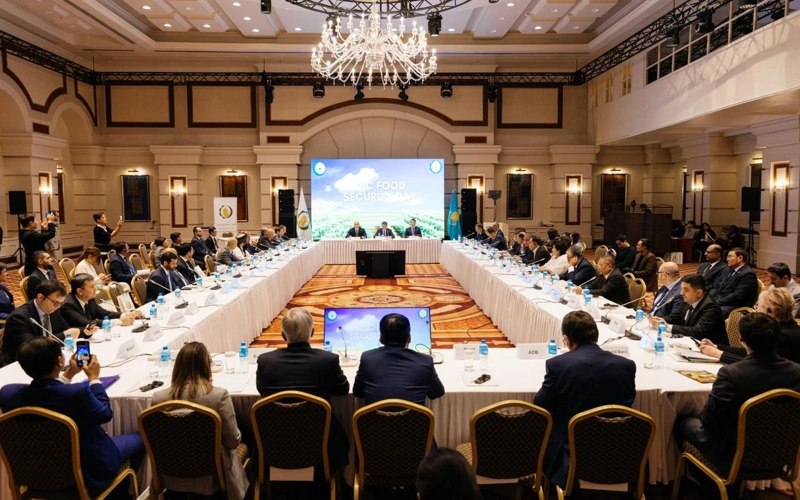
Kazakhstan will host an international genetic resources bank following unanimous approval from the 57 member states of the Organization of Islamic Cooperation (OIC). The initiative, spearheaded by the Islamic Organization for Food Security (IOFS), aims to preserve the biological diversity of agricultural crops and foster scientific collaboration among OIC countries. “One of the key initiatives we plan to implement in Kazakhstan is the creation of a Genetic Resources Bank, or an international genetic bank. Its goal is to preserve the biological diversity of agricultural crops,” said Berik Aryn, Director General of the IOFS, speaking at a roundtable in Astana marking OIC Food Security Day. According to Aryn, the government of Kazakhstan has already expressed its readiness to host the facility, and a project roadmap has been completed. The Qatar Fund for Development (QFFD) has pledged approximately $2 million to finance the first phase. “We expect to begin practical implementation of the project next year and complete the creation of the bank by 2029,” Aryn said. He cited the Svalbard Global Seed Vault in Norway as a comparable model but noted that the Kazakh bank would offer broader functionality. The project will eventually include a research center focused on crop breeding and the development of varieties resistant to climate change, drought, and other environmental stresses. “We want this gene bank to eventually become a full-fledged research center where scientists from OIC countries can work on creating new crop varieties that are resistant to climate change, drought, and other adverse factors, as well as on increasing yields,” Aryn added. The specific location is still under consideration, though the Almaty region is currently the most likely candidate due to its favorable climatic conditions. “Genetic material varies: some samples can be stored for decades, while others require regular updating and cultivation on site. In terms of climatic conditions, the Almaty region is the optimal region,” Aryn noted. In parallel with the gene bank initiative, IOFS is also advancing projects across Central Asia that promote the use of biochar to rehabilitate degraded soils. Biochar, a carbon-rich substance produced via pyrolysis of biomass, enhances soil fertility, improves water retention, and acts as a sorbent by absorbing harmful substances. “Biochar is a technology that is already widely used around the world, including in Arab and Asian countries. It is particularly relevant for Central Asia, as the region's soils are often salinated. Biochar is capable of absorbing salt and significantly improving soil structure, creating favorable conditions for agriculture for decades,” said IOFS Project Manager Bakytzhan Arystanbek. As previously reported by the Times of Central Asia, Kazakhstan launched its first agroclimatic testing site for carbon technologies, Kaz Agro Carbon, in early November.

Melon Pyramids and Empty Pantries: Tajik and Turkmen Feasts Amid Everyday Shortages

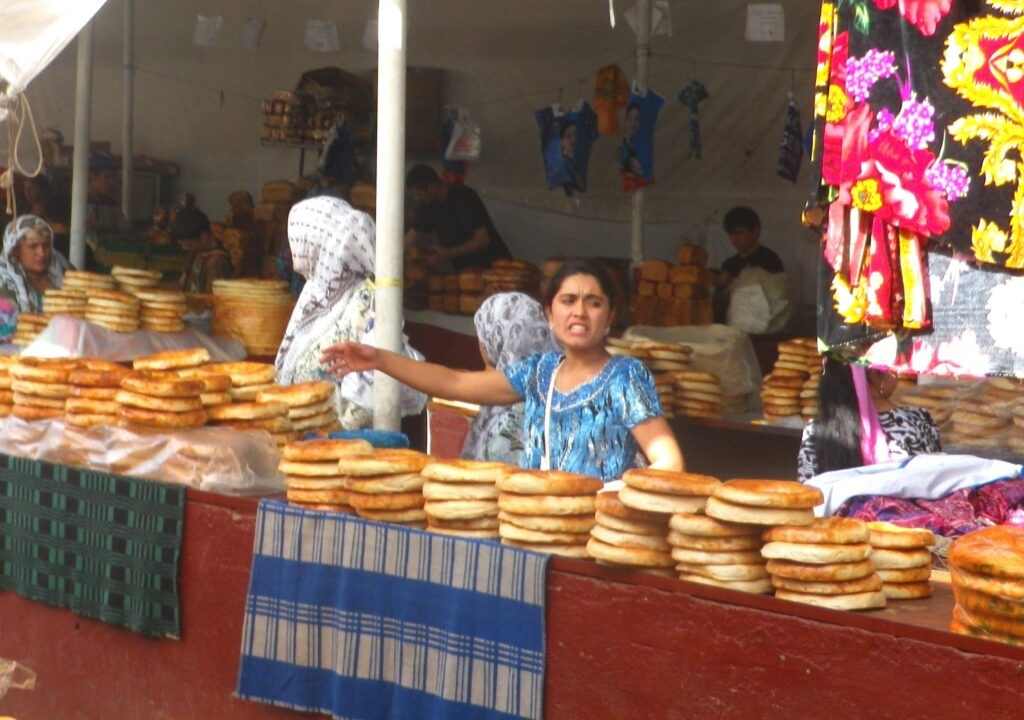
Pyramids of various kinds of melons, fruits laid across the ground to form intricate, traditional patterns, as well as an abundance of fruit, dried fruit, nuts, and bread overflowing from tables, and even fountains, surrounding the edible ground arrangement, and grapes hanging from poles. As an advertisement for national products, a background for international events, or a gift for an ally, Tajikistan is gaining fame for elaborate displays of fruit. It is an amazing sight, with fruits and nuts arranged in patterns that cover large areas of the pavilions and gardens where foreign guests are being entertained. However, as good as these lavish presentations look and taste, these cornucopias are being exhibited in some of Central Asia’s poorest countries, and, unsurprisingly, there has been some discontent and some scandals. For Sale On August 16-17, there was an exhibition of Tajikistan’s products and crafts in the Kazakh capital, Astana, with melon pyramids taking center stage in an exhibition that also featured “over a thousand tons of products: fresh fruits and vegetables, nuts, [and] dried fruits.“It was a return performance for the Tajik “masters” who arrange the exhibitions. Astana hosted a fair of Tajik products in August 2023 that drew a big crowd, some of whom were overly anxious to get their hands on the goods. Dozens of people started taking melons and grapes from the pyramids, breaking shelves and decorations in the process. [caption id="attachment_35359" align="aligncenter" width="1597"] Tajik fair in Astana, 2023; image: public domain[/caption] Impress the Guests One of the most memorable grand displays of fruit occurred when Tajikistan hosted the summit of leaders from the Commonwealth of Independent States (CIS) on September 27, 2018. On the eve of the summit, Tajik President Emomali Rahmon walked his guests through a garden flanked by enough food to feed a small town for a month. It was the first time such a spread had been laid out for guests at an international gathering, with Rahmon seeming to appreciate having an agricultural background when hosting a diplomatic event. In July 2019, Rahmon met with then-Kyrgyz President Sooronbai Jeenbekov in the northern Tajik town of Isfara. Conflicts along the Kyrgyz-Tajik border were becoming increasingly deadly, and the two presidents met to discuss ways to ease tensions and resolve the festering problems along the frontier. While the two presidents talked, Rahmon guided Jeenbekov through “6 pyramids… of watermelons and melons, as well as almost 20 types of national breads.“ [caption id="attachment_35360" align="aligncenter" width="960"] Sooronbay Jeenbekov and Emomali Rahmon in Isfara; image: press service of the President of the Republic of Tajikistan[/caption] When Dushanbe hosted the Shanghai Cooperation Organization (SCO) summit in September 2021, the feast on the eve of the summit was every bit the equal of the CIS summit in 2018 and featured “huge pyramids of fragrant melons and watermelons, carpets of fresh fruit, grapes cascading like a waterfall, and even fountains of melons.” Rahmon brought his fruit feast to St. Petersburg in October 2022 when CIS leaders gathered for an informal CIS summit...

Five-Year Plan for Food Independence in Tajikistan Faces Tough Questions

The Tajik government has approved a new Food Security Program for 2026-2030, aiming to drastically reduce reliance on food imports and enhance the sustainability of Tajikistan’s agricultural sector. Progress and Persistent Challenges The initiative is backed by a budget of 378.2 million somoni (approximately $41.6 million), with nearly 80% funded by international donors. The program’s architects express confidence that Tajikistan can fully meet domestic food needs by 2030, while also improving food quality and accessibility across all social strata. Indeed, progress has been made. In the early 2010s, Tajikistan met only 70% of its food requirements. By 2024, this figure had risen to 80%. Last year alone, agricultural output increased by 10%, with notable growth in cereals, melons, and fruit production. Still, significant structural problems persist: Wheat, sugar, and vegetable oil remain heavily import-dependent Domestic meat production covers only about half of national demand Irrigation infrastructure is outdated and inefficient Climate risks, including droughts, floods, and glacial melt, pose growing threats Additionally, food remains a heavy financial burden: more than 50% of household budgets are spent on food, leaving many families vulnerable to price fluctuations. Key Objectives and Measures The program outlines several goals: Increase agricultural output by at least 10% by 2028 Raise investment in the sector by 15% compared to 2025 Modernize irrigation systems and improve processing infrastructure Introduce digital tools and climate-resilient farming practices By 2030, the government pledges to reduce household food costs, improve livestock productivity, develop logistics infrastructure, and launch targeted support and educational campaigns for vulnerable groups. Budget Breakdown The $41.6 million budget is allocated as follows: $18.7 million - land reclamation and restoration $6 million - agricultural machinery and equipment $5.5 million - development of food and logistics infrastructure (warehousing, cold storage, processing, and transport) $2.5 million - organic crop protection $2.2 million - climate adaptation and sustainable agriculture $1.2 million - livestock development $770,000 - breeding and seed production $407,000 - agricultural digitization $550,000 - nutrition and public awareness programs Funding sources: 79% from international donors 14% from the state budget 7% from the private sector Major risks to implementation include climate-related disasters, deteriorating irrigation networks, technological lags, volatile global food prices, and geopolitical instability. To mitigate these, the government plans to establish a monitoring and early warning system alongside rapid crisis-response mechanisms. Reality or Ambition? The Ministry of Agriculture, along with regional authorities, will oversee implementation. Monitoring will adhere to national standards to ensure transparency. Experts agree the program is ambitious and its success hinges on the pace of agricultural modernization and efficient resource management. Tajikistan’s goal is clear, but success will depend on whether ambition is matched by sustained implementation and adaptability.

From Malnutrition to Water Scarcity: UN Identifies Key Threats to Food Security in Tajikistan

A new United Nations report titled Food Security and Nutrition Outlook for Europe and Central Asia 2024 has outlined the major challenges facing Tajikistan in nutrition, public health, and sustainable agriculture. The report identifies chronic malnutrition, rising childhood obesity, and vulnerability to climate change as the principal threats to the country’s food system. According to the findings, Tajikistan continues to face a dual burden: while undernutrition remains a persistent issue, obesity is on the rise, particularly among children. In 2022, nearly one in seven Tajik children under five (13.1%) suffered from stunting due to chronic malnutrition, while 9.9% were affected by wasting, well above the global target of 3%. At the same time, childhood obesity has seen a dramatic increase, with the proportion of overweight children rising from 4.6% in 2000 to 21% in 2022. Efforts to address these issues are further complicated by Tajikistan’s climate vulnerability and water management challenges. Agriculture, a cornerstone of the national economy and food supply, is particularly susceptible to shifting weather patterns. Although the government is implementing reforms, including the adoption of a new Water Code in 2020 and a watershed management system planned for completion by 2026, water scarcity remains a critical concern. Water user associations are playing a growing role in this transformation. The report also highlights gender disparities in the agricultural workforce. Women represent a significant share of those employed in agriculture, yet many work informally, without pay or legal protections. The UN urges action to ensure women have equitable access to land, resources, and decision-making processes. Beyond Tajikistan, the wider Europe and Central Asia region is not immune to food insecurity. As of 2023, 107 million people, 11.5% of the population, faced moderate or severe food insecurity, with 24.5 million in acute need. In Central Asia, 2.3 million people, around 3% of the region’s population, do not meet minimum daily energy requirements. The crisis is exacerbated by economic instability, climate change, and geopolitical tensions, including the war in Ukraine. While child malnutrition and anemia in women have declined across the region, adult obesity is increasing and now exceeds 20%. Meanwhile, 7.1% of children under five are overweight, and nearly 64.3 million people (6.9%) cannot afford a nutritious diet, an enduring challenge despite comparatively better regional indicators than global averages. The UN emphasizes the vital role of water in securing the region’s food future. Rising demand for meat and dairy products is straining already scarce water resources. Outdated infrastructure, pollution, data gaps, and insufficient regional cooperation are all significant barriers to water security. To address these challenges, the report calls for investment in water-saving technologies, reuse strategies, and reduced agricultural water footprints. Achieving long-term sustainability, the UN argues, requires an integrated approach, one that links nutrition, climate adaptation, gender equality, and modern water governance. The report was developed with the input of seven UN agencies, including FAO, UNICEF, UNDP, WHO, and WMO. International partners have expressed readiness to support Tajikistan in identifying and implementing durable, systemic solutions.

Climate Change – A Catalyst for Poverty and Environmental Degradation in Central Asia

Climate change encapsulates the gradual yet profound shifts in temperature and weather patterns over extended periods. While these changes can arise naturally from various phenomena — such as fluctuations in solar energy or significant volcanic eruptions — the advent of the industrial age in the 1800s marked a pivotal point where human influence became the predominant force driving climate change. This influence stems chiefly from burning fossil fuels, including coal, oil, and natural gas. The combustion of these fuels releases vast quantities of greenhouse gases into the atmosphere, creating a thick layer that envelops the Earth and traps heat from the sun, resulting in a steady rise in global temperatures. Carbon dioxide (CO2) and methane (CH4) are the most significant greenhouse gases contributing to this crisis. Carbon dioxide predominantly emerges from driving gasoline-powered vehicles and burning coal for heating. Additionally, the widespread practices of deforestation and land conversion continue to elevate carbon dioxide levels. Methane, meanwhile, is primarily produced through agricultural practices and the extraction processes associated with the oil and gas industries. The sectors that bear the heaviest burden in terms of greenhouse gas emissions include energy production, industrial processes, transportation, building operations, agriculture, and land use changes. The ramifications of this unfolding climate crisis are dire, especially for the world’s most vulnerable populations, particularly those residing in poverty. According to alarming insights from the World Bank, the 74 countries with the lowest income levels contribute a mere one-tenth of global greenhouse gas emissions. Yet, ironically, these nations are poised to endure the harshest repercussions of climate change. Over the past ten years, they have experienced an astounding surge in natural disasters, facing approximately eight times the frequency of such events compared to the 1980s. The effects on the lives of vulnerable populations are profound and far-reaching. Many face severe health challenges, including the prevalence of illnesses exacerbated by inadequate healthcare access. Erratic water supply creates a critical situation, often resulting in polluted drinking water that can lead to waterborne diseases. Additionally, the standard of education for these communities tends to be alarmingly poor, limiting future opportunities for young individuals. Many are forced to relocate as refugees, fleeing conflict and instability, which further complicates their lives. Moreover, those who find employment often encounter hazardous working conditions that put their safety and well-being at significant risk. Climate change presents profound security challenges for Central Asia, a region grappling with the dual threats of environmental shifts and social vulnerabilities. The interplay of climate change with existing fragility intensifies the risks to peace, stability, and security across the globe. This convergence will exacerbate human insecurity and escalate socio-economic and political instability. As a result of these changing climatic conditions, critical resources such as water, food, and energy face increasing threats. Countries already characterized by vulnerability — those grappling with conflict or instability — are among the most likely to experience detrimental effects. For instance, reports indicate severe drought conditions have led to a 30-40% decrease in agricultural production in some Central Asian...

High Food Costs and Growing Waistlines: Kazakhstan’s Struggle with Rising Obesity

More than half of Kazakhstan’s population is overweight or obese, even as food prices in the country continue to climb. Deputy Prime Minister Serik Jumangarin recently highlighted that nearly 50% of consumer spending is allocated to food and beverages. In response, members of the Senate and the upper house of parliament are advocating for stricter regulations on food quality. Aniko Nemeth, an expert on food safety and nutrition at the Food and Agriculture Organization’s (FAO) regional office for Europe and Central Asia, pointed out the country’s obesity crisis during a Senate hearing on food security. Drawing from data from the Kazakh Academy of Nutrition, she noted that 55.5% of women and 49.2% of men in Kazakhstan are overweight or obese. At the same time, 5.6% of the population suffers from malnutrition. The paradox highlights a larger issue: the rising cost of a healthy diet. According to Nemeth, the price has increased by at least 8% over the last eight years. Urban residents are more affected than rural residents who can supplement their diets with homegrown produce. Deputy Prime Minister Jumangarin acknowledged that food prices are a major burden for the population. He outlined measures to address the issue, including constructing 92 modern fruit and vegetable storage facilities by the end of next year. With a capacity of 700,000 tons, these facilities aim to stabilize seasonal prices. Additionally, subsidies for seeds will be increased to support farmers, focusing on reducing dependency on foreign hybrids. Jumangarin also addressed the dependence on imported meat, which drives up costs. He announced plans for a commercial livestock farming project in the Turkestan region, modeled on Australia’s practices. Expected to launch in 2025, the initiative aims to lower domestic meat prices and increase sausage production. Furthermore, Kazakhstan is set to become self-sufficient in poultry production and may even begin exporting chicken meat within a few years. Kazakhstan’s cheese production currently meets only 57% of domestic demand. New production projects are underway to bridge the gap, including partnerships with global leaders like French-owned Lactalis, the world's largest dairy products group. Jumangarin revealed plans for a facility in the Akmola region and another in Kostanay to produce 2,000 tons of cheese annually. These efforts coincide with an anticipated surplus in milk production from newly established dairy farms. Despite these efforts to make food more affordable, senators believe legislative action is needed to address the obesity epidemic. Arman Utegulov, representing the agricultural ministry of Kazakhstan, proposed a law to regulate genetically modified organisms (GMOs) and foods treated with pesticides and antibiotics. He also called for stricter oversight of laboratories and trade centers to ensure food quality. “Excessive hormones in animal feed lead to chronic diseases,” Karimovich warned. He suggested amendments to existing legislation and even the potential return of veterinary laboratories to state control to tackle these issues. Kazakhstan faces a dual challenge: ensuring food affordability and combating rising obesity rates. While government initiatives aim to support domestic agriculture and stabilize food prices, balancing quality and cost remains critical....