• KZT/USD = 0.00219
  • TJS/USD = 0.10810
  • UZS/USD = 0.00009
  • TMT/USD = 0.29850
  • KZT/USD = 0.00219
  • TJS/USD = 0.10810
  • UZS/USD = 0.00009
  • TMT/USD = 0.29850
  • KZT/USD = 0.00219
  • TJS/USD = 0.10810
  • UZS/USD = 0.00009
  • TMT/USD = 0.29850
  • KZT/USD = 0.00219
  • TJS/USD = 0.10810
  • UZS/USD = 0.00009
  • TMT/USD = 0.29850
  • KZT/USD = 0.00219
  • TJS/USD = 0.10810
  • UZS/USD = 0.00009
  • TMT/USD = 0.29850
  • KZT/USD = 0.00219
  • TJS/USD = 0.10810
  • UZS/USD = 0.00009
  • TMT/USD = 0.29850
  • KZT/USD = 0.00219
  • TJS/USD = 0.10810
  • UZS/USD = 0.00009
  • TMT/USD = 0.29850
  • KZT/USD = 0.00219
  • TJS/USD = 0.10810
  • UZS/USD = 0.00009
  • TMT/USD = 0.29850
05 September 2026

Viewing results 1 - 6 of 33

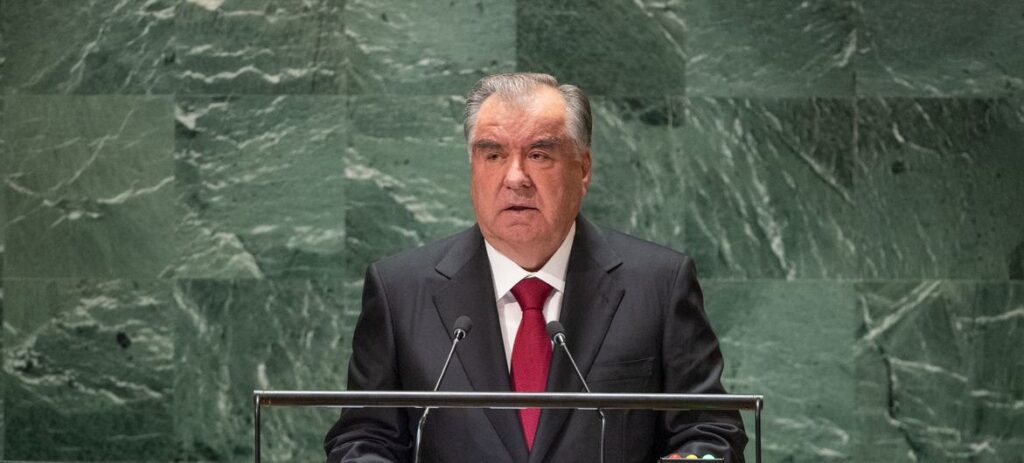
Tajikistan’s Rahmon: No Military Solution to Palestinian Conflict

The President of Tajikistan, Emomali Rahmon, has said that the current situation in the Middle East proves that there is no military solution to the Palestinian conflict. Speaking at the 79th session of the UN General Assembly in New York, Rahmon said that the Palestinian crisis is a deep concern among Tajikistan's people. “Tajikistan believes that the final and real solution of this issue is possible only by fulfilling the decisions of the United Nations on the creation of an independent Palestinian state based on the borders of 1967,” the Tajik leader said. He hopes the parties will stop fighting, work on peace talks, and take adequate measures to restore stability in Palestine. He added that Dushanbe supports global stability and socio-economic development in Afghanistan. “For this purpose, Tajikistan is always ready to contribute to restoring and developing various aspects of a peaceful life in Afghanistan,” Rahmon said. Rahmon called on the international community to help the “long-suffering people of Afghanistan, including those affected by natural disasters,” to prevent a humanitarian crisis. The Times of Central Asia has reported that Kyrgyz President Sadyr Japarov addressed the 79th session of the UN General Assembly and called on the world community to reduce weapons and international tension.

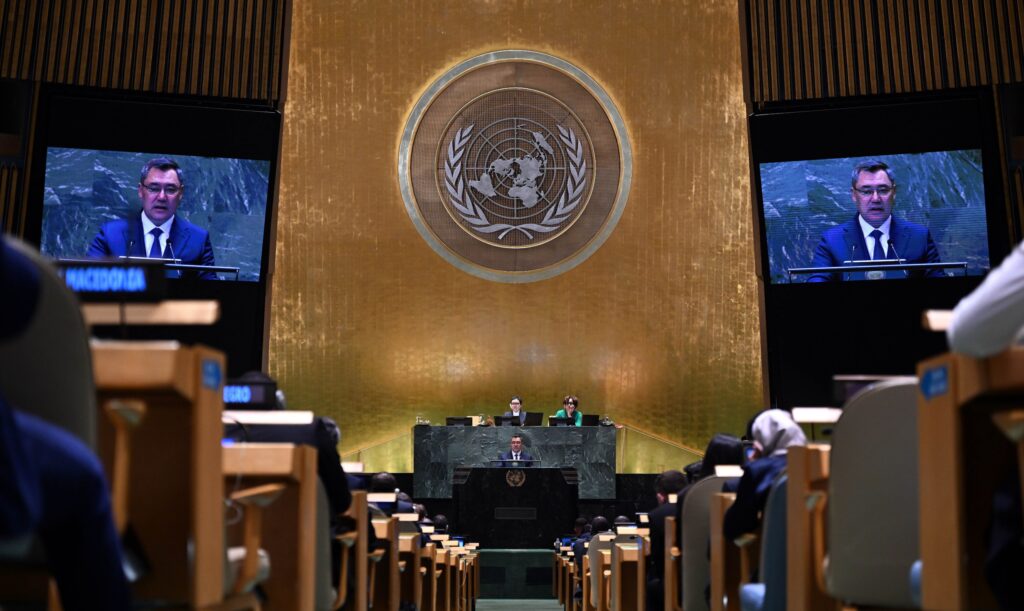
Kyrgyzstan Presents its Candidacy for UN Security Council

Speaking at the 79th session of the UN General Assembly in New York, Kyrgyz President Sadyr Japarov called on the global community to reduce arms spending and international tensions. During the general debate, Japarov nominated Kyrgyzstan's candidacy for the Security Council, saying the time has come to address historical injustices. “If elected, Kyrgyzstan will work to improve the efficiency and transparency of the Security Council and to expand it with balanced regional representation. It is time to eliminate the historical injustice of 60 member states, including Kyrgyzstan, who have never been elected to the Security Council, and to correct the under-representation of African countries on the Council,” Japarov said. The Kyrgyz leader said the world is becoming increasingly unpredictable and complex. He urged all states to continue to support the UN in its core mission of ensuring peace and preventing modern risks and threats in this “turbulent period.” “Unfortunately, this is happening in a world where many nations and peoples still lack access to basic clean water, healthcare, and education. We need to ensure that the money that goes to wars, destruction, and death goes to creating or solving global challenges for all,” Japarov said. The council has 15 members, including five permanent members. The next elections to the Council will be held in June 2026.

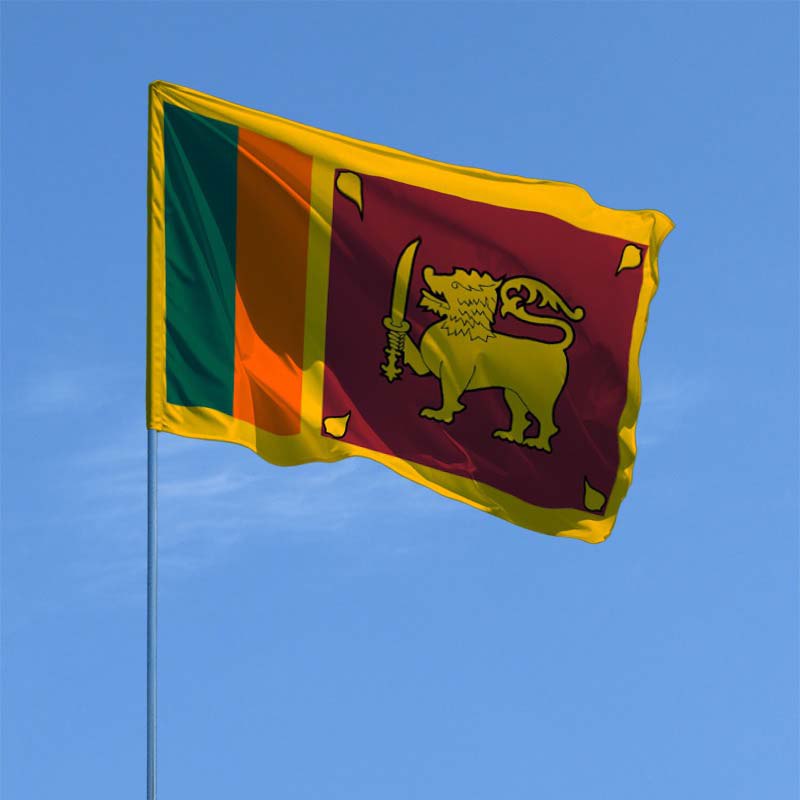
Sri Lanka Explores Deepening Ties with Central Asia

The Diplomat writes that on August 21, the Ministry of Foreign Affairs in Sri Lanka and The Geopolitical Cartographer, a Colombo-based think tank, organized a forum on Central Asia. Colombo has been eyeing Central Asia for quite some time and between 2011 and 2021, sent delegations to Uzbekistan and Kazakhstan. Apart from helping strengthen diplomatic ties, little else followed. The recent consultations mark a new phase in Sri Lanka’s relations with the region. Amid the war in Ukraine and rising tensions in the Middle East and Eurasia, both Sri Lanka and Central Asia are adjusting their foreign policies, and all five Central Asian states are balancing their positions, avoiding outright support for Russia while trying not to upset Moscow. “Given the many parallels in the foreign policies of Central Asia and South Asia, particularly India, does Sri Lanka’s Central Asia gambit make sense? Sri Lanka and Central Asia - seem to be placed in a positive conjuncture, a crossroads in their histories, that has made a strategic alliance both feasible and plausible,” reported Uditha Devapriya, author of the article. At the August meeting, Sri Lankan Foreign Ministry official Sashikala Premawardhane drew attention to critical issues in relations with Central Asia, particularly trade. Sri Lanka’s trade with the region is modest. Between 2011 and 2020, exports to Central Asia only twice exceeded $20 million and surpassed $10 million with a single country just once, in 2014 with Uzbekistan . In contrast, Sri Lanka imported $21 million of goods from Uzbekistan in 2015 alone. P. K. Balachandran, an Indian foreign policy analyst based in Colombo, contends that Sri Lanka needs to stabilize its relations with neighboring South Asian countries, particularly India, before it can consider Central Asia. Rathindra Kuruwita, a Sri Lankan foreign policy commentator and a regular contributor to The Diplomat, voiced his agreement, stating, “India is engaging more constructively with the [Central Asia] region. Whether Sri Lanka can match Delhi’s clout and influence is a big question and at best, highly debatable.” So, how can this island strengthen its relations with the region? Bilateral trade and diplomatic ties are important, but should be complemented by other strategies. One potential avenue could be sport. Central Asia and Sri Lanka share a platform for volleyball, Sri Lanka’s national sport and February 2022, Sri Lanka hosted the Central Asian Volleyball Association. While cultural exchanges can’t replace economic ties, sports like volleyball and Elle (similar to baseball) attract young, open-minded people and according to Pasindu Nimsara Thennakoon, a school volleyball player from Ratnapura, offer a cost-effective way to connect with other regions. Another obvious, if challenging, route to strengthening ties is through Central Asia’s outreach to South Asia: India. Multilateral platforms like the SCO also offer opportunities, albeit dominated by China, Russia, and India, but Sri Lanka’s relationship with India, which has had its share of controversies, entered a new phase after the 2022 crisis. Central Asia is considering energy connections with India. Still, given the backlash, such as the lawsuit against Adani Group’s...