• KGS/USD = 0.01144 0%
  • KZT/USD = 0.00204 0%
  • TJS/USD = 0.10782 0%
  • UZS/USD = 0.00008 0%
  • TMT/USD = 0.28490 0%
  • KGS/USD = 0.01144 0%
  • KZT/USD = 0.00204 0%
  • TJS/USD = 0.10782 0%
  • UZS/USD = 0.00008 0%
  • TMT/USD = 0.28490 0%
  • KGS/USD = 0.01144 0%
  • KZT/USD = 0.00204 0%
  • TJS/USD = 0.10782 0%
  • UZS/USD = 0.00008 0%
  • TMT/USD = 0.28490 0%
  • KGS/USD = 0.01144 0%
  • KZT/USD = 0.00204 0%
  • TJS/USD = 0.10782 0%
  • UZS/USD = 0.00008 0%
  • TMT/USD = 0.28490 0%
  • KGS/USD = 0.01144 0%
  • KZT/USD = 0.00204 0%
  • TJS/USD = 0.10782 0%
  • UZS/USD = 0.00008 0%
  • TMT/USD = 0.28490 0%
  • KGS/USD = 0.01144 0%
  • KZT/USD = 0.00204 0%
  • TJS/USD = 0.10782 0%
  • UZS/USD = 0.00008 0%
  • TMT/USD = 0.28490 0%
  • KGS/USD = 0.01144 0%
  • KZT/USD = 0.00204 0%
  • TJS/USD = 0.10782 0%
  • UZS/USD = 0.00008 0%
  • TMT/USD = 0.28490 0%
  • KGS/USD = 0.01144 0%
  • KZT/USD = 0.00204 0%
  • TJS/USD = 0.10782 0%
  • UZS/USD = 0.00008 0%
  • TMT/USD = 0.28490 0%

Viewing results 1 - 6 of 10

Baku-Tbilisi-Kars Railway Boosts Kazakhstan’s Middle Corridor Role

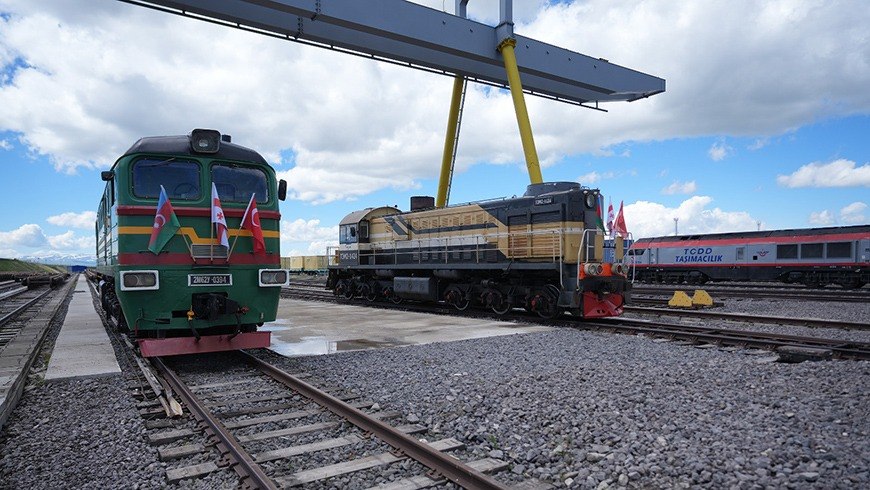
The Baku-Tbilisi-Kars railway entered full-scale operation on June 2, a development expected to increase freight transport along the Trans-Caspian International Transport Route and support Kazakhstan’s role as a key transit hub between China and Europe. The railway is a joint strategic project of Azerbaijan, Georgia, and Turkey and serves as one of the main overland links connecting Central Asia with European markets through the South Caucasus. The 827-kilometer line has been operating at limited capacity since 2017. Full commercial operation became possible following the completion of rehabilitation and construction work on the Marabda-Kartsakhi section in Georgia. According to Georgia’s Ministry of Economy and Sustainable Development, the project included the construction and modernization of bridges, railway stations, overpasses, traction substations, a cross-border rail tunnel linking Georgia and Turkey, and upgrades to the Akhalkalaki International Railway Station, one of the corridor’s key logistics hubs. The completion of the project is expected to increase the railway’s annual cargo-handling capacity to 5 million metric tons, allowing it to accommodate growing freight volumes moving between Asia and Europe. “The full-scale operation of the Baku-Tbilisi-Kars railway is an important event not only for Georgia, Azerbaijan, and Turkey, but for the entire region and Central Asia,” Georgia’s Minister of Economy and Sustainable Development Mariam Kvrivishvili said during the inauguration ceremony. She described the railway as a critical transport link connecting Europe, Central Asia, and China. According to Kvrivishvili, container traffic through Georgia involving China and Kazakhstan increased by 33% in 2025, while the number of containers transported along the Baku-Tbilisi-Kars route was nearly six times higher than in the previous year. Kazakhstan was represented at the ceremony by Deputy Transport Minister Zhanibek Taizhanov, showing the strategic importance Astana places on the corridor. Authorities in Kazakhstan view the full launch of the Baku-Tbilisi-Kars railway as a significant step in developing the country’s transit potential and improving logistics links between China, Central Asia, the Caucasus, and Europe. The railway forms a key component of the Middle Corridor, which has gained increasing attention in recent years as governments and logistics companies seek alternatives to traditional Eurasian trade routes.

Kazakhstan and Russia Digitalize Rail Freight Transportation

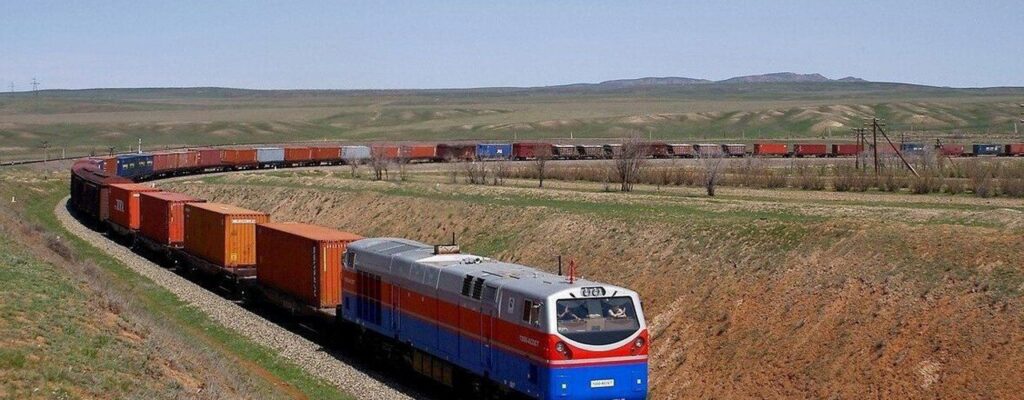
Kazakhstan’s national railway operator, Kazakhstan Temir Zholy (KTZ), and Russian Railways have signed a joint action plan to develop the digitalization of bilateral rail freight transportation. The document was signed on May 28 during Russian President Vladimir Putin’s state visit to Kazakhstan. According to KTZ, the plan aims to create a unified digital space between the railways of Kazakhstan and Russia. The company said the move would improve the efficiency of transportation processes, speed up cargo handling, and introduce modern digital solutions on international routes. Implementation of the plan is expected to support seamless transit, remove digital barriers, expand electronic document exchange, and develop paperless technologies in freight transportation. The parties also agreed to gradually increase the number of trains passing through nine interstate railway crossings on the Kazakhstan-Russia border. KTZ described the signing as an important step in developing transport and logistics cooperation between Kazakhstan and Russia, saying it would also strengthen Kazakhstan’s role as a key economic bridge between Russia and the countries of Central Asia. According to KTZ, rail freight between Kazakhstan and Russia totaled 92.1 million tons in 2025, up 3.5% from 2024. The growth was driven primarily by transit operations. Russian cargo exports through Kazakhstan increased by 16.1% to 17.3 million tons, while cargo exports from Kazakhstan transiting through Russia rose by 20.4% to 21.5 million tons. The growth trend has continued this year. In the first four months of 2026, exports from Kazakhstan, including coal, ferrous metals, and fertilizers, transiting by rail through Russia increased by 70,000 tons to 7 million tons. Russian cargo transported to and through Kazakhstan, including oil products, ferrous metals, grain and food products, exceeded 12 million tons, an increase of about 20%.

Kyrgyzstan to Temporarily Open Alternative North-South Highway from June to November

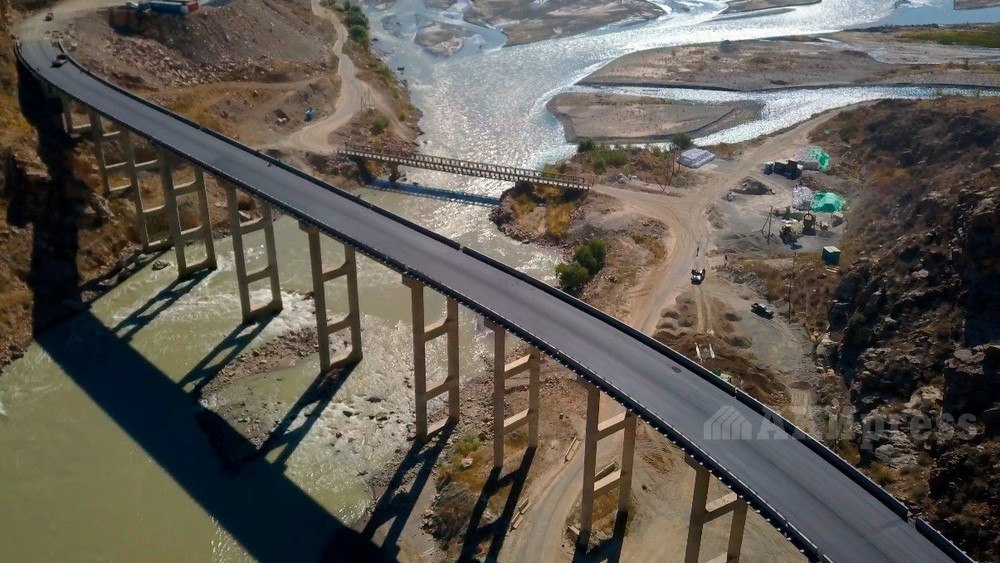
Kyrgyzstan’s alternative North-South highway will be open to traffic from June to November 2026, the Ministry of Transport and Communications has announced. Preparatory work for the seasonal opening is currently underway, including the implementation of additional safety measures. The long-anticipated 433-kilometer highway is a strategic transport corridor linking Balykchy in the Issyk-Kul Region with Jalal-Abad in southern Kyrgyzstan. Approximately 200 kilometers of the route pass through areas where no roads previously existed. Key engineering achievements along the route include Kyrgyzstan’s longest tunnel, located at the Kok-Art mountain pass, and two major overpass bridges. Once operational, the highway is expected to reduce travel time between Jalal-Abad and Balykchy from 13 hours to just six. Currently, the only route connecting Kyrgyzstan’s northern and southern regions is the Bishkek-Osh highway. The new North-South corridor is expected to improve both passenger and freight transportation between the regions, particularly given the absence of a direct railway connection. Construction of the North-South highway began in 2014, but the opening has been repeatedly postponed. The highway is expected to become fully operational year-round in 2028, according to Minister of Transport and Communications Talantbek Soltobaev. He said that in 2026 the highway would only operate during the summer season. “Until we resolve safety issues, we will be closing the highway for the winter,” the minister said, referring to the need to eliminate risks associated with rockfalls, avalanches and other natural hazards along certain sections of the road.

Kyrgyzstan Tests Alternative Transport Route to Russia That Bypasses Kazakhstan

Kyrgyzstan and Russia are advancing plans for an alternative transport route that would bypass Kazakhstan. The proposed Southern Transport Corridor would connect the Russian port of Astrakhan across the Caspian Sea to the Turkmenbashi port in Turkmenistan and then continue overland through Turkmenistan and Uzbekistan to Kyrgyzstan. The first test cargo shipments along this corridor have already been completed, according to Russian media reports citing Kyrgyzstan’s First Deputy Prime Minister Daniyar Amangeldiyev. Amangeldiyev said Kyrgyzstan views the development of this southern route via the Caspian Sea as a promising alternative for trade between the two countries. “We’re working in this direction. We have a strategic partnership in this area and a shared vision. We are currently in negotiations,” he told Russia’s TASS news agency on April 3 on the sidelines of the CIS International Economic Forum in Moscow. Discussions on establishing the new transport corridor date back to October 2024, during the visit of then–prime minister of Kyrgyzstan Akylbek Japarov to Moscow. For Kyrgyzstan, the Southern Transport Corridor offers a way to reduce dependence on transit through Kazakhstan. At present, most cargo traffic between Russia and Kyrgyzstan passes through the territory of Kazakhstan. Trucks from Kyrgyzstan often face delays of several days at the border, creating significant obstacles for cargo transport, particularly for perishable agricultural goods. The new corridor is expected to help alleviate these bottlenecks and provide an alternative route linking Kyrgyzstan with the European part of Russia. Kazakhstan would continue to serve as the primary transit route for trade with Russia’s Siberian, Ural, and Far Eastern regions.

Kazakhstan and Uzbekistan Boost Rail Freight to 32.3 Million Tons

Kazakhstan and Uzbekistan have agreed on new measures to expand rail freight capacity as Astana works toward increasing overall transit volumes to 55 million tons. According to Kazakhstan’s Ministry of Transport, the agreement was reached during a meeting between the transport ministers of the two countries, where they discussed further cooperation in the railway sector. The talks were held as part of Kazakhstan’s broader strategy to strengthen its role as a key transit hub in Central Asia. Both sides emphasized the strategic importance of rail connections between Kazakhstan and Uzbekistan, describing them as central to trade growth, international transit flows, and regional transport integration. Officials also pointed to the strong potential for increasing freight volumes and improving the efficiency of logistics corridors linking the two economies. By the end of 2025, rail freight transportation between the two countries reached 32.3 million tons, representing a 16% increase compared to 2024, the ministry said. To maintain steady growth and achieve agreed capacity targets, the parties adopted a joint action plan focused on infrastructure development at key border crossings, including Saryagash, Oasis, and Syrdarya. The plan also provides for the completion of major railway projects, including the Darbaza-Maktaaral section. Currently, up to 36 pairs of trains pass daily through the Saryagash crossing, with plans to increase that figure to 40. At the Oasis junction, traffic is expected to grow from two to 10 train pairs per day. Through Syrdarya, volumes are projected to reach 10 train pairs daily following the launch of the Darbaza-Maktaaral line. During the meeting, the ministers also reviewed the synchronization of infrastructure upgrades and maintenance work, improvements to border control procedures, and measures to optimize operational coordination in order to raise overall transport efficiency. Last month, Kazakhstan’s national railway company, Kazakhstan Temir Zholy, announced that its Jibek Joly, or Silk Road, tourist train route would be extended to Dushanbe for the first time, linking cities in Kazakhstan and Uzbekistan with Tajikistan’s capital. The inaugural journey on the expanded route is scheduled to depart from Almaty on March 20, 2026, coinciding with Nauryz celebrations across the region.

Kyrgyzstan Launches e-Permit System for Freight Transport to China and Turkic States

Kyrgyzstan has launched a new digital system for international freight transport, replacing paper permits with an electronic platform for cross-border trucking to China and several Turkic states. The Ministry of Transport and Communications introduced the e-Permit system in January 2026, allowing domestic carriers to obtain permits online for shipments to China, Uzbekistan, Azerbaijan, and Turkey. Previously, Kyrgyzstan and China operated under a fixed annual quota of paper permits exchanged on a parity basis; 130,000 permits were issued in 2025 alone. The digital platform eliminates in-person applications, significantly reducing queues and administrative burden. According to the ministry, the new system has cut processing times from up to 24 hours to just 10 minutes. Officials say it enhances transparency, improves administrative efficiency, and helps reduce the risk of corruption. Regional Logistics Strategy The launch of e-Permit is part of Kyrgyzstan’s broader effort to position itself as a regional logistics hub. Authorities view streamlined cross-border transport procedures as essential to boosting trade, especially as the country expands its economic ties with neighboring and Turkic states. Integration with TRACECA The e-Permit rollout follows Kyrgyzstan’s December 2025 accession to the multilateral permit system of the Transport Corridor Europe-Caucasus-Asia (TRACECA). Membership in TRACECA allows Kyrgyz carriers to conduct bilateral and transit shipments using a single multilateral permit across participating countries, including Armenia, Georgia, Moldova, Romania, Turkey, and Ukraine. Officials say the integration will lower transport costs, reduce delivery times, and facilitate broader access for Kyrgyz exports to European, Turkish, and Black Sea markets.