• KGS/USD = 0.01143 0%
  • KZT/USD = 0.00216 0%
  • TJS/USD = 0.10633 -0.28%
  • UZS/USD = 0.00008 0%
  • TMT/USD = 0.28571 0%
  • KGS/USD = 0.01143 0%
  • KZT/USD = 0.00216 0%
  • TJS/USD = 0.10633 -0.28%
  • UZS/USD = 0.00008 0%
  • TMT/USD = 0.28571 0%
  • KGS/USD = 0.01143 0%
  • KZT/USD = 0.00216 0%
  • TJS/USD = 0.10633 -0.28%
  • UZS/USD = 0.00008 0%
  • TMT/USD = 0.28571 0%
  • KGS/USD = 0.01143 0%
  • KZT/USD = 0.00216 0%
  • TJS/USD = 0.10633 -0.28%
  • UZS/USD = 0.00008 0%
  • TMT/USD = 0.28571 0%
  • KGS/USD = 0.01143 0%
  • KZT/USD = 0.00216 0%
  • TJS/USD = 0.10633 -0.28%
  • UZS/USD = 0.00008 0%
  • TMT/USD = 0.28571 0%
  • KGS/USD = 0.01143 0%
  • KZT/USD = 0.00216 0%
  • TJS/USD = 0.10633 -0.28%
  • UZS/USD = 0.00008 0%
  • TMT/USD = 0.28571 0%
  • KGS/USD = 0.01143 0%
  • KZT/USD = 0.00216 0%
  • TJS/USD = 0.10633 -0.28%
  • UZS/USD = 0.00008 0%
  • TMT/USD = 0.28571 0%
  • KGS/USD = 0.01143 0%
  • KZT/USD = 0.00216 0%
  • TJS/USD = 0.10633 -0.28%
  • UZS/USD = 0.00008 0%
  • TMT/USD = 0.28571 0%

Viewing results 1 - 6 of 13

Turkmenistan Fuel Duties Force Truck Drivers to Dump Diesel

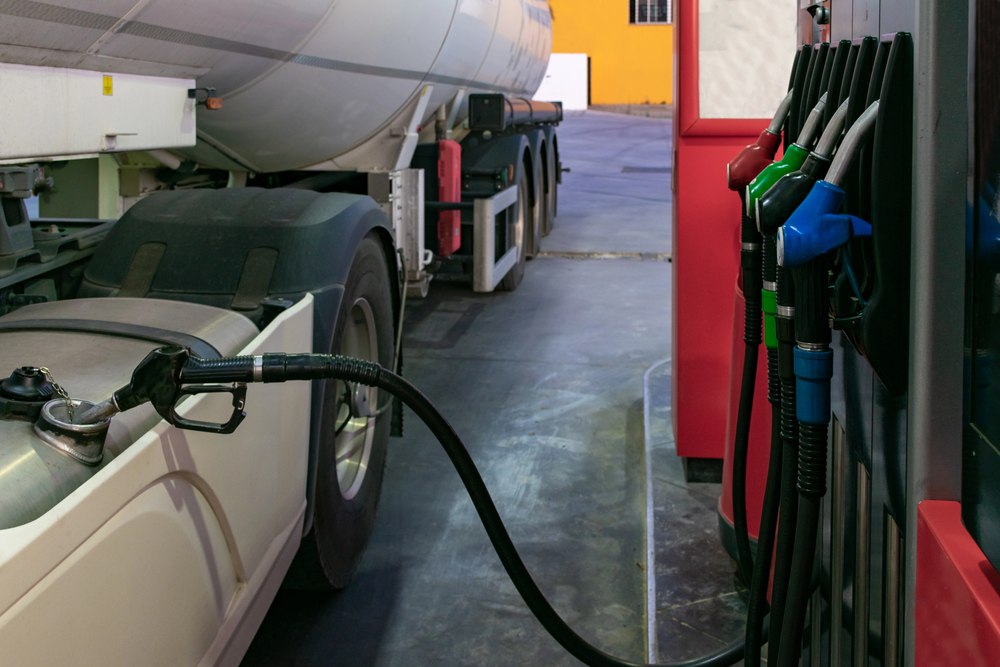
Since early April, Turkmenistan has imposed restrictions limiting the amount of fuel in the tanks of trucks leaving the country to no more than 300 liters. Any excess fuel may be retained only upon payment of a duty of $5.72 per liter, about 20 times higher than the official domestic price. Faced with these costs, many drivers have opted to dispose of surplus diesel instead. On April 5, turkmen.news posted a video on its Telegram channel showing foreign truck drivers dumping large quantities of diesel directly onto the ground. According to the outlet, the practice is a response to the country’s fuel regulations. Foreign truck drivers are required to pay the duty in U.S. dollars at the official exchange rate, rather than in the local currency. As a result, each additional liter effectively costs about $5.70. By comparison, diesel prices in Hong Kong, often cited among the highest globally, are nearly $2 lower per liter. In Kazakhstan, diesel costs approximately $0.70 per liter, while in Uzbekistan it is around $1. Within Turkmenistan, domestic fuel prices remain heavily subsidized at roughly $0.05 per liter. Only citizens of Turkmenistan are permitted to pay the duty in the national currency, the Turkmen manat. All others must pay in dollars, which are then converted into manats at the official exchange rate of 3.5 manats per dollar. Experienced drivers transiting Turkmenistan typically obtain manats in advance for local expenses. In this case, however, the requirement to pay in foreign currency appears to serve an additional fiscal purpose. As a result, rather than preventing fuel shortages, the policy has caused environmental damage, with significant quantities of diesel dumped onto the soil. Turkmenistan drivers are also reported to engage in similar practices, particularly those traveling to or through Kazakhstan, where refueling is cheaper than paying approximately $1 per excess liter at home. The impact is not limited to environmental concerns. Freight carriers operating within Turkmenistan have already begun increasing logistics prices, reflecting the added costs associated with the new regulations.

Central Asia Avoids Fuel Shock as Global Pressures Build

Central Asia has so far avoided the immediate fuel shocks spreading across much of the world following the U.S. and Israel’s war with Iran. There are no lines at gas stations, no visible shortages, and no signs of panic buying. But that stability sits within a rapidly tightening global market, where disruptions in Asia and policy responses in Europe are reshaping fuel flows in ways the region will struggle to avoid. Across Southeast Asia, governments are already taking precautionary steps. Some state agencies and private firms are shifting parts of their workforce to remote work to reduce fuel consumption and prepare for potential price spikes and logistics disruptions, while Thailand is preparing contingency measures, including possible fuel rationing. China, one of Asia’s largest suppliers of refined fuels, has moved to restrict exports of gasoline, diesel, and jet fuel in an effort to prevent domestic shortages linked to the war. The move is expected to tighten supplies across Asia, especially for countries that rely on Chinese fuel imports. China supplied about one-third of Australia’s jet fuel last year, highlighting the wider regional impact, and roughly half of the Philippines’ and Bangladesh’s in 2024. Vietnam has already warned airlines to prepare for flight reductions in April due to the risk of shortages caused by these export restrictions. Indonesia is also imposing limits on fuel sales.  Fuel-related pressures have begun to emerge in Europe as well. Poland has introduced tax measures aimed at reducing fuel prices, with the government saying this will lower prices for consumers. Slovenia, meanwhile, has introduced significant restrictions on fuel consumption. Under new rules, private motorists are limited to purchasing a maximum of 50 liters per day, while businesses and farmers may purchase up to 200 liters daily. The combined effect of war-driven energy shocks and renewed tariff barriers is raising global costs and adding pressure across trade, transport, and inflation. Against this backdrop, Central Asia’s apparent stability is misleading. It is highly unlikely that import-dependent states such as Kyrgyzstan and Uzbekistan will be as well protected as Kazakhstan, which may benefit in the short term from higher crude prices. Starting April 1, Russia is banning gasoline exports in an effort to stabilize its own domestic market. Russia is a key fuel supplier to Central Asia. However, according to assurances from the Ministry of Energy of the Russian Federation, the temporary export ban will not affect supplies to Uzbekistan. Deliveries under intergovernmental agreements are expected to continue, ensuring that at least part of the region’s supply remains uninterrupted. In Kyrgyzstan, despite recent developments, fuel prices and supplies remain relatively stable. The government is considering lowering taxes or temporarily waiving excise duties for fuel importers should the crisis continue. Information from Turkmenistan is difficult to verify independently. Despite reports of fuel shortages at gas stations last year, official media are now indicating a significant increase in domestic gasoline production. The production plan for January-February 2026 was reportedly fulfilled at 122.7%, according to Deputy Chairman of the Cabinet of Ministers Guvancha...

Jet Fuel Shortages Threaten Kazakhstan’s Aviation Growth Despite Expansion Plans

Kazakhstan’s aviation industry is demonstrating steady growth. By the end of 2025, the country’s airports had served 31.8 million passengers, up from 29.7 million in 2024, and handled 173,300 tons of cargo compared with 170,900 tons a year earlier. Total airline passenger traffic reached 20.7 million, and more than 35 new international routes were launched. The government plans to expand regional transport links and attract investment into the aviation sector. It also aims to increase the number of international routes. The industry is working to develop airport hubs and accommodate growing passenger demand, while positioning Kazakhstan as a transit country. These plans will depend in part on the availability of aviation fuel. Shortages of aviation kerosene in Kazakhstan have moved beyond an industry concern and are becoming an issue of energy and transport policy, as well as a potential source of economic risk. Despite being one of the world’s major oil producers, Kazakhstan continues to rely on imports of petroleum products. Of roughly 100 million tons of oil produced annually, only about 18 million tons are refined domestically. Although refining volumes and petroleum product output increased in 2025, the country still imports diesel and jet fuel at higher prices. According to Argus data, the cost of imported jet fuel at the Russian-Kazakh border averaged $765 per ton at the beginning of 2025. By early summer, the price had fallen to $610 per ton, before rising by nearly 60% in November to $975 per ton, excluding VAT. In 2026, the domestic supply situation may become more complicated. In addition to volatility in global markets, including tensions in the Middle East, scheduled maintenance shutdowns at oil refineries are expected to affect output. This year, all three major refineries, Atyrau Oil Refinery, Pavlodar Petrochemical Plant, and PetroKazakhstan Oil Products, are scheduled for maintenance, which will temporarily reduce fuel production. According to data provided by the national oil and gas company KazMunayGas, Kazakhstan’s refineries produced 726,000 tons of jet fuel last year. Under the Ministry of Economy’s indicative plan, output is expected to reach 750,000 tons in 2026. Demand for jet fuel is rising due to the active development of the air transport market and an increase in flight frequency. KazMunayGas is implementing measures to expand production and introduce new technologies. By 2030, refinery modernization is expected to increase jet fuel output. Deputy Minister of Energy Kaiyrkhan Tutkyshbaev told The Times of Central Asia that plans are being considered to increase jet fuel production from the current 0.7 million tons to 1.7 million tons per year through phased refinery capacity expansion from 17 million to 27.7 million tons by 2030. This includes expanding the Shymkent refinery from 6 million to 12 million tons of crude per year, the Pavlodar refinery from 5.5 million to 9 million tons in two phases and increasing secondary refining capacity at the Atyrau refinery by 0.7-1.2 million tons. Additionally, domestic jet fuel production is expected to grow by 50,000 tons annually between 2026 and 2028. With consumption projected at 1.18...

Kyrgyzstan Warns of Potential Fuel Shortage

Kyrgyzstan’s Antimonopoly Regulation Service has urged oil traders to avoid unjustified price increases and to ensure continuous fuel supplies, amid concerns about dwindling gasoline reserves. According to participants in a recent meeting convened by the Antimonopoly Regulation Service, including representatives from the presidential administration, the country’s current gasoline reserves are sufficient for only one month. Oil traders attributed recent price hikes at gas stations to rising wholesale prices at Russian refineries and a reduction in fuel shipments from Russia, Kyrgyzstan’s primary supplier. “Following the meeting, proposals were prepared to stabilize the situation on the fuel market, which will be sent to the Ministry of Economy and Commerce,” the Antimonopoly Regulation Service said in a statement. The regulator called on market players to “maintain fair competition,” refrain from unjustified price increases, and prevent disruptions in fuel availability. Traders reportedly pledged to maintain uninterrupted supplies through the end of the year, despite ongoing challenges in Russia. Kyrgyzstan relies heavily on Russian fuel imports, which it receives at preferential rates and without export duties. However, deliveries have fallen due to scheduled maintenance at Russian refineries and recent attacks on oil infrastructure. Fuel industry representatives said a new supply agreement with Russia for 2026 is expected to be signed by the end of this year.

Kazakhstan Enforces Fuel Export Ban

Kazakhstan’s Ministry of Energy has confirmed that the country’s six-month ban on fuel exports remains in full effect, with no gasoline shipments currently sent to Uzbekistan or other neighboring countries. Officials acknowledged a single exception earlier this year, when surplus volumes of AI-92 gasoline were exported to Uzbekistan in the spring. The ministry characterized the shipment as a routine measure aligned with international practice, designed to optimize domestic storage and increase tax revenues. Since June, all fuel exports have been suspended to build strategic reserves ahead of scheduled maintenance at Kazakhstan’s oil refineries. The ban, introduced on May 19, covers gasoline, diesel, and other petroleum products. Reports of Fuel Shortages and Smuggling Speculation over renewed fuel shortages in Kazakhstan surfaced in local media on September 22, with reports citing illegal cross-border smuggling as a contributing factor. Some sources also claimed that Uzbekistan had increased purchases of Kazakh gasoline amid a decline in fuel imports from Russia. In response, the Ministry of Energy reiterated that no current fuel exports are taking place and emphasized that the export moratorium is being strictly enforced. Uzbekistan’s Fuel Market in Transition Uzbekistan’s state energy company Uzbekneftegaz recently announced plans to phase out production of AI-80 gasoline starting in September. Beginning in 2026, the country intends to supply only higher-octane grades, including AI-92 and AI-95, to align with international fuel standards. The regional fuel market has already undergone significant restructuring. In April 2024, the Telegram channel Oil & Gas of Kazakhstan reported that Uzbekistan was scaling back crude oil imports from Kazakhstan in favor of cheaper Russian supplies. During the first quarter of 2024, Uzbek companies imported 15,200 tons of crude oil from Kazakhstan by rail, down from 25,600 tons during the same period in 2023. Most of this volume was refined at the Ferghana plant. Meanwhile, Russia’s Gazprom Neft significantly expanded deliveries to Uzbekistan. In the first quarter of 2024, the company shipped 75,000 tons of crude via pipelines through Kazakhstan, nearly seven times more than the 10,700 tons delivered a year earlier.