• KGS/USD = 0.01143 0%
  • KZT/USD = 0.00201 0%
  • TJS/USD = 0.10510 -0.28%
  • UZS/USD = 0.00008 0%
  • TMT/USD = 0.28575 0%
  • KGS/USD = 0.01143 0%
  • KZT/USD = 0.00201 0%
  • TJS/USD = 0.10510 -0.28%
  • UZS/USD = 0.00008 0%
  • TMT/USD = 0.28575 0%
  • KGS/USD = 0.01143 0%
  • KZT/USD = 0.00201 0%
  • TJS/USD = 0.10510 -0.28%
  • UZS/USD = 0.00008 0%
  • TMT/USD = 0.28575 0%
  • KGS/USD = 0.01143 0%
  • KZT/USD = 0.00201 0%
  • TJS/USD = 0.10510 -0.28%
  • UZS/USD = 0.00008 0%
  • TMT/USD = 0.28575 0%
  • KGS/USD = 0.01143 0%
  • KZT/USD = 0.00201 0%
  • TJS/USD = 0.10510 -0.28%
  • UZS/USD = 0.00008 0%
  • TMT/USD = 0.28575 0%
  • KGS/USD = 0.01143 0%
  • KZT/USD = 0.00201 0%
  • TJS/USD = 0.10510 -0.28%
  • UZS/USD = 0.00008 0%
  • TMT/USD = 0.28575 0%
  • KGS/USD = 0.01143 0%
  • KZT/USD = 0.00201 0%
  • TJS/USD = 0.10510 -0.28%
  • UZS/USD = 0.00008 0%
  • TMT/USD = 0.28575 0%
  • KGS/USD = 0.01143 0%
  • KZT/USD = 0.00201 0%
  • TJS/USD = 0.10510 -0.28%
  • UZS/USD = 0.00008 0%
  • TMT/USD = 0.28575 0%

Viewing results 1 - 6 of 15

Japanese Grant Program to Fund School Construction and Hospital Modernization in Tajikistan

Japan has committed around $230,000 in grant funding for two new social infrastructure projects in Tajikistan, aimed at enhancing education and healthcare in regions impacted by the April 2025 earthquake. A formal signing ceremony took place in Dushanbe, where Japanese Ambassador Keiko Furuta and representatives of the beneficiary organizations signed two grant agreements under Japan’s Grant Assistance for Grassroots Human Security Projects (GGP) program. The funding will support the following initiatives: Construction of a new school in Vahdat village, Tajikabad district - $128,739 Modernization of medical equipment at the Central Hospital in Istiklol - $99,960 Speaking at the event, Ambassador Furuta highlighted Japan’s long-standing partnership with Tajikistan. “Japan has supported the people of Tajikistan across various sectors for more than 30 years. We hope these projects will be implemented as planned and bring tangible benefits to the public, particularly those affected by the recent earthquake,” she said. Furuta emphasized that Japan’s development assistance aims to improve safety, infrastructure quality, and overall public well-being. Since 1996, Japan has implemented 470 humanitarian projects in Tajikistan under the GGP, with a cumulative value of $39.2 million.


Future Games 2026 in Kazakhstan Face Possible Delay Over Funding

Kazakh MP Sergey Ponomarev has proposed postponing the third edition of the Future Games, currently scheduled to be held in Kazakhstan in the summer of 2026, citing fiscal constraints. The Future Games are international competitions that combine traditional sports with their digital counterparts, with overall results determining the winners. The inaugural event took place in Kazan, Russia, in early 2024. The second edition, originally planned for Kazakhstan in 2025, was moved to the United Arab Emirates after the Kazakh government redirected funds to flood recovery efforts. The UAE is now set to host the event in December 2025. Speaking at a plenary session of the Mazhilis, Kazakhstan’s lower house of parliament, Ponomarev submitted a formal request to Prime Minister Olzhas Bektenov urging the postponement of the 2026 event. He estimated the cost of hosting the Games at 62 billion tenge (approximately $115 million), warning that such expenditures may not be prudent amid current budgetary pressures. “In 2024, the national budget posted a shortfall of 570.8 billion tenge (over $1 billion). Given the economic circumstances, it is worth questioning whether such large-scale spending in 2026 is appropriate,” Ponomarev stated. He noted that the estimated cost is equivalent to building at least six new schools. The lawmaker stated that postponing the tournament would not diminish its importance for Kazakhstan’s IT sector or international reputation but would allow more time to prepare under better conditions. “We are confident that our partners will understand, and that the Head of State will support this decision,” he said. The government has not yet issued an official response. As previously reported by The Times of Central Asia, the 2026 Future Games in Astana are expected to draw more than 1,500 athletes from nearly 100 countries, competing in 13 physical disciplines. The total prize fund is projected at $10 million.

EDB to Fund Feasibility Study for Railway in Kyrgyzstan’s Issyk-Kul Region

The Eurasian Development Bank (EDB) will provide a grant to Kyrgyzstan’s national railway company, Kyrgyz Temir Jolu, to prepare a preliminary feasibility study for a new railway line connecting the cities of Balykchy and Cholpon-Ata in the Issyk-Kul region. Balykchy and Cholpon-Ata are located 79 km apart. At present, the railway linking Kyrgyzstan’s capital, Bishkek, with Lake Issyk-Kul ends in Balykchy. The planned section would extend the line to Cholpon-Ata, the main resort city on the lake’s northern shore. A technical assistance agreement for financing the study was signed on August 14 by Azamat Sakiev, General Director of Kyrgyz Temir Jolu, and Iaroslav Mandron, Vice Chairman of the EDB Management Board. According to the EDB, the Balykchy-Cholpon-Ata project aims to boost both tourism and freight connectivity in the Issyk-Kul region, linking its resorts to the railway networks of Kazakhstan and Uzbekistan. It is also expected to support mineral resource development and expand freight operations by creating more reliable logistics routes. The preliminary feasibility study will compare technical and economic options, determine the optimal construction approach, develop a high-level financial and economic model, and provide recommendations for implementation and financing. “The new Balykchy-Cholpon-Ata railway section is crucial not only for strengthening Kyrgyzstan’s domestic transport system but also for advancing international logistics,” said Mandron. “The project will integrate with Tamchy Airport, about 40 km from Cholpon-Ata, helping increase both tourist and cargo traffic. The feasibility study is a strategic step that will allow the parties to move from intentions to concrete implementation mechanisms for a project estimated at around $500 million.”

In Kyrgyzstan, 13,000 Low-Income Families Receive Funds to Launch Businesses

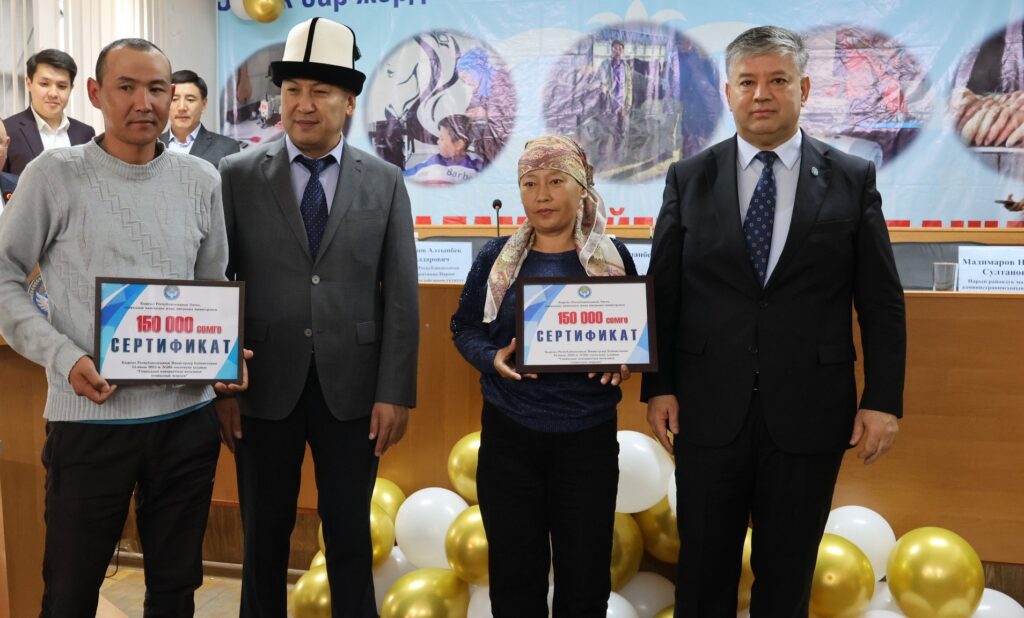
Over the past two years, 13,333 families in Kyrgyzstan living below the subsistence level have signed social contracts with the state. Through this initiative, each family received an interest-free loan of $1,700 to start a small business. According to the Ministry of Labor, the social contract program is designed to help families break the cycle of poverty by providing both start-up capital and practical support. Recipients use the funds to establish businesses, engage in subsistence farming, or purchase tools and equipment. In addition to financial assistance, the program offers training and consulting in sustainable agriculture and income-generating practices. How the Program Works Participants can use the funds to acquire equipment, materials, and other business essentials. The initiative has supported the creation of sewing workshops, food production facilities, apiaries, and small-scale poultry farms. Many recipients now produce honey, natural juices, felt goods, and meat products. The program is open to both new ventures and the expansion of existing microbusinesses. Specially trained consultants guide participants through the process of launching and managing their businesses, helping to increase long-term viability. Results and Regional Reach Although the social contract program was launched five years ago, its most significant impact has been seen in the past two years. More than 13,000 families have become self-sufficient and no longer require government aid. The majority of successful projects have emerged in Kyrgyzstan’s southern provinces, particularly Jalal-Abad and Osh, where rural entrepreneurship has rapidly expanded. Government data indicates that over 280 different products have been developed through the program. While most are sold domestically, a small number are now being exported abroad. This social contract initiative is a cornerstone of the government’s strategy to combat poverty and promote self-employment. Authorities emphasize its role in stimulating economic activity in rural areas and encouraging entrepreneurship among vulnerable populations.

U.S. Offers $1,000 Incentive for Voluntary Self-Deportation

The U.S. Department of Homeland Security (DHS) has launched a new program offering financial and travel assistance to undocumented immigrants who voluntarily leave the United States. Announced on May 5, the initiative provides a $1,000 stipend and covers airfare for eligible individuals who arrange their departure through the CBP Home mobile app.  DHS Secretary Kristi Noem described the program as a "historic opportunity" that is safer, more orderly, and more cost-effective than traditional deportation methods. According to DHS estimates, the average cost of arresting, detaining, and deporting an individual is approximately $17,121. The self-deportation program is projected to reduce these costs by about 70%.  Participants are required to submit an "Intent to Depart" via the CBP Home app, formerly known as CBP One. Upon confirmation of their return to their home country through the app, they will receive the stipend. DHS noted that individuals who engage with the program and demonstrate progress toward departure will be deprioritized for detention and removal.  The first reported participant, a Honduran national, utilized the program to return from Chicago to Honduras. Additional departures are scheduled in the coming weeks.  The Embassy of Kazakhstan in the United States has advised its citizens residing illegally in the U.S. to consider this program to avoid legal consequences and potentially preserve the option for future legal entry. This initiative aligns with President Donald Trump's broader immigration policy, which emphasizes strict enforcement and cost-efficiency. Since taking office in January, the administration has deported approximately 152,000 individuals.  Critics argue that the program may mislead participants regarding the possibility of future legal re-entry, as no specific pathways have been outlined. Immigration advocates caution that individuals considering this option should consult legal counsel to understand the potential implications for their immigration status.

Kyrgyzstan Launches $52 Million Environmental Initiative to Combat Natural Disasters

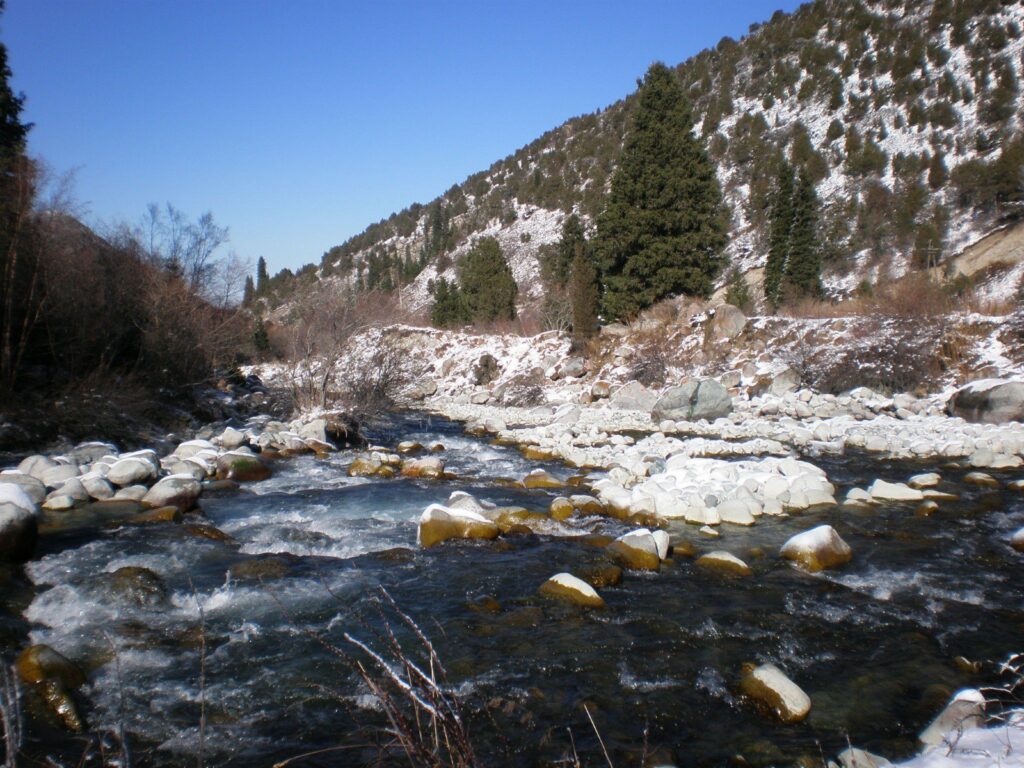
Kyrgyzstan has officially launched RESILAND CA+, a $52 million environmental initiative aimed at restoring degraded landscapes, reducing natural disaster risks, and strengthening regional cooperation in sustainable land management. Funded primarily by the World Bank, the project targets key ecological threats across several regions, including Osh, Jalal-Abad, Naryn, and Issyk-Kul, with a particular focus on the Kara-Darya River Basin, an area highly vulnerable to mudflows. According to the Kyrgyz Ministry of Emergency Situations, RESILAND CA+ seeks to mitigate the impact of mudflows, restore forests and soils, and build climate resilience across borders. Kyrgyzstan has recorded more than 900 mudflows over the past 12 years, posing a constant threat to lives and livelihoods, particularly in mountainous and riverine communities. “This project opens a new chapter in combating land degradation and climate threats in Kyrgyzstan,” said Boobek Azhikeev, Minister of Emergency Situations. “We are not just restoring landscapes, we are protecting the future of our communities”. The RESILAND CA+ program is financed through a combination of grants and credits from international development partners: $45 million in credit from the International Development Association (IDA) $5 million grant from the PROGREEN global partnership $2.4 million grant from the Korea-World Bank Partnership Facility (KWPF) Tatiana Proskuryakova, the World Bank’s Regional Director for Central Asia, stressed the broader impact of the initiative: “RESILAND CA+ is not just about the environment, it’s an investment in people’s safety, in the economy, and in international partnerships. Restoring nature helps us prevent future disasters”. Set to run through 2029, the program is part of a larger Central Asian strategy to manage transboundary landscapes and natural resources collaboratively.