• KZT/USD = 0.00211
  • TJS/USD = 0.10810
  • UZS/USD = 0.00008
  • TMT/USD = 0.29760
  • KZT/USD = 0.00211
  • TJS/USD = 0.10810
  • UZS/USD = 0.00008
  • TMT/USD = 0.29760
  • KZT/USD = 0.00211
  • TJS/USD = 0.10810
  • UZS/USD = 0.00008
  • TMT/USD = 0.29760
  • KZT/USD = 0.00211
  • TJS/USD = 0.10810
  • UZS/USD = 0.00008
  • TMT/USD = 0.29760
  • KZT/USD = 0.00211
  • TJS/USD = 0.10810
  • UZS/USD = 0.00008
  • TMT/USD = 0.29760
  • KZT/USD = 0.00211
  • TJS/USD = 0.10810
  • UZS/USD = 0.00008
  • TMT/USD = 0.29760
  • KZT/USD = 0.00211
  • TJS/USD = 0.10810
  • UZS/USD = 0.00008
  • TMT/USD = 0.29760
  • KZT/USD = 0.00211
  • TJS/USD = 0.10810
  • UZS/USD = 0.00008
  • TMT/USD = 0.29760

Viewing results 1 - 6 of 28

CSTO Leaders Tackle Regional Security, Nuclear Energy, and Afghan Border Concerns

Astana hosted a summit of the Collective Security Treaty Organization (CSTO), gathering heads of member states to discuss pressing regional and international issues. Kazakh President Kassym-Jomart Tokayev chaired the session of the CSTO Collective Security Council. Attendees included Belarusian President Alexander Lukashenko, Kyrgyz President Sadyr Japarov, Russian President Vladimir Putin, Tajik President Emomali Rahmon, and CSTO Secretary-General Imangali Tasmagambetov. In his address, President Tokayev highlighted the CSTO’s pivotal role in maintaining peace and stability in Eurasia. “Amid modern challenges, the CSTO consistently demonstrates its relevance as a guarantor of security for all member states. Our coordinated actions, mutual trust, and support strengthen our collective ability to tackle complex and large-scale tasks. The CSTO is not merely a military partnership but a unique mechanism that unites our efforts and resources to safeguard sovereignty and territorial integrity,” Tokayev stated. CSTO’s Response to Kazakhstan’s 2022 Crisis Tokayev reflected on the CSTO’s rapid deployment in January 2022, when Kazakhstan faced unrest over rising gas prices, which escalated into violent confrontations. Within 24 hours, CSTO forces were deployed to stabilize the situation. Russian troops secured strategic facilities in Almaty, while Kazakh forces restored order, marking a critical demonstration of the organization’s operational capability. Putin Unveils "Oreshnik" Missile System Russian President Vladimir Putin addressed ongoing tensions with Ukraine, signaling the potential use of the Oreshnik medium-range ballistic missile system in response to Western-supplied long-range missiles targeting Russian territory. According to Putin, the Oreshnik has the destructive power of nuclear weapons, and can penetrate heavily fortified targets. “The temperature of the striking elements reaches 4,000 degrees. At the explosion's epicenter, everything is reduced to elementary particles, essentially turning to dust,” he explained. Putin also announced that serial production of the missile had begun, with several units ready for deployment. Kazakhstan’s Nuclear Power Project Discussions also turned to Kazakhstan’s plans to build its first nuclear power plant. Tokayev has proposed an international consortium, and Putin expressed Russia's willingness to participate through Rosatom, emphasizing its extensive experience with international collaborations. “Rosatom is ready to work with specialists from other countries,” Putin remarked, leaving the door open for multilateral cooperation. Armenia’s Absence and CSTO’s Future Noticeably absent from the summit was Armenian Prime Minister Nikol Pashinyan, following Armenia’s decision to freeze its CSTO membership earlier this year. Yerevan cited concerns over its sovereignty as the reason for the suspension. Secretary-General Tasmagambetov remained optimistic about Armenia’s return, calling it a valued ally. “This is the decision of an independent and sovereign state, which no country or organization can influence. Nevertheless, we view Armenia as an ally and hope it will return to full participation in the CSTO in the foreseeable future,” Tasmagambetov stated. Key Summit Outcomes During the session, the Collective Security Treaty Organization (CSTO) also reflected on Kazakhstan's presidency in 2024, highlighting significant milestones achieved under its leadership. President Tokayev reported that approximately 60 activities were conducted within the CSTO's statutory areas of cooperation during Kazakhstan’s presidency. This included advancing coordinated approaches to key international issues in collaboration with member...

Kazakhstan and EU Address Common Security Concerns

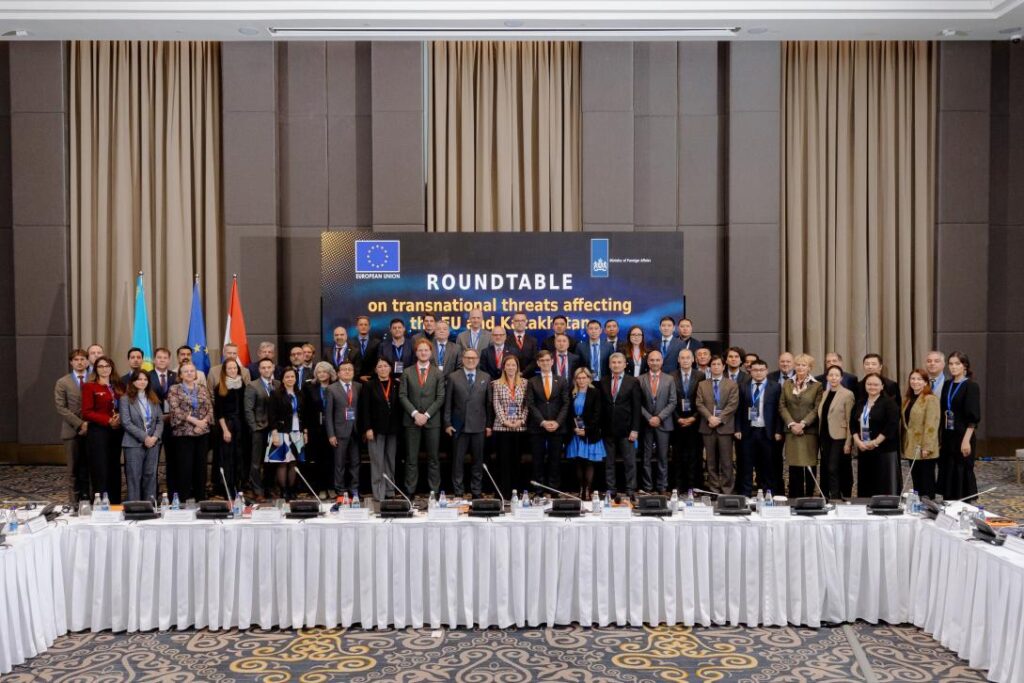
On November 14, the European Union Delegation to Kazakhstan, the Embassy of the Netherlands, and the Kazakh government convened a roundtable in Astana to address critical transnational threats impacting both the EU and Kazakhstan. The event gathered more than 70 experts, government officials, and international representatives to discuss pressing issues such as terrorism, human trafficking, migrant smuggling, and other security concerns. Particular attention was given to the interconnected nature of international extremism, border protection, critical infrastructure, drug trafficking, and arms trafficking. Participants underscored the growing level of cooperation between the EU and Kazakhstan, exchanging insights and experiences to enhance joint responses to these multifaceted threats. Kazakhstan’s Deputy Minister of Foreign Affairs, Roman Vassilenko, emphasized that transnational threats disregard borders and national sovereignty, posing a global challenge. “No country is immune from such issues as cyberattacks, organized crime, terrorism, trafficking in persons, or illegal migration,” he stated. Vassilenko noted that Astana has ratified all 19 UN universal counter-terrorism conventions and protocols, demonstrating its active engagement with the international community, including the EU. EU Ambassador to Kazakhstan Aleska Simkic hailed the roundtable as a significant milestone in security collaboration. “Today’s global security threats are neither confined by borders nor limited to single regions; they affect us all, underscoring the need for a united and coordinated response. The European Union and Kazakhstan are bound by shared interests and mutual challenges—whether addressing extremism, human trafficking, or organized crime. This roundtable offers an essential platform for exchanging insights and best practices, strengthening our common security and resilience, and creating better coordination between actions that both sides are already implementing. By working together, we build not only a safer Central Asia and Europe but also contribute to broader regional stability and peace,” Simkic said. Dutch Ambassador to Kazakhstan Nico Schermers echoed this sentiment, emphasizing the importance of collaboration. “Only by working together and learning from each other’s perspectives and insights can we tackle transnational threats affecting the European Union and Kazakhstan,” he remarked. The roundtable concluded with both the EU and Kazakhstan reaffirming their commitment to combat terrorism, trafficking, and organized crime, paving the way for deeper and more effective cooperation in the future.

Central Asian Leaders Arrive in Azerbaijan for UN COP29 Climate Summit

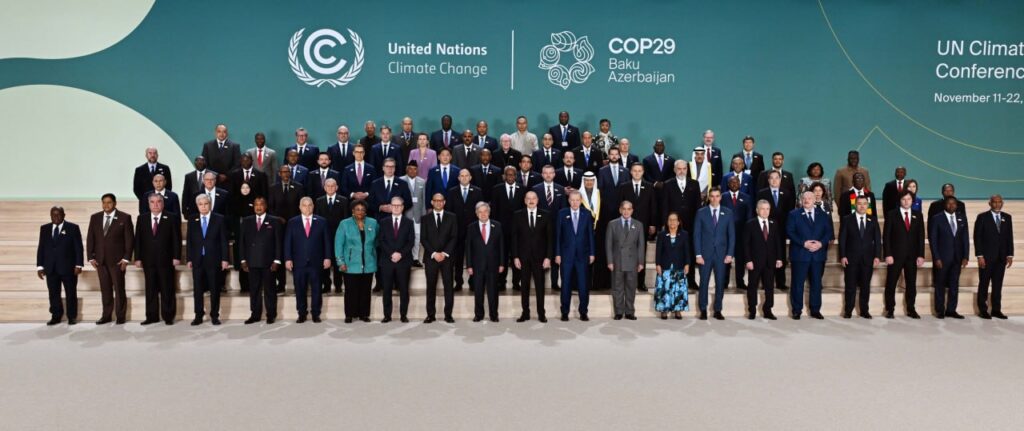
The 29th session of the Conference of the Parties to the UN Framework Convention on Climate Change (COP29) opened in Azerbaijan's capital Baku on November 11, drawing approximately 50,000 participants, including government representatives, politicians, investors, and environmentalists from 198 countries. Kazakh President Kassym-Jomart Tokayev attended the Summit, where he was welcomed by Azerbaijani President Ilham Aliyev and UN Secretary-General António Guterres. Tokayev will open the plenary session and hold talks with various heads of state, as well as representatives of international organizations and businesses. Kyrgyz President Sadyr Japarov has also arrived at the conference and is scheduled to address the opening session on November 12. He will participate in the special session “High-Level Dialogue: Advancing the Mountain Agenda and Mainstreaming Mountains and Climate Change,” organized by Kyrgyzstan with the support of Azerbaijan and Mongolia. This discussion will also feature Mongolian President Ukhnaagiin Khurelsukh, Nepali President Ram Chandra Poudel, and representatives of international organizations. Russia is represented at the summit by its Prime Minister Mikhail Mishustin. Additionally, representatives of the Taliban, which the UN does not recognize as the legitimate government of Afghanistan, have been included in the delegation for the first time. Armenia, however, has not yet confirmed its participation due to ongoing territorial disputes with Azerbaijan. The Summit is being held at the Baku Olympic Stadium, with sessions set to conclude on November 22. COP29 has been termed a “finance summit” due to its primary focus on financing developing nations in the fight against climate change. Delegates are also working to establish a framework to improve national emissions reduction programs.

Von der Leyen Affirms EU’s Commitment to Uzbekistan

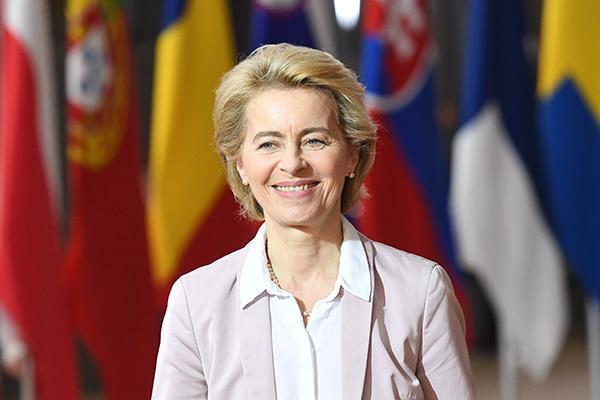
On November 6, the European-Uzbekistan Economic Cooperation Association opened the European Economic Days 2024 in Tashkent. At the ceremony, the President of the European Commission, Ursula von der Leyen, sent a video message to the event participants expressing her support for Uzbekistan’s efforts to restore its central position on Asian and world trade routes. More than 300 representatives from Uzbek and European governments and business sectors participated. Von der Leyen highlighted three main areas of cooperation between the European Union and Uzbekistan, which have grown significantly in recent years. She began by emphasizing Uzbekistan’s historical role as a “beating heart” of global trade. “For centuries, European merchants traveled to Samarkand, Bukhara, and Khiva for clothing and ceramics,” she said, recalling the stories these merchants would bring back of Uzbekistan’s palaces, landscapes, and vibrant culture. She noted that Uzbekistan seeks to open to the world once again. Her first example of collaboration focused on trade: “Since 2021, we opened the European market to Uzbek goods, and exports, especially in textiles and metallurgy, have rapidly increased,” she said, adding that there is still vast growth potential. Von der Leyen then turned to investment, mentioning the EU’s Global Gateway program, which supports Uzbekistan’s goal of global connectivity. She highlighted the EU’s investment of up to 10 billion euros, alongside international partners, in the Trans-Caspian Corridor—the shortest, safest route from Europe to East Asia, connecting Central Asia and Europe in less than 15 days. Additionally, she noted efforts to connect Uzbekistan to the EU satellite network to bring advanced digital communications to even the country’s most remote areas. Her final example centered on expanding EU cooperation in Uzbekistan’s strategic sectors. She referenced an agreement signed in April 2024 to bolster supply chains for critical minerals, a project that aims to create jobs and add value locally. “While some global investors focus solely on raw material extraction, that’s not us,” she emphasized, reaffirming Europe’s commitment to supporting domestic industry, job creation, and value-added production in line with high standards. Concluding her speech, Von der Leyen expressed hope that the forum would establish effective cooperation, new business opportunities, and strong relations between Europe and Uzbekistan. She also announced plans for the first-ever “Central Asia—EU” summit in Samarkand next year, marking another step in the region’s evolving relationship with the EU.

Kyrgyzstan Hosts Summit of Organization of Turkic States

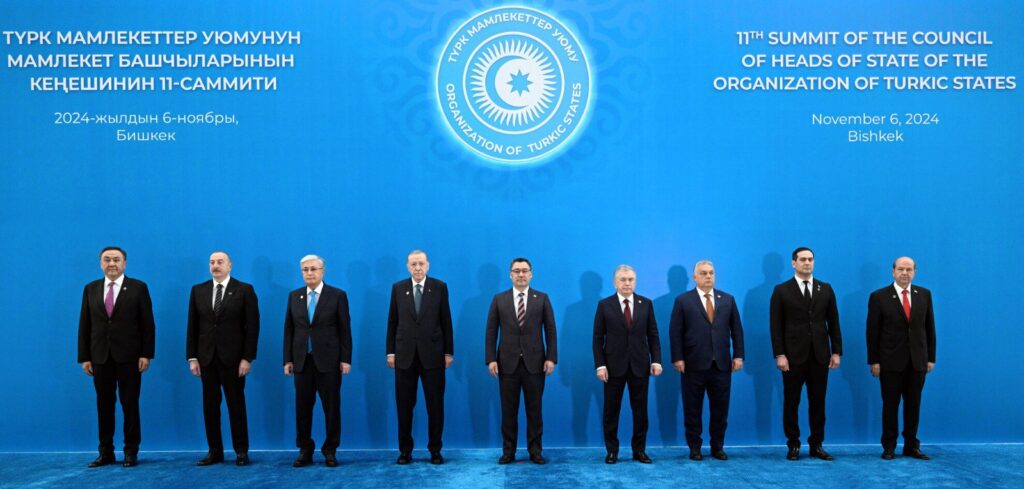
On November 6, Bishkek hosted the 11th Summit of the Council of Heads of State of the Organization of Turkic States (OTS). Chaired by Kyrgyzstan's President Sadyr Japarov and themed “Empowering the Turkic World: Economic Integration, Sustainable Development, Digital Future, and Security for All,” the summit was attended by President of Azerbaijan Ilham Aliyev, President of Kazakhstan Kassym-Jomart Tokayev, President of Turkey Recep Tayyip Erdoğan, President of Uzbekistan Shavkat Mirziyoyev, and Viktor Orbán, the Prime Minister of Hungary (observer state of the OTS). At the summit, the OTS chairmanship passed from Kazakhstan to Kyrgyzstan. In his speech, Kazakhstan's Tokayev summarized the results of his country's chairmanship of the OTS. Tokayev noted that Kazakhstan's chairmanship of the Organization of Turkic States was held under the motto "TURKTIME!" with special attention paid to strengthening the unity of the Turkic world and expanding comprehensive cooperation. Tokayev said that over the past 10 years, economic ties between the OTS members have strengthened significantly, and their trade volume exceeded $45 billion in 2024. According to Tokayev, strengthening transport and logistics ties within the OTS is a priority task. “It is necessary to fully utilize the potential of the Middle Corridor, which is strategically important for the further economic development of the Turkic world. Therefore, it seems necessary to agree to ensure the sustainable development of cargo transportation along this route.” Addressing the summit as the new chairman of the OTS, Japarov emphasized that the Organization has the unique potential to achieve high goals, strengthen its position in the international arena, intensify mutually beneficial cooperation, and create favorable conditions for the prosperity of its people. According to Japarov, during its chairmanship of the OTS, Kyrgyzstan will make every effort to develop economic partnership, sustainable development, digital integration, and strengthening common security. To expand trade and economic cooperation, negotiations will be initiated on intergovernmental agreements in services, finance, the creation and support of common labor markets, digital and e-commerce, intellectual property, agriculture, technology, innovation, tourism, and education. Japarov supported signing the Agreement on Partnership in the Field of Digital Economy, which will facilitate digital trade between the Turkic states. Joint measures to combat the challenges associated with climate change and environmental pollution will be one key area of Kyrgyzstan's chairmanship. According to Japarov, over the past 70 years, the area of glaciers in Kyrgyzstan has decreased by 16%. These glaciers are a source of drinking water for Kyrgyzstan and the entire Central Asian region. “Considering that our region is among the most vulnerable to global warming, by 2100, we may lose more than half of the glaciers,” the Kyrgyz president warned, adding that “we will develop cooperation in the implementation of joint green projects in the field of renewable energy, forest restoration, the introduction of resource-saving and energy-efficient technologies, the protection of glaciers and biological species, as well as the fight against land degradation and desertification.” Addressing the summit, Turkey's Erdoğan said: “I wholeheartedly believe that the decisions we will make today to achieve the targets we...

Kazakhstan Decides to Abstain from Applying for BRICS Membership

Kazakhstan's presidential spokesman, Berik Uali, announced that Kazakhstan plans to refrain from applying for membership in the international association BRICS. According to him, despite Kazakhstan's proposals, the decision to join BRICS remains under consideration. Specialists are analyzing prospects with a focus on the country's national interests. Uali also noted that President Tokayev will participate as a guest in the BRICS Summit, scheduled to take place October 23-24 in Kazan. He will speak at the organization's extended outreach meeting on October 24. At the same time, Kazakhstan will refrain from applying for BRICS membership. This is due to the multi-stage process of accepting new members and other aspects of the association's development. When asked about the priorities of Kazakhstan's diplomacy, Berik Uali noted that Tokayev emphasized the importance of the UN as a universal and irreplaceable international institution. Despite its shortcomings, he emphasized that the UN remains the sole platform for addressing crucial global issues. Tokayev also expressed the view that the UN Security Council should be reformed to consider the interests of the middle powers and to hold broad consultations among the organization's members. Established in June 2006, BRICS (Brazil, Russia, India, China, South Africa, UAE, Iran, Egypt, Ethiopia) aims to promote a multipolar world order. Azerbaijan and Belarus have already applied to join.