
• KGS/USD = 0.01144 0%
  • KZT/USD = 0.00213 0%
  • TJS/USD = 0.10569 0.09%
  • UZS/USD = 0.00008 0%
  • TMT/USD = 0.28530 0%
  • KGS/USD = 0.01144 0%
  • KZT/USD = 0.00213 0%
  • TJS/USD = 0.10569 0.09%
  • UZS/USD = 0.00008 0%
  • TMT/USD = 0.28530 0%
  • KGS/USD = 0.01144 0%
  • KZT/USD = 0.00213 0%
  • TJS/USD = 0.10569 0.09%
  • UZS/USD = 0.00008 0%
  • TMT/USD = 0.28530 0%
  • KGS/USD = 0.01144 0%
  • KZT/USD = 0.00213 0%
  • TJS/USD = 0.10569 0.09%
  • UZS/USD = 0.00008 0%
  • TMT/USD = 0.28530 0%
  • KGS/USD = 0.01144 0%
  • KZT/USD = 0.00213 0%
  • TJS/USD = 0.10569 0.09%
  • UZS/USD = 0.00008 0%
  • TMT/USD = 0.28530 0%
  • KGS/USD = 0.01144 0%
  • KZT/USD = 0.00213 0%
  • TJS/USD = 0.10569 0.09%
  • UZS/USD = 0.00008 0%
  • TMT/USD = 0.28530 0%
  • KGS/USD = 0.01144 0%
  • KZT/USD = 0.00213 0%
  • TJS/USD = 0.10569 0.09%
  • UZS/USD = 0.00008 0%
  • TMT/USD = 0.28530 0%
  • KGS/USD = 0.01144 0%
  • KZT/USD = 0.00213 0%
  • TJS/USD = 0.10569 0.09%
  • UZS/USD = 0.00008 0%
  • TMT/USD = 0.28530 0%

Viewing results 1 - 6 of 5

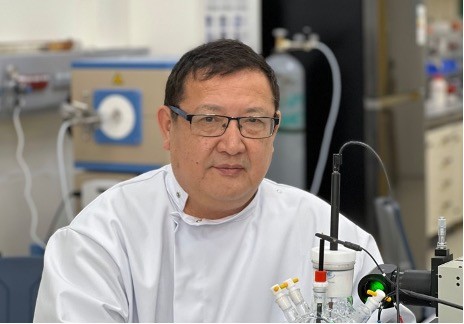
Meet Nurxat Nuraje, One of Kazakhstan’s Most Impressive Scientists

Nurxat Nuraje is a Kazakh scientist who is now well known in the global scientific community. He has spent more than two decades studying and conducting research in the United States. Drawn to science from an early age, he earned his PhD in chemistry from the City University of New York in 2008, successfully launching his research career. His main field of research is nanotechnology and its applications. At a time when nanoscience was still emerging, his bold approach to the subject quickly gained recognition. His first major publication was in the Journal of the American Chemical Society – one of the world’s leading chemistry journals. The paper introduced innovative ideas about nanocircuit fabrication, methods and challenges in their development, computational power, and potential applications. This paper was considered a major contribution to the field at the time. Soon after, he joined the Massachusetts Institute of Technology (MIT), one of the world’s foremost technology universities, as a postdoctoral researcher. There, he succeeded in finding ways to increase computer storage capacity, which is a crucial question for modern computing. His research on the development and application of specific nanoparticles was published in Advanced Materials, once again establishing his name in global science. His work was later awarded a silver medal at the International Materials Research Society conference in San Francisco. “Science doesn’t deliver results overnight. It evolves gradually,” says Nuraje. “The true mission of a scientist is to reshape the world’s thinking through discovery. In the future, we must move from oil to hydrogen energy. That is the energy of tomorrow.” Since 2013, Nuraje has worked as a research scientist at MIT. He is also credited with developing conductive polymer nanoparticles, which are now widely used. Together with his students, he continues to design and create practical, everyday-use technologies. In 2015 he received the Joseph Award for his outstanding contribution to nanotechnology. He became the first Kazakh scientist to win this American honor. Why did MIT invite him to join their team? The answer lies in his PhD dissertation, which was recognized by experts as one of the best in the field. Harvard University, the University of California, and MIT each offered him postdoctoral positions. One of Nuraje's remarkable achievements was the development of anti-fogging materials – the kind used on smartphone screens today. Working with MIT professor Angela Belcher, he co-created a new type of photocatalytic material through genetic engineering of the M13 virus. This groundbreaking work was published in Advanced Materials in 2012 and resulted in five international patents. This is a true testament to the Kazakh proverb: “Knowledge conquers all.” In 2015, he joined Texas Tech University as a professor of chemical engineering, where he established his own research laboratory, The Nurxat Nuraje Lab. There, his team developed solar-powered water-splitting technology to produce hydrogen. His breakthroughs in conductive polymers earned him the American Chemical Society’s Petroleum Research Award in 2016. In the following years, he was named “Most Distinguished Scientist” at Texas Tech University, and in 2018, the...

Central Asian Students Face Uncertainty at U.S. Universities Under Trump Administration Policies

The situation for students from Central Asia studying in the United States has grown increasingly precarious following a controversial move by the Trump administration to restrict foreign student admissions at Harvard University, a decision that has sparked legal and diplomatic reactions. Administrative Ban Targets Foreign Students On May 23, U.S. Secretary of Homeland Security Kirstjen Nielsen ordered the termination of Harvard University's certification for its student and exchange visitor program. The Department of Homeland Security (DHS) cited Harvard’s alleged refusal to submit records on the conduct of its foreign students, requested the previous month. “Harvard can no longer accept foreign students, and existing foreign students must transfer or lose their legal status,” the DHS said in a statement. The university is currently challenging the decision in court. The administration attributes the crackdown to ideological concerns. Officials have cited a determination to confront anti-Semitic rhetoric amid campus protests related to the war between Israel and Hamas. They also oppose Diversity, Equity, and Inclusion (DEI) initiatives, which the administration has condemned as “illegal and immoral discrimination.” Harvard representatives reported that 6,793 international students were enrolled in the 2024-2025 academic year, comprising 27.2% of the student body. The loss of international students, they argue, could jeopardize not only Harvard’s standing but also the broader U.S. academic landscape. Beyond Harvard, the administration has intensified scrutiny of foreign students' social media activity, suspended hundreds of millions of dollars in funding to universities, revoked thousands of student visas, and initiated deportations. In response, Harvard filed a lawsuit, and on May 30, a federal court in Boston temporarily blocked the enforcement of the ban, according to Bloomberg. Nonetheless, the outlook remains uncertain. Kazakhstan Responds with Contingency Planning According to Kazakhstan’s Ministry of Science and Higher Education, seven students are currently studying at Harvard under the state-funded Bolashak program. Additional students may be enrolled privately or through other sponsorships. Minister of Science and Higher Education Sayasat Nurbek described the situation as "difficult" and stated that the ministry is awaiting the final court decision. In the event of an unfavorable outcome, Bolashak students would be offered transfer opportunities to other Ivy League institutions, all of which maintain partnerships with the scholarship program. Bolashak Program: Opportunity and Criticism Founded in 1993, the Bolashak (Future) program offers state-funded scholarships for international education in priority sectors of Kazakhstan’s economy. In return, graduates are required to work in Kazakhstan for a specified period. Despite its aims, the program has faced criticism for alleged elitism. Critics claim it disproportionately benefits children of influential families and that many graduates fail to fulfill their service obligations or remain abroad. Among its alumni is former Minister of National Economy Kuandyk Bishimbayev, who was educated in the U.S. under Bolashak and later served as chairman of the Bolashak Association. He was subsequently convicted twice, first for corruption, and later for the murder of his common-law wife, Saltanat Nukenova, in a case that attracted international attention. Nevertheless, official statistics indicate that more than 13,000 individuals have benefited from the...

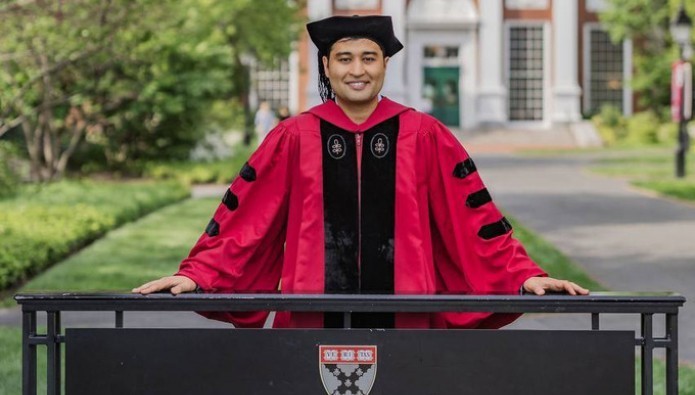
First Uzbek to Receive Doctoral Degree from Harvard Business School

Economist Botir Kobilov has become the first Uzbek to receive a doctoral degree from Harvard Business School (part of Harvard University)  reported Gazeta.uz. The topic of his doctoral dissertation was "The Role of Information and Data in the Financial Market and Economy". According to an earlier report, Kobilov worked as a doctoral student and researcher in empirical law and finance in the corporate governance program of Harvard Law School. Prior to enrolling at Harvard, he attained a master's degree in economics from Duke University in the United States and a bachelor's degree from the Singapore Institute of Management Development in Tashkent. In his early career, he worked as a leading economist at the Central Bank of Uzbekistan. His key areas of interest include the impact of new technologies and new sources of information on financial reporting, law enforcement, compliance, investor communication and decision-making. Botir Kobilov now plans to pursue a faculty position at Texas State University.
