• KZT/USD = 0.00221
  • TJS/USD = 0.10860
  • UZS/USD = 0.00008
  • TMT/USD = 0.29760
  • KZT/USD = 0.00221
  • TJS/USD = 0.10860
  • UZS/USD = 0.00008
  • TMT/USD = 0.29760
  • KZT/USD = 0.00221
  • TJS/USD = 0.10860
  • UZS/USD = 0.00008
  • TMT/USD = 0.29760
  • KZT/USD = 0.00221
  • TJS/USD = 0.10860
  • UZS/USD = 0.00008
  • TMT/USD = 0.29760
  • KZT/USD = 0.00221
  • TJS/USD = 0.10860
  • UZS/USD = 0.00008
  • TMT/USD = 0.29760
  • KZT/USD = 0.00221
  • TJS/USD = 0.10860
  • UZS/USD = 0.00008
  • TMT/USD = 0.29760
  • KZT/USD = 0.00221
  • TJS/USD = 0.10860
  • UZS/USD = 0.00008
  • TMT/USD = 0.29760
  • KZT/USD = 0.00221
  • TJS/USD = 0.10860
  • UZS/USD = 0.00008
  • TMT/USD = 0.29760
26 October 2026

Viewing results 1 - 6 of 22

WHO and UNDP to Upgrade Kazakhstan’s Virological Labs

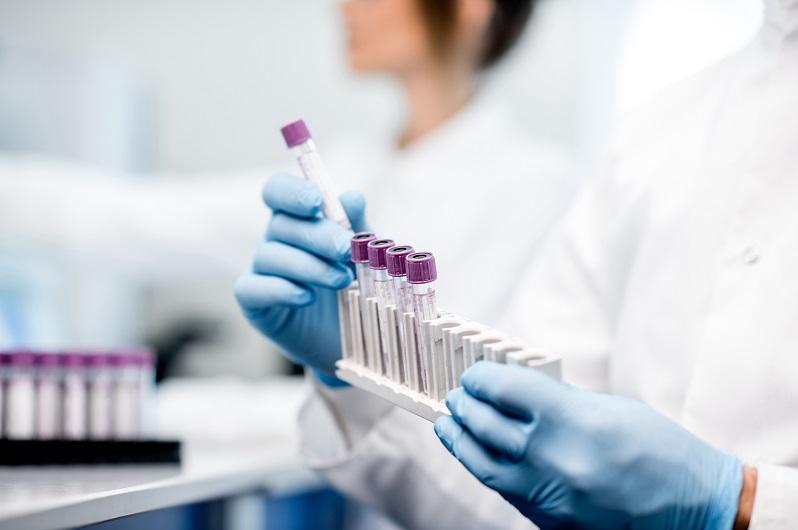
Kazakhstan’s Ministry of Healthcare, the World Health Organization (WHO) Office in Kazakhstan, and the United Nations Development Programme (UNDP) have announced a strategic partnership to upgrade the country's critical health infrastructure, supported by a three-year grant from the Pandemic Fund. As reported by UNDP in Kazakhstan, the collaboration will better prepare Kazakhstan for potential pandemics by enhancing its management of response to infectious diseases. Key components of the initiative include renovating and modernizing Almaty's virological laboratory and the construction of another in Turkestan. Both facilities will incorporate SMART (Self-Monitoring Analysis and Reporting Technology)  as well as “green” technologies to ensure sustainability and environmental responsibility. The project also includes the renovation of the National Scientific Center of Especially Dangerous Infections in Almaty to improve the infrastructure, functionality, and safety standards of its virological and bacteriological laboratories, and the modernization of  sanitary and quarantine checkpoints across Kazakhstan. Russia earlier reported on the alleged existence of US laboratories developing biological weapons in Kazakhstan. Issued by the Kremlin-controlled media in the wake of Russia’s invasion of Ukraine, the report's claims have been staunchly denied by Zauresh Zhumadilova, Director General of the National Scientific Center of Especially Dangerous Infections under the Ministry of Health of Kazakhstan. According to Zhumadilova, all laboratories in Kazakhstan belong to the government and are controlled by the country’s Ministry of Health. In June, Kazakhstan’s Deputy Minister of Culture and Information Kanat Iskakov, also commented on rumors concerning the alleged existence of foreign biological laboratories in Kazakhstan and reiterated, “The [Kazakh] Ministry of Foreign Affairs and authorized bodies have several times stated that there are no biological laboratories run by the USA or any other country, in Kazakhstan." He added that the  research center in Almaty, fully funded by the state, is run by local specialists. Reuters has reported that artificial intelligence (AI) was behind the fake news, originated in China, about the existence of U.S. laboratories allegedly developing biological weapons in Kazakhstan. Referencing the U.S. Department of Homeland Security (DHS) 2024 Homeland Threat Assessment, the agency stated that a Chinese government-controlled news site using a generative AI platform, had promoted a previously circulated false claim that the United States was running a lab in Kazakhstan to create biological weapons for use against China. According to DHS, China and other adversaries are developing AI technologies that could undermine U.S. cyber defenses, including generative AI programs that support malware attacks. In response, Reuters reports that the Biden administration is poised to launch a new front to safeguard the U.S. from AI technologies developed by China and Russia, and comments on the potential employment of AI by U.S. adversaries to wage aggressive cyberattacks or even create potent biological weapons.

Doctors in Turkmenistan Ordered Not To Perform Abortions

Turkmenistan has imposed severe restrictions on conducting abortions, effectively banning them. In recent weeks, government officials have been visiting hospitals and clinics, and warning doctors that they will be stripped of their diplomas if they do. According to Radio Azatlyk, sources from different regions of the country say that doctors have been forced to refuse women seeking abortions, even though the law allows it within the first five weeks of pregnancy. The authorities have not commented on the reasons for yet another tightening of measures to prevent abortions. However, according to several doctors in Ashgabat, it may be due to a sharp increase in teenage pregnancies. At the same time, doctors note that many young girls, unable to have a legal abortion, resort to dangerous methods of terminating pregnancy, resulting in serious risks to their health. Despite the bans, there are still doctors who continue to perform abortions clandestinely. The cost of such services has increased significantly, and varies depending on the term of the pregnancy.

EU and FAO Aid Uzbekistan’s Management of Hazardous Chemicals

On 1 May, the Food and Agriculture Organization of the United Nations (FAO) and the Ministry of Ecology, Environmental Protection and Climate Change of Uzbekistan held an inception workshop in Tashkent on technical assistance for the sound management of hazardous chemicals. The joint venture, implemented with financial support from the European Union, is designed to enhance the effectiveness of mechanisms and tools for the management of hazardous chemicals and related waste. A key goal cited by the EU Delegation to Uzbekistan, is to reduce the use of dangerous pesticides in agriculture, through the introduction and promotion of alternative methodologies amongst farmers. Aziz Abdukhakimov, Minister of Ecology, Environmental Protection and Climate Change, stressed that by actively striving to reduce the use of highly hazardous pesticides, Uzbekistan aims to lower their adverse impact on the nation’s health and environment, in addition to making a significant contribution to  UN Sustainable Development Goals. Regarding plans to address the issue, he  announced, “We need to revise our inventory of contaminated areas of former agricultural airfields and other sites, the last of which, was carried out in the ‘90s when more than 450 former agricultural airfields were identified.” Praising the move, Wim Riepma, Head of Cooperation Section, EU Delegation to Uzbekistan, stated: "Our partnership with the Government of Uzbekistan and FAO exemplifies a collective commitment to protecting the environment and public health, by cleaning up legacy waste, by improving waste management, and by reducing pesticide waste production. Integrated pest management and awareness of health and environmental risks are key to a healthier, environment- friendly and economically viable agriculture sector.” Sherzod Umarov, Assistant FAO Representative in Uzbekistan, likewise emphasized, "The project implementation will enable an improved institutional capacity for sound pesticide management and better data on hazardous wastes in agriculture allowing development of a national waste management strategy. The project also aims to scale up green practices in the agricultural sector leading to reduced risks to farmers and consumers from the use of pesticides and to food production relying on less toxic pesticides and biological protection tools.”  

US Helps Kyrgyzstan Prepare for Future Pandemics

A Global Health Security and Pandemic Preparedness Program was launched last week. The joint initiative between the United States, the Kyrgyz Republic, the Food and Agriculture Organization, the World Health Organization, and a consortium of other organizations, aims to improve Kyrgyzstan’s resilience against public health emergencies and coordinates with the United Nation’s ‘One Health’ policy linking human, animal, and environmental health. As reported by the U.S. Embassy in Bishkek, the program will target seven key areas in Kyrgyzstan: tracking and reducing antimicrobial resistance; monitoring zoonotic diseases transmissible between animals and humans; strengthening national laboratory systems; disease surveillance; building capacity within the healthcare workforce; developing risk communication and community engagement strategies; and bolstering health emergency management. U.S. Ambassador to the Kyrgyz Republic Lesslie Viguerie stated, “The United States Government ranks global health security among its top five priorities. Today’s event marks the next chapter in our long collaboration for improving Kyrgyz health care. We worked side-by-side during the COVID-19 pandemic and continued to do so in the pandemic recovery phase. We have made tremendous advancements in detecting and treating tuberculosis and HIV/AIDS. Many lives have been saved thanks to the collaborative efforts between our governments. With the timely launch of the National Action Plan for Health Security last year, the Kyrgyz Republic is taking a lead role to prepare its health systems for any future pandemics.” The Deputy Minister of Health of the Kyrgyz Republic Bubuzhan Arykbaeva further endorsed the initiative saying, “We are confident that with USAID funding this program will play a critical role in supporting key technical areas of the National Action Plan for Health Security. The implementation of the Global Health Security program in the Kyrgyz Republic will allow our country to create a more stable foundation for future response to threats in the field of public health.”