• KGS/USD = 0.01143 0%
  • KZT/USD = 0.00205 0%
  • TJS/USD = 0.10433 0.1%
  • UZS/USD = 0.00008 0%
  • TMT/USD = 0.28577 0%
  • KGS/USD = 0.01143 0%
  • KZT/USD = 0.00205 0%
  • TJS/USD = 0.10433 0.1%
  • UZS/USD = 0.00008 0%
  • TMT/USD = 0.28577 0%
  • KGS/USD = 0.01143 0%
  • KZT/USD = 0.00205 0%
  • TJS/USD = 0.10433 0.1%
  • UZS/USD = 0.00008 0%
  • TMT/USD = 0.28577 0%
  • KGS/USD = 0.01143 0%
  • KZT/USD = 0.00205 0%
  • TJS/USD = 0.10433 0.1%
  • UZS/USD = 0.00008 0%
  • TMT/USD = 0.28577 0%
  • KGS/USD = 0.01143 0%
  • KZT/USD = 0.00205 0%
  • TJS/USD = 0.10433 0.1%
  • UZS/USD = 0.00008 0%
  • TMT/USD = 0.28577 0%
  • KGS/USD = 0.01143 0%
  • KZT/USD = 0.00205 0%
  • TJS/USD = 0.10433 0.1%
  • UZS/USD = 0.00008 0%
  • TMT/USD = 0.28577 0%
  • KGS/USD = 0.01143 0%
  • KZT/USD = 0.00205 0%
  • TJS/USD = 0.10433 0.1%
  • UZS/USD = 0.00008 0%
  • TMT/USD = 0.28577 0%
  • KGS/USD = 0.01143 0%
  • KZT/USD = 0.00205 0%
  • TJS/USD = 0.10433 0.1%
  • UZS/USD = 0.00008 0%
  • TMT/USD = 0.28577 0%

Viewing results 1 - 6 of 66

World Bank Approves $250 Million Loan to Expand Student Financing in Uzbekistan

The World Bank has approved a $250 million loan to support Uzbekistan’s ambitious reform of its student financing system, the institution announced on December 11. The funding will back the Edulmkon Program, a three-year initiative aimed at expanding equitable access to higher and vocational education across the country. Scheduled for implementation between 2026 and 2028, the program is expected to benefit approximately 600,000 young people. Roughly 80% of the loan will be allocated to tuition loans for students from low-income families and for women, groups that continue to face significant barriers to accessing higher education. Uzbekistan, home to around 10 million people aged 14 to 30, has made educational reform a national priority in recent years. This push has led to a surge in the number of universities and vocational institutions, as well as a dramatic rise in enrollment. Between 2017 and 2024, youth participation in higher education increased from 8% to 48%. However, the rapid expansion has exposed weaknesses in the country’s student loan system, which is based on state subsidized loans issued through commercial banks. The World Bank has noted that the current model is not well aligned with labor market needs, as loans are not directed toward high demand fields such as science, technology, engineering, and mathematics (STEM), as well as information and communication technology (ICT). This misalignment has contributed to graduate underemployment, while gender disparities persist. Although women represent more than half of all university students and are the primary recipients of tuition loans, only one-third of female students are enrolled in STEM disciplines. The Edulmkon Program, to be led by the Ministry of Economy and Finance, will address these challenges through a series of reforms. These include modernizing tuition loan management, improving inter-agency coordination, and launching a centralized digital platform to streamline loan processing and improve transparency. The program will also revise eligibility and subsidy criteria to better serve vulnerable students. A cornerstone of the reform is the introduction of an income-contingent loan system, where repayments are based on a graduate’s income. This approach is designed to protect low-income borrowers and those facing temporary unemployment after graduation. By the end of 2028, students are expected to access loans through 12 participating commercial banks operating in coordination with the Ministry. The World Bank also noted that the program aims to attract approximately $30 million in private capital, reducing fiscal pressure on the state while expanding access to education financing.


Kazakhstan to Train Nuclear Energy Specialists Abroad Through Bolashak Program

Kazakhstan will begin training specialists for its nuclear energy sector at leading international universities through a new track within the Bolashak international scholarship program, the Ministry of Science and Higher Education announced this week. The Bolashak scholarship, launched in 1993, supports education, retraining, and professional development for specialists in priority economic sectors. Initially limited to four countries, the United States, the United Kingdom, Germany, and France, it now allows recipients to study in nearly 30 countries worldwide. More than 13,000 Kazakh citizens have participated in the program to date. The latest initiative adds future nuclear energy professionals to its ranks, aiming to build domestic capacity ahead of Kazakhstan’s planned entry into the nuclear power sector. This week, Minister of Science and Higher Education Sayasat Nurbek signed a four-party memorandum launching the new program. Other signatories included Almasadam Satkaliev, Chairman of the Atomic Energy Agency; Adil Kusmanov, Chairman of the Board of JSC “Center for International Programs”; and Yernat Berdigulov, General Director of LLP “Kazakhstan Atomic Power Plants.” “The initiative will attract specialists in engineering, technical, and scientific fields, which will be key to the development of Kazakhstan's nuclear energy sector,” the ministry stated. The program will provide 20 pilot grants in 2026, with similar allocations expected annually. It will cover international internships, as well as master’s and doctoral programs at top universities around the world. A key requirement will be cooperation with potential employers and guaranteed job placement for graduates. Tripartite agreements are being signed between scholarship recipients, nuclear sector enterprises, and the Bolashak program’s administrator to ensure employment pathways. Work is already underway to finalize agreements with several foreign institutions, including Pennsylvania State University (U.S.), Grenoble INP-UGA (France), Shanghai Jiao Tong University (China), City University of Hong Kong, and the National Research Nuclear University MEPhI (Russia). “The creation of a dedicated training track for the nuclear sector within Bolashak will help form a skilled pool of engineers, technologists, operators, and other specialists with international-level qualifications,” the ministry noted. Earlier this year, President Kassym-Jomart Tokayev announced plans to establish two “science cities” in Almaty and Kurchatov to support the development of nuclear energy and nuclear medicine. Kazakh universities have also launched domestic training programs to prepare personnel for the country’s first nuclear power plant, which is currently under development.

Central Asian Countries Agree to Recognize Each Other’s University Degrees

The governments of Kazakhstan, Kyrgyzstan, Tajikistan, Turkmenistan, and Uzbekistan have officially agreed to mutually recognize higher education diplomas issued within the region. Kazakhstan approved the relevant draft on November 12, as documented in an intergovernmental agreement. The initiative aims to create a unified educational space in Central Asia and eliminate barriers related to qualification recognition. Under the agreement, all five countries will automatically recognize university diplomas that are legally valid, officially accredited, and issued by state higher education institutions in any of the participating countries. Recognition will apply in three key areas: Employment in another Central Asian country Internships Continuing education at the next academic level However, qualifications must meet common higher education standards. Recognition may be denied only if substantial differences in the educational systems are identified. The agreement outlines a clear implementation mechanism: each country will appoint a designated authority responsible for diploma recognition and notify the depositary, which will in turn inform the other signatories. If the structure or authority of the appointed body changes, the state is required to issue an immediate notification through diplomatic channels. Despite agreeing on a shared framework, the countries still maintain varying standards for recognizing foreign university degrees. Uzbekistan, Kyrgyzstan, Turkmenistan, and Tajikistan have agreed to recognize diplomas from universities in any participating country, provided those institutions are legally operating and issue officially recognized state diplomas. Kazakhstan, however, has adopted stricter criteria. It will only recognize diplomas from regional universities that appear in the top 1,000 of the following international rankings: Quacquarelli Symonds World University Rankings (QS) Times Higher Education (THE) Academic Ranking of World Universities (ARWU) Diplomas from these universities will allow holders from participating countries to work, intern, or pursue further studies in Kazakhstan, subject to an application process. The agreement is expected to ease the movement of skilled professionals within Central Asia and reduce bureaucratic barriers to regional academic and professional mobility.

InnoTech University to Launch in Almaty with Arizona State University Support

Kazakhstan’s Ministry of Science and Higher Education and Q Group have signed an agreement with Arizona State University (U.S.) to establish the University of Innovation and Technology powered by Arizona State University (InnoTech) in Almaty. According to the ministry, the creation of InnoTech aligns with Kazakhstan’s broader strategy to enhance international educational partnerships and foster the development of innovative technologies. The university is set to become a world-class platform offering academic mobility, scientific collaboration, and practice-oriented training in engineering, IT, entrepreneurship, artificial intelligence, and sustainable development. A distinctive feature of InnoTech will be its dual-degree offering: graduates will receive both a Kazakh diploma and an American degree from Arizona State University. This model is intended to boost the global competitiveness of Kazakh students in the international job market. Undergraduate and graduate programs are expected to begin in 2026, with preparations already underway for the construction of a modern campus in Almaty. [caption id="attachment_39097" align="aligncenter" width="960"] Image: gov.kz[/caption] In related news, the Ministry of Science and Higher Education, Arizona State University, and Mukhtar Auezov South Kazakhstan University have signed a memorandum of cooperation to promote academic collaboration. The agreement covers the implementation of internationally recognized educational programs, joint research initiatives, and expanded academic mobility for students and faculty of the Kazakh university. As part of the new collaboration, students enrolled in a dual-degree program will study for three years in Kazakhstan and one year at Arizona State University in the U.S., earning degrees in Computer Science/Informatics from both institutions. Additionally, for the first time in Kazakhstan, an Honors College will be established with Arizona State University’s support. The college will offer enriched academic programs for high-achieving students, including research opportunities and leadership development.

Moscow International Relations University Opens Branch in Astana

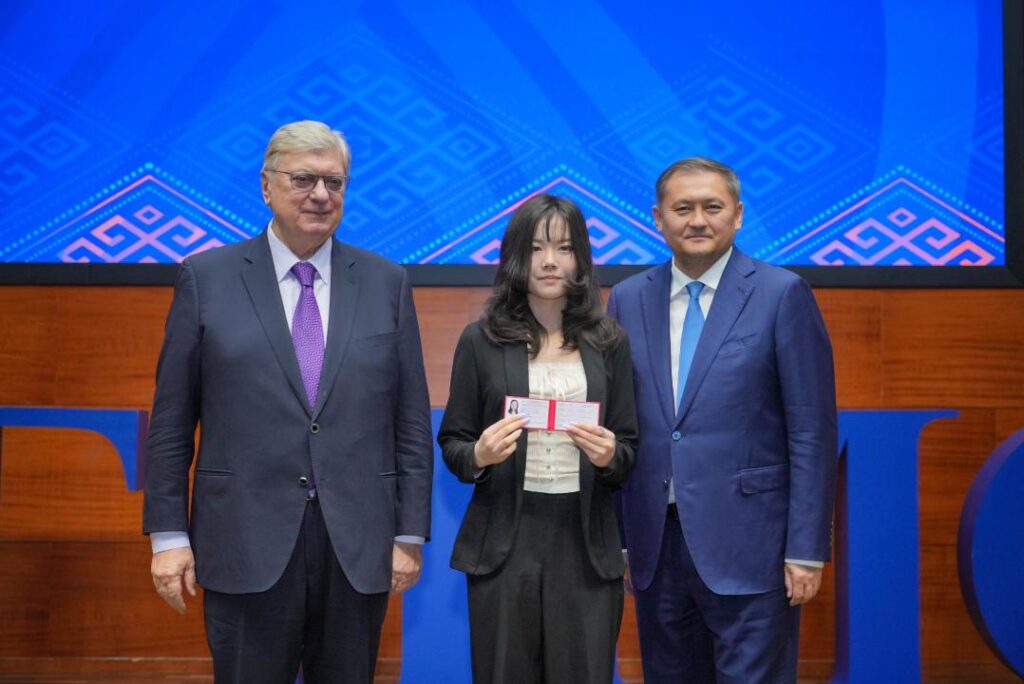
The Moscow State Institute of International Relations (MGIMO), a leading Russian university affiliated to Russia's Ministry of Foreign Affairs, has officially opened a branch at L.N. Gumilyov Eurasian National University in Astana. On November 1, the inaugural class of 103 students at the new MGIMO Astana campus received their student ID cards from Kazakhstan’s Minister of Science and Higher Education, Sayasat Nurbek, and MGIMO Rector Anatoly Torkunov. According to Torkunov, the academic programs at the Astana branch are designed to train specialists for key sectors of Kazakhstan’s economy, business, and international relations. Kazakhstan’s Ministry of Science and Higher Education reported that MGIMO Astana currently offers two undergraduate programs, World Mineral Resources and Energy Markets and Analysis and Modeling of Socioeconomic and Business Processes, as well as two master’s programs: Financial Economics and Financial Technologies and Multilateral Institutions and Management of Global Technological Development. Artem Malgin, director of the MGIMO Astana branch, noted that undergraduate students will spend two semesters studying in Moscow, while master’s students will study there for one semester. Courses at the branch are taught by faculty from both MGIMO and the Eurasian National University. MGIMO Astana is the university’s second international campus. Its first overseas branch, MGIMO Tashkent, opened in Uzbekistan and currently offers six undergraduate and graduate programs tailored to the local academic context and taught by MGIMO faculty.

New Partnerships Aim to Turn Kyrgyz Students into Entrepreneurs

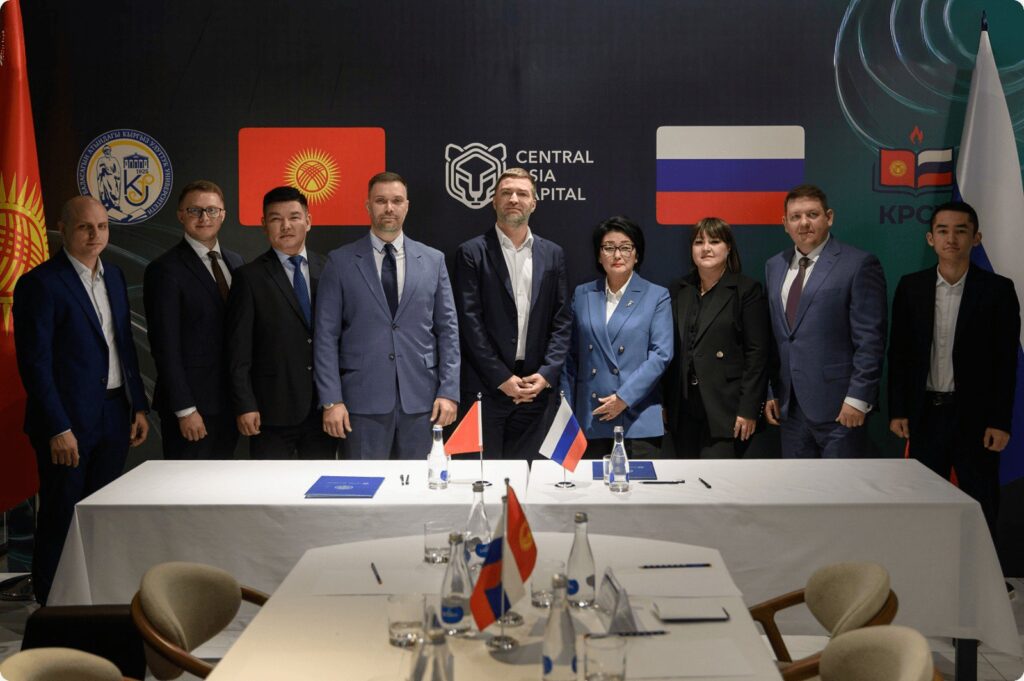
On October 20, the investment fund Central Asia Capital signed strategic cooperation agreements with Jusup Balasagyn Kyrgyz National University (KNU) and the Kyrgyz-Russian Slavic University (KRSU) to promote practice-oriented education, support student startups, and create new employment opportunities. The partnerships aim to bridge the gap between academia and industry by providing students with hands-on business experience, mentorship, and pathways to entrepreneurship. “Our agreements with KNU and KRSU are a major step toward creating conditions where students not only gain knowledge but also apply it in real business settings. This is a strategic investment in the future of Kyrgyzstan’s economy,” said Anton Sobin, Chairman of the Board of Directors at Central Asia Capital. A flagship initiative under the agreements will be the launch of an Acceleration School, where students can develop business projects, receive expert mentorship, and compete for investment grants. “We want young people to see that they can build successful businesses in Kyrgyzstan without going abroad,” Sobin emphasized. Under the agreement with KNU, the fund will support curriculum modernization, scholarship programs, and internship placements within its subsidiaries and partner firms. The KRSU partnership emphasizes innovation and startup support, along with infrastructure development. Planned upgrades include a new innovation lab, enhanced sports facilities, and improvements to the university campus. Central Asia Capital will also assist in the renovation of KRSU’s educational and recreational complex at Lake Issyk-Kul.