• KZT/USD = 0.00224
  • TJS/USD = 0.10860
  • UZS/USD = 0.00008
  • TMT/USD = 0.29850
  • KZT/USD = 0.00224
  • TJS/USD = 0.10860
  • UZS/USD = 0.00008
  • TMT/USD = 0.29850
  • KZT/USD = 0.00224
  • TJS/USD = 0.10860
  • UZS/USD = 0.00008
  • TMT/USD = 0.29850
  • KZT/USD = 0.00224
  • TJS/USD = 0.10860
  • UZS/USD = 0.00008
  • TMT/USD = 0.29850
  • KZT/USD = 0.00224
  • TJS/USD = 0.10860
  • UZS/USD = 0.00008
  • TMT/USD = 0.29850
  • KZT/USD = 0.00224
  • TJS/USD = 0.10860
  • UZS/USD = 0.00008
  • TMT/USD = 0.29850
  • KZT/USD = 0.00224
  • TJS/USD = 0.10860
  • UZS/USD = 0.00008
  • TMT/USD = 0.29850
  • KZT/USD = 0.00224
  • TJS/USD = 0.10860
  • UZS/USD = 0.00008
  • TMT/USD = 0.29850
12 November 2026

Viewing results 1 - 6 of 4

Kazakhstan Poverty Reduction Stalls Despite Economic Growth

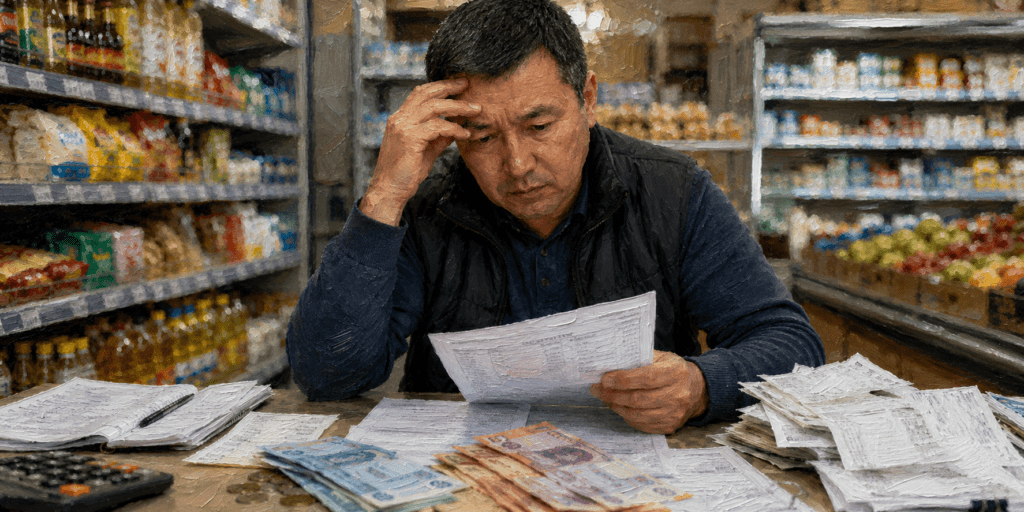
Kazakhstan has made little progress in reducing poverty in recent years despite continued economic growth, according to the World Bank’s October 2026 Poverty & Equity Brief. The Bureau of National Statistics puts the national poverty rate at 5% in 2025, unchanged from 2024. The World Bank’s brief gives a slightly lower figure of 4.9%, equivalent to approximately 1.02 million people living below the national poverty line. The national rate fell from 18.2% in 2006 to 2.9% in 2013. However, a 2018 change to the calculation of the subsistence minimum, which defines the national poverty line, limits direct comparisons with earlier figures. Much of Kazakhstan’s earlier success in reducing poverty was driven by higher earnings from employment. In 2025, however, gross domestic product per person grew by 5.2%, while wages fell by 1.4% and incomes by 2.3% after adjusting for inflation, according to the brief. The bank’s 2024 assessment linked slower poverty reduction to weaker economic growth and sluggish productivity gains. Kazakhstan’s economy remains heavily dependent on commodity exports, leaving household incomes vulnerable to economic shocks. The bank also uses a separate international poverty threshold of $8.30 per person per day for upper-middle-income countries, expressed in 2021 purchasing power terms to account for price differences between countries. Under this measure, 13.8% of Kazakhstan’s population was living in poverty in 2024. That represents a substantial improvement from 55.7% in 2006, although the share remained at roughly 14% between 2022 and 2024. Inflation has added to the pressure on household budgets, particularly among poorer families, which spend a larger proportion of their income on essentials. Although annual inflation has eased, prices continue to rise. The statistics bureau reported inflation of 9.2% in October 2026, with food prices 7.6% higher than a year earlier. The brief also highlights inequalities obscured by national averages. Citing estimates from the World Inequality Database, it notes that Kazakhstan’s highest-income 1% of adults received 14.9% of total income in 2024, almost as much as the 16.4% received by the lowest-income half. The bank’s projections put poverty under its international measure at 11.2% in 2025, 9.9% in 2026, and 8.7% in 2027. These projections are based on growth in economic output per person and remain highly uncertain pending household survey data, the bank warns.
Food Spending in Kazakhstan Tops Half of Consumer Budgets

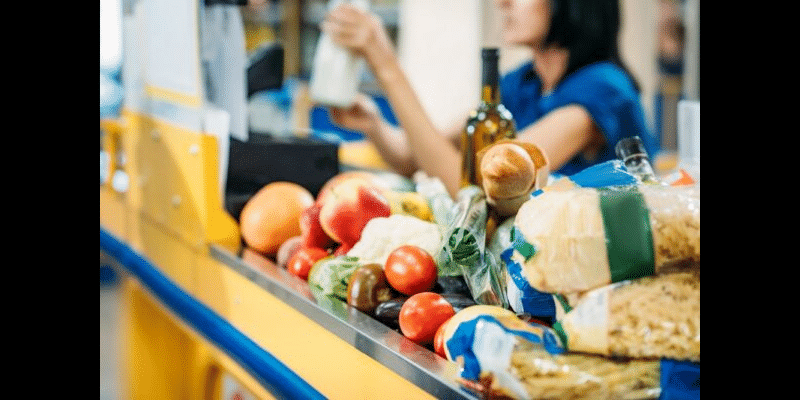
Kazakhstan, Central Asia's largest economy, ranks among the ten countries with the highest shares of consumer spending devoted to food in an international comparison. National figures show that food purchases continue to consume more than half of household consumer budgets despite rising cash incomes. According to international statistics from the United States Department of Agriculture (USDA), residents of Kazakhstan spent approximately 42% of their consumer budgets on food in 2025. The USDA measure covers food and nonalcoholic beverages purchased for consumption at home, excluding restaurant meals, alcohol, and tobacco. Higher shares were recorded in Nigeria, Myanmar, and Laos, as well as neighboring Uzbekistan. By comparison, food accounted for roughly a quarter of consumer spending in Russia and 6.4% in the U.S. Investment company Halyk Finance noted in a June 2025 analysis that Kazakhstan ranked sixth in the USDA comparison for 2023. Kazakhstan's Bureau of National Statistics uses a different food category, which also includes alcohol and tobacco. In the first quarter of 2026, this category accounted for 48.6% of household cash expenditures and approximately 54% of consumer spending. Consumer spending covers purchases of goods and services, while total cash expenditures also include debt repayments, taxes, and transfers to other households. Nonfood goods represented 19.9% of cash expenditures, services 21.7%, and another 7.6% went toward repaying loans and other debts. Halyk Finance found that this national food category had accounted for more than half of household cash expenditures for five consecutive years by early 2025. Since January 2026, however, the bureau has classified spending at cafes and restaurants as services rather than food expenditures. A decline in the reported food share compared with previous years therefore cannot automatically be interpreted as an improvement in living standards. The first-quarter share varied sharply by region, reaching 57.5% in the Zhetysu region, 56% in the Mangystau region, and 54.7% in the East Kazakhstan region. The figure was 41.2% in the capital, Astana, and 47.7% in Almaty. These differences reflect household incomes, food prices, the cost of services, and consumption patterns. Annual spending on food and nonalcoholic beverages in Kazakhstan averaged $1,292 per person in 2025, an increase of 13.9% from the previous year. Meat and meat products accounted for the largest share of the food budget in the second quarter of 2026. The bureau's household spending figures show that an average household spent 61,248 tenge, approximately $135, per month on them, about one-third of its food and nonalcoholic beverage expenditures. Bread and cereals accounted for about 14%, while dairy products represented approximately 12.6%. In the first quarter of 2026, average per capita cash income was 399,819 tenge, approximately $880 over three months, or about $294 per month. In local currency, the figure rose 12.9% year over year, but this was a nominal increase that did not account for inflation. In September, annual inflation was 9.3%, while food prices rose 8.5% year over year. For lower-income households, even moderate increases in the prices of basic groceries can significantly reduce the amount available for other needs....

National Bank of Kazakhstan Cuts Base Rate to 15.75%

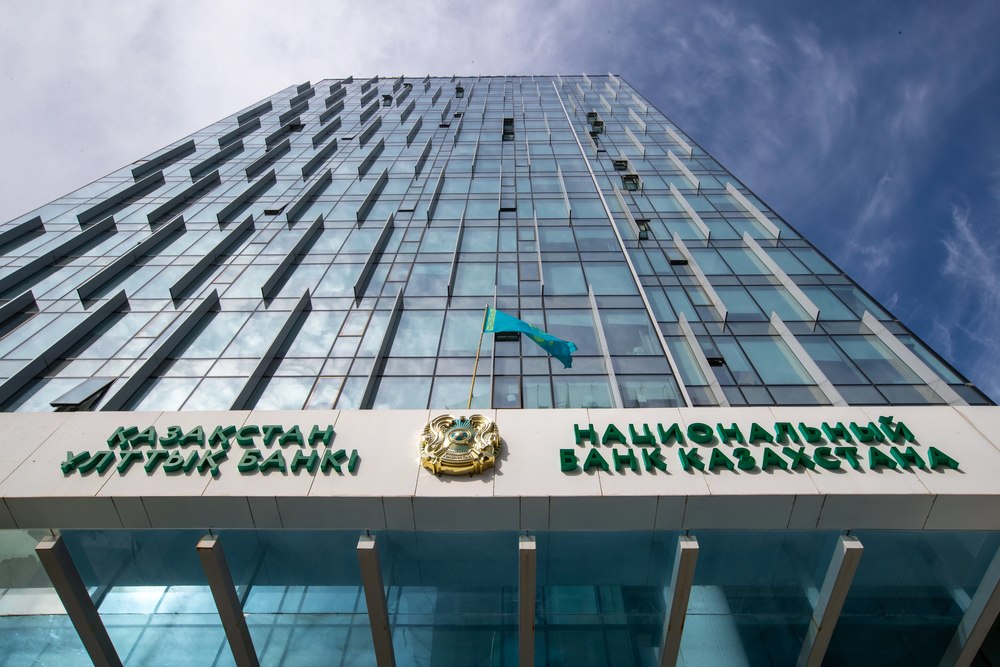
The National Bank of Kazakhstan cut its base interest rate from 16.25% to 15.75% on October 23, marking its fourth consecutive reduction since June 2026. The central bank has indicated that it may keep the rate unchanged through the end of the year, despite a continued slowdown in inflation.Annual inflation declined to 9.3% in September from 9.8% in August, while households’ inflation expectations fell from 12.1% to 11.8%. According to the National Bank, a stronger tenge and relatively tight monetary policy helped slow price increases. Food inflation declined to 8.5%, while non-food inflation fell to 11%. The base rate had remained at 18% since October 2025. It was lowered to 17% in June 2026, 16.75% in July, and 16.25% in September. The cuts have lowered the base rate by 2.25 percentage points. The base rate influences bank lending costs and deposit yields. Lowering it creates conditions for a gradual reduction in borrowing costs for businesses and households, although commercial banks set their own interest rates based on borrowers’ credit risks and funding costs. Nevertheless, borrowing costs remain high, reflecting the challenges facing Kazakhstan’s economy. Inflation is still almost twice the central bank’s 5% target, meaning prices continue to rise rapidly, even as the pace of increase slows. Meanwhile, strong economic growth has brought limited relief to households: official figures show that real per capita incomes increased by just 0.7% year-on-year in the second quarter. National Bank Governor Timur Suleimenov said that further rate cuts will require a more sustained slowdown in inflation. The central bank identifies rising global energy and food prices, high government spending, and potential increases in regulated utility tariffs among the main risks. Annual inflation could rise slightly toward the end of the year because current prices will be compared with those recorded when Kazakhstan restricted utility tariff increases, from October 2025 to March 2026. However, the National Bank intends to focus primarily on how tariff changes affect other prices rather than responding to the tariff increases themselves. Kazakhstan’s gross domestic product grew by 4.2% in January–September 2026, driven mainly by construction, manufacturing, and transportation. Fixed capital investment increased by 7%, while investment in the non-resource sector, excluding budget funds, rose by 25%. Strong investment activity supports domestic demand while also complicating efforts to bring inflation under control. The National Bank aims to reduce inflation to 6.5–8.5% in 2027 and reach its 5% target in 2028. The next base rate decision is scheduled for December 4.

Opinion: Kazakhstan’s New Income Growth Plan – Administrative Measures Against Market Realities

Kazakhstan’s government has unveiled a Comprehensive Plan to Increase Household Incomes for 2026-2029. The Ministry of National Economy says it contains 59 measures. The stated goals include higher wages and lower inflation. The plan also aims to ease household debt. The full text of the plan has not yet been published in open access. First Vice Minister Azamat Amrin presented its main provisions at a Government press conference on June 11. The central contradiction lies in the fact that guaranteed income growth applies to only a small segment of the population. The plan creates fundamentally different conditions for the public and private sectors. It provides for mandatory salary indexation for civil servants. Their wages will be revised every three years based on accumulated inflation. According to labor market data, this category includes about 85,000 to 90,000 people less than 1% of the country’s total workforce of around 9.3 million. It is this narrow group that receives a reliable long-term mechanism of financial protection. Indexation is also planned for employees of national companies and natural monopolies. This group includes around 700,000 to 800,000 people, or 8-9% of the labor market. Employees in the social sector, teachers, doctors, and others, receive their salaries directly from the state budget. This category numbers around 1.2 million to 1.3 million people, or 13-14% of the workforce. Under Kazakhstan’s law on public service, these workers are not considered part of the state administrative apparatus. The plan does not introduce automatic three-year indexation for them; their incomes are raised through separate government decrees, usually on an annual basis depending on budgetary capacity. More than 7 million people work in the competitive private sector, small and medium-sized businesses, as well as the self-employed, accounting for more than 75% of the workforce. For this dominant category, the plan offers no direct mechanisms for income growth. Instead of financial guarantees, the document proposes using an administrative lever: officials will hold talks with private business owners to encourage them to raise wages. The only basic indicator directly affecting the incomes of low-paid private sector workers is the minimum wage. However, the government has postponed revising the minimum wage until August 2026. Private business bears the main market risks and forms the country’s tax base. It is these taxes that finance guaranteed incomes in the public sector, which in total accounts for around a quarter of the labor market, while the overwhelming majority of working citizens, about three-quarters, have no comparable protection. Economist Murat Temirkhanov, an adviser to the chairman of Halyk Finance who took part in expert discussions of the government’s plan, says this approach distorts market relations. A directive requirement to raise wages could push businesses away from formal hiring and into the shadow economy to cut costs. In his view, the plan ignores the only real source of income growth: higher labor productivity. The document devotes only one point to this factor, even though international institutions such as the International Monetary Fund and the World Bank have directly recommended...