Viewing results 1 - 6 of 137
DUSHANBE (TCA) — The Delegation of the European Union to Tajikistan said it has signed a 20 million euro agreement with KfW for construction of a small hydropower plant (HPP) in the Mountainous Badakhshan Autonomous Province of Tajikistan. Continue reading
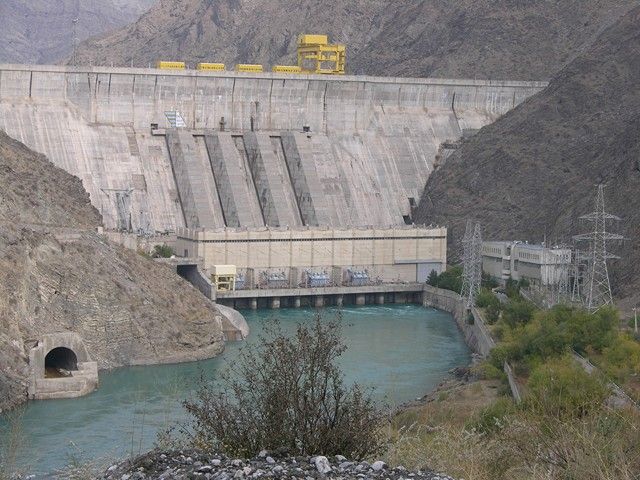
BISHKEK (TCA) — The Asian Development Bank (ADB) and the Government of the Kyrgyz Republic have signed a $100 million financing package to modernize aging equipment and improve power generation capacity at the Uch-Kurgan hydropower plant (HPP), the oldest of the six HPPs installed along the Naryn river cascade in Kyrgyzstan. Uch-Kurgan HPP’s generation capacity will be increased from 180 megawatts (MW) to 216 MW, ADB’s Country Office said. Continue reading
DUSHANBE (TCA) — Tajikistan ranks eighth in the world in hydropower resources and renewable energy. The country also ranks sixth in the world in terms of production and consumption of ecologically clean energy, Tajik President Emomali Rahmon said in an interview to Al Jazeera Television Channel. The interview was recorded on September 9 after the commissioning of the second hydro unit of the Rogun Hydropower Plant in Tajikistan, Rahmon’s press service reported on October 4. Continue reading
TASHKENT (TCA) — The Asian Development Bank (ADB) has approved a $60 million loan to construct hydropower plants (HPPs) capable of adding 25 megawatts (MW) capacity, which will help the Government of Uzbekistan achieve its goal of diversifying the country’s energy mix through greater use of clean energy sources and lowering carbon emissions, ADB’s Country Office in Uzbekistan said. “ADB’s assistance to help build HPPs will boost Uzbekistan’s aim of securing a cleaner, more sustainable energy future,” said ADB Energy Specialist for Central and West Asia Mr. Seung Duck Kim. “The project’s integrated approach to high quality design, international practices on safeguards, and climate change resilience is a template for similar development of hydropower projects in Uzbekistan.” Uzbekistan has abundant renewable energy resources, including hydropower. So far, only 1.9 gigawatts (GW) or 20% of the available hydropower potential has been exploited. The project will construct hydropower plants with 25 MW of total capacity. This is composed of a 6 MW plant in Rabat, an 8 MW plant in Chappasuy, a 10 MW plant in Tamshusu, and three mini/micro-hydropower plants with a combined capacity of 1 MW. The mini/micro-HPPs will ensure the efficient use of water resources including from spillover water from dams or irrigation canals, and can be alternate sources of electricity in rural and remote villages. The project will also help the government to formulate a hydropower development masterplan, which will help identify potential private sector investment opportunities through public–private partnerships. The Joint-Stock Company Uzbekhydroenergo, as the nodal agency to oversee the government’s $2.6 billion investment program to increase the country’s hydropower capacity by 1,600 MW by 2030, will be the project’s executing agency. ADB will also help improve Uzbekhydroenergo’s institutional capacity and corporate governance throughout the project. The total cost of the project is $75.3 million and is expected to be completed by the end of 2023.
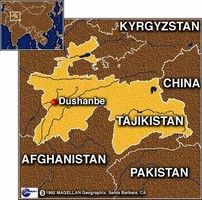
DUSHANBE (TCA) — President of Tajikistan Emomali Rahmon has officially launched the second unit of the Rogun hydropower plant. Speaking at the ceremony on September 9, Rahmon congratulated all citizens of the country on this historic event, the president’s press service said. The president said that the power plant is being built in accordance with the international norms and safety standards, using the latest technologies, and in the near future will serve not only the residents of Tajikistan but also other countries of the region. The construction of hydroelectric power stations on the rivers of Tajikistan will help to ensure a balance between electricity and water consumption, and will ensure sustainable water management and reduce electricity shortages in the region, Rahmon said. When the second unit was commissioned, the electricity generated was transmitted to the general power grid of the country. Construction of the Rogun dam and hydropower plant was started on October 29, 2016. On November 16, 2018 President Rahmon inaugurated the first unit of Rogun. Rogun will be the largest hydropower plant in the region with a capacity of 3,600 megawatts (over 17 billion kWh). At present, a total of 200 million cubic meter of water is stored in Rogun’s reservoir. Located in the upper reaches of the Vakhsh River in the Pamir Mountains, Rogun is about 90 km from Dushanbe, the capital of Tajikistan. The project was first launched in the late 1970s but halted after the Soviet Union's collapse in 1991. Now, the construction of this $3.9-billion project is being carried out by an Italian company, Salini Impregilo.
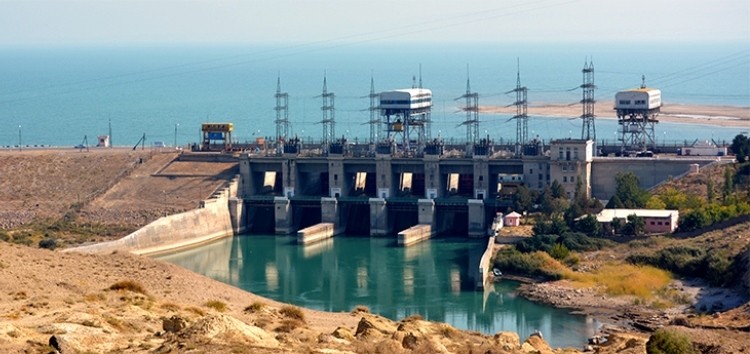
DUSHANBE (TCA) — A ceremony to mark the start of work was held on August 23 at Tajikistan’s Qairokkum hydropower plant (QHPP). The US$ 196 million financing package organized by the European Bank for Reconstruction and Development (EBRD) is helping to complete the climate-resilient rehabilitation of QHPP to help Tajikistan improve its electricity supply, the Bank reports on its website. The work is the culmination of an investment program that began in 2014, with financing provided by the EBRD, the European Investment Bank (EIB), the Green Climate Fund (GCF), the Climate Investment Funds’ Pilot Programme for Climate Resilience, Austria and the United Kingdom. The government of Austria is also funding technical cooperation support. The financing, comprising a US$ 88 million EBRD loan, a US$ 37 million EIB loan, a US$ 50 million GCF loan and grant and a US$ 21 million Climate Investment Funds loan and grant to the state-owned power utility Barki Tojik, will fund the rehabilitation and modernization of QHPP, a 60-year-old hydropower plant that provides electricity to 500,000 people. Measures will include concrete dam works and the installation of hydraulic steel components, turbines and electromechanical equipment for the six hydropower units. The full rehabilitation will increase the plant’s installed capacity from 126 MW to 174 MW. The upgrade will introduce innovative climate resilience measures, enabling the plant to cope with the expected impact of climate change on the country’s hydrological systems. It will also build the capacity of the Tajik hydropower operator to anticipate, assess and manage climate-related risks by introducing best international practices from countries such as Canada. Tajikistan is one of the countries most vulnerable to climate change. Its glacial hydrology and, by extension, its hydropower sector, are highly sensitive to the impacts of climate change and the project offers a model of how carefully designed investments can make hydropower more resilient. This model can be replicated across the country and the region. To date, the EBRD has invested nearly €670 million (US$ 740 million equivalent) in various sectors of Tajikistan’s economy. The EBRD is also supporting Tajikistan’s efforts to adapt to the effects of climate change.