• KGS/USD = 0.01144 0%
  • KZT/USD = 0.00211 0%
  • TJS/USD = 0.10802 -0.18%
  • UZS/USD = 0.00008 0%
  • TMT/USD = 0.28490 0%
  • KGS/USD = 0.01144 0%
  • KZT/USD = 0.00211 0%
  • TJS/USD = 0.10802 -0.18%
  • UZS/USD = 0.00008 0%
  • TMT/USD = 0.28490 0%
  • KGS/USD = 0.01144 0%
  • KZT/USD = 0.00211 0%
  • TJS/USD = 0.10802 -0.18%
  • UZS/USD = 0.00008 0%
  • TMT/USD = 0.28490 0%
  • KGS/USD = 0.01144 0%
  • KZT/USD = 0.00211 0%
  • TJS/USD = 0.10802 -0.18%
  • UZS/USD = 0.00008 0%
  • TMT/USD = 0.28490 0%
  • KGS/USD = 0.01144 0%
  • KZT/USD = 0.00211 0%
  • TJS/USD = 0.10802 -0.18%
  • UZS/USD = 0.00008 0%
  • TMT/USD = 0.28490 0%
  • KGS/USD = 0.01144 0%
  • KZT/USD = 0.00211 0%
  • TJS/USD = 0.10802 -0.18%
  • UZS/USD = 0.00008 0%
  • TMT/USD = 0.28490 0%
  • KGS/USD = 0.01144 0%
  • KZT/USD = 0.00211 0%
  • TJS/USD = 0.10802 -0.18%
  • UZS/USD = 0.00008 0%
  • TMT/USD = 0.28490 0%
  • KGS/USD = 0.01144 0%
  • KZT/USD = 0.00211 0%
  • TJS/USD = 0.10802 -0.18%
  • UZS/USD = 0.00008 0%
  • TMT/USD = 0.28490 0%

Viewing results 1 - 6 of 49

Tajikistan Links Green Energy Push to Regional Power Exports

Tajikistan is positioning renewable energy and regional electricity trade as central to its long-term economic strategy, as Dushanbe seeks to build on its hydropower base while reducing exposure to climate- and seasonal-supply risks. The message was delivered by Deputy Minister of Energy and Water Resources Sharif Makhmadzoda during a ministerial dialogue on the renewable energy transition in Central Asia. The session, titled International Cooperation for a Sustainable and Diversified Energy Future, was held as part of the Baku Energy Forum. According to Makhmadzoda, the energy transition has become one of Tajikistan’s key long-term development priorities. He said the shift toward renewable energy is not only about meeting international climate commitments, but also about strengthening energy security, supporting industrial development, and improving living standards. Tajikistan continues to place hydropower at the center of its energy strategy. Makhmadzoda noted that approximately 95% of the country’s electricity is generated by hydroelectric power plants, making the republic one of the world’s leading producers of green energy. Makhmadzoda also stressed the need to diversify the country’s energy mix, citing climate change, glacier melt, seasonal changes in river flows, and rising domestic electricity demand. Against this backdrop, the government sees modernization of the energy sector and the expansion of other renewable energy sources as increasingly important. Particular attention is being paid to the development of solar and wind power generation. Regional cooperation was another key theme of Makhmadzoda’s remarks. According to the deputy minister, Tajikistan’s renewed participation in the Central Asian Unified Energy System could play an important role in creating a regional market for clean electricity. CASA-1000 is designed to carry up to 1,300 megawatts of surplus electricity from Central Asia to high-demand markets in South Asia, linking Tajikistan and Kyrgyzstan with Afghanistan and Pakistan. The comments underline a wider challenge for Tajikistan. Hydropower gives the country one of the region’s cleanest power systems, but it also leaves the energy sector heavily exposed to water availability, climate pressures, and seasonal demand peaks.

Kyrgyzstan Eyes Role in Trans-Caspian Green Power Route

Kyrgyzstan has signaled interest in taking part in the Central Asia-Azerbaijan Green Energy Corridor, a regional initiative aimed at expanding renewable electricity links across the Caspian region. The issue was discussed during a meeting between Azerbaijan’s Energy Minister Parviz Shahbazov and Kyrgyzstan’s Energy Minister Taalaibek Ibraev on the sidelines of Baku Energy Week on June 1. The ministers said the project would help integrate regional energy systems, strengthen energy security, and facilitate access to new markets for electricity generated from renewable sources. Ibraev said Kyrgyzstan’s hydropower potential and its role within the Unified Energy System of Central Asia made it a logical participant in the initiative. He added that Kyrgyzstan’s involvement would enhance the sustainability and reliability of green electricity supplies along the Caspian route. Kyrgyzstan currently faces seasonal electricity shortages and relies on imports to meet domestic demand. However, authorities expect the country to generate significant exportable surpluses once several large hydropower projects, including the long-delayed Kambarata-1 dam, are completed. The ministers also discussed fuel cooperation. The Kyrgyz side proposed increasing imports of Azerbaijani diesel as the country seeks alternatives amid rising prices for fuel traditionally supplied from Russia. The Central Asia-Azerbaijan Green Energy Corridor is one of several flagship projects aimed at strengthening energy connectivity between Central Asia, the South Caucasus, and European markets. Speaking at the Investment Forum on Energy Transition in Central Asia, held during Baku Energy Week and organized jointly by the International Renewable Energy Agency and Azerbaijan’s Energy Ministry, Shahbazov described the initiative as a key component of regional energy integration. According to Shahbazov, a strategic partnership agreement previously signed by Azerbaijan, Kazakhstan, and Uzbekistan laid the foundation for the development of a Trans-Caspian Energy Corridor. “The establishment of the strategically important Trans-Caspian energy corridor, which will interconnect the power systems of our countries, is fully aligned with the key priorities of this policy,” Shahbazov said. He added that the project could also strengthen the Middle Corridor by creating a green energy link connecting Europe with Asia and China via the Caspian Sea. Shahbazov said the feasibility study for the Caspian-Black Sea-Europe Green Energy Corridor is expected to be completed by July 2026, while the feasibility study for the Central Asia-Azerbaijan Green Energy Corridor is scheduled for completion in May 2027.

Central Asian Countries Rank Among World’s Highest Water Consumers

Several Central Asian countries rank among the world’s highest consumers of water per person, according to data compiled by the Worldometer portal. The figures, based on statistics from UN agencies including UNESCO and the UN Food and Agriculture Organization (FAO), place Turkmenistan first globally, with Uzbekistan, Tajikistan, and Kyrgyzstan also in the top ten. The figures highlight a long-standing regional challenge: heavy dependence on water-intensive agriculture combined with aging irrigation systems that lose substantial amounts of water before it reaches fields. Turkmenistan leads the global ranking with daily water consumption of 15,445 liters per person. Uzbekistan ranks fourth worldwide at 4,778 liters per capita per day, followed by Tajikistan with 4,460 liters and Kyrgyzstan with 4,153 liters. Kazakhstan recorded the lowest level among Central Asian states, at 3,397 liters per person daily, though that still places it among relatively high-consuming countries internationally. In terms of total annual water use, Uzbekistan consumes the largest volume in the region at 54.56 billion cubic meters a year. It is followed by Turkmenistan with 27.9 billion cubic meters, Kazakhstan with 22.77 billion, Tajikistan with 11.49 billion, and Kyrgyzstan with around 8 billion cubic meters. Experts say agriculture explains much of the region’s high consumption. Globally, farming accounts for about 70% of freshwater use, compared with 20% for industry and 10% for households. In Central Asia, agriculture represents more than 80% of water consumption, while up to 40% of water is estimated to be lost through deteriorating irrigation infrastructure. The problem has become increasingly significant as freshwater demand rises worldwide. According to UN estimates, freshwater withdrawals have tripled over the past 50 years, while global demand continues to grow by around 64 billion cubic meters annually because of population growth, changing consumption patterns, energy production, and biofuel development. Several Central Asian governments have begun introducing reforms aimed at reducing water losses. In Uzbekistan, authorities joined the World Bank’s Water Forward initiative and announced plans to expand water-saving technologies across 4.1 million hectares of irrigated farmland while reducing irrigation losses by 25%. Kazakhstan has also faced recurring shortages. Seasonal water restrictions are regularly introduced in southern regions, and this year the government approved consumption limits because of expected shortages during the agricultural season. The issue is closely linked to energy production in upstream countries. Studies by the Organization for Economic Co-operation and Development (OECD) indicate that more than 80% of electricity generation in Kyrgyzstan and Tajikistan comes from hydropower, creating a close link between irrigation needs and energy supply. Limited coordination over water releases and electricity generation has contributed to summer shortages in some years. The figures show the scale of the challenge for Central Asian governments seeking to reduce water losses and manage shared rivers more effectively.

Kazakhstan, Kyrgyzstan, Uzbekistan Agree on Toktogul Water Releases

Energy and water ministers from Kazakhstan, Kyrgyzstan, and Uzbekistan signed a trilateral protocol in Tashkent on May 7 establishing agreed water release volumes and schedules from the Toktogul Reservoir for the next two months. The Toktogul Reservoir plays a central role in maintaining water and energy stability across Central Asia. The Toktogul Hydropower Plant, located on the Naryn River, the main tributary of the Syr Darya, is Kyrgyzstan’s largest power station and supplies around 40% of the country’s electricity. The reservoir serves a dual purpose: generating electricity for Kyrgyzstan while regulating water flows essential for downstream agriculture in Kazakhstan and Uzbekistan. During winter, Kyrgyzstan typically increases electricity generation to meet heating demand, often lowering reservoir levels and reducing the amount of water available for irrigation during the following spring and summer. According to Kazakhstan’s Energy Ministry, the newly signed protocol removes uncertainty for farmers in southern Kazakhstan at the start of the agricultural season and allows both Kazakh and Uzbek farmers to begin irrigation activities on schedule. To ensure stable water supplies throughout the remainder of the growing season, the three countries agreed to continue coordination in stages. The next ministerial meeting is scheduled for mid-June in Bishkek, where officials plan to finalize water release schedules for the critical summer months of July, August, and September. The agreement highlights the continued functioning of the region’s interstate water-energy exchange mechanism. Coordination over summer irrigation flows was preceded by extensive cooperation during the winter season. From September 2025 to April 2026, Kazakhstan supplied more than 1.5 billion kilowatt-hours of electricity to Kyrgyzstan, helping the upstream country reduce winter water releases for heating and preserve additional reserves in the Toktogul Reservoir for summer irrigation needs in Kazakhstan and Uzbekistan. According to Kyrgyzstan’s Deputy Energy Minister Altynbek Rysbekov, the Toktogul Reservoir held 7 billion cubic meters of water on April 1, 2026, down from 9.14 billion cubic meters on January 1 after the winter heating season. The reservoir’s so-called “dead water level,” the threshold below which turbines can no longer operate, stands at 6.5 billion cubic meters.

Uzbekistan Plans $5.8 Billion Expansion of Hydropower Sector

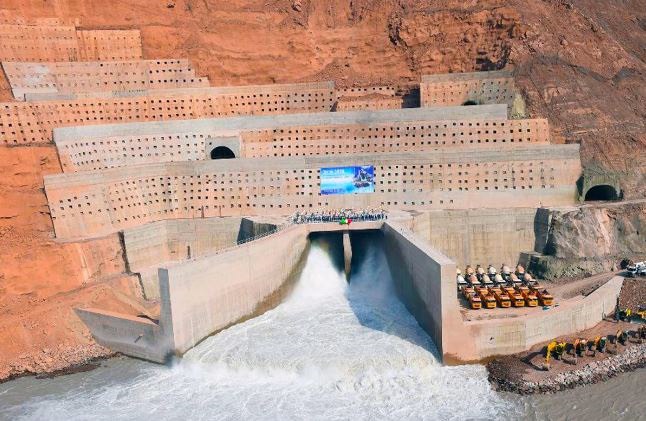
Uzbekistan is planning a major expansion of its hydropower sector, with 73 new projects worth $5.8 billion scheduled for implementation between 2026 and 2032, officials said during a presentation to Shavkat Mirziyoyev. According to the briefing, the country aims to add 3.6 gigawatts of new generating capacity as part of efforts to diversify its energy mix. Currently, most of Uzbekistan’s electricity is produced from natural gas and coal, while hydropower accounts for only about 10-12%. Officials emphasized that Uzbekistan’s extensive water network, more than 150,000 kilometers of rivers, canals, and streams, represents a largely untapped energy resource. Expanding hydropower is seen as key to improving energy stability, reducing dependence on fossil fuels, and making more efficient use of water. The sector has already seen significant growth in recent years. The number of hydroelectric power plants has increased from 36 in 2017 to 100 in 2025, while installed capacity has risen from 1.6 gigawatts to 2.4 gigawatts. Among the projects discussed, the Upper Pskem hydropower plant in the Bostanlyk district stands out. With an investment of $365 million, it is expected to generate 160 megawatts of electricity and supply power to around 161,000 households. In the Fergana region, a 15-megawatt plant is planned in the Sokh district, which is expected to cover 71% of local electricity demand. Authorities also reviewed the potential for constructing 42 small hydropower plants in the Upper Tupalang area, which could add 541 megawatts of capacity and generate up to 1.9 billion kilowatt-hours annually. In addition, nearly 3,000 small and micro hydropower plants are planned, with a combined capacity of 164 megawatts. This year alone, 13 hydropower plants and one wind power facility are expected to come online, with a total capacity of 114 megawatts and annual generation of 537 million kilowatt-hours. A 20-megawatt wind project is also under construction in Bostanlyk with $28 million in grant funding. Officials said Uzbekistan is also considering the construction of three pumped-storage hydropower plants with a combined capacity of 1.4 gigawatts, which would help balance electricity supply and demand. The presentation highlighted ongoing efforts to modernize the sector through digital technologies. More than 3,500 monitoring devices have already been installed to track water levels, weather conditions, and infrastructure performance in real time. The plans build on earlier developments in the sector. Last year, Uzbekistan launched the first stage of the Naryn hydropower cascade, a project valued at over $428 million. The initial plant, built using domestic materials and equipment, produces 171 million kilowatt-hours annually and supplies electricity to around 430,000 households.

Chinese Company to Build Hydropower and Solar Plants in Kyrgyzstan

Construction of a small hydropower plant and a solar power station has begun in Kyrgyzstan’s Jalal-Abad region as part of efforts to expand domestic electricity generation and reduce reliance on energy imports. The groundbreaking ceremony took place on April 28 and was attended by the presidential envoy to the region, Tilek Tekebayev; the project’s scientific supervisor and former Prime Minister Akylbek Japarov; as well as representatives of the Chinese corporation SINOMACH. The project involves the construction of two facilities: a small hydropower plant with a capacity of 5 megawatts and an annual output of around 20 million kWh, and a solar power plant with a capacity of 1 megawatt, generating approximately 1.6 million kWh per year. The total investment, to be implemented under a public-private partnership model, is estimated at $259.8 million. Once operational, the facilities are expected to help reduce electricity shortages in the region and decrease dependence on imports. The project is also expected to create more than 100 jobs and provide irrigation for over 1,000 hectares of arid land. Kyrgyzstan is accelerating the development of small hydropower projects amid rising electricity demand and limited generation capacity. Currently, 48 small hydropower plants are operating in the country, with a combined capacity of around 180 megawatts. Another 50 facilities are under construction, which authorities say will strengthen the country’s energy independence.