• KGS/USD = 0.01143 0%
  • KZT/USD = 0.00213 0%
  • TJS/USD = 0.10593 0.47%
  • UZS/USD = 0.00008 0%
  • TMT/USD = 0.28571 0%
  • KGS/USD = 0.01143 0%
  • KZT/USD = 0.00213 0%
  • TJS/USD = 0.10593 0.47%
  • UZS/USD = 0.00008 0%
  • TMT/USD = 0.28571 0%
  • KGS/USD = 0.01143 0%
  • KZT/USD = 0.00213 0%
  • TJS/USD = 0.10593 0.47%
  • UZS/USD = 0.00008 0%
  • TMT/USD = 0.28571 0%
  • KGS/USD = 0.01143 0%
  • KZT/USD = 0.00213 0%
  • TJS/USD = 0.10593 0.47%
  • UZS/USD = 0.00008 0%
  • TMT/USD = 0.28571 0%
  • KGS/USD = 0.01143 0%
  • KZT/USD = 0.00213 0%
  • TJS/USD = 0.10593 0.47%
  • UZS/USD = 0.00008 0%
  • TMT/USD = 0.28571 0%
  • KGS/USD = 0.01143 0%
  • KZT/USD = 0.00213 0%
  • TJS/USD = 0.10593 0.47%
  • UZS/USD = 0.00008 0%
  • TMT/USD = 0.28571 0%
  • KGS/USD = 0.01143 0%
  • KZT/USD = 0.00213 0%
  • TJS/USD = 0.10593 0.47%
  • UZS/USD = 0.00008 0%
  • TMT/USD = 0.28571 0%
  • KGS/USD = 0.01143 0%
  • KZT/USD = 0.00213 0%
  • TJS/USD = 0.10593 0.47%
  • UZS/USD = 0.00008 0%
  • TMT/USD = 0.28571 0%

Viewing results 1 - 6 of 136

Central Asia Deepens Trade Links with India Amid Growing Economic Ties

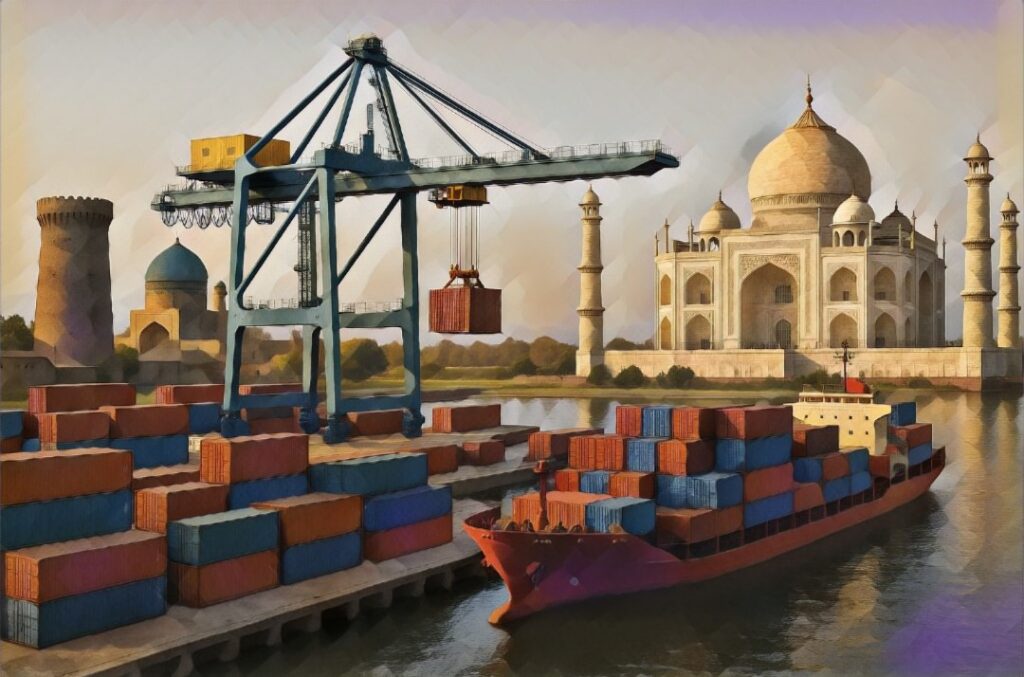
Trade between the countries of Central Asia and India is growing, edging closer to the $2 billion mark and signaling a new phase in cooperation across the Eurasian continent. According to data from the Eurasian Development Bank (EDB), this surge reflects the expanding economic footprint of both regions. Nikolay Podguzov, Chairman of the EDB, emphasized that Central Asia and India are not only continental neighbors but also markets with significant untapped potential. Of the bank’s seven member states, four — Kazakhstan, Kyrgyzstan, Tajikistan, and Uzbekistan — form the heart of Central Asia. Their growing engagement with New Delhi is now setting the tone for broader regional cooperation. Strong Growth as a Foundation The economic fundamentals supporting this trend are healthy. Central Asia has maintained steady growth of around 4.5% annually, while India’s economy continues to expand even faster, at roughly 6% per year. But despite this positive backdrop, there are still logistical hurdles. Trade routes between India and Central Asia must pass through intermediary countries such as Iran, Russia, or Azerbaijan — each adding layers of bureaucracy, customs costs, and delays. Experts argue that overcoming these transit bottlenecks will be crucial if India and Central Asia are to unlock the full potential of their partnership. New initiatives like the International North-South Transport Corridor and discussions on India’s role in developing Chabahar Port in Iran reflect ongoing efforts to make these pathways more efficient. Kazakhstan: The Leading Partner Kazakhstan is India’s largest trading partner in Central Asia, with bilateral trade crossing $1 billion — more than half of the region’s total trade with India. Astana supplies uranium, which is important for India’s civilian nuclear energy program, along with crude oil and steel products. In return, India exports pharmaceuticals, textiles, and consumer goods, with exports valued at around $260 million. The two countries also collaborate in strategic sectors such as energy security and defense. In 2022, India and Kazakhstan conducted joint military drills under the Kazind exercise, which reflects a broadening relationship beyond commerce. Uzbekistan: A Growing Market Trade with Uzbekistan has risen steadily, approaching $500 million in bilateral turnover, while India’s exports to Uzbekistan are valued at around $1.3 billion. Pharmaceuticals, machinery, and agricultural products dominate New Delhi’s exports, while Uzbekistan provides fruits, minerals, and cotton to the Indian market. Uzbekistan and India recently increased engagement through forums like the India-Central Asia Dialogue, where issues of connectivity, counterterrorism, and energy cooperation are regularly discussed. Tajikistan: Small but Strategic Although trade volumes with Tajikistan hover around $100 million, the partnership has strategic importance. Aluminium from Tajikistan’s massive TALCO smelter is a key export, while India provides medicines and consumer goods to Tajikistan. Beyond commerce, Dushanbe is a vital security partner for New Delhi. India operates a military facility in Tajikistan — the Farkhor Air Base, its only such presence abroad. Kyrgyzstan: Modest Trade, Strong Ties Kyrgyzstan’s trade with India is relatively small, at about $50 million, but the relationship is significant in the context of regional institutions like the Eurasian Economic Union...
Indian Gold Miners Enter Kyrgyz Market for the First Time

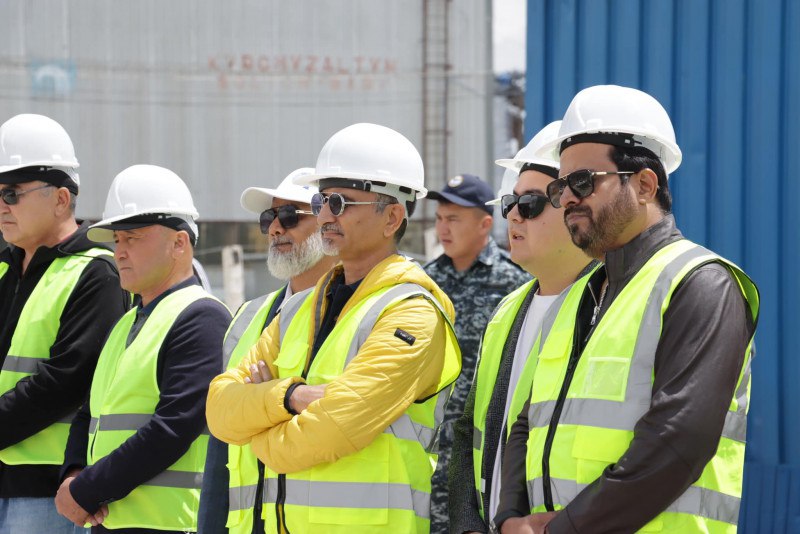
Indian mining firm Deccan Gold Mines has launched operations at the Altyn Tor gold deposit in Kyrgyzstan’s Naryn region, marking the first overseas venture by an Indian gold mining company, according to Indian media reports. The project is being developed through Deccan's local subsidiary, Avelum Partners LLC, which holds a 60% stake in the mine. Production of doré bars is scheduled to begin in October 2025. Geological assessments estimate the Altyn Tor deposit contains approximately 4.6 million tons of gold-bearing ore with an average grade of 1.2 grams per ton, translating to roughly 60 tons of total gold reserves. Hanuma Prasad Modali, CEO of Deccan Gold Mines, said preparations are progressing on schedule. “Eleven conveyor systems have been installed at the site, and the crushing complex has been tested. In early September, the ball mill, one of the key components of the processing plant, will go online, enabling us to reach design capacity as planned,” Modali stated. The company has positioned the project as a model of responsible mining, aiming to strengthen bilateral ties between India and Kyrgyzstan. Despite challenging climatic conditions at the site’s 3,300-meter elevation, year-round production is planned. Altyn Tor forms part of the larger Solton-Sary gold deposit, originally discovered by Soviet geologists in the 1940s. Mining activity at the site was active through the 1990s and early 2000s but later ceased due to insufficient investment. Deccan Gold Mines is also evaluating the potential for processing materials in the tailings pond, where residual gold remains. The company remains the only publicly listed gold mining firm on the Indian stock exchange. News of its overseas expansion triggered a surge in share prices. Earlier, Kyrgyzaltyn, the state-owned holding company, confirmed that production at the site was expected to commence in the second half of 2024.

Uzbekistan, India Boost Strategic Partnership in High-Level Call

Uzbek President Shavkat Mirziyoyev spoke with Indian Prime Minister Narendra Modi on August 12, 2025, in a telephone conversation aimed at deepening the strategic partnership between Uzbekistan and India. The two leaders discussed expanding cooperation across trade, connectivity, healthcare, technology, and cultural exchanges, with Modi describing their conversation as “fruitful.” Posting on X, Modi stated that “We reviewed the progress achieved in key areas of our bilateral cooperation and reaffirmed our shared resolve to further advance the India-Uzbekistan Strategic Partnership.” Ahead of India’s 79th Independence Day, Mirziyoyev highlighted the longstanding friendship between the two nations. The talks underscored Uzbekistan’s growing role as a vital partner in Central Asia for India, as both countries seek to bolster regional stability and their economic development. Since Uzbekistan’s independence in 1991, the country has steadily built ties with India, which was among the first to recognize its sovereignty. The two nations formally established diplomatic relations in 1992 and elevated their engagement with a Strategic Partnership declaration in 2011. Uzbekistan has hosted several visits by Modi, most recently in September 2022, when he participated in the 22nd SCO summit held in Samarkand. Mirziyoyev has visited India on two occasions. Uzbekistan plays a central role in Central Asian connectivity initiatives such as the China–Kyrgyzstan–Uzbekistan railway project, enhancing trade routes and regional cooperation. It is also exploring collaboration with India in healthcare and technology, alongside efforts to promote cultural and educational exchanges that strengthen ties between their peoples. Bilateral economic ties are steadily growing, with trade between India and Uzbekistan reaching approximately $756.6 million in 2023, up from $444.2 million in 2020. Indian exports include pharmaceuticals, machinery, and food products, while Uzbekistan supplies fruits, fertilizers, and textiles. More than 300 Indian companies now operate in Uzbekistan, encouraged by a new Bilateral Investment Treaty signed in 2024, which is aimed at boosting joint ventures in healthcare, IT, and tourism. Both governments have signaled their intent to diversify into renewable energy, agriculture, and hospitality. Connectivity is a key pillar of the partnership. Uzbekistan is working with India on projects like the International North–South Transport Corridor and seeking operational access to Iran’s Chabahar Port, which would give Tashkent a direct route to the Indian Ocean. Security and defense cooperation have intensified since the creation of the Joint Working Group on Defense in 2019. The two countries hold the annual Dustlik military exercises, alternating between India and Uzbekistan, to strengthen counter-terrorism and urban warfare capabilities. The sixth edition was held in Pune from April 16–28, 2025, underscoring growing interoperability between the two militaries. Uzbek forces regularly train at Indian military academies, and discussions are underway on defense industry collaboration. Cultural and educational ties also remain vibrant. Bollywood and Indian music enjoy enduring popularity in Uzbekistan. Around 10,000 Indian students now study across Uzbek institutions, particularly in medicine. On the tech side, ministers agreed this year to launch an India–Central Asia Digital Partnership Forum, with Uzbekistan offering to host the inaugural meeting, linking India’s digital public infrastructure experience with Central Asia’s modernization...

Opinion: Strengthening the Silk Bonds — India’s Renewed Push Towards Central Asia

The velvet-draped tables of New Delhi’s 4th India-Central Asia Dialogue convened under the stewardship of External Affairs Minister Dr. S. Jaishankar on June 6, 2025, radiated congeniality, with history and strategy converging. This high-level engagement, attended by foreign ministers from Kazakhstan, Kyrgyzstan, Tajikistan, Turkmenistan, and Uzbekistan, marked more than a diplomatic ritual — it signaled India's deepening resolve to recalibrate its strategic posture in a region too long shaped by other powers. Yet beneath pledges of shared civilizational futures and energy corridors, an uncomfortable truth lingered as India remains a guest, not a player, in Central Asia’s great power theatre. Further, India’s internal socio-political landscape presents notable challenges that inadvertently shape its foreign policy credibility, particularly in the eyes of Central Asian nations. Persistent communal tensions — most visibly manifested in the Hindu-Muslim divide, the controversial demolition of the Babri Masjid in 1992, and the politically charged construction of the Ram Mandir — have deepened perceptions of religious polarization. Such domestic developments, while largely internal, resonate beyond India’s borders, especially in the Muslim-majority Central Asian republics, raising concerns about inclusivity and pluralism in India’s governance model. Simultaneously, India’s strained relations with key neighbors — Pakistan, and China, and increasingly volatile dynamics with Nepal, Bangladesh, and Sri Lanka — have reinforced a regional image of discord and inconsistency. These internal and regional complexities contribute to a trust deficit, making Central Asian countries cautious in placing long-term strategic confidence in India. For New Delhi to emerge as a dependable partner in the region, addressing internal fissures and presenting a coherent, inclusive national vision is as vital as economic or diplomatic outreach. Central Asia sits at the center of ancient trade routes and modern geopolitical competition. For India, its importance is twofold: the region is a bridge to Eurasia and a repository of energy resources critical to India’s growing economy. But India’s historical connectivity to Central Asia — through the Silk Road, shared cultural legacies, and spiritual exchanges — has, for decades, been overshadowed by geographic and political barriers, notably the lack of direct overland access due to Pakistan. Recognizing these constraints, the dialogue showcased a strategic pivot. India reaffirmed its commitment to enhancing regional connectivity through the International North-South Transport Corridor (INSTC) and the Chabahar Port in Iran. While geopolitical instability in Iran and Afghanistan poses challenges, India's emphasis on multimodal routes demonstrates pragmatic flexibility. In an era defined by supply chain resilience and multipolar geopolitics, connectivity is no longer just an infrastructure question — it is a currency of influence. The dialogue also addressed the evolving regional security architecture. India’s proposal for counter-terrorism cooperation, capacity building, and intelligence sharing was timely and necessary. However, the dialogue echoed with familiar refrains, viz. civilizational bonds, shared destiny, and multipolar cooperation. Yet beneath the diplomatic choreography lies a haunting question. Can India transcend its historical role as Central Asia’s cultural cousin to become its strategic confidant? History whispers caution. The Burden of History: From Silk Roads to Shadow Roads For centuries, the Silk Road...

Indian Students Involved in New Year’s Eve Brawl Deported from Kazakhstan

Six Indian students have been deported from Kazakhstan following their involvement in a mass brawl in Almaty on New Year’s Eve​. The students, enrolled at a university in Almaty, were the only individuals implicated in the altercation, with no Kazakh citizens involved. "This was an internal conflict among the students," Kazakhstan’s Minister of Science and Higher Education, Sayasat Nurbek commented. "The Almaty Police Department is conducting an investigation. We have discussed the matter with the Indian Embassy and reached a joint decision to deport the students." The altercation occurred at a café on Kok-Tobe, a popular mountain destination in Almaty​. What began as a quarrel between the students escalated into a violent mass brawl, with video footage showing participants wielding chairs, tables, and batons. The footage quickly circulated online, drawing public attention to the incident​​. According to the Almaty Police Department, all individuals involved in the fight were identified and taken to the Medeusky District Police Department for questioning.

Kazakhstan’s Strategic Stand: Navigating BRICS Amidst Geopolitical Tensions

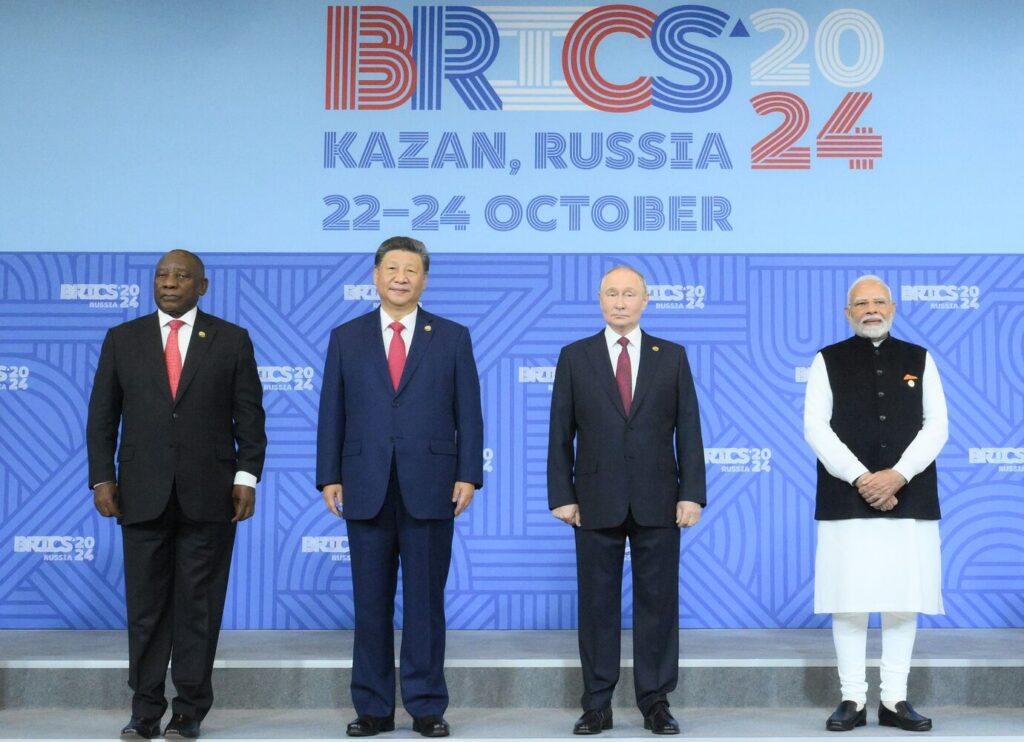
In recent days, BRICS - an intergovernmental organization comprising Brazil, Russia, India, China, South Africa, Iran, Egypt, Ethiopia, and the UAE - has become one of the most critical topics on the Eurasian region's information agenda. Russian propaganda has presented the BRICS summit, which is taking place in Kazan, as a global event. However, the press secretary of Kazakhstan's president, Kassym-Jomart Tokayev, has stated that the republic has no plans to apply for BRICS membership in the foreseeable future, which has caused an adverse reaction in the Russian media, and led to a seemingly retaliatory Russian ban on Kazakhstan's agro-products. The Kazakhstani side, represented by the expert community, has tried to explain that its reasoning is based not only on Astana's national interest, but also on its obligations to its partners in Central Asia. Perhaps the most convincing argument is that the C5+1 mechanism is effective as a format for the region's interactions with the outside world. Therefore, it is not worth breaking this mechanism. No Central Asian country besides Kazakhstan has been invited to join BRICS, but Astana cannot afford to damage the established alliance by creating the conditions for distrust from its neighbors; Central Asia has already gone through a period of distrust. At the same time, rejecting the idea of joining BRICS, where India, Russia, Brazil and China are the founding members, does not unduly affect Kazakhstan's interactions with these powers. Kazakhstan works with China and Russia within the framework of the SCO (Shanghai Cooperation Organisation) and EAEU (Eurasian Economic Union), and has signed multiple partnership and alliance agreements with Beijing and Moscow. In other words, the information hysteria that Kazakhstan will exit Russia's sphere tomorrow and join the "Global West" (a term used in the Russian media) has no basis in reality. At the same time, however, it is evident that most Central Asian countries are trying to distance themselves from Russia as much as possible, maintaining cooperation only along certain economic lines. Even banks in Kyrgyzstan, a republic maximally dependent on Moscow on several essential issues, have stopped working with Russian banks. The Kazakhstan Stock Exchange, meanwhile, recently announced the end of cooperation with the sanctioned Moscow Stock Exchange. Moreover, Rosselkhoznadzor's ban on imports of a wide range of agro-industrial products from Kazakhstan, if not a response to the refusal to join the BRICS, clearly hints that behind the scenes, economic relations between Astana and Moscow are not all that smooth. Another argument against joining BRICS was voiced not just within Kazakhstan, but also by Russian experts. Despite the organization's purportedly representative nature, which includes countries with a combined population of 3.5 billion people (45% of the Earth's population), the association has no structure. Russian analysts opposed to the Kremlin believe that BRICS is a club where one can come, sabre-rattle at the West, conclude bilateral agreements, and forget about everything until the next summit. No coordinating center monitors the implementation of any agreements reached. BRICS was conceived as an intercontinental organization, uniting similar economies in volume and GDP. Thus, it initially included Brazil, representing...