• KZT/USD = 0.00219
  • TJS/USD = 0.10860
  • UZS/USD = 0.00008
  • TMT/USD = 0.29850
  • KZT/USD = 0.00219
  • TJS/USD = 0.10860
  • UZS/USD = 0.00008
  • TMT/USD = 0.29850
  • KZT/USD = 0.00219
  • TJS/USD = 0.10860
  • UZS/USD = 0.00008
  • TMT/USD = 0.29850
  • KZT/USD = 0.00219
  • TJS/USD = 0.10860
  • UZS/USD = 0.00008
  • TMT/USD = 0.29850
  • KZT/USD = 0.00219
  • TJS/USD = 0.10860
  • UZS/USD = 0.00008
  • TMT/USD = 0.29850
  • KZT/USD = 0.00219
  • TJS/USD = 0.10860
  • UZS/USD = 0.00008
  • TMT/USD = 0.29850
  • KZT/USD = 0.00219
  • TJS/USD = 0.10860
  • UZS/USD = 0.00008
  • TMT/USD = 0.29850
  • KZT/USD = 0.00219
  • TJS/USD = 0.10860
  • UZS/USD = 0.00008
  • TMT/USD = 0.29850
21 November 2026

Viewing results 1 - 6 of 3

Kazakhstan Launches 125 Industrial Projects as It Seeks to Expand Domestic Manufacturing

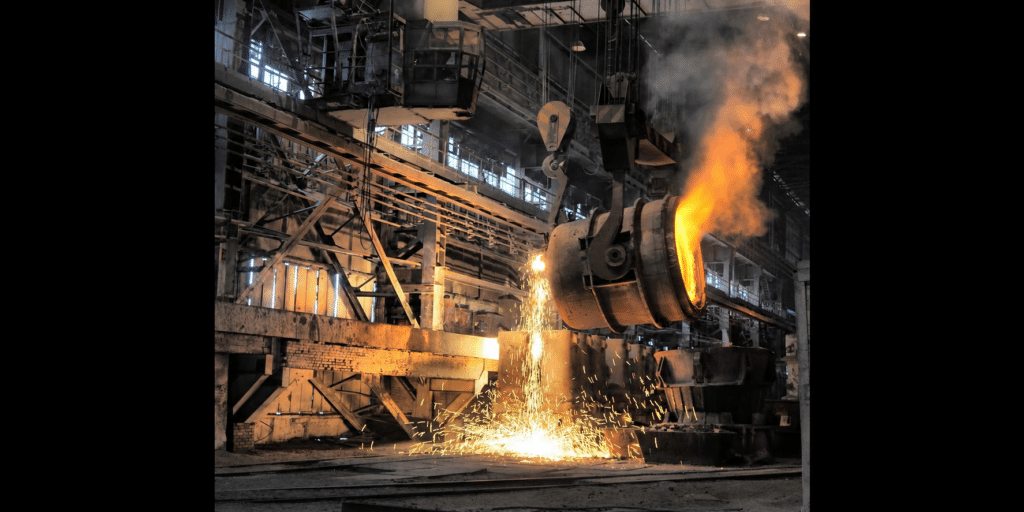
Kazakhstan says it has launched 125 industrial projects worth 900 billion tenge ($2 billion) since the beginning of 2026, with another 75 projects nearing completion. Total planned investment in the 200 projects exceeds $3.8 billion. Minister of Industry and Construction Yersayin Nagaspayev presented the figures at a government meeting on November 17. According to ministry estimates, once all 200 projects reach full capacity, they could produce $3.4 billion worth of goods annually, with approximately one-third intended for export. The projects are expected to create more than 17,000 jobs, including 5,500 in rural areas. Kazakhstan's manufacturing sector grew by 9.3% in January–October compared with the same period last year, while overall industrial output increased by 3.5%. Mining output fell by 3.4% over the same period. Nagaspayev said the new projects would allow Kazakhstan to manufacture products not previously made domestically, including steel rims for railway wheels, gears, industrial presses, drip irrigation systems, and aluminum coffee capsules. Separate, longer-term investments include two major copper smelters expected to begin production in 2030. Kazakhstan produces approximately 3.4 million metric tons of copper concentrate annually but processes only 59% of that volume domestically. By 2030, the government aims to increase concentrate production to 5.1 million metric tons, with projects at the Koksay and Aidarly deposits expected to account for the additional 1.7 million metric tons. To expand domestic processing, a copper smelter is being built in Aktogay in the Abai region. The plant will have an annual capacity of 300,000 metric tons of refined copper, with initial production expected in 2030. Construction officially began on October 20. The project, valued at approximately $1.8 billion, is being developed by KAZ Minerals with a Chinese engineering partner. Another facility with the same capacity is planned for Balkhash in the Karaganda region. Construction is scheduled to begin in 2027, with production expected in 2030. The plant is expected to create 1,200 jobs. The ministry aims to increase annual copper output from 471,000 metric tons to 1.1 million metric tons by 2030 and more than double production of finished copper products to 40,000 metric tons. Even if these targets are achieved, most of the copper industry's output will remain metal rather than finished goods. Kazakhstan is also aiming to increase the share of locally manufactured components in its automotive industry. The country already produces batteries, tires, seats, and multimedia systems. In 2026, manufacturers began producing heating and climate control systems, floor coverings, and engine blocks for trucks. Steel supplied by Temirtau-based Qarmet is used to stamp body panels for buses. A plant capable of producing up to 60,000 automotive components annually is expected to open in Kostanay by the end of the year. Production of automotive wiring harnesses, brake lines, and fuel lines is also being prepared in Almaty. Heavy-duty vehicles are another area of development. Kazakhstan already assembles HOWO and Scania trucks, while Volvo assembly operations are expected to begin in Almaty before the end of 2026. Prime Minister Olzhas Bektenov has also reported talks with Mercedes-Benz about...

SIBUR Sanctions Test Kazakhstan’s Petrochemical Ambitions

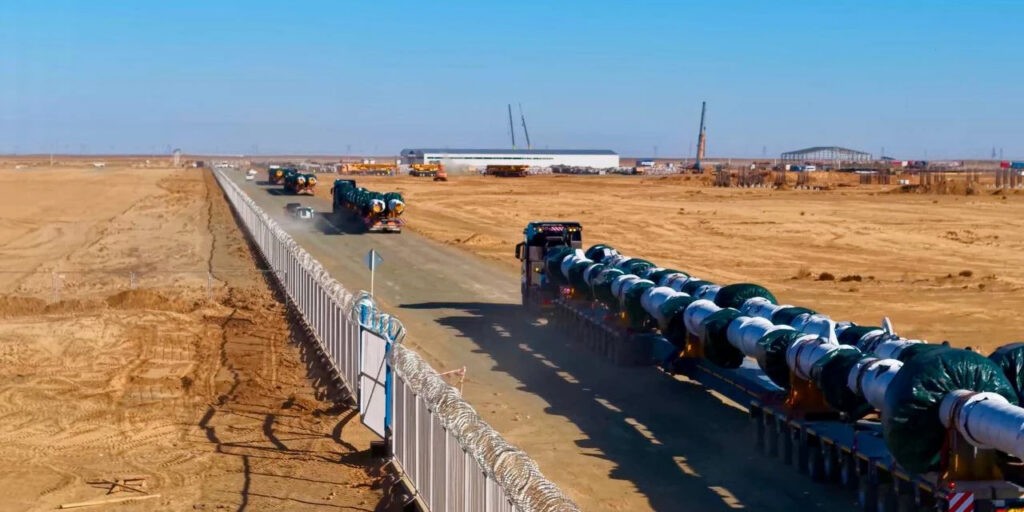
Two days before the UK sanctioned Russia’s SIBUR, Kazakhstan’s national oil company announced a major delivery to its Silleno petrochemical project. Eight reactor sections, weighing more than 600 tons, had reached the construction site in Atyrau region. The equipment marked progress toward a plant intended to turn Kazakh gas into higher-value industrial exports. The November 10 delivery preceded a decision that could complicate the international partnerships supporting that ambition. SIBUR owns 30% of Silleno, a $7.4 billion polyethylene complex, and 40% of Kazakhstan Petrochemical Industries (KPI), which operates a nearby polypropylene plant. The UK’s November 12 designation imposed an asset freeze alongside restrictions on trust services, company directorships and transport. The British authorities cited SIBUR’s business in Russia’s strategically important energy sector as grounds for the measures. SIBUR rejected the decision on November 13. The company called the sanctions “neither legitimate nor justified” and reserved its right to challenge them, Reuters reported. For Kazakhstan, the central issue is whether the two ventures can maintain financing and commercial relationships involving a sanctioned shareholder. Neither plant automatically falls under UK asset freezes merely because SIBUR holds a minority stake. Nevertheless, KazMunayGas’s experience with another Russian partner shows how insurance and lending difficulties can threaten projects beyond Russia’s borders. Financing at a Critical Stage Silleno is particularly exposed to uncertainty because it remains under construction. KazMunayGas’s 2025 annual report says the venture attracted $2 billion in bridge financing that year. Key long-term project investments were expected in 2026–2027, placing the sanctions decision within an important funding period. The report lists KazMunayGas’s stake at 40%, alongside 30% each for SIBUR and China’s Sinopec. The plant’s planned annual capacity is 1.25 million metric tons, with production scheduled for 2029. KazMunayGas has said shareholder equity and international bank loans would finance the development. It expects the plant to replace imported polyethylene and expand exports of manufactured goods. Polyethylene is used in products ranging from pipes and packaging to automotive components and medical equipment. Those ambitions depend on an industrial chain extending well beyond the factory. Silleno’s project outline shows gas from the Tengiz field passing through a separation complex operated by KMG PetroChem. Pipelines will carry ethane to Karabatan, where it will be converted into ethylene and then polyethylene. The annual report separately estimates investment of about $2.1 billion in the gas separation unit and $470 million in ethane and propane pipelines. The technology is international, too. Silleno identifies U.S. company Lummus as the supplier of its steam-cracking technology. Its polymerization and associated processes involve Chevron Phillips Chemical and Univation Technologies of the U.S., and France’s Axens. Oil and gas analyst Oleg Chervinsky has warned that SIBUR’s designation could complicate dealings with banks, insurers and equipment licensors. According to Kursiv, he described additional compliance and payment difficulties rather than an automatic shutdown of the Kazakh ventures. Keeping Exports Moving KPI has a business to protect. The plant exported 326,000 of the 377,000 tons of polypropylene it produced in 2025. Its ability to sell abroad and receive...

Kyrgyzstan’s Bilateral Development Funds Back Industry and Energy Projects

Kyrgyzstan has established bilateral development funds with Russia, Uzbekistan, Azerbaijan and Hungary that are financing manufacturing and energy projects across the country. The Russian-Kyrgyz Development Fund (RKDF) is by far the largest. In November 2025, President Sadyr Japarov said it had invested more than $1 billion in Kyrgyzstan and financed more than 3,500 projects since its creation. At the time, the fund was participating in 14 hydropower and renewable energy projects worth more than $175 million. One of them is the 25-megawatt Bala-Saruu hydropower plant in Talas Region, for which the RKDF allocated $10 million to help complete construction. The newer Azerbaijan-Kyrgyz Development Fund has also begun financing identifiable projects. By November 2025, it had allocated $14.4 million to four projects worth a combined $52.7 million. They included KG TEX, a garment factory with 300 jobs, and the 9-megawatt Tyup small hydropower plant. The Uzbek-Kyrgyz Development Fund financed the 6.7-megawatt Kogart hydropower plant. The project began in August 2022 and was ready for operation by July 2024, according to the fund. In May 2026, the Hungarian-Kyrgyz Development Fund opened a long-term credit line for NEMAN-PHARM. The first financing stage was earmarked for purchasing pharmaceutical products in Hungary. Projects financed by the fund must include a Hungarian component of at least 30%. Its published loan rates range from 1.5% to 7.25% a year, with terms of up to 10 years. These institutions are operating during a period of rapid economic expansion in Kyrgyzstan. Gross domestic product grew by 11.9% year-on-year in the first half of 2026. The International Monetary Fund has warned of emerging signs of overheating and expects re-export and trade-related activity to plateau. The number of state-backed financing options is also set to increase. The Turkic Investment Fund has begun practical operations and is expected to provide financing for joint projects across Central Asia. For Kyrgyzstan, these funds provide access to long-term capital for projects that may struggle to secure conventional financing. Their success will ultimately depend on whether the businesses and infrastructure they support remain viable and repay their loans.
