• KZT/USD = 0.00212
  • TJS/USD = 0.10810
  • UZS/USD = 0.00008
  • TMT/USD = 0.29850
  • KZT/USD = 0.00212
  • TJS/USD = 0.10810
  • UZS/USD = 0.00008
  • TMT/USD = 0.29850
  • KZT/USD = 0.00212
  • TJS/USD = 0.10810
  • UZS/USD = 0.00008
  • TMT/USD = 0.29850
  • KZT/USD = 0.00212
  • TJS/USD = 0.10810
  • UZS/USD = 0.00008
  • TMT/USD = 0.29850
  • KZT/USD = 0.00212
  • TJS/USD = 0.10810
  • UZS/USD = 0.00008
  • TMT/USD = 0.29850
  • KZT/USD = 0.00212
  • TJS/USD = 0.10810
  • UZS/USD = 0.00008
  • TMT/USD = 0.29850
  • KZT/USD = 0.00212
  • TJS/USD = 0.10810
  • UZS/USD = 0.00008
  • TMT/USD = 0.29850
  • KZT/USD = 0.00212
  • TJS/USD = 0.10810
  • UZS/USD = 0.00008
  • TMT/USD = 0.29850
07 August 2026

Viewing results 1 - 6 of 120

Transit of Russian Gas to Uzbekistan Through Kazakhstan Continues to Grow

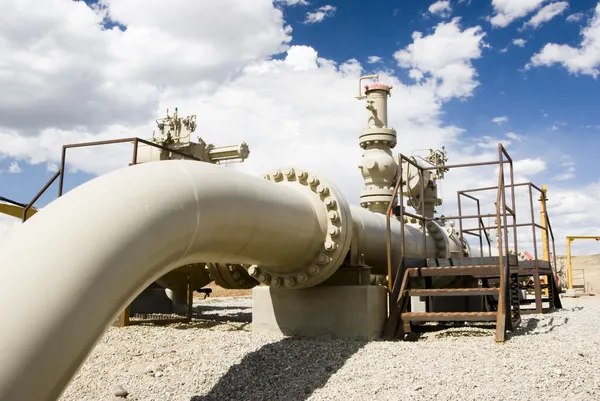
The volume of Russian natural gas transiting through Kazakhstan to Uzbekistan is on the rise, reflecting deepening regional energy cooperation. Kazakhstan’s Deputy Minister of Energy, Alibek Zhamauov, shared the update during a speech at the international Energy Trends forum, according to Interfax. Gas transit to Uzbekistan via Kazakhstan began in October 2023. In 2024, 5.6 billion cubic meters of Russian gas were delivered through Kazakhstan, surpassing earlier forecasts of 3.8 billion cubic meters. The volume is projected to increase to 7.3 billion cubic meters in 2025, with further plans to reach 11 billion cubic meters per year starting in 2026. The growing volumes highlight Kazakhstan’s emerging role as a vital transit hub for Central Asia. In 2023, the initial year of operation, 1.28 billion cubic meters of gas were transported along this route. Zhamauov stated that the project is part of a broader strategy to enhance regional energy security and develop cross-border gas infrastructure. Kazakhstan’s Ministry of Energy has committed to expanding and upgrading the country’s gas transportation network to accommodate long-term supply agreements with neighboring states. Uzbekistan’s Production Decline Raises Concerns The rising reliance on imported gas comes amid a continued decline in Uzbekistan’s domestic natural gas production. In the first two months of 2025, output fell by 4.2% compared to the same period in 2024. This trend follows a steep drop in production from 61.59 billion cubic meters in 2018 to 44.59 billion in 2024. The shrinking output has sparked concerns over Uzbekistan’s energy security and its broader economic implications. The country’s increasing dependence on regional gas flows highlights the strategic importance of projects like the Russia-Kazakhstan-Uzbekistan transit corridor.

Bishkek Authorities Plan to Relocate Railroad and Build Expressway

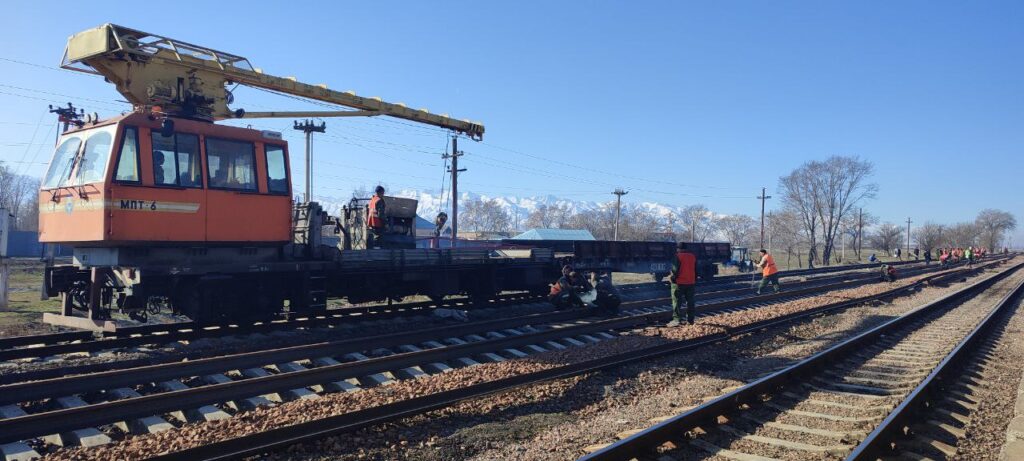
Bishkek City Hall has unveiled plans to relocate the railroad from the city center to the outskirts, replacing it with an expressway and residential developments with integrated shopping centers. While the initiative aims to modernize the capital's infrastructure, it has drawn criticism from experts in transportation and urban planning. Plans for Relocation Bishkek Mayor Aibek Junushaliev outlined the project during a parliamentary session, revealing that the new railroad route would be constructed near the northern bypass road. The Chinese company China Road and Bridge Corporation (CRBC) has expressed readiness to finance the project, which is estimated to cost $550 million. In exchange, CRBC is seeking ownership of the land vacated by the current railroad. Alternatively, the city is also exploring the possibility of self-financing the project. “We've conducted the necessary studies. Relocating the railroad to the south of Bishkek would harm the environment, so we decided to move it to the north, outside the city,” Junushaliev explained. He added that the project would include the creation of a new transportation hub with a railroad and a modern railway station. CRBC recently presented several potential routes for the relocated railroad during a working meeting with city officials. Criticism from Experts Despite the ambitious nature of the proposal, the plan has been met with skepticism from some in Kyrgyzstan. Specialists in transport infrastructure argue that Bishkek’s traffic congestion issues would be better addressed by improving traffic regulation and constructing multi-level interchanges, rather than embarking on an expensive relocation project. Talant Sadakbayev, head of the Independent Engineering Association, emphasized the need for detailed planning and feasibility studies before proceeding. “Relocating the railroad will involve more than just moving the tracks—it will require rebuilding the entire railroad infrastructure, including stations, sidings, signal systems, and freight loading and unloading facilities. This is a complex and costly endeavor,” Sadakbayev told The Times of Central Asia. He added that Kyrgyzstan already has affordable access to reinforced concrete due to production quarries near Bishkek, suggesting that constructing an expressway over the existing railroad could be a more cost-effective solution. Challenges and Alternative Solutions Sadakbayev questioned whether the proposed expressway would deliver the anticipated benefits, stressing the importance of data-driven planning. “Authorities need to analyze cellular data to determine where people live and work, as well as how cargo and passenger traffic is organized. In some areas, solutions might involve widening streets, improving traffic signals, or simply changing road markings,” he said. Sadakbayev also noted that Bishkek’s road network problems are not being addressed comprehensively, leading to persistent traffic congestion. He criticized the lack of specialized expertise within city authorities, pointing to this as a barrier to effective urban planning. Future Developments In addition to the railroad relocation project, the mayor’s office is planning to build new traffic interchanges to alleviate congestion. CRBC is also expected to participate in these developments. According to Mayor Junushaliev, construction on three overpasses in different parts of Bishkek will commence in the near future. While the relocation of the railroad and the construction...

EDB Supports Construction of Strategic Highway in Kyrgyzstan

The Eurasian Development Bank (EDB) has pledged up to $200,000 for a preliminary feasibility study for the Bishkek - Kuntuu - Belogorka - Suusamyr highway. This alternative route aims to connect Kyrgyzstan’s capital, Bishkek, with the southern and western regions of the country. An agreement for technical assistance was signed on December 5 between the EDB and Kyrgyzstan’s Cabinet of Ministers. Strategic Importance The proposed highway is expected to have significant strategic, economic, and social benefits for Kyrgyzstan. Beyond improving transport infrastructure, it will facilitate access to mineral deposits and create new employment opportunities both during construction and operation. Nikolai Podguzov, Chairman of the EDB Management Board, emphasized the project’s importance: “This initiative is part of the Eurasian Transport Framework, a key investment mega-project. It aims to strengthen transport connectivity among Kyrgyzstan’s economic centers while increasing the transit potential of Kyrgyz highways and attracting greater interest in road transportation through Kyrgyzstan from neighboring countries.” Alleviating Traffic and Economic Growth Deputy Minister of Transport and Communications Bekzhan Rysmendeev highlighted the project’s role in addressing existing infrastructure challenges. “The Bishkek—Osh highway, Kyrgyzstan’s main arterial road, currently handles 5,000 to 18,000 vehicles per day and is struggling to accommodate the growing traffic flow,” he explained. The new highway is set to reduce the travel distance by 164 kilometers compared to the existing route, providing an alternative pathway to southern regions and improving access to mining areas. “This public-private partnership project will ease congestion on the Bishkek—Osh route, contribute to economic and social development, and foster international and domestic tourism and trade,” Rysmendeev added. Regional Connectivity As part of the EDB’s broader mission to invest in Eurasia, this project aligns with the bank’s goals of enhancing regional connectivity and economic development. The EDB, a multilateral development institution, includes Armenia, Belarus, Kazakhstan, Kyrgyzstan, Russia, and Tajikistan as its member countries.

First Train Tour Launched Between Kazakhstan and Uzbekistan

Kazakhstan is launching a new international train tour called “Silk Road,” connecting the cities of Almaty, Turkestan, and Tashkent. The first train on this route will depart on November 16. According to the Ministry of Tourism and Sports of Kazakhstan, the four-day tour will allow travelers to plunge into the atmosphere of ancient cities along the historic Silk Road. The itinerary covers the most important sights of Turkestan and Tashkent and includes guide services, meals, transfers, and entrance fees. Vice-Minister of Tourism and Sports Yerzhan Erkinbayev mentioned that the route will strengthen cultural ties between Kazakhstan and Uzbekistan and make travel more comfortable and affordable. The tour program includes visits to historical places such as the ancient city of Otyrar, the mausoleum of Arystan Baba, the historical and cultural complex Azret Sultan, and the most significant tourist complex in Central Asia, Caravan-Saray. In Tashkent, tourists can familiarize themselves with historical sights and modern architecture. Earlier, the media reported on the launch of a tourist route between China and Kazakhstan. The train from China, which began running in July 2024, passes through the Khorgos-Altynkol border crossing, adding a new opportunity for travel in Central Asia.

Kazakhstan’s Longest Road Tunnel Opens on Western Europe – Western China Transport Corridor

On September 12, a new tunnel was opened at the Shakpak Baba pass in Kazakhstan’s southern Turkestan region. As the Kazakh Ministry of Transport reported, it is the longest automobile tunnel in Kazakhstan. The two-lane tunnel is 840 meters long, 11 meters wide, and 8 meters high. Control centers on both sides of the tunnel monitor lighting, ventilation, and traffic lights. The tunnel's opening will facilitate traveling and cargo transportation during winter. At the tunnel's opening ceremony, Kazakhstan’s Deputy Minister of Transport Satzhan Ablaliyev stated: "The opening of this tunnel is an important event for Kazakhstan's transport infrastructure. It will not only improve the region's year-round transport accessibility but will also significantly increase traffic safety in this difficult section. The tunnel will prevent drivers from being trapped in the snow on the Shakpak Baba pass in winter. In addition, the main traffic flow will now be redirected to bypass the village of Shakpak Baba, increasing safety in the village." The tunnel is part of the Kazakh section of the international road transport corridor Western Europe-Western China. With a total length of 8,445 km, the corridor runs 2,233 km through Russia, 2,787 km through Kazakhstan, and 3,425 km through China. In July, Kazakh Minister of Transport Marat Karabayev announced that in 2024, Kazakhstan planned to repair and construct 12,000 kilometers of road.

World Bank to help increase opportunities for Tajikistan’s vulnerable communities

DUSHANBE (TCA) — Two projects that aim to address fragility risks and increase social resilience in Tajikistan’s vulnerable regions were approved on June 20 by the World Bank’s Board of Executive Directors. The grant financing of $30 million for the Rural Economy Development Project and $37 million for the Socio-Economic Resilience Strengthening Project were allocated from the International Development Association’s (IDA) Risk Mitigation Regime. The projects will be implemented in Tajikistan’s southern Khatlon region and eastern Gorno-Badakhshan Autonomous Oblast (GBAO), which both border Afghanistan. Continue reading