• KGS/USD = 0.01144 0%
  • KZT/USD = 0.00205 0%
  • TJS/USD = 0.10785 0.09%
  • UZS/USD = 0.00008 0%
  • TMT/USD = 0.28571 0.28%
  • KGS/USD = 0.01144 0%
  • KZT/USD = 0.00205 0%
  • TJS/USD = 0.10785 0.09%
  • UZS/USD = 0.00008 0%
  • TMT/USD = 0.28571 0.28%
  • KGS/USD = 0.01144 0%
  • KZT/USD = 0.00205 0%
  • TJS/USD = 0.10785 0.09%
  • UZS/USD = 0.00008 0%
  • TMT/USD = 0.28571 0.28%
  • KGS/USD = 0.01144 0%
  • KZT/USD = 0.00205 0%
  • TJS/USD = 0.10785 0.09%
  • UZS/USD = 0.00008 0%
  • TMT/USD = 0.28571 0.28%
  • KGS/USD = 0.01144 0%
  • KZT/USD = 0.00205 0%
  • TJS/USD = 0.10785 0.09%
  • UZS/USD = 0.00008 0%
  • TMT/USD = 0.28571 0.28%
  • KGS/USD = 0.01144 0%
  • KZT/USD = 0.00205 0%
  • TJS/USD = 0.10785 0.09%
  • UZS/USD = 0.00008 0%
  • TMT/USD = 0.28571 0.28%
  • KGS/USD = 0.01144 0%
  • KZT/USD = 0.00205 0%
  • TJS/USD = 0.10785 0.09%
  • UZS/USD = 0.00008 0%
  • TMT/USD = 0.28571 0.28%
  • KGS/USD = 0.01144 0%
  • KZT/USD = 0.00205 0%
  • TJS/USD = 0.10785 0.09%
  • UZS/USD = 0.00008 0%
  • TMT/USD = 0.28571 0.28%

Viewing results 1 - 6 of 132

Kazakhstan and EU Address Common Security Concerns

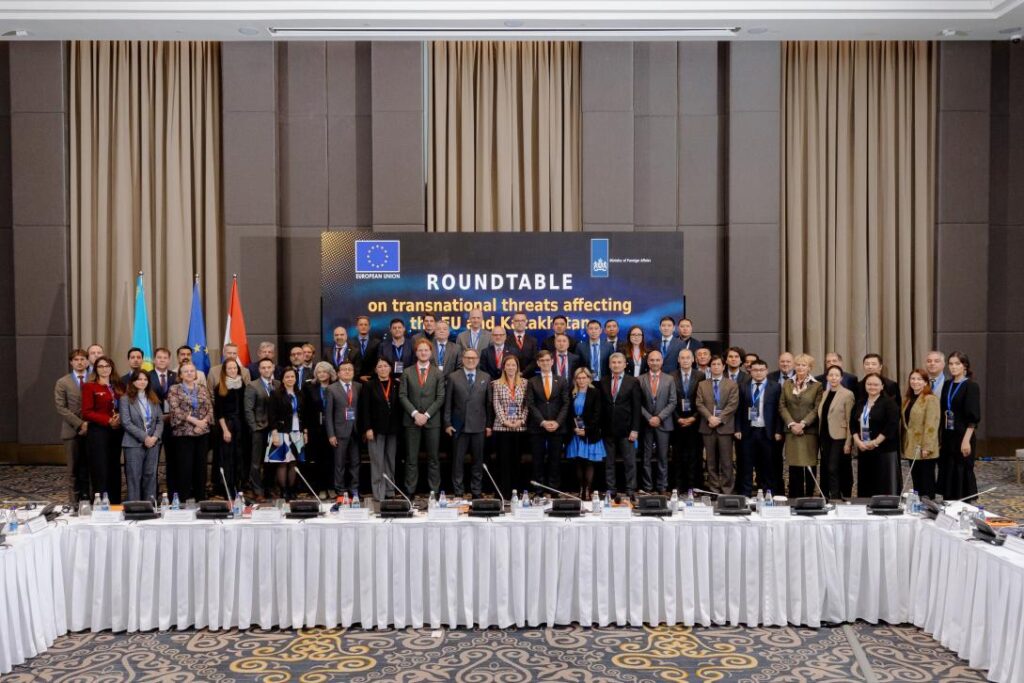
On November 14, the European Union Delegation to Kazakhstan, the Embassy of the Netherlands, and the Kazakh government convened a roundtable in Astana to address critical transnational threats impacting both the EU and Kazakhstan. The event gathered more than 70 experts, government officials, and international representatives to discuss pressing issues such as terrorism, human trafficking, migrant smuggling, and other security concerns. Particular attention was given to the interconnected nature of international extremism, border protection, critical infrastructure, drug trafficking, and arms trafficking. Participants underscored the growing level of cooperation between the EU and Kazakhstan, exchanging insights and experiences to enhance joint responses to these multifaceted threats. Kazakhstan’s Deputy Minister of Foreign Affairs, Roman Vassilenko, emphasized that transnational threats disregard borders and national sovereignty, posing a global challenge. “No country is immune from such issues as cyberattacks, organized crime, terrorism, trafficking in persons, or illegal migration,” he stated. Vassilenko noted that Astana has ratified all 19 UN universal counter-terrorism conventions and protocols, demonstrating its active engagement with the international community, including the EU. EU Ambassador to Kazakhstan Aleska Simkic hailed the roundtable as a significant milestone in security collaboration. “Today’s global security threats are neither confined by borders nor limited to single regions; they affect us all, underscoring the need for a united and coordinated response. The European Union and Kazakhstan are bound by shared interests and mutual challenges—whether addressing extremism, human trafficking, or organized crime. This roundtable offers an essential platform for exchanging insights and best practices, strengthening our common security and resilience, and creating better coordination between actions that both sides are already implementing. By working together, we build not only a safer Central Asia and Europe but also contribute to broader regional stability and peace,” Simkic said. Dutch Ambassador to Kazakhstan Nico Schermers echoed this sentiment, emphasizing the importance of collaboration. “Only by working together and learning from each other’s perspectives and insights can we tackle transnational threats affecting the European Union and Kazakhstan,” he remarked. The roundtable concluded with both the EU and Kazakhstan reaffirming their commitment to combat terrorism, trafficking, and organized crime, paving the way for deeper and more effective cooperation in the future.

Bishkek Secures Multi-Million Dollar Grants at COP29 Conference in Baku

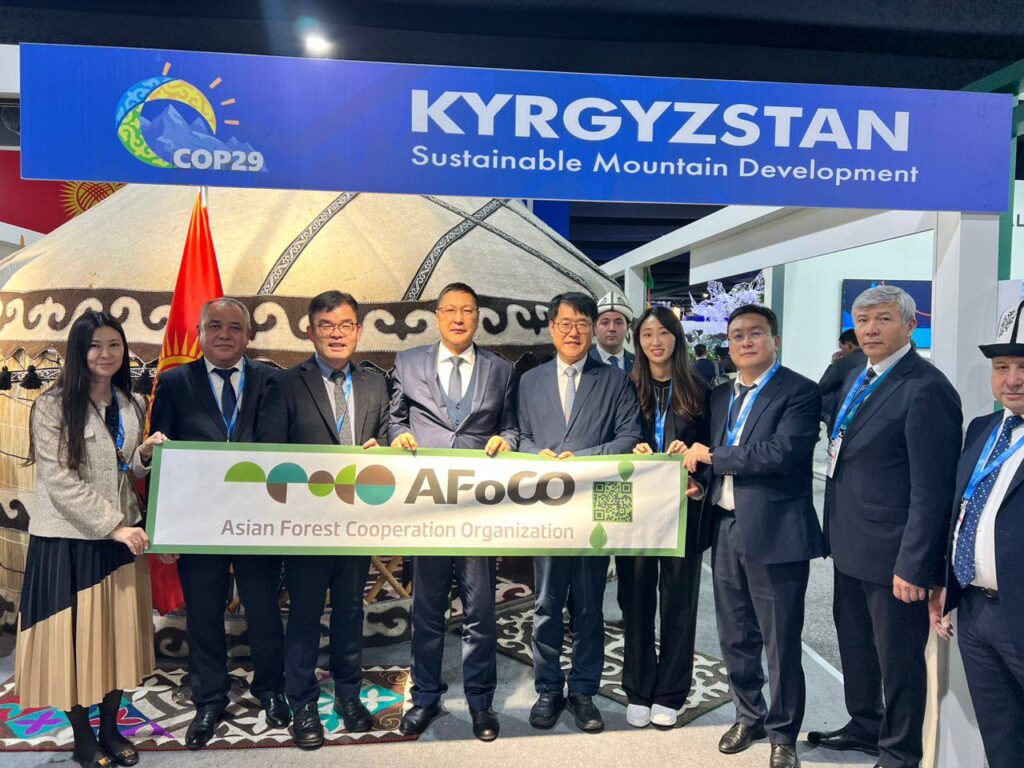
Boobek Azhikeev, the head of Kyrgyzstan’s Ministry of Emergency Situations, held several meetings with representatives of international institutions during the COP29 conference in Baku. Protocols and memorandums were signed, and a joint action plan for 2025-27 was developed. “I would like to highlight our meeting with the regional director of the Green Climate Fund, where we discussed a $25 million grant,” stated Kyrgyz EMERCOM spokeswoman Elnura Muktarova. “These funds are intended to support Kyrgyzstan’s Hydrometeorological and Forestry Services, as well as the Training and Research Center of the Ministry of Emergency Situations. We anticipate beginning these projects next year.” Azhikeev also negotiated with FETNet, a Finnish company that will provide advanced training for the Hydrometeorological Service. FETNet has offered to train Kyrgyz specialists in Finland and will present cutting-edge technologies to improve the accuracy and timeliness of weather forecasts. In addition, the Ministry of Emergency Situations announced that it had reached an agreement with the Asian Development Bank (ADB) to secure $60 million for strengthening the banks of the Kara-Darya, Chu, and Yassy rivers. This funding aims to reduce flood risks and enhance the ecological situation in the region. Of the total, 40% will be provided as a grant, while the remainder will be offered as a loan. During a meeting with representatives from the Financial Service under the Government of South Korea, discussions centered on financing Kyrgyzstan’s Forest Service. The South Korean representatives pledged support in the form of laboratory equipment, high-quality seeds, and digital mapping tools to combat pasture degradation and enhance forestry management. Kyrgyz Ministry of Emergency Situations officials also met with Turkish EMERCOM representatives and the Turkish Cooperation and Coordination Agency (TIKA) to discuss joint efforts in responding to emergency situations.

ADB Launches ‘Glaciers to Farms’ Initiative to Combat Climate Change in Central Asia

The Asian Development Bank (ADB) has unveiled a new regional initiative, Glaciers to Farms, aimed at promoting sustainable water management and food security in Central Asia, the South Caucasus, and Pakistan. The program addresses the severe effects of accelerated glacial melt caused by climate change. Backed by the Green Climate Fund (GCF), ADB will conduct risk assessments of glacial melt in Azerbaijan, Kyrgyzstan, Tajikistan, and Uzbekistan to establish a scientific and technical foundation for the program. Regional Cooperation for Glacier Preservation On November 14 in Baku, Azerbaijan, a declaration of support for glacier preservation was signed by several regional leaders: Azerbaijan’s Minister of Ecology and Natural Resources Mukhtar Babayev, Kazakhstan’s Minister of Ecology and Natural Resources Yerlan Nyssanbayev, Kyrgyzstan’s Minister of Natural Resources, Ecology and Technical Supervision Meder Mashiev, Tajikistan’s Committee on Environmental Protection Chairman Bahodur Sheralizoda, and Uzbekistan’s Minister of Ecology, Environmental Protection, and Climate Change Aziz Abdukhakimov. They were joined by ADB President Masatsugu Asakawa and GCF Chief Investment Officer Henry Gonzalez. “As melting glaciers change water flows, disrupt lives, and destroy ecosystems, we must act now,” said Asakawa. “As Asia and the Pacific’s climate bank, we are pleased to be joined by key partners to launch this program to drive international collaboration and deliver results where they matter most—on the ground, in communities at risk.” The Urgent Need for Action Temperatures in the region are expected to rise by up to 6 degrees Celsius by 2100. The resulting loss of glacial mass poses a dire threat to ecosystems, jeopardizing water supplies for agriculture and hydropower and endangering the livelihoods of over 380 million people. The Glaciers to Farms program aims to mobilize up to $3.5 billion in funding from ADB, GCF, governments, development partners, and the private sector. Beyond investments in water and agriculture, the program will prioritize vulnerable communities in fragile mountain regions that are most threatened by glacial melt. Global and Regional Efforts The United Nations General Assembly has declared 2025 the International Year of Glacier Preservation, with Tajikistan set to host the International Conference on Glaciers’ Preservation in Dushanbe next year. At a high-level event in Baku on November 12, Tajikistan's President Emomali Rahmon underscored the importance of preventing further glacier melt and preserving fragile ecosystems. Rahmon highlighted the establishment of the International Trust Fund for the Preservation of Glaciers under the United Nations’ auspices and noted the UN’s recent adoption of a resolution—initiated by Tajikistan and France—declaring 2025-2034 the Decade of Action for Cryospheric Sciences. This resolution calls for enhanced efforts to safeguard glaciers globally. Rahmon also proposed creating a Regional Coordination Center for Glaciology in Dushanbe under the World Meteorological Organization’s guidance. The center would study the impact of climate change on glaciers in collaboration with development partners.

COP29: Environmental Initiatives in the Real World

Kazakhstan's President Kassym-Jomart Tokayev has addressed the World Climate Summit in Baku, Azerbaijan. In his speech he spoke about the country's environmental problems, but also mentioned opportunities for new eco-friendly projects. At the same time, many world leaders did not attend the summit, and activist Greta Thunberg said climate problems should be discussed at other venues. Tokayev reaffirmed Kazakhstan's commitment to the global climate agenda and emphasized the importance of international cooperation in the fight against climate change. He reminded forum participants that carbon neutrality by 2060 can only be achieved with close cooperation and technology exchange. “Access to predictable funding and state-of-the-art technology is vital to achieving the targets. The NCQG should pay special attention to regions most vulnerable to climate change, including landlocked developing countries. Despite accounting for only 1% of global emissions, Central Asia faces multiple climate risks. To increase efficiency, we must actively utilize advanced technologies such as artificial intelligence, satellite monitoring, and other digital tools to provide early warning and better management of water and land resources,” Tokayev said. Tokayev added that Kazakhstan has opportunities for transition to better agriculture. According to him, the republic, which has 200 million hectares of agricultural land, is an ideal platform for introducing “carbon farming." The president said these agricultural production methods can reduce emissions and improve soil quality. “Our country provides 43% of the world's uranium supply and plays a significant role in developing low-carbon nuclear power. In October this year, ROK citizens supported the construction of a nuclear power plant in a nationwide referendum. We strive to ensure the safety and efficiency of this project through partnership with the world's technological leaders in energy”, added Tokayev. He separately emphasized the problem of the world's water resources. “Climate change is already seriously impacting the global water cycle. Water-related disasters account for more than 80% of all natural disasters. This year, the ROK faces unprecedented floods. To respond quickly in the future and recover from such emergencies, we are implementing a comprehensive risk management system. In partnership with France, Kazakhstan will hold the One Water Summit in December to actualize the water agenda. Participants of this forum will discuss the problems of global water management,” Tokayev said. “Today, the Caspian Sea is under threat. Saving the world's largest lake is a problem that requires long-term international cooperation. We support President Ilham Aliyev's (Azerbaijan) initiative to create a group of experts from the Caspian littoral states. Additionally, Kazakhstan is taking concrete steps to preserve the Aral Sea,” he added. Also, within the framework of the World Climate Summit in Baku, an important agreement for Kazakhstan's water sector was signed. Deputy Prime Minister and Minister of National Economy Nurlan Baybazarov said the Islamic Development Bank will finance Kazakhstan's $1.1 billion project for water resources development, which will be realized in nine regions. Kazakhstan is not standing still Today, Kazakhstan has several major environmental projects in operation. These include the Astana Green Belt, which has significantly improved the city's ecology, reduced air...

Kazakhstan Secures Agreement for 11 Billion Cubic Meters of Water from Neighboring Countries by April 2025

Kazakhstan will receive approximately 11 billion cubic meters of irrigation water from the Syr Darya River by April 2025, following an agreement made by Nurzhan Nurzhigitov, Kazakhstan’s Minister of Water Resources and Irrigation, with representatives from neighboring Central Asian countries. The accord was reached at the 87th meeting of the Interstate Coordination Water Management Commission held last week in Ashgabat, Turkmenistan, and attended by water ministry leaders from Tajikistan, Turkmenistan, and Uzbekistan, with Kyrgyzstan as an observer. This substantial water supply is expected to fill the Shardara reservoir in southern Kazakhstan by April 1, 2025, providing enough water for the region's 2025 irrigation season. Given Kazakhstan’s reliance on irrigation for agriculture, particularly in the arid south, the flow from upstream countries like Tajikistan, Kyrgyzstan, and Uzbekistan is vital. Nurzhigitov noted, "This year, thanks to negotiations and joint actions, we ensured the effective water distribution in the Syrdarya River basin. Agreements on water and energy cooperation with Kyrgyzstan were implemented, and measures were taken to coordinate the operating mode of the Bakhri-Tojik reservoir [in Tajikistan] during this year’s irrigation season.”

Kazakhstan, Azerbaijan and China Establish Joint Cargo Terminal in Baku

Azerbaijan, China, and Kazakhstan have signed an agreement to establish an intermodal cargo terminal in the Port of Alat in Baku, the Azerbaijani capital. The agreement was signed in Baku on November 12 by SK-AIH Investment Fund Ltd (Samruk-Kazyna, Azerbaijan Investment Holding), Kazakhstan Temir Zholy (Kazakhstan’s national railway company), Baku International Sea Trade Port (Azerbaijan), and Xi'an Free Trade Port Construction and Operation Co., Ltd (China). The project was made possible through Azerbaijan’s provision of a land plot, operational berths, and terminal facilities at the Port of Alat. This new terminal is expected to increase container train traffic between China and Europe along the Trans-Caspian International Transport Route (TITR), also known as the Middle Corridor, reducing delivery times, transportation costs, and transshipment time. The terminal will feature a universal cargo yard, a covered warehouse complex spanning 5,000 square meters, and a container yard with a capacity of over 1,000 containers. Kazakhstan and China plan to increase the volume of cargo transported along the TITR to 600 container trains per year by 2025–2026, with targets of 1,000 container trains in 2027 and 2,000 by 2029, according to Kazakhstan’s Ministry of Transport. In 2023, transit volumes between China and Europe through Kazakhstan reached 2.76 million tons—a 65% increase from 1.7 million tons in 2022. The TITR connects China and Europe via Central Asia and the Caucasus, bypassing Russia, offering a strategic link between the two regions.